Discussion Leading Edge Foundry Node advances (TSMC, Samsung Foundry, Intel) - [2020 - 2025]

Page 192 - Seeking answers? Join the AnandTech community: where nearly half-a-million members share solutions and discuss the latest tech.

DisEnchantment

Golden Member
Mar 3, 2017
1,779
6,798
136
TSMC's N7 EUV is now in its second year of production and N5 is contributing to revenue for TSMC this quarter. N3 is scheduled for 2022 and I believe they have a good chance to reach that target.
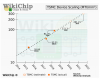
1587737990547.png
N7 performance is more or less understood.
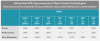
1587739093721.png

This year and next year TSMC is mainly increasing capacity to meet demands.

For Samsung the nodes are basically the same from 7LPP to 4 LPE, they just add incremental scaling boosters while the bulk of the tech is the same.

Samsung is already shipping 7LPP and will ship 6LPP in H2. Hopefully they fix any issues if at all.
They have two more intermediate nodes in between before going to 3GAE, most likely 5LPE will ship next year but for 4LPE it will probably be back to back with 3GAA since 3GAA is a parallel development with 7LPP enhancements.


1587739615344.png

Samsung's 3GAA will go for HVM in 2022 most likely, similar timeframe to TSMC's N3.
There are major differences in how the transistor will be fabricated due to the GAA but density for sure Samsung will be behind N3.
But there might be advantages for Samsung with regards to power and performance, so it may be better suited for some applications.
But for now we don't know how much of this is true and we can only rely on the marketing material.

This year there should be a lot more available wafers due to lack of demand from Smartphone vendors and increased capacity from TSMC and Samsung.
Lots of SoCs which dont need to be top end will be fabbed with N7 or 7LPP/6LPP instead of N5, so there will be lots of wafers around.

Most of the current 7nm designs are far from the advertized density from TSMC and Samsung. There is still potential for density increase compared to currently shipping products.
N5 is going to be the leading foundry node for the next couple of years.

For a lot of fabless companies out there, the processes and capacity available are quite good.

---------------------------------------------------------------------------------------------------------------------------------------------------


FEEL FREE TO CREATE A NEW THREAD FOR 2025+ OUTLOOK, I WILL LINK IT HERE
 
Last edited:

Doug S

Diamond Member
Feb 8, 2020
3,811
6,747
136
There are two key events here:
1) The iPhone in 2008 kicks the mobile compute market into high gear, threatening to overtake Intels traditional market. That's where the future volume will be. Intel rejects making those processors, likely recognizing that would risk their x86 moat, and decides to try winning mobile by scaling x86 down. This doesn't work. Moores law's faith in the engineers doesn't apply to each individual company.
2) Apple goes with ARM, which bypasses the proprietary x86 market in favor of a more open architecture (opening the proprietary lock) and goes with foundries which allow them to pool resources with other companies (opening the volume lock). At first that's Samsung (a competitor with the industry on devices) which allows TSMC (not a competitor on devices) to build a larger consortium of customers. GF is spun out in 2012, Apple signs on with TSMC around that time, the coalition is formed.

Apple had ALWAYS planned to use ARM for the iPhone, even from back in 2002 when they started working not on a phone but a tablet. Jobs later said the tablet was put on the back burner because the technology to make it cost effective wasn't there yet, but they decided they could make a phone work due to the subsidization economics of the cellular market at the time. Apple was one of the founders of ARM and had history using ARM in their products not only with the Newton, but also the iPod. There was no debate within Apple, it was always gonna be ARM.

Jobs went to Intel and said we'd like to have you make ARM SoCs for us. Intel owned the highest performance ARM design at the time, XScale, which Apple was reportedly interested in as part of that deal. So it would be Intel fabbing an Intel owned product. Intel told him they'd only make chips for Apple if they went with x86. Well that was clearly a non starter, so Jobs went to Samsung next, and rest is history.

Intel was blinded by the "x86 everywhere" types who couldn't comprehend making a deal that was profitable to Intel without trying to shoehorn x86 into the deal, even though they owned XScale and it was clearly more appropriate for the task. I imagine those idiots were the same idiots behind Intel selling XScale a little over a year after the Jobs meeting, to make sure there was no chance anyone could change their mind on that in the future.
 

Doug S

Diamond Member
Feb 8, 2020
3,811
6,747
136
Even Apple is struggling to afford the necessary investment to lock down supply.

Based on what? They can easily afford to prepay for whatever capacity they may need. The schedule for N2 mass production isn't too favorable for their needs though, so it won't be like previous nodes where they've soaked up the entire early supply for themselves.
 

Joe NYC

Diamond Member
Jun 26, 2021
4,181
5,746
136
AMD is far closer in N2 numbers to Qualcomm.
N3 numbers in 2026 are probably a tad high, 2027 is legit due to PS6 ramp.

The N2 estimated numbers are a joke. Intel's N2 is one SKU that will be in low volume, will be introduced after its AMD competitor.

In the meantime, AMD will be ramping up to supply (with N2):
- 1/2 of CPU datacenter market with Venice
- some small percentage of datacenter GPU market with Mi400
- desktop CPU market
- premium notebook market
 
Last edited:

511

Diamond Member
Jul 12, 2024
5,392
4,814
106
The N2 estimated numbers are a joke. Intel's N2 is one SKU that will be in low volume, will be introduced its AMD competitor.

In the meantime, AMD will be ramping up to supply:
- 1/2 of CPU datacenter market with Venice
- some small percentage of datacenter GPU market with Mi400
- desktop CPU market
- premium notebook market
Exactly my point they are made up numbers Intel's 18A Wafer output is way above AMDs N2 Capacity though but Intel N2 volume is less than AMD.
 

Tigerick

Senior member
Apr 1, 2022
941
857
106
Really, guys !!! :oops: You guys still believe in node rumors ?

First of all, 18-A in Nova Lake is only used for Core Ultra 3, Core Ultra 5 and above are using N2 8+16 die; with 2 dies to create Core Ultra 9. Don't forget HX mobile series which are popular in high performance laptop and workstation with or without GPU.

Venice is on N2, please no N2P/N2X BS which are HVM in end of 2026. And they are being used on server platform. Medusa Point, Halo and desktop are all using N3-variant only not N2, period. Some of N3P-Zen6 will be used on low end Venice platform similar to Turin/Turin Dense.

That explains AMD has more 3nm wafer allocation (including Soundwave) than Intel. OTOH, Intel has more N2 wafer allocation than AMD. Yep, I believe in that chart, not 100% accurate but pretty close.
 
Last edited:
  • Haha
Reactions: Io Magnesso

Thunder 57

Diamond Member
Aug 19, 2007
4,250
7,049
136
Really, guys !!! :oops: You guys still believe in node rumors ?

First of all, 18-A in Nova Lake is only used for Core Ultra 3, Core Ultra 5 and above are using N2 8+16 die; with 2 dies to create Core Ultra 9. Don't forget HX mobile series which are popular in high performance laptop and workstation with or without GPU.

Venice is on N2, please no N2P/N2X BS which are HVM in end of 2026. And they are being used on server platform. Medusa Point, Halo and desktop are all using N3-variant only not N2, period. Some of N3-Zen6 will be used on low end Venice platform similar to Turin/Turin Dense.

That explains AMD has more 3nm wafer allocation (including Soundwave) than Intel. OTOH, Intel has more N2 wafer allocation than AMD. Yep, I believe in that chart, not 100% accurate but pretty close.

I actually kind of think that you are right about Intel using 18A for low end/low power chips and N2 for the rest in the immediate future.
 

Joe NYC

Diamond Member
Jun 26, 2021
4,181
5,746
136
Really, guys !!! :oops: You guys still believe in node rumors ?

First of all, 18-A in Nova Lake is only used for Core Ultra 3, Core Ultra 5 and above are using N2 8+16 die; with 2 dies to create Core Ultra 9. Don't forget HX mobile series which are popular in high performance laptop and workstation with or without GPU.

Venice is on N2, please no N2P/N2X BS which are HVM in end of 2026. And they are being used on server platform. Medusa Point, Halo and desktop are all using N3-variant only not N2, period. Some of N3-Zen6 will be used on low end Venice platform similar to Turin/Turin Dense.

That explains AMD has more 3nm wafer allocation (including Soundwave) than Intel. OTOH, Intel has more N2 wafer allocation than AMD. Yep, I believe in that chart, not 100% accurate but pretty close.

It's not like N3 estimates are any better. AMD will have only a token N3 volume in 2025, consisting of Mi350 and Strix Halo.

Intel shown as ~4x even though it has 2 volume products (Lunar Lake, Arrow Lake on N3). In reality, Intel is probably 10x to 20x AMD N3 in 2025.

For Intel, it is showing 2026 N2 wafers nearly the same as 2025 N3 wafers, while Intel has (said) volume parts on N3 in 2025 and Nova Lake will barely launch in 2026, will have only minimal N2 wafer starts in 2026.
 

branch_suggestion

Senior member
Aug 4, 2023
880
1,932
106
The N2 estimated numbers are a joke. Intel's N2 is one SKU that will be in low volume, will be introduced after its AMD competitor.

In the meantime, AMD will be ramping up to supply (with N2):
- 1/2 of CPU datacenter market with Venice
- some small percentage of datacenter GPU market with Mi400
- desktop CPU market
- premium notebook market
Ah the chart is either 2023 or at most midway through 2024.
Explains why the numbers are off, AMD moved several products to N2 since then.
 

johnsonwax

Senior member
Jun 27, 2024
469
674
96
Apple had ALWAYS planned to use ARM for the iPhone, even from back in 2002 when they started working not on a phone but a tablet. Jobs later said the tablet was put on the back burner because the technology to make it cost effective wasn't there yet, but they decided they could make a phone work due to the subsidization economics of the cellular market at the time. Apple was one of the founders of ARM and had history using ARM in their products not only with the Newton, but also the iPod. There was no debate within Apple, it was always gonna be ARM.

Jobs went to Intel and said we'd like to have you make ARM SoCs for us. Intel owned the highest performance ARM design at the time, XScale, which Apple was reportedly interested in as part of that deal. So it would be Intel fabbing an Intel owned product. Intel told him they'd only make chips for Apple if they went with x86. Well that was clearly a non starter, so Jobs went to Samsung next, and rest is history.

Intel was blinded by the "x86 everywhere" types who couldn't comprehend making a deal that was profitable to Intel without trying to shoehorn x86 into the deal, even though they owned XScale and it was clearly more appropriate for the task. I imagine those idiots were the same idiots behind Intel selling XScale a little over a year after the Jobs meeting, to make sure there was no chance anyone could change their mind on that in the future.
I'm not sure what you are trying to counter. I said: "Intel rejects making those processors, likely recognizing that would risk their x86 moat". You just said the same thing in 3 paragraphs.

Of course Apple was going with ARM, that goes without saying. Intel could have opened up their foundry business and captured the ARM volume with Apple as a customer but that risked undercutting their x86 business if it got larger than it. Intel, deciding the double moat was too valuable to break, rejects Apple, chases x86 downmarket hoping to supply competitors to Apple (which they tried doing but failed, in part because iPhones value wasn't primarily in CPU compute but software, etc. so Intel was reliant on OEMs to make a competitive product, which they didn't). Had Intel recognized the implications of Moores Law they should have seen the risk in pursuing that strategy because if ARM took off in mobile, which could be fabbed anywhere (and was), they were hosed. But in that moment there was that if. Maybe mobile would fail.

But all that said, the last x86 phone was 10 years ago, around the time TSMC grabbed pretty much every fabless customer. That was the moment it should have happened - the Atom strategy has now failed - they know it failed, TSMC has consolidated most of the volume in the industry - all of the dies are now cast. Moores law informs us of the probable outcome. Yes, that's when 10nm was supposed to ship and didn't - so, you know, they had their hands full - but that's implementation. The strategy should still be obvious from the law - they need volume, and yet, they keep protecting x86...

But I'm not trying to relitigate the sequence of events. I'm trying to point out how Moores law informs us how to predict what the consequences are likely to be from those events. Some were uncertain, most were not.
 
  • Haha
Reactions: Io Magnesso

johnsonwax

Senior member
Jun 27, 2024
469
674
96
Based on what? They can easily afford to prepay for whatever capacity they may need. The schedule for N2 mass production isn't too favorable for their needs though, so it won't be like previous nodes where they've soaked up the entire early supply for themselves.
Because part of the strategic purpose of the prepayment agreements is to deny access to their competitors. They've been doing that since they bought out the global NVRAM supply back in the iPod nano days. Apple would be weighing stockpiling components to give them that market advantage. Why'd they let Qualcomm get volume in 2026? Certainly some of Apple's 2027 production will be a continuation of the 2026 components. Apple is ruthless with their prepayment agreements. Like, that's one of their biggest hammers.
 

Doug S

Diamond Member
Feb 8, 2020
3,811
6,747
136
Because part of the strategic purpose of the prepayment agreements is to deny access to their competitors. They've been doing that since they bought out the global NVRAM supply back in the iPod nano days. Apple would be weighing stockpiling components to give them that market advantage. Why'd they let Qualcomm get volume in 2026? Certainly some of Apple's 2027 production will be a continuation of the 2026 components. Apple is ruthless with their prepayment agreements. Like, that's one of their biggest hammers.

Prepayment agreements are to insure supply, not "deny access". They might have that effect in some cases, but that's what happens when Apple is willing to prepay to guarantee supply and others can't/won't. They have never and will never pay TSMC billions to keep their fabs idle.

It doesn't really matter to Apple if Intel, AMD, Nvidia or Qualcomm get capacity Apple doesn't need, because Apple does not see chipmakers as their competition. People largely have already made the "Windows or Mac" and "iPhone or Android" decision before they even begin looking at alternatives; there is little cross shopping so the performance of AMD/Intel based PCs or Qualcomm PCs Androids relative to Apple's offerings just doesn't matter.

To the extent the Windows and Android world does matter it is about software and overall product design. Apple sees those as factors that matter much more to consumers than chip performance. Just look at how much time during announcements they pay to the silicon versus the software and the design. They might have a slide or two about A18 Pro or M4 and spend less than a minute in a hour+ long presentation, but they'll go on and on about little design features other companies would hardly bother to mention.
 
  • Like
Reactions: Io Magnesso

511

Diamond Member
Jul 12, 2024
5,392
4,814
106
Really, guys !!! :oops: You guys still believe in node rumors ?

First of all, 18-A in Nova Lake is only used for Core Ultra 3, Core Ultra 5 and above are using N2 8+16 die; with 2 dies to create Core Ultra 9. Don't forget HX mobile series which are popular in high performance laptop and workstation with or without GPU.
Also the SoC die which is 18A lol so every NVL SKU will ship with 18A
Venice is on N2, please no N2P/N2X BS which are HVM in end of 2026. And they are being used on server platform. Medusa Point, Halo and desktop are all using N3-variant only not N2, period. Some of N3P-Zen6 will be used on low end Venice platform similar to Turin/Turin Dense.
Yes
That explains AMD has more 3nm wafer allocation (including Soundwave) than Intel. OTOH, Intel has more N2 wafer allocation than AMD. Yep, I believe in that chart, not 100% accurate but pretty close.
The allocation is not true Intel's current N3 allocation is greater than AMDs N4 allocation lol
 
  • Like
Reactions: Io Magnesso

johnsonwax

Senior member
Jun 27, 2024
469
674
96
Prepayment agreements are to insure supply, not "deny access". They might have that effect in some cases, but that's what happens when Apple is willing to prepay to guarantee supply and others can't/won't. They have never and will never pay TSMC billions to keep their fabs idle.
Where did I say idle? I have two whole sentences dedicated to it not being idle.
 
  • Like
Reactions: Thunder 57

511

Diamond Member
Jul 12, 2024
5,392
4,814
106
Server tends to be a bit slow in moving on to new products.
Servers are slow but it's not only servers but it is servers and client as a whole while for Intel it's 2 tiles of NVL they don't need ridiculous amount of wafers for 2 Tiles like they do with Arrow/Lunar with their entire SKU only HX/S will use the tile alongside maybe NVL-AX.
 

oak8292

Member
Sep 14, 2016
199
215
116
I'm not sure what you are trying to counter. I said: "Intel rejects making those processors, likely recognizing that would risk their x86 moat". You just said the same thing in 3 paragraphs.

Of course Apple was going with ARM, that goes without saying. Intel could have opened up their foundry business and captured the ARM volume with Apple as a customer but that risked undercutting their x86 business if it got larger than it. Intel, deciding the double moat was too valuable to break, rejects Apple, chases x86 downmarket hoping to supply competitors to Apple (which they tried doing but failed, in part because iPhones value wasn't primarily in CPU compute but software, etc. so Intel was reliant on OEMs to make a competitive product, which they didn't). Had Intel recognized the implications of Moores Law they should have seen the risk in pursuing that strategy because if ARM took off in mobile, which could be fabbed anywhere (and was), they were hosed. But in that moment there was that if. Maybe mobile would fail.

But all that said, the last x86 phone was 10 years ago, around the time TSMC grabbed pretty much every fabless customer. That was the moment it should have happened - the Atom strategy has now failed - they know it failed, TSMC has consolidated most of the volume in the industry - all of the dies are now cast. Moores law informs us of the probable outcome. Yes, that's when 10nm was supposed to ship and didn't - so, you know, they had their hands full - but that's implementation. The strategy should still be obvious from the law - they need volume, and yet, they keep protecting x86...

But I'm not trying to relitigate the sequence of events. I'm trying to point out how Moores law informs us how to predict what the consequences are likely to be from those events. Some were uncertain, most were not.
Intel foundry 1.0 had ARM generate physical IP at Intel for mobile customers on 10 nm and LG was a rumored customer. Obviously the failure of 10 nm was also the end of that effort with ARM. I don’t know who took the loss on that engineering effort. ARM generated no royalties for putting IP on Intel silicon.


Doug S

Diamond Member
Feb 8, 2020
3,811
6,747
136
Where did I say idle? I have two whole sentences dedicated to it not being idle.

You're talking about stockpiling components as if stockpiling A20s from the initial N2 wafers is at all comparable to buying up commodity stuff like DRAM or NAND. They'd have to tape out two quarters early to be able to do that, and there are consequences to doing so.
 

oak8292

Member
Sep 14, 2016
199
215
116
Because part of the strategic purpose of the prepayment agreements is to deny access to their competitors. They've been doing that since they bought out the global NVRAM supply back in the iPod nano days. Apple would be weighing stockpiling components to give them that market advantage. Why'd they let Qualcomm get volume in 2026? Certainly some of Apple's 2027 production will be a continuation of the 2026 components. Apple is ruthless with their prepayment agreements. Like, that's one of their biggest hammers.
I don’t think prepayments at TSMC deny access to competitors. Prepayments come with wafer supply contracts and as long as you are willing to buy wafers for the capacity you prepay for then TSMC will build capacity.

Huawei had wafers on N5 as early as Apple did and they were a 10% revenue customer at the time. Huawei got shut out of TSMC by the U.S. government and it would be interesting to know who got those wafers.

Intel got relatively early access to N3 wafers. I believe this came with supplying their own EUV litho equipment when their own process was floundering and they needed to build Aurora. I also believe it is a fairly long contract that Pat was trying to renegotiate.

If you contract the wafers for long enough then TSMC will build it. Qualcomm was TSMC largest customer prior to Apple moving there. Apple and Qualcomm essentially swapped foundries over three years. It was all planned and it isn’t like there was enough ‘spare’ capacity that they could move faster than they did.

Qualcomm has slowly been returning to TSMC as Samsung flounders and based on the size of their demand they must be writing longer contracts and potentially providing prepayments. It wouldn’t surprise me if they get early access to N2.
 

johnsonwax

Senior member
Jun 27, 2024
469
674
96
I don’t think prepayments at TSMC deny access to competitors. Prepayments come with wafer supply contracts and as long as you are willing to buy wafers for the capacity you prepay for then TSMC will build capacity.

Huawei had wafers on N5 as early as Apple did and they were a 10% revenue customer at the time. Huawei got shut out of TSMC by the U.S. government and it would be interesting to know who got those wafers.

Intel got relatively early access to N3 wafers. I believe this came with supplying their own EUV litho equipment when their own process was floundering and they needed to build Aurora. I also believe it is a fairly long contract that Pat was trying to renegotiate.

If you contract the wafers for long enough then TSMC will build it. Qualcomm was TSMC largest customer prior to Apple moving there. Apple and Qualcomm essentially swapped foundries over three years. It was all planned and it isn’t like there was enough ‘spare’ capacity that they could move faster than they did.

Qualcomm has slowly been returning to TSMC as Samsung flounders and based on the size of their demand they must be writing longer contracts and potentially providing prepayments. It wouldn’t surprise me if they get early access to N2.
It's not that simple, though, is it? When you're first on the node there isn't the promise of infinite capacity. Surely there is an equipment bottleneck you have to clear first. Of course TSMC will build as much capacity as customers pay for but they can't build more capacity than they can build. There are real world constraints on labor, equipment, and so on that TSMC is not immune to.
You're talking about stockpiling components as if stockpiling A20s from the initial N2 wafers is at all comparable to buying up commodity stuff like DRAM or NAND. They'd have to tape out two quarters early to be able to do that, and there are consequences to doing so.
Why would they need to tape out early? Apple has 100% of the 2025 N2 capacity. Clearly they've already taped out.

I think the answer is that Apple pushed much more aggressively onto 3nm than they are planning to do on 2nm, just based on the total volume represented. Is there any reason other than cost to do that?
 

Io Magnesso

Senior member
Jun 12, 2025
578
165
71
At the end of the day, Moores law is entirely about economics and cost, and it's not really about reducing the cost of ops - that's an assumption built into the law, not a conclusion derived from it. Moores law doesn't stand in opposition to economics, it assumes that the density will increase because the economic problem will always have been solved.

Moores law has great faith in the engineers. It assumes that whatever wall compute hits, the engineers will chart a path through it. And that's proven true. The law also assumes that the marginal cost of ops will always decline. That's axiomatic if the engineers assumption is correct. The problem is the fixed cost. That's the thing that will scale in some way with performance and the thing that needs to be controlled - and something Moore understood. Because you need to move quickly, you're going to have to take those costs as they come, and the only sustainable solution is scale. You spread those fixed costs across more compute demand, and the assumption is there will always be demand for more compute (the law of accelerating returns, on which Moores law is anchored).

Where Moores law intersects with a business is that it doesn't promise this will be distributed evenly. If Intel isn't expanding its markets to keep pace with the growth in fixed costs (you could argue they could go upmarket instead and get by with higher prices but fewer units, but per the law, you only get to do that so many times before the market catches up with you) relative to it's competitors, then it's going to fail. Now there's another way to succeed and that's to violate Moores law in a different way by differentiating compute. If a market needs x86 and you are the only supplier of it, you are somewhat exempt from that law so long as that need doesn't change. I think everyone here has an intuition of how far you can protect a business behind proprietariness.

Intels double moat strategy was that they were, indeed, a limited supplier of proprietary x86 which captured a certain market regardless of whether the world around them was moving faster. That was the first moat. The 2nd moat was that because x86 was the majority of the market, that afforded them the scale, and therefore they had the ability to sustain a process advantage. That was the 2nd moat. 1) x86 was needed for Windows, and 2) x86 was fastest as a byproduct of 1) which made Windows the thing to want, which funded the process allowing it to be the thing to want.

There are two key events here:
1) The iPhone in 2008 kicks the mobile compute market into high gear, threatening to overtake Intels traditional market. That's where the future volume will be. Intel rejects making those processors, likely recognizing that would risk their x86 moat, and decides to try winning mobile by scaling x86 down. This doesn't work. Moores law's faith in the engineers doesn't apply to each individual company.
2) Apple goes with ARM, which bypasses the proprietary x86 market in favor of a more open architecture (opening the proprietary lock) and goes with foundries which allow them to pool resources with other companies (opening the volume lock). At first that's Samsung (a competitor with the industry on devices) which allows TSMC (not a competitor on devices) to build a larger consortium of customers. GF is spun out in 2012, Apple signs on with TSMC around that time, the coalition is formed.

1) was the opportunity (and signal) for Intel to open the business that 17 years later they're finally trying to do and 2) was the moment that the clock really started ticking like this (clip of Marisa Tomei stomping her foot on the porch) because that was the moment Intel became the small fish in the big pond. Same for Samsung. By 2014 or so, the writing was on the wall for everyone but TSMC. TSMC could always screw up, but if they didn't they were going to win this - Moores law says so. Even if Intel had nailed 10nm, they would have still landed here, just a little later. Otellini (or the board) is the one who forgot the consequence of Moores law, and every CEO after that (again, or the board) failed to correct the error. They deserve some lenience for not seeing it right away (most people didn't), and the failure on 10nm meant that they weren't in a position to open the business because they were uncompetitive, but still. There are a lot of signs they understand what needs to happen, but we're hitting a point where only governments, not even tech giants, have the resources to do it.

It doesn't entirely matter what the yields are on 18A, the business isn't stable enough for someone to take the risk without a real discount, and their volume isn't going to be high enough to get an Apple here even if they could. Yeah, it's good news for Intel processors, but that's not a big market any longer. Intels total revenue last year was 50% higher than Apples revenue last year - for just Watch and Airpods. Like, I think there is a nostalgia for Intel being a juggernaut, and they've really been run over quite badly by mobile and now AI.

Ultimately Moores law is a law of monopolization because any effort to fragment that market will inevitably happen unevenly and the smaller party will be unable to cover their fixed costs and will become uncompetitive (this was easier to avoid when those fixed costs were smaller, but now they're massive and continuing to grow). You can force a split and subsidize the effort but the cost of that subsidy will forever increase. In order to hold Moores law, the industry will force itself into consolidation. If it doesn't, Moores law breaks - at least to some degree. And maybe slower technological advancement is something we're willing to trade, but that's the trade. There is another fragmentation at work here - that's the political isolation of China from the industry and their potential to rise to overtake TSMC, but it's hard to imagine a scenario where they can overcome that kind of advantage without a significant global realignment, which given the state of the US I guess isn't totally out of the cards - things are b-u-s-t-e-d.
ARM is not an open architecture
ARM is also proprietary,
ARM is just doing IP business
Don't misunderstand
 
  • Like
Reactions: Tlh97 and Thibsie

Doug S

Diamond Member
Feb 8, 2020
3,811
6,747
136
Why would they need to tape out early? Apple has 100% of the 2025 N2 capacity. Clearly they've already taped out.

I think the answer is that Apple pushed much more aggressively onto 3nm than they are planning to do on 2nm, just based on the total volume represented. Is there any reason other than cost to do that?


What are you basing your claim that Apple "pushed much more aggressively onto 3nm than they are planning to do on 2nm"? The Morgan Stanley graph? Because I don't read it that way. At all.

"Year one" for N3 was 2023, that's when Apple first started shipping large numbers of products containing N3. The graph shows a little under 20K N3 wpm for 2023, which means a total of around 200K wafers. Those were N3B, which Apple used for A17P/M3/M3P/M3M. It shows a little over 40K N3 wpm for 2024, which means a total of around 500K wafers. Those were continuing N3B production for A17P/M3/etc and N3E for A18/A18P/M4/M4P/M4M.

"Year one" for N2 will be 2026. Yes the graph shows a little 2025 production. As you say they've taped out SOMETHING but they aren't shipping any products with N2 this year. It shows just under 30K N2 wpm for 2026, for a total of around 350K wafers. Those will be used for A20P and (we've assumed until Gurman claimed M5 Macs are delayed to next spring) M6/M6P/M6M. Ignoring the M6 stuff for a moment that's a LOT more "first year" wafers for N2 than N3, despite being the same product mix - iPhone Pro only, and (maybe) Macs.

If we take those Morgan Stanley numbers at face value, or at least assume they are in the ballpark, Apple is pushing "much more aggressively" onto N2 than they did N3, contrary to your claim. The question, is, why? Apple is shipping the same products with N2 in 2026 that they did N3 in 2023. But the numbers indicate ~75% more N2 wafers.

The obvious candidate is servers - those would use bigger chips, and a lot of them, but 150K wafers worth of server chips? That sounds like a lot to me! The only other thing I can think of is that maybe the reason new Macs aren't shipping until next spring as Gurman reported is that M5 will be made with N2. That seems like a real longshot and I'm not sure how many more wafers shipping N2 Macs for say 8 months instead of 2 months really adds up to anyway. But I will say if M5 Macs ship next spring on N3P there's no way N2 Macs ship later that same year.

I'll add that the "second year" N2 numbers in 2027 also handily beat the second year N3 numbers - it looks like about 55K wpm or around 650K wafers that year, a 30% increase over the second year of N3. iPhone unit demand is not really growing much if at all anymore. Mac can maybe grow a bit but nothing like 150K wafers worth. No other Apple products can generate that sort of leading edge volume. So that's gotta be servers again, and there's that same 150K number again. Interesting...