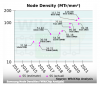
Discussion Leading Edge Foundry Node advances (TSMC, Samsung Foundry, Intel) - [2020 - 2025]

Page 193 - Seeking answers? Join the AnandTech community: where nearly half-a-million members share solutions and discuss the latest tech.

DisEnchantment

Golden Member
Mar 3, 2017
1,779
6,798
136
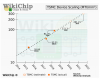
TSMC's N7 EUV is now in its second year of production and N5 is contributing to revenue for TSMC this quarter. N3 is scheduled for 2022 and I believe they have a good chance to reach that target.
1587737990547.png
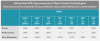
N7 performance is more or less understood.
1587739093721.png

This year and next year TSMC is mainly increasing capacity to meet demands.

For Samsung the nodes are basically the same from 7LPP to 4 LPE, they just add incremental scaling boosters while the bulk of the tech is the same.

Samsung is already shipping 7LPP and will ship 6LPP in H2. Hopefully they fix any issues if at all.
They have two more intermediate nodes in between before going to 3GAE, most likely 5LPE will ship next year but for 4LPE it will probably be back to back with 3GAA since 3GAA is a parallel development with 7LPP enhancements.


1587739615344.png

Samsung's 3GAA will go for HVM in 2022 most likely, similar timeframe to TSMC's N3.
There are major differences in how the transistor will be fabricated due to the GAA but density for sure Samsung will be behind N3.
But there might be advantages for Samsung with regards to power and performance, so it may be better suited for some applications.
But for now we don't know how much of this is true and we can only rely on the marketing material.

This year there should be a lot more available wafers due to lack of demand from Smartphone vendors and increased capacity from TSMC and Samsung.
Lots of SoCs which dont need to be top end will be fabbed with N7 or 7LPP/6LPP instead of N5, so there will be lots of wafers around.

Most of the current 7nm designs are far from the advertized density from TSMC and Samsung. There is still potential for density increase compared to currently shipping products.
N5 is going to be the leading foundry node for the next couple of years.

For a lot of fabless companies out there, the processes and capacity available are quite good.

---------------------------------------------------------------------------------------------------------------------------------------------------


FEEL FREE TO CREATE A NEW THREAD FOR 2025+ OUTLOOK, I WILL LINK IT HERE
 
Last edited:

Io Magnesso

Senior member
Jun 12, 2025
578
165
71
And you misunderstand Moore's law
It's not something that can be said in a single event like that.
 
Last edited:

Io Magnesso

Senior member
Jun 12, 2025
578
165
71
And you misunderstand Moore's law
It has nothing to do with x86 or ARM there.
It has nothing to do with saying things like monopoly of improvement, convergence, or integration.
Even TSMC, which is considered to be safe, doesn't know what will happen
That's the semiconductor industry
It's too naive to think that it will be managed somehow if it is integrated into TSMC
 

Io Magnesso

Senior member
Jun 12, 2025
578
165
71
Intel may have funded it, but their steadfast refusal to use it on their 10nm node was a choice. EUV in-and-of-itself probably didn't factor too heavily in all the delays associated with their first node to actually use it (Intel 4) except for the fact that they simply didn't order many EUV machines upfront while TSMC did.

edit: The main drivers of 10nm's delays were (apparently) quad-patterning and the extensive use of cobalt metal layers. Using EUV would only have alleviated the need for quad-patterning, and waiting for EUV equipment to be available might have made things worse (or just as bad).
Of course, Intel has been researching EUV since then.
The cause of the Intel 10nm delay is not in the EUV
 

johnsonwax

Senior member
Jun 27, 2024
469
674
96
ARM is not an open architecture
ARM is also proprietary,
ARM is just doing IP business
Don't misunderstand
ARM can be licensed. What's an x86 license?

That's my point. If anyone wants to build ARM, they can. If anyone wants to build x86, they can't. There's a reason why ARM has won out.
 
  • Haha
Reactions: Io Magnesso

Io Magnesso

Senior member
Jun 12, 2025
578
165
71
ARM can be licensed. What's an x86 license?

That's my point. If anyone wants to build ARM, they can. If anyone wants to build x86, they can't. There's a reason why ARM has won out.
Well, X86 feels like AMD has been licensed as an exception at the moment.
I think it's possible to give IP business or license to other companies even with X86.
Although it was not actually adopted, when the next Japanese supercomputer project started around 2013, it was possible that Intel would be able to add its own x86 expansion order for hiring. Considering the system of Intel at that time, it is quite surprising.

Well, I know that in the first place

ARM is licensed and IP is granted, so if you w ant to use it, you can use it to make it.
There are only a few places that have an ARM ISA license.
If you buy the rights, you can use ARM as you like.(You can't buy an ARM ISA license even if you want to As long as there is nothing too much)
I wanted to say that it's never OPEN.
ARM is Proprietary like x86 Just a different business model
ARM sells IP, x86 is Intel and AMD (and Chinese X86 licensed companies) grants the rights to both sides and can use what is developed by each other(Even AVX is originally invented by Intel.)
Being a Proprietary doesn't change anything

And I never said it was an x86 license until I said this statement.
Where did the word come from?
 
  • Like
Reactions: Tlh97 and poke01

oak8292

Senior member
Sep 14, 2016
201
215
116
It's not that simple, though, is it? When you're first on the node there isn't the promise of infinite capacity. Surely there is an equipment bottleneck you have to clear first. Of course TSMC will build as much capacity as customers pay for but they can't build more capacity than they can build. There are real world constraints on labor, equipment, and so on that TSMC is not immune to.
TSMC is constrained, absolutely. Apple and every other customer is as also constrained by reality. Planning is what makes bottlenecks disappear.

Huawei got capacity on N5, the first EUV process which was probably constrained by EUV equipment availability. Did they take EUV from N6 production that Huawei was using, who knows?

Apple is buying consistently from TSMC and they have capacity for 5 years out of each of the last three fabs, assuming that iPhones are defining their dominant demand. They used 20/16 fab for three years on new iPhones with two trailing years. They used the 10/7 fab in the same way. They also used the 5 nm node in a similar way but there was a split on the last year with some phones staying an extra year on the older node. My guess is that will happen again with N2 as the ramp probably won’t be fast enough and the costs are increasing. They aren’t blocking anybody out, they have a planned capacity. Anybody else can do that.

Is there opportunity for others to get capacity? Yes.
 

oak8292

Senior member
Sep 14, 2016
201
215
116
Well, X86 feels like AMD has been licensed as an exception at the moment.
I think it's possible to give IP business or license to other companies even with X86.
Although it was not actually adopted, when the next Japanese supercomputer project started around 2013, it was possible that Intel would be able to add its own x86 expansion order for hiring. Considering the system of Intel at that time, it is quite surprising.

Well, I know that in the first place

ARM is licensed and IP is granted, so if you w ant to use it, you can use it to make it.
There are only a few places that have an ARM ISA license.
If you buy the rights, you can use ARM as you like.(You can't buy an ARM ISA license even if you want to As long as there is nothing too much)
I wanted to say that it's never OPEN.
ARM is Proprietary like x86 Just a different business model
ARM sells IP, x86 is Intel and AMD (and Chinese X86 licensed companies) grants the rights to both sides and can use what is developed by each other(Even AVX is originally invented by Intel.)
Being a Proprietary doesn't change anything

And I never said it was an x86 license until I said this statement.
Where did the word come from?
ARM is a cheaper license at volume. The POP IP means even fairly small companies can design economic SOC.

1. ARM has ISA license, needs the highest volume because you spend a lot of engineering resource.
2. The they logical cores than can be laid out on any process technology, cheapest from ARM but requires layout on something like SMIC 7 nm.
3. Finally there is physical core layout on something like TSMC N5 and that IP is probably the most commonly used. This is block layout and you bring your own blocks like Mediateks radios.

ARM is cheap and took at the expansion path for the increasing volume needed for ‘Moore’s Law’.

RISC-V could be even cheaper but it needs to build up adequate volume and software to cover NRE costs. If RISC-V is too fragmented the software base won’t develop to generate volume. A company like Apple, Google or Intel could generate the volume to develop a pseudo standard that everybody follows.

Edit for more clarity, no excuse for my inability to use my own language.
 
Last edited:
  • Haha
Reactions: Io Magnesso

Io Magnesso

Senior member
Jun 12, 2025
578
165
71
ARM is a cheaper license at volume. The POP IP means even fairly small companies can design economic SOC.

1. ARM has ISA license, needs the highest volume because you spend a lot of engineering resource.
2. The they logical cores than can be laid out on any process technology, cheapest from ARM but requires layout on something like SMIC 7 nm.
3. Finally there is physical core layout on something like TSMC N5 and that IP is probably the most commonly used. This is block layout and you bring your own blocks like Mediateks radios.

ARM is cheap and took at the expansion path for the increasing volume needed for ‘Moore’s Law’.

RISC-V could be even cheaper but it needs to build up adequate volume and software to cover NRE costs. If RISC-V is too fragmented the software base won’t develop to generate volume. A company like Apple, Google or Intel could generate the volume to develop a pseudo standard that everybody follows.

Edit for more clarity, no excuse for my inability to use my own language.
I'm not talking about Moore's law right now.
Your speech is only one of the interpretations of Moore's Law
I don't even know if it's right or wrong

increasing volume needed for ‘Moore’s Law’?
I don't understand
Are you talking about the Moore's Second Law?
This is just the manufacturing side.

The original Moore's law is also more of a manufacturing technology than the design technology.

It's the first time I've seen a claim about Moore's law like you

Well, it's common to say "more than moore" or something like postmoore.
It's interesting


And I just wanted to point out that ARM is not open, but proprietary. I wanted to point it out
 

Io Magnesso

Senior member
Jun 12, 2025
578
165
71
Also, when it comes to the fragmentation of RISC-V, you're not in a position to put yourself on the shelf and complain…

And don't make a mistake, Google and Intel are participating in RISC-V International.

In fact, Intel and Google personnel are participating as RISC-V International Governance and technical members.

Although it is not perfect, the operation and specifications of the RISC-V are decent.
 

johnsonwax

Senior member
Jun 27, 2024
469
674
96
Well, X86 feels like AMD has been licensed as an exception at the moment.
I think it's possible to give IP business or license to other companies even with X86.
Although it was not actually adopted, when the next Japanese supercomputer project started around 2013, it was possible that Intel would be able to add its own x86 expansion order for hiring. Considering the system of Intel at that time, it is quite surprising.

Well, I know that in the first place

ARM is licensed and IP is granted, so if you w ant to use it, you can use it to make it.
There are only a few places that have an ARM ISA license.
If you buy the rights, you can use ARM as you like.(You can't buy an ARM ISA license even if you want to As long as there is nothing too much)
I wanted to say that it's never OPEN.
ARM is Proprietary like x86 Just a different business model
ARM sells IP, x86 is Intel and AMD (and Chinese X86 licensed companies) grants the rights to both sides and can use what is developed by each other(Even AVX is originally invented by Intel.)
Being a Proprietary doesn't change anything

And I never said it was an x86 license until I said this statement.
Where did the word come from?
My point was that ARM is more available, I'd say sufficiently available to address the scale needed to enable Moores law as a cohort. x86 is not because it's constrained to a handful of companies - Intel, AMD, and VIA. If they can cross foundries and chase the leading nodes, they don't fall behind, but in the timeframe of where I was expressing that - Intel wasn't doing that. They can't stay close to Moores law both with a proprietary design and keeping fab in-house because the volume just isn't there. ARM allows Apple or literally anyone else to not buy from Intel. TSMC allows ARM or literally any other architecture to fab on the best node.

Moores law isn't saying x86 will double transistors, or TSMC will double transistors, it says the industry will, and it will because the engineers will solve the problem and there will be enough volume by virtue of all of these companies having access to architecture they can design around (which x86 doesn't contribute to) creating demand that they can then take to some foundry (which Intel wasn't available for) in sufficient volume to pay for the upfront costs to realize Moores law. Moores law is a product of the economics coming together and look at where that volume is coming from. x86 is a relatively small player. The volume is a lot of ARM, a bit of x86, a bunch of GPU/AI (and growing fast).

So one question is can you create the necessary economic demand behind architectures controlled by a handful of companies, or through fabs that are coupled to those architectures? I don't think it's a coincidence that around the time that Intel, as the driver of that earlier economic demand started to have problems that you get these other players around a more accessible architecture, coming from a lot of different directions, quickly close and overtake that process gap from foundries that are open to all comers. Apple would not be where they are if not for that. Nor would Qualcomm, nor partially would Samsung. Were x86 architecture licenses available to these companies at reasonable price so they could create that mobile market, or were AMD and Intel going to try and keep this large market to themselves to the degree possible? Normally they only license in order to reach markets they aren't directly trying to reach - but they were directly trying to reach that market. I don't think that license was realistically available. But ARM license to basically anyone that law allows, including Intel.

So even when Intel does stumble at 10nm, Moores law plows on because all of these companies can get an ARM license (sub in RISC V or anything else that is appropriate and licensable) and all of these companies can freely choose between Samsung and TSMC. That allows the economic problem to be solved. That allows TSMC to push those nodes as hard as they do because they have the revenue to build what the engineers designed. Without the economics, Moores law potentially stalls out. Intel should have recognized a lot earlier on they couldn't do that because it requires they maintain a majority of the economic equation, which they realistically weren't going to do. Everyone could see that.
 

johnsonwax

Senior member
Jun 27, 2024
469
674
96
Also, when it comes to the fragmentation of RISC-V, you're not in a position to put yourself on the shelf and complain…

And don't make a mistake, Google and Intel are participating in RISC-V International.

In fact, Intel and Google personnel are participating as RISC-V International Governance and technical members.

Although it is not perfect, the operation and specifications of the RISC-V are decent.
I think the concern around fragmentation is what Apple has done with ARM. Even though Apple has regularly incorporated proprietary elements to Apple Silicon, and in very high unit volume, it didn't fragment the ARM software space because that space had been so solidly established ahead of time. If Apple were to do that with RISC-V soon out of the gate, it's not clear the software space wouldn't fragment and undermine the potential of the architecture. That potential issue seems very obvious to me.
 

Io Magnesso

Senior member
Jun 12, 2025
578
165
71
My point was that ARM is more available, I'd say sufficiently available to address the scale needed to enable Moores law as a cohort. x86 is not because it's constrained to a handful of companies - Intel, AMD, and VIA. If they can cross foundries and chase the leading nodes, they don't fall behind, but in the timeframe of where I was expressing that - Intel wasn't doing that. They can't stay close to Moores law both with a proprietary design and keeping fab in-house because the volume just isn't there. ARM allows Apple or literally anyone else to not buy from Intel. TSMC allows ARM or literally any other architecture to fab on the best node.

Moores law isn't saying x86 will double transistors, or TSMC will double transistors, it says the industry will, and it will because the engineers will solve the problem and there will be enough volume by virtue of all of these companies having access to architecture they can design around (which x86 doesn't contribute to) creating demand that they can then take to some foundry (which Intel wasn't available for) in sufficient volume to pay for the upfront costs to realize Moores law. Moores law is a product of the economics coming together and look at where that volume is coming from. x86 is a relatively small player. The volume is a lot of ARM, a bit of x86, a bunch of GPU/AI (and growing fast).

So one question is can you create the necessary economic demand behind architectures controlled by a handful of companies, or through fabs that are coupled to those architectures? I don't think it's a coincidence that around the time that Intel, as the driver of that earlier economic demand started to have problems that you get these other players around a more accessible architecture, coming from a lot of different directions, quickly close and overtake that process gap from foundries that are open to all comers. Apple would not be where they are if not for that. Nor would Qualcomm, nor partially would Samsung. Were x86 architecture licenses available to these companies at reasonable price so they could create that mobile market, or were AMD and Intel going to try and keep this large market to themselves to the degree possible? Normally they only license in order to reach markets they aren't directly trying to reach - but they were directly trying to reach that market. I don't think that license was realistically available. But ARM license to basically anyone that law allows, including Intel.

So even when Intel does stumble at 10nm, Moores law plows on because all of these companies can get an ARM license (sub in RISC V or anything else that is appropriate and licensable) and all of these companies can freely choose between Samsung and TSMC. That allows the economic problem to be solved. That allows TSMC to push those nodes as hard as they do because they have the revenue to build what the engineers designed. Without the economics, Moores law potentially stalls out. Intel should have recognized a lot earlier on they couldn't do that because it requires they maintain a majority of the economic equation, which they realistically weren't going to do. Everyone could see that.

Is that so, I'm already tired

The claims of your Moore's Law and ARM's Correlations I've seen for the first time in the Moore's Law assertion I've seen so far.
 

Io Magnesso

Senior member
Jun 12, 2025
578
165
71
I think the concern around fragmentation is what Apple has done with ARM. Even though Apple has regularly incorporated proprietary elements to Apple Silicon, and in very high unit volume, it didn't fragment the ARM software space because that space had been so solidly established ahead of time. If Apple were to do that with RISC-V soon out of the gate, it's not clear the software space wouldn't fragment and undermine the potential of the architecture. That potential issue seems very obvious to me.

Established ARM Software Space? Where on earth?
You can't talk about people when Qualcomm and Apple refuse to implement SVE2 at the moment.

There is a RISC-V committee to address concerns about its fragmentation.

No matter how many Even if this is open source ISA can be expanded, there are rules and technical reasons are not accepted unless the technical reasons are supported.
There is a mechanism to prevent arbitrary expansions.
Also, you can restrain yourself from people like Apple who act on their own. 

I can't believe in a company that has done negative campaigns or silly against open source (RISC-V) in the past
 
Last edited:

johnsonwax

Senior member
Jun 27, 2024
469
674
96
increasing volume needed for ‘Moore’s Law’?
I don't understand
What Moores law leaves unstated is that someone has to pay for the implementation. God doesn't apparate silicon. The assumption before the law is that:
1) The engineers can always solve the design problem - this is an article of faith, it is not necessarily true at all times, and absolutely not true for any given company, so it's increasingly true provided there are a diversity of engineers working on the problem - you need a market on process
2) There will always be enough interest in the additional compute provided it's available in the necessary form - this is an expression that the market needs to be sufficiently open for that form to meet the market's needs - you need a market on architecture
3) The economics will dominated by up-front costs at a rate proportionate to the increase in density and marginal costs will be negligible - this is intuitive to Moore because Intel was the first to recognize this relationship with ICs and shaped the entire market around that observation.

1) and 2) inform as to how to shape the market to ensure the engineering problem is solved and the interest for the compute can be converted to demand. 3) informs that the density increase will require an increase in dollars poured in to build the fab. You can solve that by increasing price, but you shouldn't need to because of 2) you should be able to just increase scale, because that marginal cost is negligible. Someone will find a use for the increased compute, a market will allow an architecture to exist to match that found use, the increased demand will generate increased dollars, and the increase can be realized, Moores law rings the success bell, and the cycle continue.

My argument is that if you choke off 1) through restricted fabs or you choke off 2) through restricted architectures, you won't be able to afford 3) and you'll fall behind the law. If you don't solve the economic problem, the law fails.

There's a contradiction here though because 3) is not equally distributed. If TSMC keep winning and they put Intel/Samsung/SMIC out of business because 3) keeps accumulating to them, the market in 1) disappears and you should expect the engineers to not so reliably solve the design problem. Similarly we're pretty reliant right now on ASML and other key players in the supply chain not losing the plot because I'm not sure there's a competitor that's in a position to step in if they stumble. It doesn't create a contradiction in 2) provided there's enough diversity across the market to keep new forms arriving - desktop gives way to mobile gives way to AI, etc. It doesn't inherently collapse the market.
 

Io Magnesso

Senior member
Jun 12, 2025
578
165
71
Domain-specific architecture… Custom architecture…
All you have to do is create chips freely, architecture has nothing to do with it.
There's just a Fab that manufactures that chip or processor.
 

poke01

Diamond Member
Mar 8, 2022
4,802
6,128
106
You can't be open source and all goody there and restrict AMD in OEM space and make backhand deals.
 

Io Magnesso

Senior member
Jun 12, 2025
578
165
71
What Moores law leaves unstated is that someone has to pay for the implementation. God doesn't apparate silicon. The assumption before the law is that:
1) The engineers can always solve the design problem - this is an article of faith, it is not necessarily true at all times, and absolutely not true for any given company, so it's increasingly true provided there are a diversity of engineers working on the problem - you need a market on process
2) There will always be enough interest in the additional compute provided it's available in the necessary form - this is an expression that the market needs to be sufficiently open for that form to meet the market's needs - you need a market on architecture
3) The economics will dominated by up-front costs at a rate proportionate to the increase in density and marginal costs will be negligible - this is intuitive to Moore because Intel was the first to recognize this relationship with ICs and shaped the entire market around that observation.

1) and 2) inform as to how to shape the market to ensure the engineering problem is solved and the interest for the compute can be converted to demand. 3) informs that the density increase will require an increase in dollars poured in to build the fab. You can solve that by increasing price, but you shouldn't need to because of 2) you should be able to just increase scale, because that marginal cost is negligible. Someone will find a use for the increased compute, a market will allow an architecture to exist to match that found use, the increased demand will generate increased dollars, and the increase can be realized, Moores law rings the success bell, and the cycle continue.

My argument is that if you choke off 1) through restricted fabs or you choke off 2) through restricted architectures, you won't be able to afford 3) and you'll fall behind the law. If you don't solve the economic problem, the law fails.

There's a contradiction here though because 3) is not equally distributed. If TSMC keep winning and they put Intel/Samsung/SMIC out of business because 3) keeps accumulating to them, the market in 1) disappears and you should expect the engineers to not so reliably solve the design problem. Similarly we're pretty reliant right now on ASML and other key players in the supply chain not losing the plot because I'm not sure there's a competitor that's in a position to step in if they stumble. It doesn't create a contradiction in 2) provided there's enough diversity across the market to keep new forms arriving - desktop gives way to mobile gives way to AI, etc. It doesn't inherently collapse the market.

That's why you're saying that the architecture isn't tied together,
ARM alone didn't move Moore's law forward.
There are multiple factors, Moore's law has moved forward.
Moore's Law never moved forward by one factor
We've made progress by a wide variety of causal relationships You said earlier that you said that the GPU is not a big number, but the GPU is a fine contributor, regardless of the manufacturer's GPU. It's even in the SOC

It's not that I moved alone, the industry itself is moving.

What do you want to make? It's not a matter of what you make
it's good to have a chip to make there
 

Io Magnesso

Senior member
Jun 12, 2025
578
165
71
Intel has its own fair share of negative campains as well. A lot worse than ARM making a website on why ARM is better than RISC-V.
Yes, that's right I'm not denying that
In front of me, all companies are treated as garbage-like companies.
I haven't made any statements that affirm Intel
 
  • Like
Reactions: poke01

poke01

Diamond Member
Mar 8, 2022
4,802
6,128
106
Q. What is the expected revenue contribution of N2 ramp-up in 2026? Will it be similar to N3's 10-11% (based on the second year)?

- New nodes have historically ramped up through smartphones, but now HPC products are also participating in the ramp-up.

source: TSMC and Jukan
 

Io Magnesso

Senior member
Jun 12, 2025
578
165
71
But open source is good
Let's put aside the disputes between companies for the time being...
Please don't get angry, okay?
Isn't it embarrassing to do something terrible to open source…

You can't be open source and all goody there and restrict AMD in OEM space and make backhand deals.

Also, what do you mean you did something sloppy with open source?
 

Io Magnesso

Senior member
Jun 12, 2025
578
165
71
Q. What is the expected revenue contribution of N2 ramp-up in 2026? Will it be similar to N3's 10-11% (based on the second year)?

- New nodes have historically ramped up through smartphones, but now HPC products are also participating in the ramp-up.

source: TSMC and Jukan

Well, the percentage is probably small, but I guess it refers to Zen6 Venice.
 

poke01

Diamond Member
Mar 8, 2022
4,802
6,128
106
Also, what do you mean you did something sloppy with open source?
Intel supports open source but the same time it also did dirty with AMD back in day for its own financial gain. sorry if I wasn't clear. Open source for massive corps is a way to gain good will thats it and a way to expand their busniess.
 

Io Magnesso

Senior member
Jun 12, 2025
578
165
71
Intel supports open source but the same time it also did dirty with AMD back in day for its own financial gain. sorry if I wasn't clear. Open source for massive corps is a way to gain good will thats it and a way to expand their busniess.

It's not just a dialect to get goodwill
In fact, for example, open source systems are often used in the server and embedded markets.
In order to have the users choose their own products, we make them compatible with our own products. We can also contribute to the project itself beyond the framework of our own products.
As long as you are doing business with open source, you are obliged to contribute to open source.
However, in fact, thanks to the large-scale strength of the company, the developers are saved, and the developers can get around where they can't handle it.
The developer's environment is also better, so it's hard to say that it's bad.
Contribution to open source by corporate forces

It's the same everywhere regardless of Intel or AMD

Since 2010, Microsoft, which has been conspicuously hostile to open source in the past, has contributed again since 2010.
The developer's attitude has softened to some extent.