Discussion Intel Meteor, Arrow, Lunar & Panther Lakes + WCL Discussion Threads

Page 902 - Seeking answers? Join the AnandTech community: where nearly half-a-million members share solutions and discuss the latest tech.

Tigerick

Senior member
Apr 1, 2022
942
857
106
Wildcat Lake (WCL) Specs

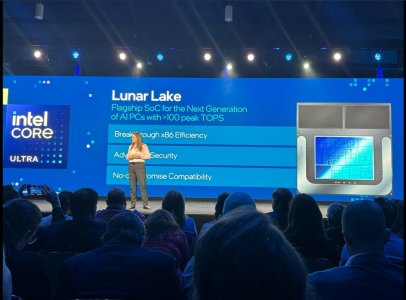
Intel Wildcat Lake (WCL) is upcoming mobile SoC replacing Raptor Lake-U. WCL consists of 2 tiles: compute tile and PCD tile. It is true single die consists of CPU, GPU and NPU that is fabbed by 18-A process. Last time I checked, PCD tile is fabbed by TSMC N6 process. They are connected through UCIe, not D2D; a first from Intel. Expecting launching in Q1 2026.
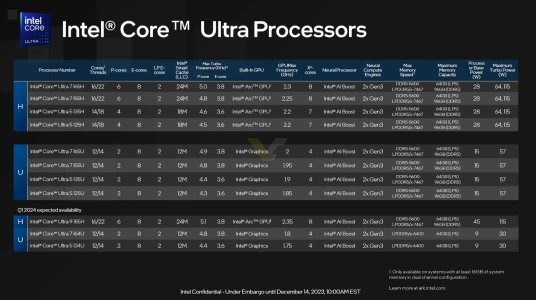
Intel Raptor Lake UIntel Wildcat Lake 15W?Intel Lunar LakeIntel Panther Lake 4+0+4
Launch DateQ1-2024Q2-2026Q3-2024Q1-2026
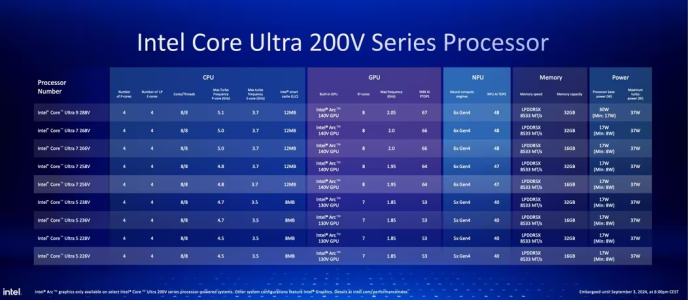
ModelIntel 150UIntel Core 7Core Ultra 7 268VCore Ultra 7 365
Dies2223
NodeIntel 7 + ?Intel 18-A + TSMC N6TSMC N3B + N6Intel 18-A + Intel 3 + TSMC N6
CPU2 P-core + 8 E-cores2 P-core + 4 LP E-cores4 P-core + 4 LP E-cores4 P-core + 4 LP E-cores
Threads12688
Max Clock5.4 GHz?5 GHz4.8 GHz
L3 Cache12 MB12 MB12 MB
TDP15 - 55 W15 W ?17 - 37 W25 - 55 W
Memory128-bit LPDDR5-520064-bit LPDDR5128-bit LPDDR5x-8533128-bit LPDDR5x-7467
Size96 GB32 GB128 GB
Bandwidth136 GB/s
GPUIntel GraphicsIntel GraphicsArc 140VIntel Graphics
RTNoNoYESYES
EU / Xe96 EU2 Xe8 Xe4 Xe
Max Clock1.3 GHz?2 GHz2.5 GHz
NPUGNA 3.018 TOPS48 TOPS49 TOPS


PPT1.jpg
PPT2.jpg
PPT3.jpg


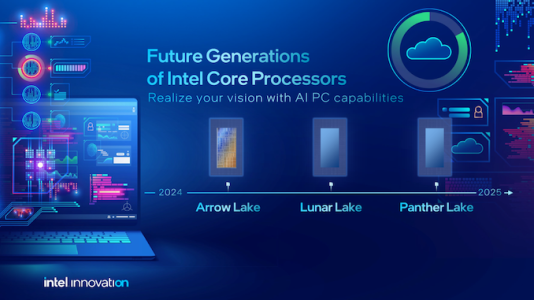
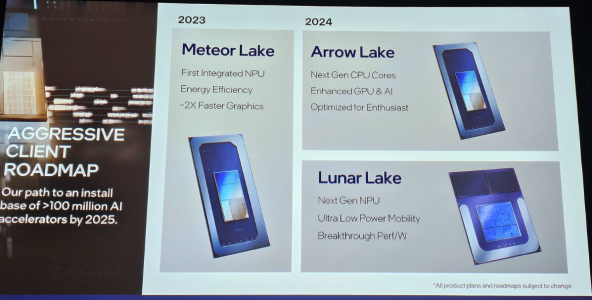
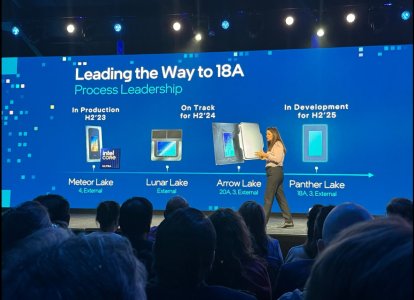
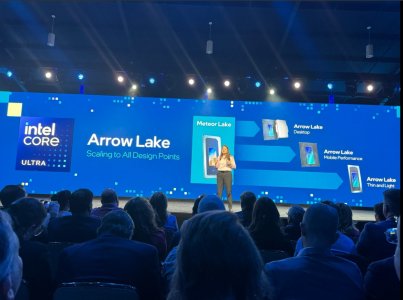
As Hot Chips 34 starting this week, Intel will unveil technical information of upcoming Meteor Lake (MTL) and Arrow Lake (ARL), new generation platform after Raptor Lake. Both MTL and ARL represent new direction which Intel will move to multiple chiplets and combine as one SoC platform.

MTL also represents new compute tile that based on Intel 4 process which is based on EUV lithography, a first from Intel. Intel expects to ship MTL mobile SoC in 2023.

ARL will come after MTL so Intel should be shipping it in 2024, that is what Intel roadmap is telling us. ARL compute tile will be manufactured by Intel 20A process, a first from Intel to use GAA transistors called RibbonFET.


LNL-MX.png
 

Attachments

  • PantherLake.png
    PantherLake.png
    283.5 KB · Views: 24,044
  • LNL.png
    LNL.png
    881.8 KB · Views: 25,531
  • INTEL-CORE-100-ULTRA-METEOR-LAKE-OFFCIAL-SLIDE-2.jpg
    INTEL-CORE-100-ULTRA-METEOR-LAKE-OFFCIAL-SLIDE-2.jpg
    181.4 KB · Views: 72,440
  • Clockspeed.png
    Clockspeed.png
    611.8 KB · Views: 72,327
Last edited:

DavidC1

Platinum Member
Dec 29, 2023
2,187
3,338
106
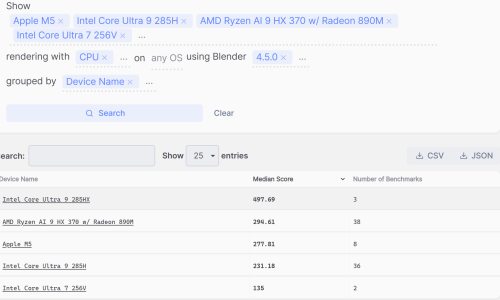
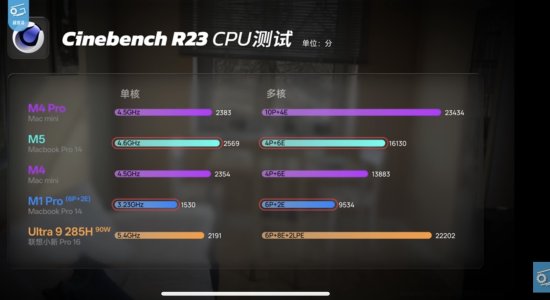
Pantherlake looking like a newborn kitten next to M5.

It's 80% faster per clock than Lion Cove/Zen 5 in Cinebench R24 ST and 50% faster per clock in Spec. These kind of things remind me over and over again how whether AMD or Intel cores are better is made moot when you get yourself out of the Wintel RDF bubble. Both can do MUCH, MUCH better.

GPU looks 20-40% faster than Pantherlake, assuming the presentation slides are correct. Though GPUs are harder to differentiate because they are more at mercy to process.
 

poke01

Diamond Member
Mar 8, 2022
4,873
6,205
106
GPU looks 20-40% faster than Pantherlake, assuming the presentation slides are correct. Though GPUs are harder to differentiate because they are more at mercy to process.
GPU is still better on Panther lake for gaming, although for productivity M5 GPU takes a huge lead
 

Hulk

Diamond Member
Oct 9, 1999
5,403
4,110
136
Pantherlake looking like a newborn kitten next to M5.

It's 80% faster per clock than Lion Cove/Zen 5 in Cinebench R24 ST and 50% faster per clock in Spec. These kind of things remind me over and over again how whether AMD or Intel cores are better is made moot when you get yourself out of the Wintel RDF bubble. Both can do MUCH, MUCH better.

GPU looks 20-40% faster than Pantherlake, assuming the presentation slides are correct. Though GPUs are harder to differentiate because they are more at mercy to process.

The M5 is a wonder. Too bad it can't do the one thing I need it to do. Run Windows.
 

511

Diamond Member
Jul 12, 2024
5,457
4,887
106
Pantherlake looking like a newborn kitten next to M5.

It's 80% faster per clock than Lion Cove/Zen 5 in Cinebench R24 ST and 50% faster per clock in Spec. These kind of things remind me over and over again how whether AMD or Intel cores are better is made moot when you get yourself out of the Wintel RDF bubble. Both can do MUCH, MUCH better.

GPU looks 20-40% faster than Pantherlake, assuming the presentation slides are correct. Though GPUs are harder to differentiate because they are more at mercy to process.
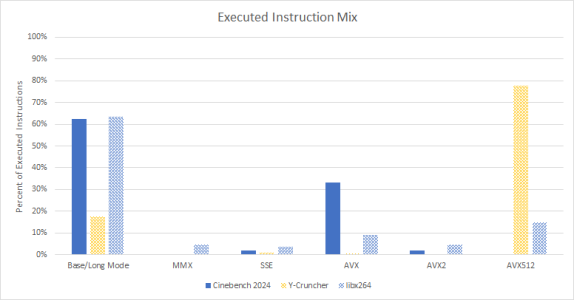
I am more curious about the instructions mix of CBR24 cause Snapdragon X2 is 162 on reference device kind of expected but M4/M5 is league ahead did they do something on it for cinebench?
 

adroc_thurston

Diamond Member
Jul 2, 2023
8,572
11,307
106
I am more curious about the instructions mix of CBR24 cause Snapdragon X2 is 162 on reference device kind of expected but M4/M5 is league ahead did they do something on it for cinebench?
yeah, that thing's off, underperforms heavily on Zen5.
 

poke01

Diamond Member
Mar 8, 2022
4,873
6,205
106
I am more curious about the instructions mix of CBR24 cause Snapdragon X2 is 162 on reference device kind of expected but M4/M5 is league ahead did they do something on it for cinebench?
IMG_2886.png

Here’s your answer
“Cinebench 2024 uses scalar and 128-bit packed floating point operations. Wider vector execution units are not useful. Scalar integer performance plays an important role in keeping the FP execution units fed.”
 

poke01

Diamond Member
Mar 8, 2022
4,873
6,205
106
yeah, that thing's off, underperforms heavily on Zen5.
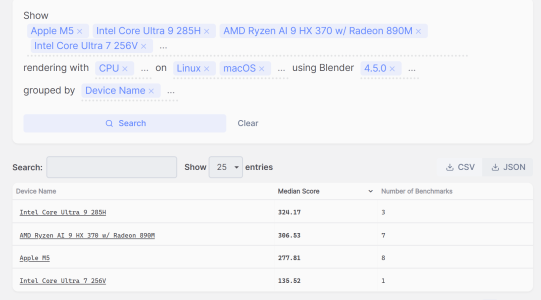
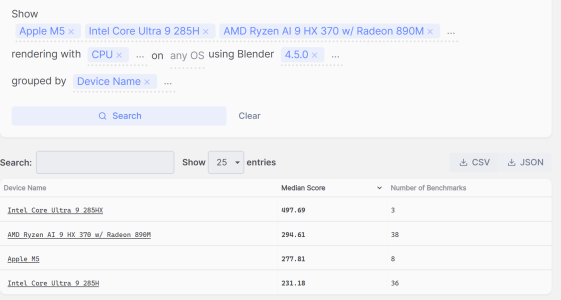
CB2024 is fine, its nT results reflects in Blender too
1761456170323.png

Ever since M4 Apple just went crazy with FP.
 

Attachments

  • 1761455755557.png
    1761455755557.png
    94.7 KB · Views: 15
  • 1761455808946.png
    1761455808946.png
    100.1 KB · Views: 20
Last edited:

511

Diamond Member
Jul 12, 2024
5,457
4,887
106
View attachment 132617

Here’s your answer
“Cinebench 2024 uses scalar and 128-bit packed floating point operations. Wider vector execution units are not useful. Scalar integer performance plays an important role in keeping the FP execution units fed.”
it is for x86 not ARM also Glymer is close to Apple M5 in ST but in Cinebench it's like 20% difference.
 

poke01

Diamond Member
Mar 8, 2022
4,873
6,205
106
it is for x86 not ARM also Glymer is close to Apple M5 in ST but in Cinebench it's like 20% difference.
It’s the same for ARM lol. It’s scalar integer based.

Well like I said before Apples cores are very good at FP, which is what rendering applications like. They are also much wider cores than Qualcomms.


IMG_2888.jpeg

In R23 ST, M5 is 5% faster than the 285K at 5.7GHz with 8400MT/s CUDIMMs where it runs under x86 emulation. Remove the emulation and it’s not suprising to see the M5 doing so well in native apps.
 

511

Diamond Member
Jul 12, 2024
5,457
4,887
106
It’s the same for ARM lol. It’s scalar integer based.
Big doubt especially on windows ARM vs MacOS ARM
Well like I said before Apples cores are very good at FP, which is what rendering applications like. They are also much wider cores than Qualcomms.
Glymer is similar to apple cores in ST but the Cinebench score Delta is way wide
View attachment 132624

In R23 ST, M5 is 5% faster than the 285K at 5.7GHz with 8400MT/s CUDIMMs where it runs under x86 emulation. Remove the emulation and it’s not suprising to see the M5 doing so well in native apps.
Yeah R23 was never optimized for ARM
 

Magio

Senior member
May 13, 2024
207
246
76
In R23 ST, M5 is 5% faster than the 285K at 5.7GHz with 8400MT/s CUDIMMs where it runs under x86 emulation. Remove the emulation and it’s not suprising to see the M5 doing so well in native apps.
Yeah R23 was never optimized for ARM

We can discuss whether it was fully optimized (which is really why crossplatform benchmarking never makes sense), but R23 has had a native ARM/Apple Silicon build since the M1 days, it's not running in "emulation" or through Rosetta so the original claim is bogus.
 
  • Like
Reactions: Tlh97 and 511

poke01

Diamond Member
Mar 8, 2022
4,873
6,205
106
We can discuss whether it was fully optimized (which is really why crossplatform benchmarking never makes sense), but R23 has had a native ARM/Apple Silicon build since the M1 days, it's not running in "emulation" or through Rosetta so the original claim is bogus.
R23 is based on v3.11 Intel embree which Maxon just ported over to ARM with no optimisation. Support for Apple cpus wasn't even added till v3.13 and then v3.13.4 added more support. R23 is "native" but the backend is still very much x86 based.


This is why you see a much bigger uplift with CB2024 which uses a newer version of Intel Embree.
 

Nothingness

Diamond Member
Jul 3, 2013
3,374
2,473
136
R23 is based on v3.11 Intel embree which Maxon just ported over to ARM with no optimisation. Support for Apple cpus wasn't even added till v3.13 and then v3.13.4 added more support. R23 is "native" but the backend is still very much x86 based.
That still doesn't prove it was emulated in the Rosetta sense. It perhaps just defaulted to using no vector instruction at all due to poor compilation flags (and/or lack of ISPC ARM as hinted in v3.13.1 release). If I wasn't lazy, I'd look into it, but I am. Anyway we all agree that CB23 is a poor choice to make x86 vs Arm comparisons, don't we? :)

Note that Embree seems to still use some intrinsics translation layer: https://github.com/RenderKit/embree/releases/tag/v4.3.1
Known issue: Embree build using Apple Clang 15 and ARM support (via the SEE2NEON library) may cause "EXEC_BAD_INSTRUCTION" runtime exceptions. Please use Apple Clang <= 14 on macOS.
Given last Intel announcements about open source and not giving an edge to competition, I don't expect this to improve.
 
  • Like
Reactions: poke01

511

Diamond Member
Jul 12, 2024
5,457
4,887
106
Apple is a Trillion$ Company sure they could afford few big fixes in EMBREE also EMBREE has Better kernels for AVX2/AVX-512 the biggest it's complied using ISPC.
 
Last edited:

Hulk

Diamond Member
Oct 9, 1999
5,403
4,110
136
Apple is a Trillion$ Company sure they could afford few big fixes in EMBREE also EMBREE has Better kernels for AVX2/AVX-512 the biggest it's complied using ISPC.
Why would Apple invest 10 cents to support Windows?

Everything about the Apple eco-system is closed. They have complete control and no competition. They can charge just about whatever they want for hardware and software. No modifications are allowed. There is no DIY market. The software is also tightly controlled, which allows for software and hardware to be optimized more easily since there are no arguments among CPU developers or software developers as to how things should be. This is how Apple has been able to do the impossible many times over the past 50 years. By that I mean moving from Motorola to PowerPC to x86 to M Series CPU's. They have switched the entire code bas 3 times!

Everything that is great about x86 and Windows, namely the huge open "source" market for millions of applications going back 50+ years and the ability to custom configure and build/upgrade your own system at great prices, have a downside in that there are compatibility and optimization issues on a far larger scale than an "East Berlin's" Apple culture.

Now having lived through building computers from the 80's to date, I can tell you that Windows 11, as much as it is maligned is a wonder compared to Window 1, 2, or even the groundbreaking 3.0. Not to mention DOS, which I used at my first engineering job in the late '80's.

While it is natural to compare Apple CPU's to x86, it's kind of silly. It's like comparing an F1 car to one that is legal to be driven daily. One is purpose built to run in a tiny loop on perfect pavement, the other goes slower, but basically anywhere.

I NEED to build the PC to my exact specifications. What I need exactly isn't manufactured. I need it to fit under my desk, I need a certain form factor, I need it to be quiet, and need custom fan profiles, I need specific SSD and memory configurations, etc... I guess you could say "desire" instead of need but you get the point.

If the performance gap between Apple and x86 was so great that I simply couldn't work then I'd switch. But in reality, while we are always looking for more compute, my 9950X handles everything I throw at it with aplomb. 50 plugins on an audio mix I'm working on? No problem. But as I mentioned in an earlier post, it's all a nonstarter as I need Windows. I think in directories and roots, not folders and desktops.

Finally, honestly I wonder without the iPod and iPhone if we'd even be talking about Apple today? My kids laugh at my Pixel 7, which cost 1/3 of their iPhones. I ask them what my Pixel can't do they their phones can. They can't tell me anything that has value other than "easier to use facetime" or some other nonsense.

Apple is great, "from a certain point of view" as a wise man once said.

Different stroke for different folks.
 
Last edited:

Nothingness

Diamond Member
Jul 3, 2013
3,374
2,473
136
Everything about the Apple eco-system is closed. They have complete control and no competition. They can charge just about whatever they want for hardware and software.
I agree HW is closed and prices are outrageous, but on the SW front I disagree. I happily run thousands of apps on macOS over which Apple has no control. Basically the same that Linux can run. Something I never was able to achieve with Windows (which I stopped using before WSL was introduced).

Everything that is great about x86 and Windows, namely the huge open "source" market for millions of applications going back 50+ years and the ability to custom configure and build/upgrade your own system at great prices, have a downside in that there are compatibility and optimization issues on a far larger scale than an "East Berlin's" Apple culture.
Many old applications don't run anymore on modern Windows. I had to use full machine emulation in some circumstances to get old games to run. And that also means that for these apps I could run them on an Apple or a Linux machine if I had to.

Your experience is so far from mine. I never could switch from UNIX/Linux to Windows, despite trying several times over the last 30 years. But I easily switched from Linux to macOS. As you wrote, different stroke for different people, but some of your claims are just plain wrong.
 
  • Like
Reactions: perry mason

Magio

Senior member
May 13, 2024
207
246
76
R23 is based on v3.11 Intel embree which Maxon just ported over to ARM with no optimisation. Support for Apple cpus wasn't even added till v3.13 and then v3.13.4 added more support. R23 is "native" but the backend is still very much x86 based.
That's still not what emulation is. As I said we can discuss optimization but it was still native code.

And it's such a crapshoot to estimate which OS/ISA a benchmark is most optimized and how much of that is representative of library optimization in real world use and which is just the benchmark's own failings. Just need to look at Linux consistently outperforming Windows (pretty sure it also beat macOS when they were still on Intel) on the same hardware in Geekbench and as big a Linux fan as I am there's no evidence it translates 1-to-1 to real world use.

The only conclusion from a debate around a benchmark's cross platform optimization should be that cross platform benchmarks are just never really reliable.
 

Doug S

Diamond Member
Feb 8, 2020
3,837
6,788
136
Finally, honestly I wonder without the iPod and iPhone if we'd even be talking about Apple today?

Without the iPod to generate cash flow Apple never could have made the investments required to develop the iPhone. Without the iPhone driving massive economies of scale for developing their own silicon, ARM Macs wouldn't exist so yes we wouldn't be discussing those.

Without IBM making their ill-fated deal with Bill Gates you wouldn't be talking about Windows because Microsoft would be a footnote in computing history like Broderbund. You can play the "what if" game any number of ways. In one maybe Acorn ends up as the dominant PC and Intel dropped out of CPU manufacturing to focus exclusively on DRAM.