What was your last home project and what is your next home project?

Page 7 - Seeking answers? Join the AnandTech community: where nearly half-a-million members share solutions and discuss the latest tech.

Red Squirrel

No Lifer
May 24, 2003
70,891
13,918
126
www.anyf.ca
I can't see how it would be any different than wiring inside walls. As long as there's no hidden junction boxes which there won't be. Going to use conduit for the cat6 too in case I ever need to run more wire later on.

 

Paperdoc

Platinum Member
Aug 17, 2006
2,510
380
126
You're probably right. So you, too, are running Cat6 for a home network into the garage.We did our garage in 2022, but it's on its own concrete pad nearly 100 ft from the back of the house. So cables to it are buried. My son bought a reel of high-quality direct burial Cat6 (500 ft), and we had no job other than the run to the garage. So (in the same trench as the electrical cable, but slightly shallower) we buried TWO runs of that Cat6 for redundancy in case of future malfunction. Then there's a small switch designed for sheltered but low-temperature use in a cabinet inside the garage to handle 2 cables incoming from the house plus the cable to the WiFi Point of Access transceiver (also for low temps and mounted inside) and one spare port. In your case with a shorter run via conduit, merely adding a spare pull wire in the conduit for possible future feeding of more Cat6 will do the job nicely.

In the garage we have two smart switches for exterior lights plus the garage door opener with WiFi connectivity, all controllable by apps on my phone. In addition I use another app in conjunction with a small device that plugs into any car OBDII port to access the car's diagnostic info and decode all that with the app's access by WiFi to an internet database.

I planned for an EV charger system but did not install one - no EV now in our family. But the supply cable to the garage and the panel I installed are 120 / 240 VAC 100 A capacity, quite enough for one or two chargers when needed. A hint I got from the electrical inspectors: the heavy cable (in my case, TECK style for direct burial) is MUCH cheaper in Aluminum than in Copper. So ours is 000 gauge Aluminum, ampacity 115 A but if we de-rate for its 135 foot length from the house 200 A panel (upgraded to that the same summer for this reason plus adding central air in a new furnace), it still can handle just over 100 A. So that's the panel capacity I installed.
 

deadlyapp

Diamond Member
Apr 25, 2004
6,672
744
126
Lots of work, and I can hear the pride. A note of caution for you to check on. You plan to leave a gap between insulation / vapour barrier and the sheetrock ceiling to run wiring through. That may not be allowed. A basic principle for wiring is that it must be accessible for inspection and repairs. What you plan would hide it completely in that gap. The common plan, of course, is that the wiring is done from above after the insulation / vapour barrier is installed, with an access hatch into the "attic". Wires and all junction boxes are attached to beams as you pull the insulation aside temporarily. If the only items to be connected are your T8 fixtures connected by screws through the sheetrock into beams, you MAY be able to just run supply cables just though holes through the sheetrock directly into each fixture. BUT you may actually need to use octagon boxes attached to beams and poking though the sheetrock against the back (top) of each fixture. Then you'd need a hole cut out of the top of each fixture to match the octagon box so you can access that box's wires from inside the fixture. I recommend you consult your local electrical inspection agency and be sure you do it the way they WILL approve.
I just don't see the point of creating a gap to run the wires between the barrier and the drywall. If you ever needed to run the wire again, you've got a massive issue of dealing with the vapor barrier. I don't know if you're spray insulating or just blowing it in or putting in batts, but it feels like you'd have a much easier life of just running the electrical over the joists and then dropping wherever you want, sealing at the punctures where you pierce the vapor barrier. Plus way less chance of running a screw through the romex when you attach the drywall to the strapping (that would be my concern from a code related standpoint).
 

Red Squirrel

No Lifer
May 24, 2003
70,891
13,918
126
www.anyf.ca
I just don't see the point of creating a gap to run the wires between the barrier and the drywall. If you ever needed to run the wire again, you've got a massive issue of dealing with the vapor barrier. I don't know if you're spray insulating or just blowing it in or putting in batts, but it feels like you'd have a much easier life of just running the electrical over the joists and then dropping wherever you want, sealing at the punctures where you pierce the vapor barrier. Plus way less chance of running a screw through the romex when you attach the drywall to the strapping (that would be my concern from a code related standpoint).

The joists are not perfectly 16" OC everywhere, so I need to add strapping anyway which will make a gap so that edges of sheets always line up on a stud. The gaps will sorta act like conduits in a way for wiring for lights, AP and possibly other data cabling. Access hatches could also make it easy to run more wires in the future for something else. The attic won't really easily be accessible once this is all done and all the insulation is in, given the roof slope. Going to add an access hatch but won't easily be able to do much in there but maybe look at the roof.

Some of the wiring I'll do in the attic though and just do conduits in case I ever need to pull new wire. For security cameras that's what I'll do since it will be easier to get into the soffit space that way. Ended up getting a nasty cold so that took out a bunch of days that I could have used so have not done anything else yet.
 

deadlyapp

Diamond Member
Apr 25, 2004
6,672
744
126
The joists are not perfectly 16" OC everywhere, so I need to add strapping anyway which will make a gap so that edges of sheets always line up on a stud. The gaps will sorta act like conduits in a way for wiring for lights, AP and possibly other data cabling. Access hatches could also make it easy to run more wires in the future for something else. The attic won't really easily be accessible once this is all done and all the insulation is in, given the roof slope. Going to add an access hatch but won't easily be able to do much in there but maybe look at the roof.

Some of the wiring I'll do in the attic though and just do conduits in case I ever need to pull new wire. For security cameras that's what I'll do since it will be easier to get into the soffit space that way. Ended up getting a nasty cold so that took out a bunch of days that I could have used so have not done anything else yet.
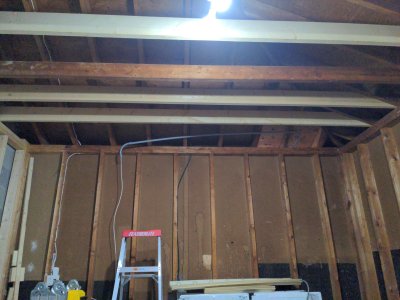
You could just sister the studs or add blocking to get the support you want for the drywall. I think 5/8" drywall can span 24" safely as long as you aren't hanging a bunch of crap from it.
 

Red Squirrel

No Lifer
May 24, 2003
70,891
13,918
126
www.anyf.ca
My vacation is over and I didn't get as much done as I hoped. Got sick and the weather went to crap once I felt better. Got one day of good weather yesterday though so got 1 camera done. Installed conduit and pulled wire from the server room. Had 60 feet left in my spool, was not enough, so had to get into the new spool. The one that was too short still reaches the ceiling, so I kept it there, will probably put a wireless AP or something. Running out of wire in the spool almost felt like some sort of milestone though, it means I have over 1,000ft worth of cat6 in my house now lol.


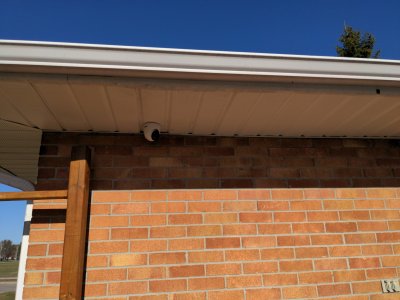
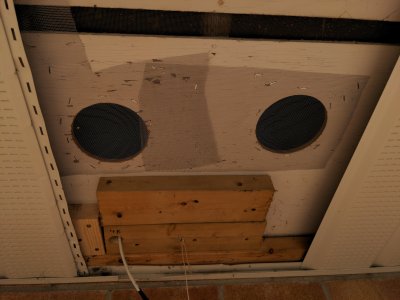
Dealing with removing and reinserting soffit is a pain though so I will take a different approach for the other cameras. The reason for removing it was to insert blocking so there's something to fasten the cameras to, since there is about 2" of hollow space between soffit and the plywood. This particular one had a speaker mounted there, I should have known better that there would already be blocking so removed it for nothing. But while I was there I added extra venting. A bit of a hack job there with the screening but it's covered anyway, I just cut random pieces off a scrap section I had lying around.

IMG_20250509_170733.jpg


Conduit in ceiling inside. That wall is going to have cabinets so going to leave the access open where all the wiring will be accessible. The conduits going to the house are just below at the floor. All the ceiling conduits will terminate at the top so left it loose so once I'm done I can bundle them in the same spot and block it in, will then spray foam that part to seal it and vapour barrier will go around that.

IMG_20250509_170641.jpg


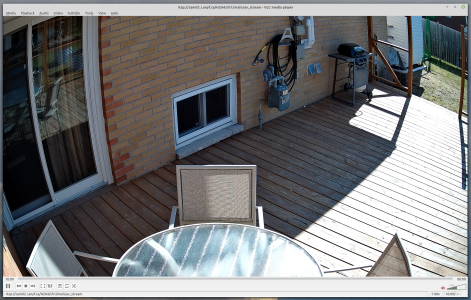
Camera is installed! I really beat up that soffit trying to get it back in but looks ok from the street. :p

IMG_20250510_175015.jpg


Screenshot from 2025-05-10 17-12-53.png


For the other cameras I will just make a bigger hole, insert blocking, and then I will finish it with some metal trim to cover it up, that will save me from removing soffit in first place, and I should have done that from the start. Also offers a bit more serviceability.

After the cameras are done I'll start on the electrical. Going to install a new sub panel, an automation box (basically just a box that will house a RPI and relays) and I want to add some Christmas light outlets in the soffits, 2 new outdoor lights, also a light on the deck side. Oh and a junction box for a potential future EV charger outside. I'll just run the wiring to it and close it up. It's now or never, since once I finish the walls and ceiling it will be hard to do after.

Once I'm done with all the wiring I can finally start on the actual insulating. All this is just stuff that needs to be done now or never. Oddly enough the insulating is probably going to be the fastest part. Still have not decided on if I do drywall or something else, but probably end up doing drywall.

I'm glad I at least got one camera put in at least, and that fishing the wire was successful. I think the other two will go faster especially with my different approach for the soffit. During my night shift if it's quiet I'll work on setting up Zone Minder. Right now I don't have any recording or anything setup yet.
 

jmagg

Platinum Member
Nov 21, 2001
2,260
477
136
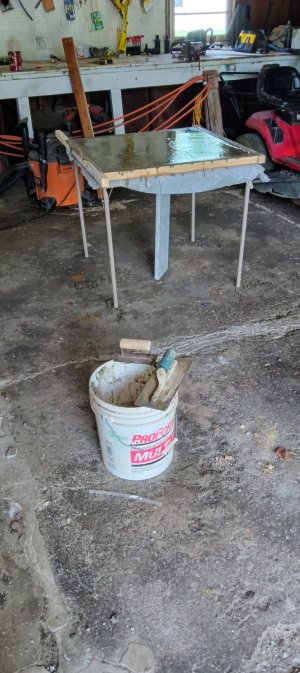
Poured a small slab in order to turn an unused iron fire pit into a outdoor table. Too much ash and mess at this time of my life.

IMG_20250516_123637.jpg
 

iRONic

Diamond Member
Jan 28, 2006
8,445
3,747
136
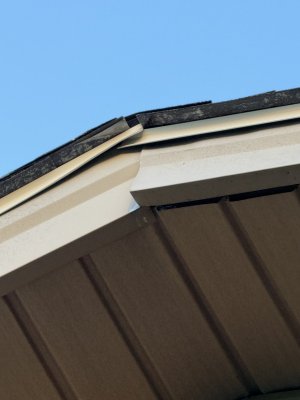
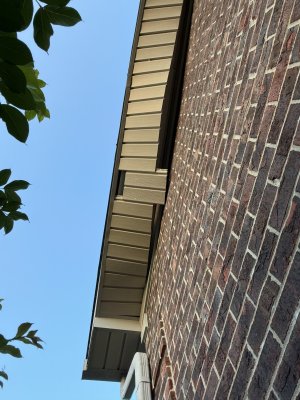
The straight line winds that rolled through a few weeks ago bent the metal and popped all the nails holding the fascia and soffit up tight to the house.
IMG_2527.jpeg
IMG_2531.jpeg
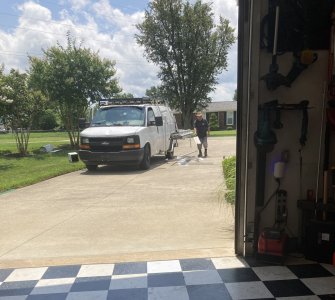
Time to call in the pros: dude had a brake built right into his truck!
IMG_2787.jpeg
 
  • Like
Reactions: skyking

Greenman

Lifer
Oct 15, 1999
22,395
6,522
136
Latest project is termite proofing. One of the cedar planter boxes in my back yard was absolutely infested with the damn things. That's just 25' from my house and to close for comfort. Have to dig a shallow trench all the way around the perimeter to treat with Taurus SC. Of course it was raining far to much to work on over the past 3 weeks, and now that the rain has stopped I have 90 degree heat and high humidity.
 

jmagg

Platinum Member
Nov 21, 2001
2,260
477
136
If you ever get them in your house you'll learn about contractors and equity loans.
I was under the impression that cedar was bug proof, and since this house has cedar clap, your post got my attention. I spent some time learning about the little bastards, and doing an inspection where the joist meet the sill plate, and around the deck.
 
Last edited:

Greenman

Lifer
Oct 15, 1999
22,395
6,522
136
I was under the impression that cedar was bug proof, and since this house has cedar clap, your post got my attention. I spent some time learning about the little bastards, and doing an inspection where the joist meet the sill plate, and around the deck.
No wood is bug proof. Termites will eat cedar and redwood, they just go after the sapwood parts. I've seen them eat the paper off the back of drywall, I've seen tubes from the ground 18" up to the floor joists in the middle of a house. I've seen them eat one layer of plywood out of a cabinet.
The little fuckers are insidious and expensive. Back when I was the guy getting paid to fix the damage they did I kind of considered them my little allies. Once they got near my house that changed to intractable enemy's and I've declared unlimited war on them. Everything is on the table and my first salvo is full on WMD.
Only one of us is walking away from this.
 

jmagg

Platinum Member
Nov 21, 2001
2,260
477
136
We're up in zone 5, so I read the instance is less than in the south, and haven't come across them in my travels as of yet. The worst I've had to deal with have been Japanese beetles. They are nearly impossible to kill besides drowning,. I've planted trees (anything green actually) that swarms nearly killed overnight. I had to shake the limbs so that they fall into a bucket of soapy water. Daily for weeks. to save my work. fkers
 

Greenman

Lifer
Oct 15, 1999
22,395
6,522
136
I think I might rather have the beetles than termites, but that might be because I haven't had to deal with the beetles.
We have some weird bugs around here. One verity I call death bugs because that's what they seem to do. I've actually seen the things drop dead while flying. I've seen hundreds of dead one's and maybe a dozen alive.
 

jmagg

Platinum Member
Nov 21, 2001
2,260
477
136
I think I might rather have the beetles than termites, but that might be because I haven't had to deal with the beetles.
We have some weird bugs around here. One verity I call death bugs because that's what they seem to do. I've actually seen the things drop dead while flying. I've seen hundreds of dead one's and maybe a dozen alive
Your death bugs would freak my wife out. She would never sleep again if one landed on her head.
 

Fenixgoon

Lifer
Jun 30, 2003
33,442
13,061
136
Last:
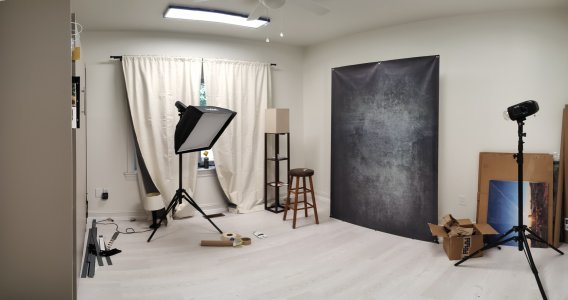
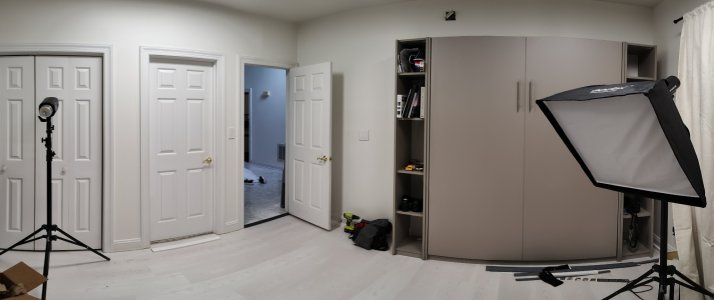
Renovated a guest bedroom into a small photography studio.
Murphy wallbed to save space, new paint, new flooring, new closet space.

Next:
Clearing out the garage of vehicles and installing new overhead lights.

Next next (possibly ):
Replacing the carpet in the living room with LVP. First row is the hardest. After that you absolutely fly.
 
  • Like
Reactions: iRONic

deadlyapp

Diamond Member
Apr 25, 2004
6,672
744
126
Last:
Renovated a guest bedroom into a small photography studio.
Murphy wallbed to save space, new paint, new flooring, new closet space.

Next:
Clearing out the garage of vehicles and installing new overhead lights.

Next next (possibly ):
Replacing the carpet in the living room with LVP. First row is the hardest. After that you absolutely fly.
Moving all the furniture is the hardest
 

pete6032

Diamond Member
Dec 3, 2010
8,230
3,641
136
Last:
Renovated a guest bedroom into a small photography studio.
Murphy wallbed to save space, new paint, new flooring, new closet space.

Next:
Clearing out the garage of vehicles and installing new overhead lights.

Next next (possibly ):
Replacing the carpet in the living room with LVP. First row is the hardest. After that you absolutely fly.
What kind of LVP are you putting down? I am looking to put some down as well.
 

Greenman

Lifer
Oct 15, 1999
22,395
6,522
136
Finished the bridge over the little creek in my back yard. Book shelves and window seat in MIL's bedroom is next.
 

Fenixgoon

Lifer
Jun 30, 2003
33,442
13,061
136
Did you have to level the floor at all before putting it down?
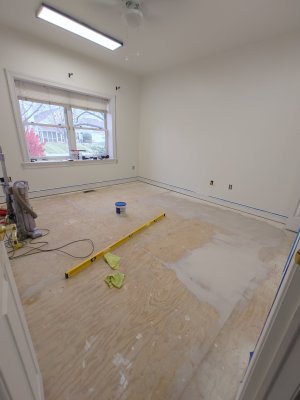
I had some really low spots where I i used quick setting leveling cement. LVP is otherwise pretty forgiving with non-level surfaces. You don't need the floor absolutely perfectly level

Here is a before pic with the leveling compound!
1127241323_HDR.jpg
 
Last edited:
  • Like
Reactions: pete6032