
Red Squirrel
No Lifer
I can't see how it would be any different than wiring inside walls. As long as there's no hidden junction boxes which there won't be. Going to use conduit for the cat6 too in case I ever need to run more wire later on.



which one mr new member?That sounds super interesting, do you have any before/after pictures of the process? It would be interesting to see an update on the outcome
I just don't see the point of creating a gap to run the wires between the barrier and the drywall. If you ever needed to run the wire again, you've got a massive issue of dealing with the vapor barrier. I don't know if you're spray insulating or just blowing it in or putting in batts, but it feels like you'd have a much easier life of just running the electrical over the joists and then dropping wherever you want, sealing at the punctures where you pierce the vapor barrier. Plus way less chance of running a screw through the romex when you attach the drywall to the strapping (that would be my concern from a code related standpoint).Lots of work, and I can hear the pride. A note of caution for you to check on. You plan to leave a gap between insulation / vapour barrier and the sheetrock ceiling to run wiring through. That may not be allowed. A basic principle for wiring is that it must be accessible for inspection and repairs. What you plan would hide it completely in that gap. The common plan, of course, is that the wiring is done from above after the insulation / vapour barrier is installed, with an access hatch into the "attic". Wires and all junction boxes are attached to beams as you pull the insulation aside temporarily. If the only items to be connected are your T8 fixtures connected by screws through the sheetrock into beams, you MAY be able to just run supply cables just though holes through the sheetrock directly into each fixture. BUT you may actually need to use octagon boxes attached to beams and poking though the sheetrock against the back (top) of each fixture. Then you'd need a hole cut out of the top of each fixture to match the octagon box so you can access that box's wires from inside the fixture. I recommend you consult your local electrical inspection agency and be sure you do it the way they WILL approve.
I just don't see the point of creating a gap to run the wires between the barrier and the drywall. If you ever needed to run the wire again, you've got a massive issue of dealing with the vapor barrier. I don't know if you're spray insulating or just blowing it in or putting in batts, but it feels like you'd have a much easier life of just running the electrical over the joists and then dropping wherever you want, sealing at the punctures where you pierce the vapor barrier. Plus way less chance of running a screw through the romex when you attach the drywall to the strapping (that would be my concern from a code related standpoint).
You could just sister the studs or add blocking to get the support you want for the drywall. I think 5/8" drywall can span 24" safely as long as you aren't hanging a bunch of crap from it.The joists are not perfectly 16" OC everywhere, so I need to add strapping anyway which will make a gap so that edges of sheets always line up on a stud. The gaps will sorta act like conduits in a way for wiring for lights, AP and possibly other data cabling. Access hatches could also make it easy to run more wires in the future for something else. The attic won't really easily be accessible once this is all done and all the insulation is in, given the roof slope. Going to add an access hatch but won't easily be able to do much in there but maybe look at the roof.
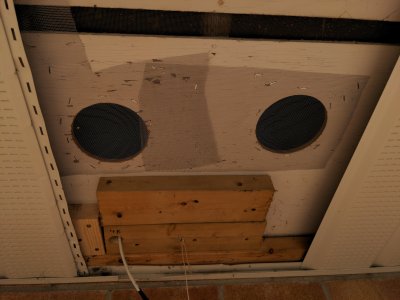
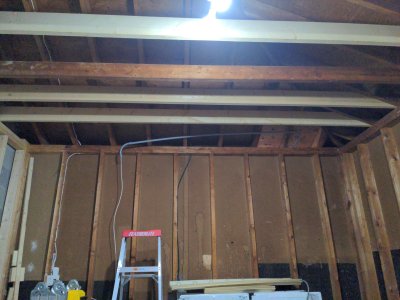
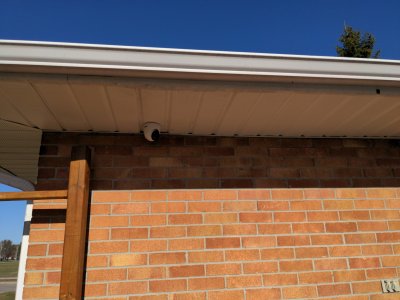
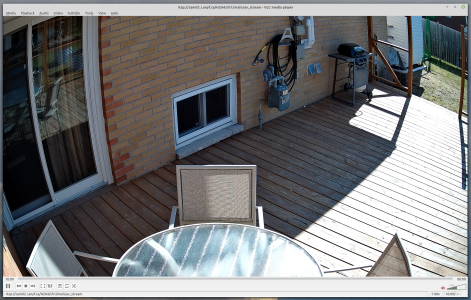
Some of the wiring I'll do in the attic though and just do conduits in case I ever need to pull new wire. For security cameras that's what I'll do since it will be easier to get into the soffit space that way. Ended up getting a nasty cold so that took out a bunch of days that I could have used so have not done anything else yet.

If you ever get them in your house you'll learn about contractors and equity loans.Today I learned about cedar and termites and beyond.
I was under the impression that cedar was bug proof, and since this house has cedar clap, your post got my attention. I spent some time learning about the little bastards, and doing an inspection where the joist meet the sill plate, and around the deck.If you ever get them in your house you'll learn about contractors and equity loans.
No wood is bug proof. Termites will eat cedar and redwood, they just go after the sapwood parts. I've seen them eat the paper off the back of drywall, I've seen tubes from the ground 18" up to the floor joists in the middle of a house. I've seen them eat one layer of plywood out of a cabinet.I was under the impression that cedar was bug proof, and since this house has cedar clap, your post got my attention. I spent some time learning about the little bastards, and doing an inspection where the joist meet the sill plate, and around the deck.
Your death bugs would freak my wife out. She would never sleep again if one landed on her head.I think I might rather have the beetles than termites, but that might be because I haven't had to deal with the beetles.
We have some weird bugs around here. One verity I call death bugs because that's what they seem to do. I've actually seen the things drop dead while flying. I've seen hundreds of dead one's and maybe a dozen alive

Moving all the furniture is the hardestLast:
Renovated a guest bedroom into a small photography studio.
Murphy wallbed to save space, new paint, new flooring, new closet space.
Next:
Clearing out the garage of vehicles and installing new overhead lights.
Next next (possibly ):
Replacing the carpet in the living room with LVP. First row is the hardest. After that you absolutely fly.

What kind of LVP are you putting down? I am looking to put some down as well.Last:
Renovated a guest bedroom into a small photography studio.
Murphy wallbed to save space, new paint, new flooring, new closet space.
Next:
Clearing out the garage of vehicles and installing new overhead lights.
Next next (possibly ):
Replacing the carpet in the living room with LVP. First row is the hardest. After that you absolutely fly.
I used Home Depot's LifeProof. It worked out really well. I'll snap a pic of the room when I get home.What kind of LVP are you putting down? I am looking to put some down as well.
Here's the99% finished room (some supplies still around). Apologies for the crappy cell phone pic.What kind of LVP are you putting down? I am looking to put some down as well.
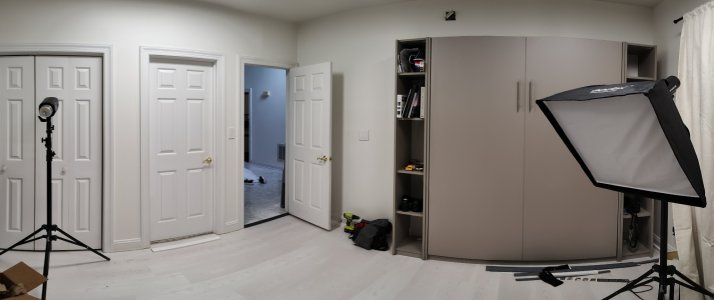
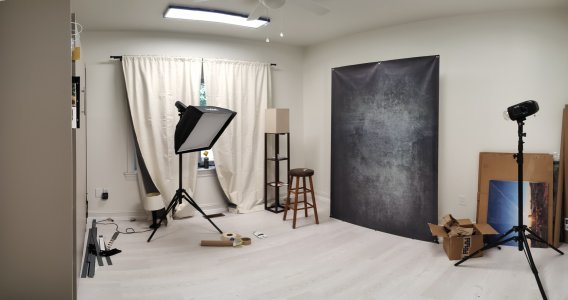
Did you have to level the floor at all before putting it down?Here's the99% finished room (some supplies still around). Apologies for the crappy cell phone pic.
I had some really low spots where I i used quick setting leveling cement. LVP is otherwise pretty forgiving with non-level surfaces. You don't need the floor absolutely perfectly levelDid you have to level the floor at all before putting it down?
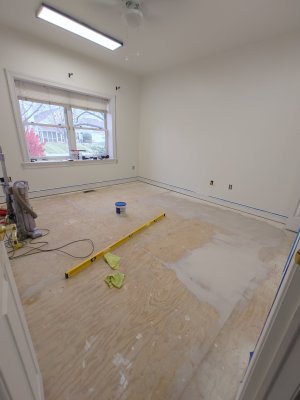



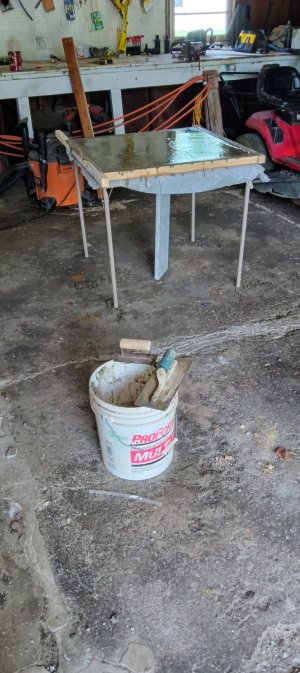


 Facebook
 Twitter