What was your last home project and what is your next home project?

Page 8 - Seeking answers? Join the AnandTech community: where nearly half-a-million members share solutions and discuss the latest tech.
Nov 17, 2019
13,374
7,896
136
Latest project is termite proofing.

Have to dig a shallow trench all the way around the perimeter to treat with Taurus SC.
I laid 1" conduit in that trench. Drilled at 6" intervals with sweep els at the end of each run that rise above the ground.

Open, pour treatment in, let flow and seep into the ground.

One dig, treat as often as desired.

Need to do another pour though I guess. Not sure how often is necessary, but it's been a couple of years.
 

sdifox

No Lifer
Sep 30, 2005
100,849
18,071
126
Replace dead pool pump. The original pump timer is only for 120vac and the crazy people just used it on one phase of the 240v split phase.

So I am installing a Eaton 30A 2pole definite purpose contactor to control the 2 hot lines, then use a smart socket to control the coil of the contactor. The socket will be integrated to my Home Assistant VM for scheduling automation.
 

Greenman

Lifer
Oct 15, 1999
22,395
6,522
136
I laid 1" conduit in that trench. Drilled at 6" intervals with sweep els at the end of each run that rise above the ground.

Open, pour treatment in, let flow and seep into the ground.

One dig, treat as often as desired.

Need to do another pour though I guess. Not sure how often is necessary, but it's been a couple of years.
The Taurus SC is supposed to be good for up to ten years.
 

Fallen Kell

Diamond Member
Oct 9, 1999
6,240
555
126
Well, I guess technically the last home project was running CAT6A to the main rooms of my house (living room, first floor office, first floor entertainment room (spare bedroom turned into TV/game room), the current finished basement area (future retro game console and arcade room), and roughly to the unfinished side of my basement (and intended home theater room). Almost all the areas had existing wallplates for RJ11/phone connections that I replaced with RJ45, some adding more than one line, like the office, living room, and future home theater.

My current project is slowly replacing all the light switches in the home with smart switches. I have about 12 left, but most of these are a little more complex as they are 2-way/3-way or are a combo ceiling light+fan. The switches I am using will work just like the normal physical switch even if my smart home hub is not working (however they will not be able to perform secondary/tertiary functions like double/triple taps and/or scene lighting changes dependent on time of day/other variables).

Still trying to figure out how to wire one of the hallways that have a 2-way, but I believe have load/lights connected on both switches (I really don't want to have to pull new wire).
 

Paperdoc

Platinum Member
Aug 17, 2006
2,510
380
126
The more common arrangement for a "2-way" switch system for one light is to have power from the source (breaker panel) supplied at the first switch and the light fixture connected at the second switch. One cable runs between the two switches with THREE current-carrying wires (14/3, Black White and Red)). Each switch is a single-pole double-throw switch, so it connects a Common terminal (connected to the Black Hot line from the source) to either one or the other of the output terminals. Those two connect to the Black and Red of the 14/3 cable (these two lines often are called the Trailer leads), and the source Neutral White line connects to White on the 14/3. At the second switch box the incoming White connects to the White of the 14/2 cable going out to the lamp. The incoming Black and Red connect to the two "output" terminals (in this case, now inputs) of the switch, and the Common of the switch connects to the Black Hot output line to the lamp. So the first switch selects which of the Red or Black wires of the 14/3 cable carries power up to the second switch. Then the second switch selects which of those two is fed on to the lamp. Meanwhile the White Neutral line from the source is connected through to the lamp directly.

On many smart "2-way" switches there are FIVE leads. Whatever you have, DO follow the included instructions on how to connect carefully. Do NOT simply try to copy old colour-to-colour of wires. The switches will have colour-coded wires for Neutral (white wire), Ground (Green wire for bare Grounding wire from the cables), a Load or Common wire (often red) and two lines marked Line1 and Line 2, or maybe Line and Trailer or something similar.

There is a different type of circuit layout in which the lamp is connected to wires in the FIRST switch's box, and the 14/3 cable simply runs to the second box and its switch. There is no lamp connected to the second switch. This layout uses the White wire of the 14/3 cable to return to the first box (and on to the lamp Black Hot wire) the power output of the second switch, so that White actually is used as a Hot wire. Where this is allowed by code that White is supposed to be wrapped in black electrical tape to alert the user that this is NOT really a Neutral wire. But that means that there is NO actual Neutral wire connection at the second switch box, and most smart switches need a neutral connection. So using a smart switch in this case requires a slightly different set of connections unless you replace the 14/3 cable with a 14/4 cable to provide Hot, Neutral, and TWO independent Load lines. IF your circuit is laid out this way, consult the Tech Support people for your switch to be sure you know how to install.
 
Last edited:

iRONic

Diamond Member
Jan 28, 2006
8,445
3,747
136
To caulk or not to caulk…
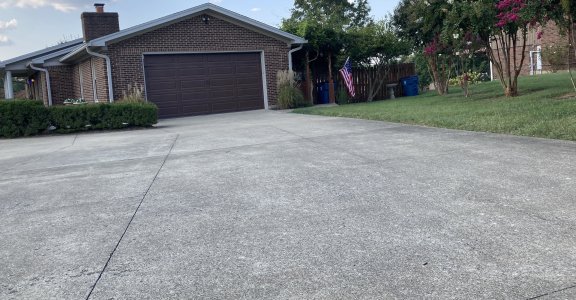
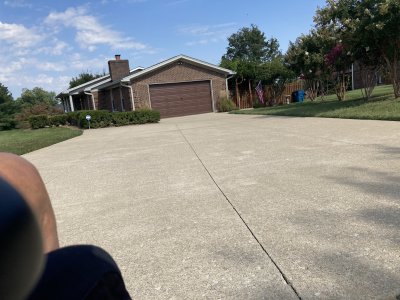
We power washed the driveway this morning. This was 6 years on the last application using this product:

Eagle Clear Solvent-based Ready-to-use Concrete Sealer (5-Gallon) EU5 at Lowes.com

Before:-
IMG_2969.jpeg

After:
IMG_3007.jpeg

I didn't caulk the expansion joints last time and I'm wondering if I should try this product prior to the sealing:

Sika All-Purpose Non-Sag Polyurethane Fast Setting 10.1 -fl oz Stucco Mortar Concrete Sealant in the Concrete & Mortar Repair department at Lowes.com

The sealer is solvent-based and I'm wondering if it would immediately or eventually fuck up the caulking. There is an acrylic-based sealer but the reviews are not as good as the solvent-based for concrete. I'm satisfied with the performance but it's nasty AF and you need to wear a respirator while applying it. I paid $99 for a 5 gallon can back then. The same shit is $149 now.
 

Fallen Kell

Diamond Member
Oct 9, 1999
6,240
555
126
Why not seal and then caulk the expansion joints? I also recommend using foam backer rod in most of the expansion joints that are wider than 1/8" and then sprinkling sand that roughly matches the color of your concrete on top. The sand serves multiple purposes, as it is a decent UV deflector (which is one of the main things that causes caulk to breakdown), and it prevents insects and other living things from being able to burrow into the caulk.

I would also recommend something like Vulkem 45SSL (which is a semi-self leveling so that it can work on sloped driveways up to about 6 degrees). It also comes in several colors to attempt to match your concrete (also get sand that matches).
 
Last edited:
  • Like
Reactions: iRONic

Red Squirrel

No Lifer
May 24, 2003
70,890
13,918
126
www.anyf.ca
That is the cleanest driveway I've ever seen, no cracks or anything. I would definitely caulk those joints to stop water from getting in and then freezing and expanding. I would consider sealing, the only issue is it does make it more slippery. I epoxied my garage floor and that floor is a hazard if your shoes are wet or have snow on them. It's basically like a skating rink. I don't think concrete sealer would be as bad though.
 

iRONic

Diamond Member
Jan 28, 2006
8,445
3,747
136
I considered caulking after I sealed. Those caulk products I linked only come in tan or gray. I’m not looking for a “tiled & grouted” look ala a bathroom or kitchen floor. As light as they are I envision those caulk joints will amplify a dirty appearance.

I’ll see about that product you mentioned. I use the caulk/sand process on my rough aggregate concrete sidewlk joints instead of the stupid wood spacers and it does a good job of not drawing attention to the break in different surfaces.
 
Last edited:

Micrornd

Golden Member
Mar 2, 2013
1,385
243
106
Sika All-Purpose Non-Sag Polyurethane Fast Setting 10.1 -fl oz Stucco Mortar Concrete Sealant in the Concrete & Mortar Repair department at Lowes.com
If you use this product, make sure you completely kill any ant nests that may in the joints. We always used the commercial version of Sika Polyurethane in joints and I can tell you from experience that ants will tunnel right through it, if trapped under it. And use a backer, "No-Sag" is a relative term, as in third cousin, twice removed.
 
  • Like
Reactions: iRONic and jmagg

jmagg

Platinum Member
Nov 21, 2001
2,260
477
136
Backer rod is the most important for a long lasting joint. Read up on 3 sided caulk joints if you are interested.
 
  • Like
Reactions: iRONic

Greenman

Lifer
Oct 15, 1999
22,395
6,522
136
I just finished screening the weep holes on the exterior of my house. I can't believe this isn't required by code. Some of the gaps are large enough for a mouse to pass through, and 90% will allow a lizard in. I know that because I watched one run in. I have a vision of an entire ecosystem living in there.
 

Paperdoc

Platinum Member
Aug 17, 2006
2,510
380
126
Yesterday I cleaned off the air conditioner compressor unit outside, shut off its breaker and installed its winter cover. A bit early, but I'm protecting it from debris for a roofing contractor coming tomorrow. While out there I was cleaning lint out of the discharge flap unit for the bathroom exhaust fan vent, and it broke. The usual white plastic, but over 40 years old and it had become brittle. So off to the hardware store to buy a replacement kit of 4" short metal duct and external 3-flap louvred cap. Installed it pretty easily with new screws and silicone caulking, re-connecting to existing flex hose inside.
 
  • Like
Reactions: iRONic

deadlyapp

Diamond Member
Apr 25, 2004
6,672
744
126
I just finished screening the weep holes on the exterior of my house. I can't believe this isn't required by code. Some of the gaps are large enough for a mouse to pass through, and 90% will allow a lizard in. I know that because I watched one run in. I have a vision of an entire ecosystem living in there.
House should be sealed and protected behind the brick though?

I've found plenty of ant nests that have crawled into mine that I've had to burn with fire.
 

Greenman

Lifer
Oct 15, 1999
22,395
6,522
136
House should be sealed and protected behind the brick though?

I've found plenty of ant nests that have crawled into mine that I've had to burn with fire.
The walls are supposed to be sealed behind the brick. That said, there is nothing about this house that gives me confidence that was done correctly. Even if they are properly sealed, I don't want critter heaven in my walls. Beyond that, some of the weep holes are right at grade, a perfect place for termites to enter.
 
  • Like
Reactions: deadlyapp

iRONic

Diamond Member
Jan 28, 2006
8,445
3,747
136
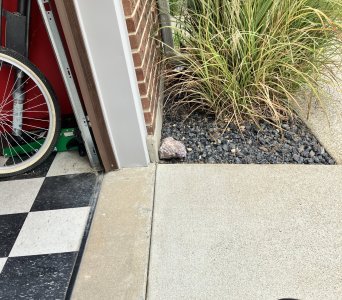
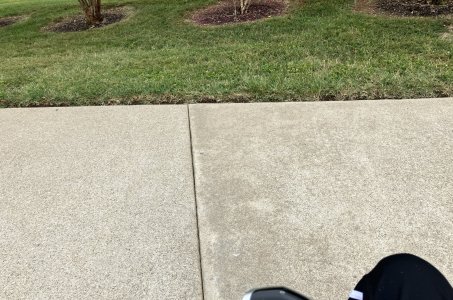
From what I see, those are not expansion joints in the driveway, but control joints cut onto the finished slab to stop diagonal cracks.

Exactly. This huge driveway was poured in two lifts. You can tell the difference between the expansion joints and control joints by the finished edges of the expansion joints.
IMG_2652.jpegIMG_2653.jpeg
 

Greenman

Lifer
Oct 15, 1999
22,395
6,522
136
Exactly. This huge driveway was poured in two lifts. You can tell the difference between the expansion joints and control joints by the finished edges of the expansion joints.
View attachment 130759View attachment 130760
There aren't any expansion joints pictured. Those demonstrate the two methods of creating control joints. Tooled joints done when poured and cut joints after the slab has set. An actual expansion joint will be a gap filled with a flexible or compressible material.
 

Paperdoc

Platinum Member
Aug 17, 2006
2,510
380
126
Noisy today. Contractors are replacing the roofing on our house. Existing was about 20 years old and had developed one leak we know of, with many damaged (aging) shingle strips visible. Next month a different crew will install Aluminum soffit and fascia over the original (100 years old?) painted wood stuff. Should look much better and I won't have to get up there to paint!
 
  • Like
Reactions: jmagg and pcgeek11

Muse

Lifer
Jul 11, 2001
41,064
10,307
136
Bought my fridge in 2000, Amana BR22VW. I've repaired it 2 times, 2021 and again the last 2 weeks. Both times the repair amounted to replacing a thermostat.

2021: The freezer temperature thermostat (I guessed right). The freezer had stopped being able to maintain the temperature range

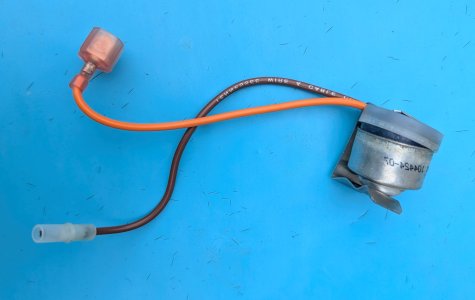
2025: The defrost thermostat had become at best inconsistent and around 2 weeks ago stopped allowing the defrost heater to turn on.

Here's a photo of the bad defrost thermostat I replaced yesterday, note the bulging top, a tipoff that it was the culprit:

Defrost Thermostat gone bad.jpg

The last 2 weeks have been something of an odyssey trying to keep my cold storage food from going bad. Wondered if I could repair the fridge or needed to replace it. Didn't know what was wrong. It's been a learning experience. I had only vague ideas of how modern refrigerators work. Now, I have a pretty good idea of how automatic defrost works and how to troubleshoot its problems. I posted at r/appliancerepair and got some direction, watched a bunch of videos, read stuff. Bought a new defrost timer, but determined that the one I had seems OK. I put in the new one anyway, WTH. Figured the problem had to be either the defrost thermostat or the heater, but what I experienced convinced me the heater worked, at least after I manually defrosted the freezer. When I did that I saw the deformed defrost thermostat and deduced there was a 90% chance that was the issue and ordered a new one. I was right.

 
  • Like
Reactions: iRONic

WilliamM2

Diamond Member
Jun 14, 2012
3,013
892
136
Bought my fridge in 2000, Amana BR22VW. I've repaired it 2 times, 2021 and again the last 2 weeks. Both times the repair amounted to replacing a thermostat.

2021: The freezer temperature thermostat (I guessed right). The freezer had stopped being able to maintain the temperature range

2025: The defrost thermostat had become at best inconsistent and around 2 weeks ago stopped allowing the defrost heater to turn on.

Here's a photo of the bad defrost thermostat I replaced yesterday, note the bulging top, a tipoff that it was the culprit:

View attachment 131142

The last 2 weeks have been something of an odyssey trying to keep my cold storage food from going bad. Wondered if I could repair the fridge or needed to replace it. Didn't know what was wrong. It's been a learning experience. I had only vague ideas of how modern refrigerators work. Now, I have a pretty good idea of how automatic defrost works and how to troubleshoot its problems. I posted at r/appliancerepair and got some direction, watched a bunch of videos, read stuff. Bought a new defrost timer, but determined that the one I had seems OK. I put in the new one anyway, WTH. Figured the problem had to be either the defrost thermostat or the heater, but what I experienced convinced me the heater worked, at least after I manually defrosted the freezer. When I did that I saw the deformed defrost thermostat and deduced there was a 90% chance that was the issue and ordered a new one. I was right.

Not much to the defrost function on an older fridge. 3 components.
You can test the heating element with a multimeter. If it's bad, you will have an open circuit.

Your thermostat was obvious, but if it' not bulging, you can test with a multimeter as well.

Third option is the defrost timer, sometimes they fail to rotate.
 

Muse

Lifer
Jul 11, 2001
41,064
10,307
136
Not much to the defrost function on an older fridge. 3 components.
You can test the heating element with a multimeter. If it's bad, you will have an open circuit.

Your thermostat was obvious, but if it' not bulging, you can test with a multimeter as well.

Third option is the defrost timer, sometimes they fail to rotate.
Actually, I could tell the defrost timer was rotating. It's behind the kick plate, which I leave removed anyway so I can access the condensing coils for occasional cleaning. Can stick my fingers in there and rotate the timer spindle to initiate a manual defrost. Can also just look at the spindle, note its position (there's a notch in it), come back in a couple hours and see if the notch has advanced. Mine did, also was no defrost going on when manual defrost was supposed to be in effect (hear a click when twisting the spindle). That told me it was either the thermostat or the heater.
 
Nov 17, 2019
13,374
7,896
136
Gotta hand mix 6 80# bags of concrete in the morning.

Maybe 2-3 more for another project if I get to it, but that may wait for a different day.
 
  • Wow
Reactions: Muse

Fallen Kell

Diamond Member
Oct 9, 1999
6,240
555
126
The walls are supposed to be sealed behind the brick. That said, there is nothing about this house that gives me confidence that was done correctly. Even if they are properly sealed, I don't want critter heaven in my walls. Beyond that, some of the weep holes are right at grade, a perfect place for termites to enter.
Well, it depends more on the age of the house as to if they sealed behind the brick or not. Modern construction, there should be a seal, but older construction had it all much more open for air flow to occur which would allow the moisture that will go through the brick and mortar to be able to be dried out with the airflow so that moisture would not build up behind the brick and on any wood touching the brick preventing the mold and dry rot that would occur.