
IntelUser2000
Elite Member
Large APU on 7nm => 15B+ at 122 mm squared < x mm squared < 398 mm squared
Xbox Scorpio/Playstation 5.

Large APU on 7nm => 15B+ at 122 mm squared < x mm squared < 398 mm squared
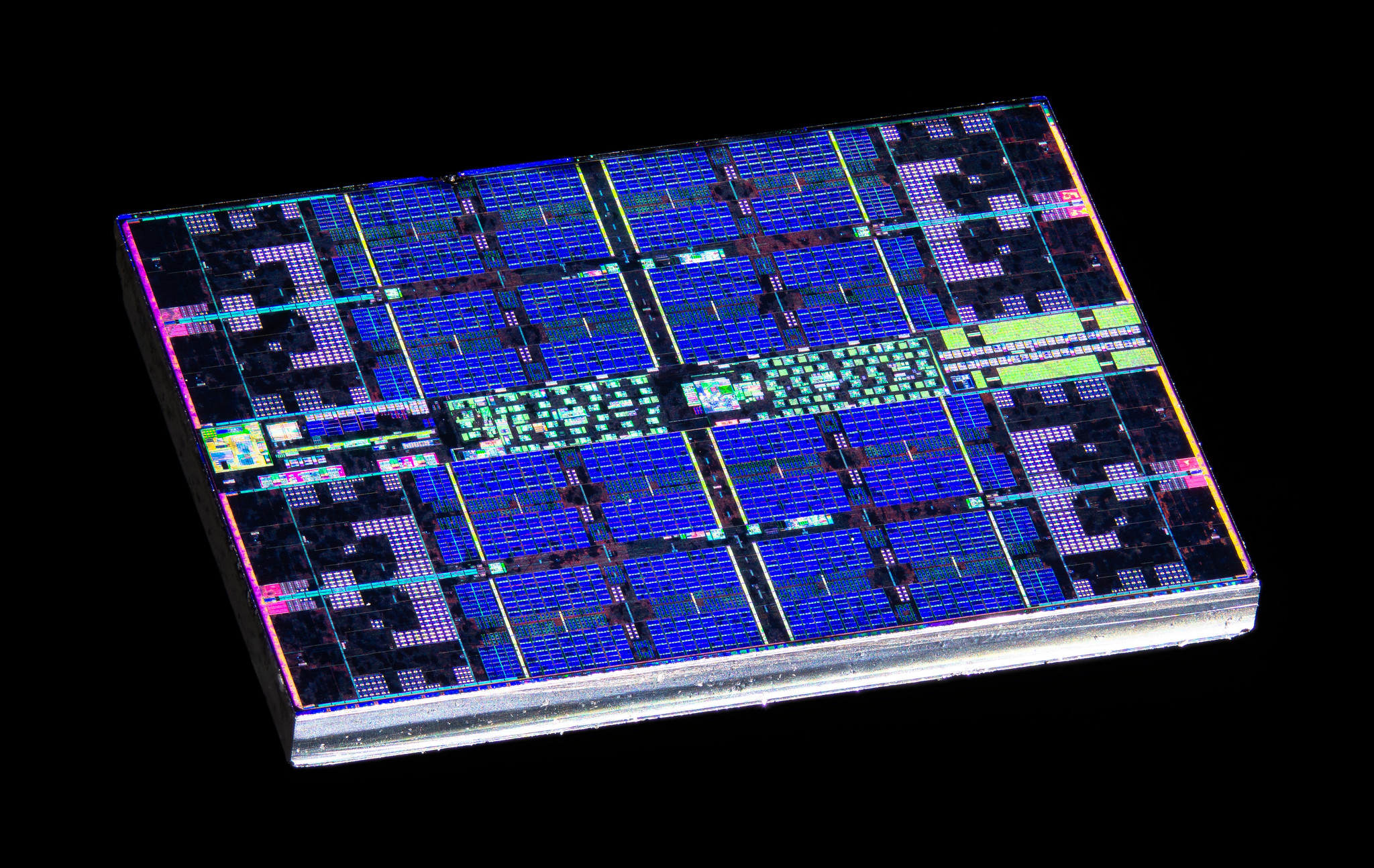 AMD@7nm(12nmIOD)@Zen2@Matisse@Ryzen_5_3600@100-000000031_BF_1923SUT_9HM6935R90062___DSC03560-DSC03693_-_ZS-retouched by Fritzchens Fritz, on Flickr
I agree with thisI like Jim/AdoredTV as his speculations help me thinking more outside the box regarding the possibilities, like AMD is doing with these designs. But I prefer discussing about the designs and possible ways onward from there, not about what Jim/AdoredTV got right or wrong and whether the latter constitute lies.

??? Ryzen 3600,3600x,3700x,3800x,3900x have been on sale for about a month now.When is the rest of the lineup coming, e.g. Ryzen 3700, Ryzen 3900?
Easy the process is better and more refined. When Intel started their Turbo romps they didn't have a way to figure out what cores and where. They had an infinite manfucaturing capacity and dozens of sku's to toss imperfect dies into so they could do high turbo's but upper limit set to allow for larger stock of 700k chips. Everything that didn't meet that got to become something you couldn't overclock so we don't know what the average limit is. That said noone has ever said that all Intel K CPU's can hit Max single core turbo as all core.I was puzzeled why it's barley possible to reach 4.3 ghz all core even with manual oc. I mean intel proccessors usually do all-core on the advertised turbo if you have the right cooling. With ryzen3000k it's a brick wall. It also makes no sense marketing wise. just set boost to 100mhz lower on all skus and it would probably have been fine.

It is highly unlikely that there will be 3700/3900.I mean 3700, not 3700X and 3900, not 3900X.

The sku names are just a marketing thing and have even less consistency, I think intel's new 9900 naming is what caused the difference between what launched and what was leaked before. The prices of the current parts mimick the ryzen1000 launch pretty well. Ryzen2000 prices were probably a result of needing to offer more value at the time.The 3700x is a replacement for the 2700 and the 3800x a replacement for the 2700x. They just figured that their turbo settings allowed for pretty high everything but all core turbo's so they kept the X at the end. Even in Non-turbo power usuage it fits the same niche.
The sku names are just a marketing thing and have even less consistency, I think intel's new 9900 naming is what caused the difference between what launched and what was leaked before. The prices of the current parts mimick the ryzen1000 launch pretty well. Ryzen2000 prices were probably a result of needing to offer more value at the time.
From looking at results of the 3600/3600x and 3700x/3800x it seems like there's a fairly tough power and performance wall that the CCDs run into. All four of those cpus run similar power levels and without core discrepancy the performance is similar as well. For single dies I don't think there's a need for many skus between 65-100w there. It might open up for some really low wattage parts even down to ~30w but those are normally oem parts.
It's on the dual die parts that I think more skus make sense, more than ever these days with intelligent boost algorithms allowing singular cores to boost to above 4ghz within power and then have 12-16 cores running low-mid 3ghz whilst sipping power. I like the option of low power high core parts as they make great low maintenance and quiet parts when assembling machines for other people or cheap render boxes.

CPU support list of some ASUS motherboard/s contains not only Ryzen 9 3900X, but also Ryzen 9 3900 and Ryzen 9 PRO 3900...
Ryzen 9 GA 3900, what specs does it have? 🙂I was willing to wait for the Ryzen 9 Gifted Amateur 3900, but the PRO may promote better epeen growth.
Ryzen 9 GA 3900, what specs does it have? 🙂
Seriously - are the Pro versions any different than normal cpus?
Ryzen 9 GA 3900, what specs does it have? 🙂
Seriously - are the Pro versions any different than normal cpus?

If you don't overclock, its got as higher base clock, and a higher boost clock. I have not followed close enough to know those who OC, how much better do they do. I just know that most OCing on the 3000 series is very limited.The 3800x doesn’t seem to bring much to the party vs the 3700x.
Am I missing something about the 3800x?

It's the best binned chip, meaning it needs the lowest voltage out of all Ryzen 3k chips for reaching specific frequencies. (I recall there was a nice graph showcasing this.)The 3800x doesn’t seem to bring much to the party vs the 3700x.
Am I missing something about the 3800x?
It's the best binned chip, meaning it needs the lowest voltage out of all Ryzen 3k chips for reaching specific frequencies. (I recall there was a nice graph showcasing this.)
Doesn’t it use more power?


