
Arachnotronic
Lifer
- Mar 10, 2006
- 11,715
- 2,012
- 126
My prediction is that Icelake Client is based upon a modified version of the 14 nm SoC process they call 10 nm; and maybe they will throw in the FPGAs on it. But that's it for 19 and 20.
Why?


My prediction is that Icelake Client is based upon a modified version of the 14 nm SoC process they call 10 nm; and maybe they will throw in the FPGAs on it. But that's it for 19 and 20.
Why?
Because they can't fix the original 10 nm and they reassigned all the production lines to 14 nm.
There was a rumor that one of the last ideas BK had was a special project that Murthy was tasked in executing; what I described is what I think it is. And it's not like it doesn't mean that Icelake mobile won't be a nice improvement over Whiskey Lake.

So does this mean Charlie's accurate leak streak is finally at an end?Murthy just confirmed that they didn't change the density specifications of 10nm at the Dec. 4 Nasdaq investor conference.

Murthy just confirmed that they didn't change the density specifications of 10nm at the Dec. 4 Nasdaq investor conference.
https://edge.media-server.com/m6/p/sxqkw2g8
They can introduce a 12nm and still say 10nm is unchanged. How to keep the investors contented (ignorant?) for as long as possible might be the game. They need to ride out a rough few years by any means possible.That makes me pretty "nervous" that they have nothing and know it. Figure the absolute best case would have been to cut the density 10% so they can reduce or eliminate the 4+ pattern layers or wait long enough so that EUV would become viable.
They could certainly do another low volume release like Cannonlake for Icelake Client and just call it high volume.
They can introduce a 12nm and still say 10nm is unchanged. How to keep the investors contented (ignorant?) for as long as possible might be the game. They need to ride out a rough few years by any means possible.
So does this mean Charlie's accurate leak streak is finally at an end?
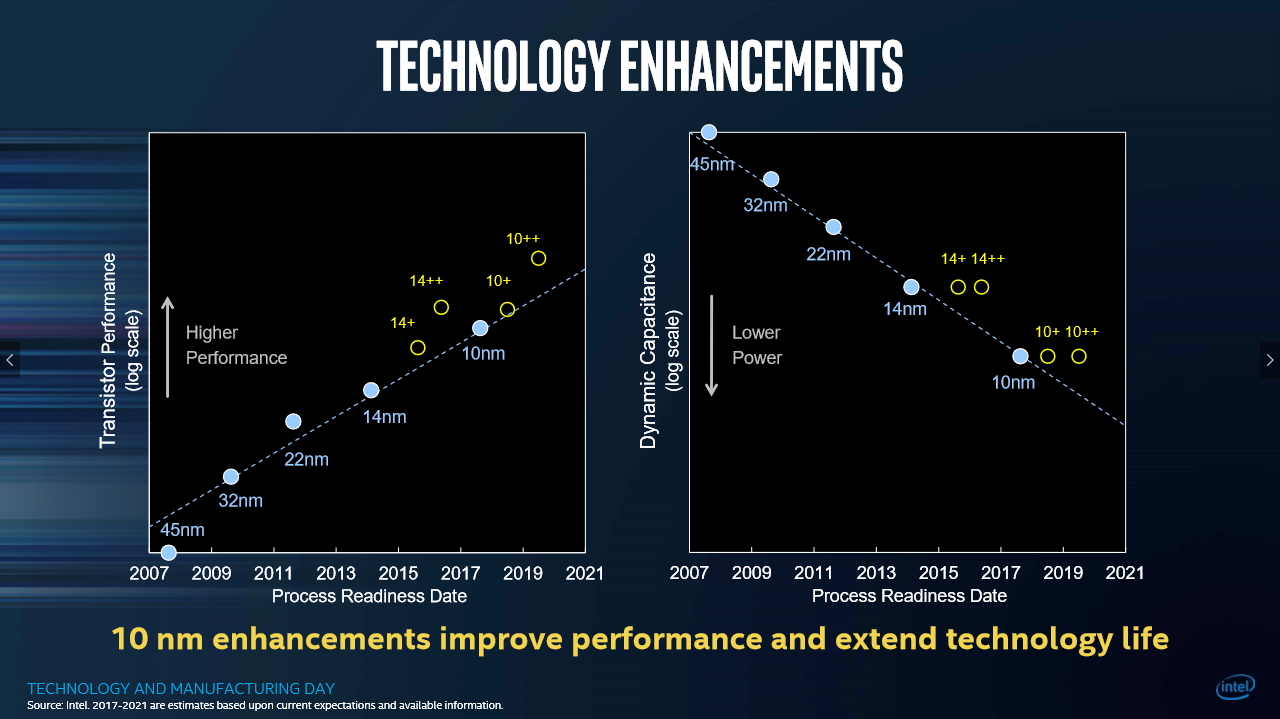
The ambitions for 10 haven’t changed. I mean even though we have had the trials and tribulations with 10, the power and performance and transistor density targets that we set in 2014 remain the same.
We could have taken two approaches, we could have slackened off on the tech specs of 10 nanometers and move towards a faster schedule or we could have maintain the tech specs and basically done the work to get it out on the timeline we talked about. And that’s really because of the resiliency that we have been able to engineer in 14 nanometers.
Intel doesn’t really do a great job in terms of speaking about its manufacturing technology, I think, in that scenario we can become sharper on. But we have had three iterations of 14 nanometers within the last few years. I mean if you look at the performance of the current generation of 14 nanometers shipping products compared to the very first generation from a process-only perspective we have improved that 30% to 40%, so the transistor improvement. I mean that’s kind of like the more so then half in many respects. So, yeah, I think, one thing we should be clear is that we have had multiple iterations of 10 -- 14 nanometers…


the power and performance and transistor density targets that we set in 2014 remain the same
Dave Kanter thinks contact over gate is a big problem for them as well.The issue has always been the defect rates caused by using QP+ in so many layers, plus perhaps the cobalt. So it's not a performance issue per se, but rumors were that the yields were in the single digit percentage even at the point of the 8121U's 'launch'.
.

And he'd be right, just as well they have cells/libraries with and without COAGDave Kanter thinks contact over gate is a big problem for them as well.
By just relaxing the M2 pitch from 36 to 40nm they should in theory be able to move to double patterning instead of quad for the M1 and M2 pitch. This would likely have no consequence for overal transistor density. And like jpiniero said, replacing cobalt for copper might also solve their issues without impact on density and their performance targets. Either or both could be enough to solve their issues.

https://videocardz.com/79267/intel-ghost-canyon-x-nuc-to-feature-8-core-16-thread-core-i9-9xxxh-cpu
NUC roadmap leak until the end of 2020. Nothing using Icelake is in there; only Comet and Whiskey and Coffee Lake Refresh. They could always add an Icelake model but doesn't seem like Icelake will be that high of volume.
PCIe x16 slot? At what point does "NUC" stop being a NUC, and start just being a regular mini-ITX system? 0_o Weird that Intel is happy to start encroaching on traditional system-builder territory.
What's going on with mini-STX these days? I like that form factor.
https://www.anandtech.com/show/13683/intel-euvenabled-7nm-process-tech-is-on-track7 nm for us is a separate team and largely a separate effort. We are quite pleased with our progress on 7 nm. In fact, very pleased with our progress on 7 nm. I think that we have taken a lot of lessons out of the 10 nm experience as we defined that and defined a different optimization point between transistor density, power and performance and schedule predictability. […] So, we are very, very focused on getting 7 nm out according to our original internal plans.”





 Facebook
 Twitter