Discussion Leading Edge Foundry Node advances (TSMC, Samsung Foundry, Intel) - [2020 - 2025]

Page 105 - Seeking answers? Join the AnandTech community: where nearly half-a-million members share solutions and discuss the latest tech.

DisEnchantment

Golden Member
Mar 3, 2017
1,779
6,798
136
TSMC's N7 EUV is now in its second year of production and N5 is contributing to revenue for TSMC this quarter. N3 is scheduled for 2022 and I believe they have a good chance to reach that target.
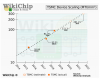
1587737990547.png
N7 performance is more or less understood.
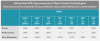
1587739093721.png

This year and next year TSMC is mainly increasing capacity to meet demands.

For Samsung the nodes are basically the same from 7LPP to 4 LPE, they just add incremental scaling boosters while the bulk of the tech is the same.

Samsung is already shipping 7LPP and will ship 6LPP in H2. Hopefully they fix any issues if at all.
They have two more intermediate nodes in between before going to 3GAE, most likely 5LPE will ship next year but for 4LPE it will probably be back to back with 3GAA since 3GAA is a parallel development with 7LPP enhancements.


1587739615344.png

Samsung's 3GAA will go for HVM in 2022 most likely, similar timeframe to TSMC's N3.
There are major differences in how the transistor will be fabricated due to the GAA but density for sure Samsung will be behind N3.
But there might be advantages for Samsung with regards to power and performance, so it may be better suited for some applications.
But for now we don't know how much of this is true and we can only rely on the marketing material.

This year there should be a lot more available wafers due to lack of demand from Smartphone vendors and increased capacity from TSMC and Samsung.
Lots of SoCs which dont need to be top end will be fabbed with N7 or 7LPP/6LPP instead of N5, so there will be lots of wafers around.

Most of the current 7nm designs are far from the advertized density from TSMC and Samsung. There is still potential for density increase compared to currently shipping products.
N5 is going to be the leading foundry node for the next couple of years.

For a lot of fabless companies out there, the processes and capacity available are quite good.

---------------------------------------------------------------------------------------------------------------------------------------------------


FEEL FREE TO CREATE A NEW THREAD FOR 2025+ OUTLOOK, I WILL LINK IT HERE
 
Last edited:

Hitman928

Diamond Member
Apr 15, 2012
6,757
12,503
136
Where are these chip designers coming from? Isn't this supposed to be a black art of sorts or did someone opensource a recent chip design that everyone and their granny is coming out with their variation?

I think most of the custom ARM designs from the big silicon players haven't been very custom but they add modular blocks or tweak the cache and call it a custom chip. The custom AI chips I've seen have been pretty straight forward and are meant for lighter AI workloads. They don't get anywhere near the complexity of something like the MI300.
 

Doug S

Diamond Member
Feb 8, 2020
3,860
6,830
136
But this move by Samsung is not just justifiable. Their 3nm GAA already has worse density than TSMC 3nm FinFET. Renaming their 3nm to 2nm means the gap is going to be even wider when comparing TSMC 2nm and Samsung 2nm.

I don't understand Samsung. They keep announcing new processes that never appear in any designs anyone sees until ages later and then in small quantities, but have breathless press releases claiming process superiority all the time.

Now they are going to claim they are first to 2nm, but they can't even ship any first gen "3nm" stuff in quantity.

I guess this is to fool shareholders? Because the general public isn't a customer of Samsung foundry, and no one is going to buy an Android phone because it advertises "fabbed by Samsung". What's their game here, how does all this deception actually pay off for them?
 
  • Like
Reactions: Tlh97 and Executor_

Hitman928

Diamond Member
Apr 15, 2012
6,757
12,503
136
I don't understand Samsung. They keep announcing new processes that never appear in any designs anyone sees until ages later and then in small quantities, but have breathless press releases claiming process superiority all the time.

Now they are going to claim they are first to 2nm, but they can't even ship any first gen "3nm" stuff in quantity.

I guess this is to fool shareholders? Because the general public isn't a customer of Samsung foundry, and no one is going to buy an Android phone because it advertises "fabbed by Samsung". What's their game here, how does all this deception actually pay off for them?

Government subsidies?
 

Thibsie

Golden Member
Apr 25, 2017
1,184
1,403
136


Node renaming shenanigans again....

But there is a difference.

When Intel renamed their 10nm to Intel 7, it was kinda justified, because Intel 10nm actually had slightly better density than TSMC 7nm.

But this move by Samsung is not just justifiable. Their 3nm GAA already has worse density than TSMC 3nm FinFET. Renaming their 3nm to 2nm means the gap is going to be even wider when comparing TSMC 2nm and Samsung 2nm.
I propose they rename their 2nd gen 3nm to 7nm as to better suit the reality xD
 

DavidC1

Platinum Member
Dec 29, 2023
2,196
3,349
106
For foundry customers like Nvidia, that means a lot. Nvidia might ditch tsmc for their post-blackwell lineup.
LOL, no. Ada got a significant gain thanks to moving to TSMC.
What the foundries call their nodes really doesn't matter in this day and age. For starters, TSMC N7, N6, N5, N4, N3, N2, Intel 7, 4, 3, 20A, 18A, Samsung SF7, SF5, SF4E, SF3P, SF2 are all completely fake names given by their marketing teams.
Sure, but in this case Samsung is completely making it up. Others at least pretend to have some sense of logic. Intel 4 for example is a significant density and perf/watt improvement over Intel 7, and the same is for N5 vs N7.

Dumping a process mid-cycle means hopelessly behind: https://arstechnica.com/gadgets/202...n-1-salvage-operation-moves-the-chip-to-tsmc/
"10 percent faster CPU performance," thanks to a 200 MHz peak CPU boost (up to 3.2 GHz now) and a 10 percent faster GPU. The real shocker is a "30 percent improved power efficiency" claim for the CPU and GPU.
That's because "4LPP" is a revised version of their 7nm process and is only comparable to N6: https://images.anandtech.com/doci/16463/SFF2019 USA_SFF_000009.png

After the "2nm" rebadge, you're going to see a scenario where TSMC N4 rivals Samsung "2nm".
 

moinmoin

Diamond Member
Jun 1, 2017
5,248
8,463
136
Samsung nodes aren't as bad as portrayed by the general public. Nvidia ditched tsmc and went to samsung for their ampere lineup. The samsung node has some yield issues in the beginning which they later solved. But the libraries weren't as efficient as tsmc's at higher frequencies. But these aren't major deficiencies considering they offered a better deal than tsmc. For foundry customers like Nvidia, that means a lot. Nvidia might ditch tsmc for their post-blackwell lineup.
Right, Samsung is perfectly serviceable with older nodes where they can make killer deals (for the customers, that is) which can outweigh the overall slightly worse qualities in other areas compared to contemporaries. There are plenty companies that think they can save a couple of bucks (= increase the margins) by outsmarting the market and pick Samsung. (The last time Nvidia did that AMD Radeon suddenly seemed much more competitive, after the pivot back to TSMC not so much anymore.)

At the same time Samsung repeatedly positions itself as a foundry offering leading edge nodes, going so far to rename them to make them seem even more leading, as we saw happening now again.

We all know that foundries make the most money with leading edge nodes, and Samsung repeatedly seems to want to trick customers into thinking they compete well in that area. Looking at the financial results however it looks like it's exactly that business that's falling apart, reporting a record loss in the last quarter. So by now I'd say Samsung is in a even worse shape than Intel.
 

FlameTail

Diamond Member
Dec 15, 2021
4,384
2,762
106
That's because "4LPP" is a revised version of their 7nm process and is only comparable to N6

Wrong.

It is Samsung 5LPE/5LPP which is a derivative of 7LPP.

4LPE/4LPP/4LPP+ is a different node line. It's density is similar to N5.
 

Tigerick

Senior member
Apr 1, 2022
942
859
106
Intel's chief financial officer reiterated at a conference this week that it does not expect to win the bulk of any large customer's chip orders with this technology.

"We probably will not win anybody's major volume [with] 18A," said David Zisner, CFO of Intel, at the Morgan Stanley Technology, Media, and Telecom Conference (via SeekingAlpha). "We will win some smaller SKUs, and that is all we need, to be honest with you. That will be very significant to us, even though it seems maybe marginal in the marketplace, particularly if we can collect enough of these customers [developing high-performance compute chips]."

Yeah, real assessment for 5NI4Y from the mouth of CFO. If 18A is so good, then why the heal there is no major volume?
 

dr1337

Senior member
May 25, 2020
548
837
136
vibrant ecosystem is a must.
This would be this main driver IMO. Having good library's already available for customer would be the biggest driving factor for any semi-fab. The less a digital architecture designer has to deal with analog EE problems the better.
 
  • Like
Reactions: SiliconFly

SpudLobby

Golden Member
May 18, 2022
1,041
702
106
Apparently Nvidia's semi-custom Arm SoC for MS' Surface lineup in 2025 is going to be on Intel 3 per Charlie.
 

poke01

Diamond Member
Mar 8, 2022
4,913
6,256
106
Apparently Nvidia's semi-custom Arm SoC for MS' Surface lineup in 2025 is going to be on Intel 3 per Charlie.
Where did Charlie say this? This is pretty big news. It doesn’t even matter if Nvidia is using stock ARM cores, their GPU IP is enough to carry any SoC they make.