
Aapje
Golden Member
Didn't think Intel had that many EUV systems. Interesting.
They obviously need them to produce 10 billion Intel Arc cards...

Didn't think Intel had that many EUV systems. Interesting.
Well since ARC is being made by TSMC, does this mean Intel are going to give their underused EUV machines to TSMC?They obviously need them to produce 10 billion Intel Arc cards...
It was just a little joke...Well since ARC is being made by TSMC, does this mean Intel are going to give their underused EUV machines to TSMC?
As was my reply.It was just a little joke...

Intel did mention this months ago. People here just chose not to believe them for whatever reason.
The *mont cores have so much potential. Too bad Intel is squandering it in the desire to beat AMD at all costs.

Yes really, ADL introduced E cores but brute forces inefficient peak performance out of them. I'd expect ADL+1 to balance that more both in hardware and software, especially since it adds even more E cores. The very fact that power consumption is rising further tells me Intel didn't deem such an approach low hanging fruits which is disappointing to say the least.
The *mont cores have so much potential. Too bad Intel is squandering it in the desire to beat AMD at all costs.
The cache size increases for the RPL e-cores alone means it's not exactly the same chip as the one on ADL. What remains to be seen is whether there's going to be clock regressions on the e-cores or not.ADL and RPL uses the same e cores, Gracemont and its not until Meteor Lake we see new e cores(Crestmont). The e cores on RPL will double and provide extra MT Intel wants.

So if Mizuho wasn't basing TSMC's capacity forecast on availability of EUV systems
Intel did mention this months ago. People here just chose not to believe them for whatever reason.
What I meant was the micro-architecture the cores are based on. ADL and RPL use Gracemont but RPL has largely the same e-cores as ADL.The cache size increases for the RPL e-cores alone means it's not exactly the same chip as the one on ADL. What remains to be seen is whether there's going to be clock regressions on the e-cores or not.
Why are you posting this on a intel thread ?...
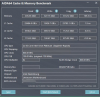
Intel Sapphire Rapids QS E3 Sample. Production performance numbers. That CPU is as close as anyone will get to a production CPU for performance(But the Bios is still Beta)
More info on them.
84080+ is the QS E3 sample on a 2S System
View attachment 64758
Well, it was indeed an ad for ASML stock, but the headline wasn't, "This one company is holding back the entire leading-edge semiconductor industry: Strong Buy". I think the idea was that demand for EUV systems was clearly trending upwards, and despite orders being fully booked two years out, ASML would be able to hit their delivery schedule and meet demand going forward. I'm sure Mizuho never meant to suggest that ASML would be capacity constrained to the point of negatively impacting their customers' business.It appeared as though they were. As you said, it was basically an ad for ASML, showing that every major foundry player would be constrained by EUV equipment in the near future.
Will Intel have enough EUV for 7nm?
It sure does not seem like it. Big win for TSMC 3N?
| process | reported EUV layers | max EUV layers | capacity (KWSPM) | EUV systems required | EUV systems installed |
|---|---|---|---|---|---|
| Intel 4 | 12-13 | 13 | 40 | 12 | 12-20 |
| TSMC N7+ | 4 | 4 | 30 | 3 | |
| TSMC N6 | 5 | 5 | 80 | 9 | |
| TSMC N5 | 11-14 | 14 | 100 | 32 | |
| TSMC N4 | 14-15 | 15 | 60 | 20 | |
| TSMC N3 | 20-25 | 25 | 90 | 50 | |
| TSMC total | 114 | 84-115 |
| MTL tile | x (mm) | y (mm) | area (mm²) | dies per wafer | process | defects / cm² | yield (Seeds model) | dies required (M) | wafers required (K) | production quarters | KWSPM required |
|---|---|---|---|---|---|---|---|---|---|---|---|
| 2+8 CPU | 5.1 | 7.9 | 40.29 | 1578 | Intel 4 | 0.50 | 82.23% | 70 | 54 | 0.5 | 36 |
| 6+8 CPU | 8.8 | 7.9 | 69.52 | 909 | Intel 4 | 0.50 | 74.21% | 100 | 149 | 1.5 | 34 |
| 8+16 CPU | 13.9 | 7.9 | 109.81 | 565 | Intel 4 | 0.50 | 64.56% | 80 | 220 | 2 | 37 |
| GT2 GPU | 2.2 | 10.5 | 23.10 | 2708 | TSMC N3 | 0.10 | 97.74% | 170 | 65 | 1 | 22 |
| SoC-LP | 9.0 | 10.5 | 94.50 | 662 | TSMC N6/N5P/N4 | 0.08 | 92.97% | 170 | 277 | 2 | 47 |
| IOE | 5.1 | 2.0 | 10.20 | 6199 | TSMC N6/N5P/N4 | 0.08 | 99.19% | 170 | 28 | 1 | 10 |
| SoC-HP | ? | ? | ~94.50 | 662 | TSMC N6/N5P/N4 | 0.08 | 92.97% | 80 | 131 | 1 | 44 |
| Base-U | 16.9 | 10.85 | 183.37 | 332 | Intel ? | 0.08 | 87.21% | 70 | 243 | 1 | 81 |
| Base-P/H | 20.6 | 10.85 | 223.51 | 269 | Intel ? | 0.08 | 84.83% | 100 | 439 | 1.5 | 98 |
| Base-HX/S | 23.5 | 10.85 | 254.98 | 234 | Intel ? | 0.08 | 83.06% | 80 | 413 | 1.5 | 92 |
| Intel 4 total | 423 | 4 | 36 | ||||||||
| Intel ? total | 1095 | 4 | 92 | ||||||||
| TSMC N3 total | 65 | 1 | 22 | ||||||||
| TSMC N6/N5P/N4 total | 436 | 4 | 37 |
Intel still has enough EUV systems and cleanroom space at D1X to produce 250 million Meteor Lake compute tiles.
Why would you expect defect densities on Intel 4 to be higher than 0.5? SAQP has been mostly eliminated, pure cobalt is out, enhanced copper is in... Or is it just that you have zero confidence in Intel and are making these numbers up without considering any of the available data?I said I was suggesting Intel 7 is around 0.5. I have no idea what Intel 4 is expected to be in 2023, it could be 20 for all I know.
423,000 wafers in total, manufactured during the span of 4 quarters. Which works out to 35,250 wafers per month, which Intel is entirely capable of. They currently have enough EUV systems and fab space for 40,000 wafer starts per month.Your own estimate says they would need 423k wafers (a year?) when they would maybe in theory be able to do 120.
Exactly. Intel will be lucky to sell 250M client platforms in 2023, and there is no chance that they would be 100% Meteor Lake. As usual, the product mix will include a hefty percentage of salvaged dies that are partially or mostly disabled. My yield calculations are only to eliminate unsalvageable dies and don't address parametric yields or binning. So using your preposterously high D0 numbers just further drives home the point—Intel 4 is in no way capacity constrained.Good news is that your estimate of 250 M dies for a year needed is also far too high. It's not like 100% of Intel's sales are ever of the latest generation.
are making these numbers up without considering any of the available data?
That wasn't part of the rumor at all.Plus this rumored meeting that Pat is going to TSMC about trying to weasel out of their Meteor Lake SoC/IGP obligations because of Intel 4 problems?
That wasn't part of the rumor at all.
No, that simply wasn't part of it at all. They claimed that because of Intel's schedule slip, they want to negotiate more/later N3 wafers to avoid penalties from breaking their agreement. Nothing at all about needing more N3 because of Intel 4 issues.That's basically what Digitimes was implying. You can choose not to believe it.

I updated these to reflect the increased N6 capacity outlined by TSMC during their 2021 Technology Symposium, and I revised Intel 4 capacity upwards again to accommodate a D0 of 0.5 as proposed by @jpiniero.
process reported EUV layers max EUV layers capacity (KWSPM) EUV systems required EUV systems installed Intel 4 TSMC N7+ TSMC N6 TSMC N5 TSMC N4 TSMC N3 TSMC total
| 2015-2017 | 16 | |
| 2018 | 18 | |
| 2019 | 26 | TSMC has half of all EUV machines (statement in Aug 2020) = 30 |
| 2020 | 31 | |
| 2021 | 32 | Based on 2x first half 2021 |
| Total | 123 |
 www.anandtech.com

 www.neowin.net
Is this confirmed. I thought last update was A16 is 5/4nm.This should not be surprising given we know TSMC delayed Apple in getting 3nm last year and this year only the top iPhone models will have the 3nm A16, the rest will continue to use the 5nm A15.

Nonsense IMO. If anything, it's more likely they're trying to weasel their way out of using N3 for the iGPU if you ask me.Plus this rumored meeting that Pat is going to TSMC about trying to weasel out of their Meteor Lake SoC/IGP obligations because of Intel 4 problems?
IMO Intel will announce another Intel 4 delay soon. Just have to wait until there's clarity on whether the chips bill is going to pass or not.
Is this confirmed. I thought last update was A16 is 5/4nm.
Rumors suggest that the iPhone 14 models are likely to continue to use the same A15 chip that was introduced in the iPhone 13 series, while the iPhone 14 Pro models receive an updated A16 chip.

 www.macrumors.com
As for the chip situation, 9to5Mac’s sources confirm that there will be two new iPhone 14 models based on the A15 chip, while two others will have a brand new chip. It’s worth noting that Apple currently has two different versions of the A15 chip, one of which has an extra GPU core and 6GB of RAM (used in 13 Pro models).
Apple could use the high-end version of its A15 Bionic chip in the entry-level iPhone 14 models, as 9to5Mac also heard from our own sources that all this year’s iPhones will have 6GB of RAM.

 9to5mac.com
N3 was never the plan for MTL, but I look forward to the rumor mongers attempting to claim otherwise when it launches. To cover their failed predictions, if nothing else.Nonsense IMO. If anything, it's more likely they're trying to weasel their way out of using N3 for the iGPU if you ask me.
Cough cough splutter 128EUs? cough dying cough


