

-
We’re currently investigating an issue related to the forum theme and styling that is impacting page layout and visual formatting. The problem has been identified, and we are actively working on a resolution. There is no impact to user data or functionality, this is strictly a front-end display issue. We’ll post an update once the fix has been deployed. Thanks for your patience while we get this sorted.
You are using an out of date browser. It may not display this or other websites correctly.
You should upgrade or use an alternative browser.
You should upgrade or use an alternative browser.
Discussion Intel current and future Lakes & Rapids thread
Page 648 - Seeking answers? Join the AnandTech community: where nearly half-a-million members share solutions and discuss the latest tech.

DrMrLordX
Lifer
I’m not here for the sake for meaningless arguing. Learn to read!
I did read what you said, and all you did was back my own statements, so, I don't know what you're going on about.
nicalandia
Diamond Member
Intel would never give AMD an advantage on OpenFoam by leaving their CPUs with HT On and AMD with SMT Off.You have AMD's own marketing materials that have SMT off: https://www.amd.com/system/files/documents/amd-epyc-7Fx2-openfoam.pdf
This shows that in all applications tested, there are gains with lower core counts but not with higher ones: https://www.nas.nasa.gov/assets/nas/pdf/papers/NAS_Technical_Report_NAS-2015-05.pdf
You are talking about 6% gains in a specific scenario with most getting no gains or even lower with recommendations to disable SMT.
By who cares anyways. Sapphire Rapids have been delayed yet again and it will have to compete with Genoa.
Someone tells that woman that Intel 7 is Not the same as 7-nm process
Last edited:

IntelUser2000
Elite Member
Intel would never give AMD an advantage on OpenFoam by leaving their CPUs with HT On and AMD with SMT Off.
Of course not. But it could benefit SPR few % by having HT on and benefit EPYC by having HT off.
They might have cherry picked the situation that benefits them most, but they don't always disadvantage it like that. Yes, sometimes they do, like the Kabylake-G comparison where they used single channel memory, but most of the time they don't, like when people were saying they gimped AMD by using single channel on the Ryzen vs Icelake mobile comparison when they said didn't and had dual channel on Ryzen as well.
Someone tells that woman that Intel 7 is Not the same as 7-nm process
Potential similar density, and similar performance. TSMC is calling it 7nm right?
This article is from Wednesday, but I don't think it was shared here yet. Anyway Intel has a hiring freeze in the Client Group right now. Which is claimed to be only for two weeks but probably will be longer.
The relevant point is that somewhere else I saw a suggestion that PC sales are slumping to the point where Intel might warn at some point. And their Q2 forecast was for a decrease in revenue as it is. Probally not an AMD thing but a macro thing.
It's worth noting that the actual silicon development falls under the Design Engineering Group.
This article is from Wednesday, but I don't think it was shared here yet. Anyway Intel has a hiring freeze in the Client Group right now. Which is claimed to be only for two weeks but probably will be longer.
The relevant point is that somewhere else I saw a suggestion that PC sales are slumping to the point where Intel might warn at some point. And their Q2 forecast was for a decrease in revenue as it is. Probally not an AMD thing but a macro thing.
Also, the original article: https://www.reuters.com/technology/intel-freezes-hiring-pc-chip-decision-least-two-weeks-2022-06-08/
DrMrLordX
Lifer
Potential similar density, and similar performance. TSMC is calling it 7nm right?
1). TSMC hasn't used "nm" in their node names since 16nm/12nm
2). Intel had a 7hm process and renamed it to Intel 4
Anyone referring to Intel 7 as a "7nm process" is clearly in error.
1). TSMC hasn't used "nm" in their node names since 16nm/12nm
2). Intel had a 7hm process and renamed it to Intel 4
Anyone referring to Intel 7 as a "7nm process" is clearly in error.
Semantics mostly, discussed and argued over and over again. Neither has any actual 7nm features in them and both can be called "7nm (marketing) class" processes.
What is important tho, is that Intel is back to being full node behind AMD.
I found this one the most interesting. The rumoured culprit of 10nm debacle seems to be gone and in its place is eCu, whatever that means. Overall seems to be very nice process advance versus "7"
I found this one the most interesting. The rumoured culprit of 10nm debacle seems to be gone and in its place is eCu, whatever that means. Overall seems to be very nice process advance versus "7"
It means enhanced copper.


It means enhanced copper.
Good eye there, Dr. Watson. Seriuosly tho, one has to wonder how it is "enchanced". And if those dopants are unique to Intel, or already deployed in other foundries?
nicalandia
Diamond Member
I found a better quality shot of a 8P + 8E Meteor Lake picture

Last edited:
Henry swagger
Senior member
Polly pitch was the real nm number.. i judge a node by density and polly pitchSemantics mostly, discussed and argued over and over again. Neither has any actual 7nm features in them and both can be called "7nm (marketing) class" processes.
What is important tho, is that Intel is back to being full node behind AMD.
Henry swagger
Senior member
Intel 4 looks like a fanastic node 2x density over intel 7 so 200mmt density... can't wait for meteor lake 😁
Henry swagger
Senior member
They can fit 40 e-cores on this node.. ✅
DrMrLordX
Lifer
can't wait for meteor lake 😁
Well you're gonna have to. Sorry, bud.
Where did you find that? It's not a composite image?
Looks like the images got nuked off of twitter, but there're still all available here.
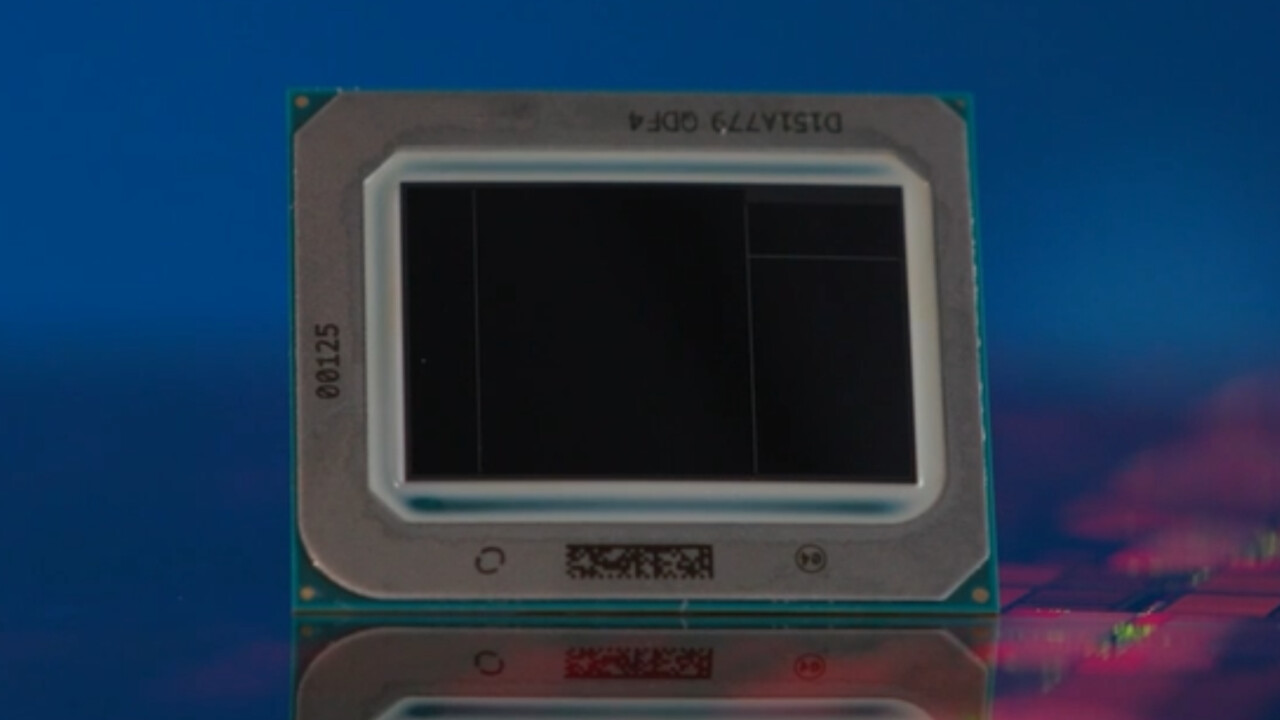
 www.computerbase.de
One would hope that, if nothing else, this would dispel some silly "predictions" about peak clocks.
Intel und die EUV-Fertigung: Technische Details zu „Intel 4“ und Meteor Lake
Intel erwacht aus dem Dornröschenschlaf und führt mit Intel 4 und Meteor Lake die EUV-Fertigung ein. Große Boni werden greifbar.
One would hope that, if nothing else, this would dispel some silly "predictions" about peak clocks.
lightisgood
Senior member
In theory, Intel must use EUV on M0 (and FEOL) only.
Other metal layer could be dealt with by SADP or single patterning.
This fact is very significant in yield / throughput.
Intel 4/3 & TSMC N3(N5?) combination might get back INTC's leadership.
I'm sure, IDM 2.0 is correct strategy.
Other metal layer could be dealt with by SADP or single patterning.
This fact is very significant in yield / throughput.
Intel 4/3 & TSMC N3(N5?) combination might get back INTC's leadership.
I'm sure, IDM 2.0 is correct strategy.
Henry swagger
Senior member
Intel 4 has the highest density in the industry.. should be good for many years like 14nmIn theory, Intel must use EUV on M0 (and FEOL) only.
Other metal layer could be dealt with by SADP or single patterning.
This fact is very significant in yield / throughput.
Intel 4/3 & TSMC N3(N5?) combination might get back INTC's leadership.
I'm sure, IDM 2.0 is correct strategy.
Uhm, you are joking, right? Right?Intel 4 has the highest density in the industry.. should be good for many years like 14nm

Markfw
Moderator Emeritus, Elite Member
He loves Intel. Asking him to remove the blinders is like trying to move a rock.Uhm, you are joking, right? Right?
Henry swagger
Senior member
DrMrLordX
Lifer
Semantics mostly
The problem here is that Intel's own engineers and marketing department were content to call the Intel 4 process "7nm" for quite some time. And the same engineers and marketing dept referred to Intel 7 as 10nm Enhanced SuperFin.
Even if we defer to Intel's own marketing, we can't call Intel 7 "7nm", because they clearly labeled it as a 10nm node with their own language.
He loves Intel. Asking him to remove the blinders is like trying to move a rock.
As long as he stays positive, a little cheerleading every now and then isn't terrible. Might be cringeworthy from time to time but, not really harmful.
TRENDING THREADS
-
 Discussion Zen 5 Speculation (EPYC Turin and Strix Point/Granite Ridge - Ryzen 9000)
- Started by DisEnchantment
- Replies: 25K
-
Discussion Intel Meteor, Arrow, Lunar & Panther Lakes + WCL Discussion Threads
- Started by Tigerick
- Replies: 25K
-
 Discussion Intel current and future Lakes & Rapids thread
- Started by TheF34RChannel
- Replies: 24K
-

-
