• We’re currently investigating an issue related to the forum theme and styling that is impacting page layout and visual formatting. The problem has been identified, and we are actively working on a resolution. There is no impact to user data or functionality, this is strictly a front-end display issue. We’ll post an update once the fix has been deployed. Thanks for your patience while we get this sorted.

Discussion Ada/'Lovelace'? Next gen Nvidia gaming architecture speculation

Page 34 - Seeking answers? Join the AnandTech community: where nearly half-a-million members share solutions and discuss the latest tech.

Leaks were spot on regarding how it looks... Pretty much a beefed up Ampere cooler with a larger fan.

Any guesses as to price? 😛
 
Or getting in the air for a bit in my Cessna....
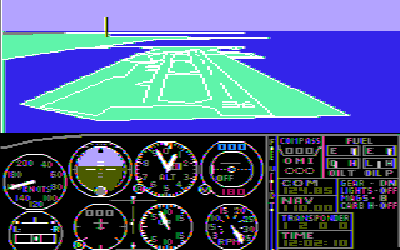
That's why flight sims have been popular for so long, even when they looked like this:

Msfs1.00_000.png
 
90 TERAFLOPS GPU, reordering leading up to 25% efficiency, inference to RT rays for better results with less rays, more powerful DLSS.

Remembers me that classic line "the competition can't compete". Stop it Jensen!
 
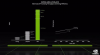
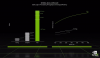
DLSS 3.0 looks like it's doing inter-frame interpolation based on motion vectors and a neural network to increase frame rates. Note, this is on TOP of what DLSS 2.0 does, which is use a lower resolution actual rendered frames to generate new pixels / a higher resolution frame. DLSS 3.0 takes those outputted frames and generates new ones in between. Nvidia demo'd Cyberpunk 2077 with DLSS 3.0 showing almost 4x FPS increase, but it was in a scene where the user drove straight ahead (i.e. the motion vector is quite simple).

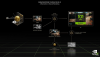
Here's the workflow. DLSS3.0 is the Optical Flow Accelerator / Optical Multi Frame Generation portion. It takes rendered frames from DLSS 2.0 and interpolates between them using motion vectors. So technically, the quality of these new frames in theory cannot be any better than the originally rendered frames, but due to interpolation you get more frames per second in general. It probably does a better job than simple linear interpolators because it uses motion vectors to predict with better accuracy what the interpolated frame should look like and thus mitigate ghosting, etc.
1663687751435.png
 
Last edited:
Up 2X in raster as Jensen said. Maybe RDNA3 (rumored 2.5X 6900XT in raster) will really be faster in raster but I think they will get smoked on RT.
 
I guess >2100 € for 4090 and 1500 €ish for 16GB 4080 here in Finland.

EDIT:
From NVIDIA...
GeForce RTX 4090: >=1999,00 €
RTX 4080 (16GB): >=1509,00 €
RTX 4080 (12GB): >=1129,00 €
 
Back
Top