DisEnchantment
Golden Member
Speculate at will
Last edited:

Vanilla Zen6 is all N3p, N2 only for Dense CCD iirc.

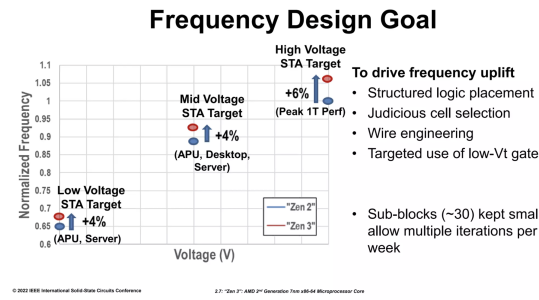
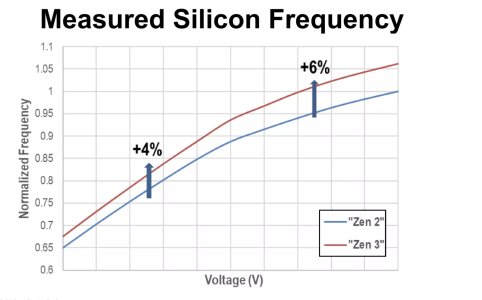
Very very very very very incremental node improvement.Still, they should use a better perf/watt performing process than for Zen 5
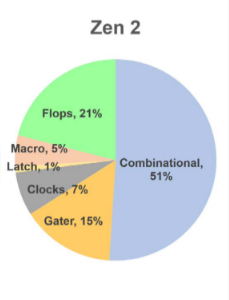
Now that's the funny bit, AMD tends to deliver 1:1 IPC/Cdyn.and inherently lower uarch efficency at isofrequency.
GAA yes, BSPDs are for N2p.Is n2 not when tsmc plans on introducing gaa and backside power delivery?
that should be a fun time to witness whether it's successful and lives up to the hype or it doesn't.GAA yes, BSPDs are for N2p.
Very very very very very incremental node improvement.
Now that's the funny bit, AMD tends to deliver 1:1 IPC/Cdyn.

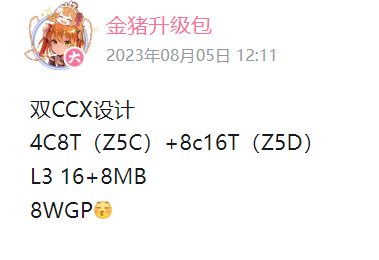
c stands for cloud and is essentially the PR name, d is dense and is the unofficial name still often used (maybe even internally at AMD seeing how often it still pops up?).If the C in Zen meant dense initially what the heck does a zen5d mean?
No.He/she seems to be implying that Zen 5c and 5d are different cores???
I may be missing something but I can't find any data that makes a difference between the C and the D. Both are stripped down traditional cores to pack up to 16 of them on a compute die. If i search against amd's own website with the worse dense it brings up zen4c.c stands for cloud and is essentially the PR name, d is dense and is the unofficial name still often used (maybe even internally at AMD seeing how often it still pops up?).

OTOH *if* those hype claims are true - Zen 5 being a radical departure from the old 4-wide Zen design bringing ~20% IPC & being the last gen on the "2010 packaging tech". Then Zen 6 could still bring a nice IPC gains.Should be the same as Zen+ to Zen 2 or from this latter to Zen 3, since Zen 5 is supposed to be a bigger departure from Zen 4 than thoses previous itérations we can expect it to be some sort of pipe cleaner like Zen 1 in its time.
If Zen 5 IPC improvement is substancial comparatively to Zen 4 it would be logical that Zen 6 would bring significantly less IPC uplift, they ll surely focus on perf/Watt with a 2nm node jump.
Not happeningNow that's the funny bit, AMD tends to deliver 1:1 IPC/Cdyn.
That's what happened at Zen3 so...Not happening
was there not a rumor of amd going 8 wide and intel going even wider earlier in the year or was that all bs?OTOH *if* those hype claims are true - Zen 5 being a radical departure from the old 4-wide Zen design bringing ~20% IPC & being the last gen on the "2010 packaging tech". Then Zen 6 could still bring a nice IPC gains.
First, a fresh architecture always cuts corners meaning its direct successor has plenty of low-hanging fruit. Second, current Zen 4 and probably Zen 5 too are limited by the current IF architecture - having a completely new one could boost a class of workloads.
Also Intel is gonna keep releasing new stuff every year so in 2026 Zen 6 has to bring a substantial perf boost to compete.
From the tone of Mike Clarck interview Zen 5 should be noticeably above the average level of previous iteration, so 18-20% is possible for Zen 5, but it s likely that Zen 6 will be within the usual uplifts, FTR the average improvement per iteration from Zen to Zen 4 was 13% using Cinebench as metric.OTOH *if* those hype claims are true - Zen 5 being a radical departure from the old 4-wide Zen design bringing ~20% IPC & being the last gen on the "2010 packaging tech". Then Zen 6 could still bring a nice IPC gains.
First, a fresh architecture always cuts corners meaning its direct successor has plenty of low-hanging fruit. Second, current Zen 4 and probably Zen 5 too are limited by the current IF architecture - having a completely new one could boost a class of workloads.
Also Intel is gonna keep releasing new stuff every year so in 2026 Zen 6 has to bring a substantial perf boost to compete.

Never seen "Cdyn" in AMD tech docs, they always use the term CacNow that's the funny bit, AMD tends to deliver 1:1 IPC/Cdyn.
Yea that's Intel lingo.Never seen "Cdyn" in AMD tech docs, they always use the term Cac