[Rumor, Tweaktown] AMD to launch next-gen Navi graphics cards at E3

Page 134 - Seeking answers? Join the AnandTech community: where nearly half-a-million members share solutions and discuss the latest tech.
Status
Not open for further replies.

Head1985

Golden Member
Jul 8, 2014
1,867
699
136

Same CU count as the 5700.

36CUs, 192 bit memory bus, 12Gbps memory and significantly lowered clocks.
Interesting.But i dont see how 2304sp navi will cost bellow 300usd(when 5700 cost 350+)
Also 7nm yields must be very good because its only 11% cut vs full SKU in 5700xt.7nm is how old today?? 3 years?I bet it is better and cost less than 14nm when rx480 launched for only 230usd.AMD just milking us.
 
Last edited:

lobz

Platinum Member
Feb 10, 2017
2,057
2,856
136
If you want similar to PS5 performance on PC, the mimium i feel is 5700XT. Anything less than THAT, then PS5 will be better option.
I don't know why everyone forgets that the GPUs in consoles perform 1-2 tiers higher, because of how the developers can finetuine their optimizations. TFLOP vs TFLOP no consumer GPU comes close to the consoles.
 

railven

Diamond Member
Mar 25, 2010
6,604
561
126
I don't know why everyone forgets that the GPUs in consoles perform 1-2 tiers higher, because of how the developers can finetuine their optimizations. TFLOP vs TFLOP no consumer GPU comes close to the consoles.

This hasn't been true since consoles adopted x86 CPUs. The PS4 could barely deliver 1080p@60 on all titles, and the Xbox One had to resort to 720-900p range. Even now the PS4 Pro and Xbox One X can barely deliver 4K@30 without resorting to upscaling on variable resolutions.

EDIT: The only caveat I'd agree to is first part studios. First part devs have definitely punch above the hardware performance, but that doesn't help PC when most first party devs worth mentioning work for Nintendo and Sony (Sorry MSFT) and count the number of games their first party studios put out on PC.
 

lobz

Platinum Member
Feb 10, 2017
2,057
2,856
136
This hasn't been true since consoles adopted x86 CPUs. The PS4 could barely deliver 1080p@60 on all titles, and the Xbox One had to resort to 720-900p range.
You couldn't be farther from the truth there. The PS4 and especially the Xbox One systems perform far beyond what they could reach in a PC.
 

GaiaHunter

Diamond Member
Jul 13, 2008
3,732
432
126
Data out there confirms otherwise. Steam hardware survey and others like it support my statement. 2070S outsells the buggy 5700XT. AMD reddit still full of BSOD, reboots and various bugs with Navi.
The reason NVIDIA outsells AMD is because they have the fastest card and most people buy cards based on who tops the chart.
The moment AMD has the top performer they will outsell NVIDIA.
 

uzzi38

Platinum Member
Oct 16, 2019
2,747
6,657
146
The reason NVIDIA outsells AMD is because they have the fastest card and most people buy cards based on who tops the chart.
The moment AMD has the top performer they will outsell NVIDIA.

As if. You'll see that in ~6 months, as if the last time it happened wasn't proof enough.
 
  • Like
Reactions: Glo.

Head1985

Golden Member
Jul 8, 2014
1,867
699
136
Last time amd had fastest single GPU for atleast 1year was in radeon 9700/9800pro time and maybe in x800time.And they were close to 50% market share back then.
 

Tup3x

Golden Member
Dec 31, 2016
1,300
1,438
136
You couldn't be farther from the truth there. The PS4 and especially the Xbox One systems perform far beyond what they could reach in a PC.
I don't think that's true, judging by DigitalFoundry's comparison and tech videos.
 
  • Like
Reactions: psolord

AtenRa

Lifer
Feb 2, 2009
14,003
3,362
136
Except it didn't happen the last few times

In Q1 and Q2 2010 AMD Mid-Level and High-Level segment was outselling NVIDIA, it was the time AMD had the HD5xxx at 40nm and NVIDIA was 9 months behind with Fermi and its best GPU was the 55nm GTX285.

NVIDIA still had the overall market share but only because they were selling way more entry-level gpus to the OEMs/ODMs. Today NVIDIA sells tons of GPUs to China's Internet Cafes and that is shown in Steam Survey.
 

GaiaHunter

Diamond Member
Jul 13, 2008
3,732
432
126
In Q1 and Q2 2010 AMD Mid-Level and High-Level segment was outselling NVIDIA, it was the time AMD had the HD5xxx at 40nm and NVIDIA was 9 months behind with Fermi and its best GPU was the 55nm GTX285.

NVIDIA still had the overall market share but only because they were selling way more entry-level gpus to the OEMs/ODMs. Today NVIDIA sells tons of GPUs to China's Internet Cafes and that is shown in Steam Survey.
And then the 6970 was later and was slower than the GTX580 which was considerably better than the GTX480.
The 7970 arrived earlier than the GTX680 and even though time proved the 7970 was a superior card at the time that wasn't clear.
Since then AMD has always been late.

You need 2-3 years of consistent products to change the market.
Look at ryzen.
 

alexruiz

Platinum Member
Sep 21, 2001
2,836
556
126
The RX 5600 XT looks very good, probably too strong on the GPU part, but it has a major flaw:
6GB VRAM! :eek:
That card should have been 8GB VRAM, still 256 bits bus, still 1625 MHz game clock, but only 32 CUs (2048 SP)

Being lower clocked, I am thinking that overclocking it will be fairly easy.
We'll see
 

uzzi38

Platinum Member
Oct 16, 2019
2,747
6,657
146
The RX 5600 XT looks very good, probably too strong on the GPU part, but it has a major flaw:
6GB VRAM! :eek:
That card should have been 8GB VRAM, still 256 bits bus, still 1625 MHz game clock, but only 32 CUs (2048 SP)

Being lower clocked, I am thinking that overclocking it will be fairly easy.
We'll see

If they kept the 256 bit bus, they'd basically just be selling a 5700 for cheap. They aren't doing that.
Power modding AMD GPUs is easy, getting around a memory bus limitation however, is not.
 
  • Like
Reactions: Glo.

Head1985

Golden Member
Jul 8, 2014
1,867
699
136
And then the 6970 was later and was slower than the GTX580 which was considerably better than the GTX480.
The 7970 arrived earlier than the GTX680 and even though time proved the 7970 was a superior card at the time that wasn't clear.
Since then AMD has always been late.

You need 2-3 years of consistent products to change the market.
Look at ryzen.
7970 arrived and AMD increased price form 6970 369usd to 7970 550usd.This is where all this bullshit prices started and why we have today polaris replacement at 400+ usd.They tried correct it with hawaii, but it was too little too late(maxwell destroyed it).After that they playing along NV with DUOPOLY.
 

tajoh111

Senior member
Mar 28, 2005
350
389
136
7970 arrived and AMD increased price form 6970 369usd to 7970 550usd.This is where all this bullshit prices started and why we have today polaris replacement at 400+ usd.They tried correct it with hawaii, but it was too little too late(maxwell destroyed it).After that they playing along NV with DUOPOLY.

Yup. When the value company prices themselves high at the expense of marketshare and profits, it further allows price increase from the luxury company as demand from the value company gets transferred to the luxury company as the price difference between the two disappears.

This market equilibrium is only restored when the luxury company raises their prices. This causes demand to falls for their product and goes back to the value company. This is why price fixing mutually benefits both companies. Both companies get to charge higher prices they normally could in a competitive market.

If AMD released their products at lower prices, demand for Nvidia product would decrease. Low demand for Nvidia cards would ultimately cause Nvidia to lower prices and ultimately consumers would benefit whether they bought AMD or Nvidia cards. When the 4870 was released, AMD took nearly 50% of the market from Nvidia, Nvidia dropped prices and a market equilibrium was reach which was better for consumers.
 

Mopetar

Diamond Member
Jan 31, 2011
8,526
7,786
136
What AMD should do is to cut the 5500 XT prices heavily and release this card for $249 AT MOST. But they won't, of course. They seem to be perfectly content with remaining completely irrelevant in 90% of the dGPU space for some enigmatic reason...

It’s probably been said a dozen times already, but what choice do they have? Sure they could cut prices and sell through everything immediately, but they’d just be permanently sold out because they can’t produce more without cutting production on another product since all of the main products are on TSMC now. People would just resell cards and people would get mad at AMD who is making less money themselves.

Consumer GPU is probably the least profitable product based on wafer cost (APUs would be if they were using 7nm as well, but they aren’t yet) so it’s hardly surprising that it gets priced to where it sells comfortably without shortages or piling up inventory. If AMD is pricing their cards at NVidia prices it’s because they finally have a card that they can sell at NVidia prices instead of having to cut prices just to get sales from average consumers.

If they see a big turnaround it will only be when NVidia makes some kind of misstep. The times when AMD did best weren’t just when AMD had good products, but also when NVidia wasn’t executing as well as they usually do or when they had some of their worst products. Remember that when it comes down to a choice between two manufacturers it’s not about how good of a product one company has in an absolute sense, but how the two competing products compare in a relative sense.
 
  • Like
Reactions: Veradun

VirtualLarry

No Lifer
Aug 25, 2001
56,587
10,227
126
Has anyone noticed the numerical similarity between AMD numbering and NVidia's?

5500(XT) == GTX 1650 (Super)
5600(XT) == GTX 1660 (Super)
5700(XT) == RTX 2070 (Super)
5800(XT) == RTX 2080 (Super) (*Hopefully!)
 
  • Like
Reactions: CHADBOGA and lobz

GaiaHunter

Diamond Member
Jul 13, 2008
3,732
432
126
7970 arrived and AMD increased price form 6970 369usd to 7970 550usd.This is where all this bullshit prices started and why we have today polaris replacement at 400+ usd.They tried correct it with hawaii, but it was too little too late(maxwell destroyed it).After that they playing along NV with DUOPOLY.
When the 7970 released at $550 the GTX580 was selling for $500 and the 6990 and 590 were selling for $700 and $750.

Maxwell released 1 year after Hawaii. At the time the GTX980 was something like 20% faster (similar to the same 20% faster than the 7970 was over the GTX580 btw, but I guess when AMD charges $550 vs $500 for 20% more performance it is overpriced while when NVIDIA charges $550 vs $460 for 20% more performance it is destruction).

Hawaii was like 6 months later than the GTX780 and matched the Titan.
One month later NVIDIA released the 780Ti.

The prices went out of control with the mining craze and the RTX GPUs pricing didn't help.

But yeah, AMD isn't going to sell cheap 7nm GPUs when they can turn all the 7nm wafers into EPYCs (which they don't because they need to keep market presence for the time they can sell to all the markets).

If AMD wants to sell cards they have to have the top of the charts cards or be the first to the market.
 
  • Like
Reactions: lobz

JPB

Diamond Member
Jul 4, 2005
4,064
89
91
AMD's high-end Navi GPU details: twice as fast as Radeon RX 5700 XT?!

AMD's next-gen Navi 21 GPU: massive 505mm2 die, 12-16GB of GDDR6 -- and SUPER fast!

AMD has been cooking up a kick-ass successor to Navi with a 2020 flagship GPU that is being referred to as Navi 21, with the second-generation RDNA family coming on the new 7nm+ process node.

69543_01_amds-high-end-navi-gpu-details-twice-fast-radeon-rx-5700-xt.jpg


Navi 21 will be a large GPU with new rumors pointing to it packing somewhere between 15-16 billion transistors, which makes it bigger than Vega 20 (13.2 billion) and Navi 10 (10.3 billion). But the bigger news here is that AMD's new flagship Navi 20-based graphics card would feature 12-16GB of GDDR6 memory on a much wider memory bus.

The new rumors have AMD possibly using a wider 384-bit or 512-bit memory interface, something that would enable much more memory bandwidth with GDDR6 memory. Previous rumors suggested AMD would tap higher-end HBM2E memory, packing between 16-32GB of framebuffer.

The new Navi 21 GPU will have hardware-based ray tracing, exactly the same as the Turing GPU from NVIDIA. We should see something in the first few months of 2020, but I would guess we'll see a mix of GDDR6 (on consumer cards) and HBM2/E on the server/datacenter solutions.

GPU Die Size
Navi 10 - 251mm2
Vega 20 - 331mm2
Navi 21 - 505mm2

GPU Transistors
Navi 10 - 10.3 billion transistors
Vega 20 - 13.2 billion transistors
Navi 21 - 15-16 billion transistors
 
  • Like
Reactions: guachi

tajoh111

Senior member
Mar 28, 2005
350
389
136
When the 7970 released at $550 the GTX580 was selling for $500 and the 6990 and 590 were selling for $700 and $750.

Maxwell released 1 year after Hawaii. At the time the GTX980 was something like 20% faster (similar to the same 20% faster than the 7970 was over the GTX580 btw, but I guess when AMD charges $550 vs $500 for 20% more performance it is overpriced while when NVIDIA charges $550 vs $460 for 20% more performance it is destruction).

Hawaii was like 6 months later than the GTX780 and matched the Titan.
One month later NVIDIA released the 780Ti.

The prices went out of control with the mining craze and the RTX GPUs pricing didn't help.

But yeah, AMD isn't going to sell cheap 7nm GPUs when they can turn all the 7nm wafers into EPYCs (which they don't because they need to keep market presence for the time they can sell to all the markets).

If AMD wants to sell cards they have to have the top of the charts cards or be the first to the market.

Cards like the GTX 480, GTX 580 are huge monolithic chips with a high cost of production. They need to be expensive to justify there existent because they need a higher cost to justify their efforts to create and manufacture. Due to how yields work with larger chips, the cost of production for larger chips is not linear with a cost of production of smaller chips. It is improportionally more expensive. The engineering in terms of R and D is also much more difficult. It is why Nvidia has since abandoned until recently again(done when the nod is mature) launching flagship first and selling at volume. The GTX 480 was an example of this and vega to an extent as well.

The 7970 has more in common with the 5870 than a monolithic chip like Vega, GTX 480 or RTX 2080 TI or RTX 2080 even.

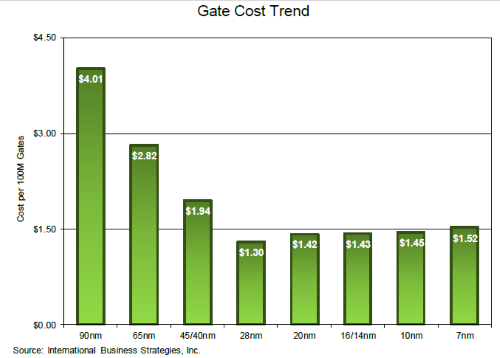
What was typical of the past prior to finfet is the die shrinkage from a newer nod reduced cost per mm by decreasing the cost per transistor. This was true until 14nm finfet. 28nm still brought significant saving

Handel1.png


What AMD did was screw that. Our performance is the best now so lets keep all the profit for ourselves and pass on none of the savings onto the customer.

What this lead to is price to performance moving laterally rather than improving.

perfrel_1680.gif


The same thing happened to the RTX in terms of price to improvement.

1577904072142.png

The reasons for the RTX for costing so much are less greedy than AMD's though. The RTX 2080 cost more to produce than a gtx 1080 ti. Not only was it a larger die on a newer process, the expense of GDDr6 more than offset the savings of 3gb less memory as GDDR6 cost 70% more than Gddr5. In addition Nvidia had more than800 million dollars in inventory of pascal.

The 7970 was midsized and priced like a flagship at the time and even the 7870 which was mainstream sized and should have come out at 200 or less was priced at 350. I argue this was even worse offender considering cheap 28nm was being used to manufacture the chips and is priced the same as 7nm finfet chips when we account for inflation.

Forum goers did not react that negatively because of a strong bias for AMD to succeed and happiness for them coming out on top vs the GTX 580. But the public was different, they were more used to AMD providing better value, so they waited.

The GTX 680 came out with slightly better performance at a lower price which resulted in significantly better performance per dollar. And because of their brand strength and they were offering better price to performance than AMD, they were welcomed as the hero.

AMD was struck down by the sword of Damocles because it was playing a stupid and arrogant game of trying to leadership branding from Nvidia when they were not prepared and they thought they could take a victory lap when it was obvious the risk of their move. The competition was literally a few months from releasing and they only held a 10-20 percent lead over the GTX 580. The 7970 was no GTX 8800 and kepler was not going to show up a year later. After kepler launched the result was the 7xxx series stopped selling, the 7970 had fallen 200 dollars by the end of the year and AMD had to pack 3 AAA titles for the cards to sell well. AMD also lost a tonne of goodwill and marketshare as 7970 series card collected dust on store shelves after kepler launched. AMD was forced to sell the cards lower than a 5870 because AMD made it so easy for reviewers to write good reviews for the GTX 680 and 670. Performance, price and efficiency on top of the Nvidia brand, AMD handed Nvidia the keys to the market because they allowed Nvidia to become the good guys for correct AMD's greed while in actuality, nvidia was being greedy and taking advantage of AMD's ultra greed.

 
  • Haha
Reactions: Krteq and lobz

lobz

Platinum Member
Feb 10, 2017
2,057
2,856
136
Cards like the GTX 480, GTX 580 are huge monolithic chips with a high cost of production. They need to be expensive to justify there existent because they need a higher cost to justify their efforts to create and manufacture. Due to how yields work with larger chips, the cost of production for larger chips is not linear with a cost of production of smaller chips. It is improportionally more expensive. The engineering in terms of R and D is also much more difficult. It is why Nvidia has since abandoned until recently again(done when the nod is mature) launching flagship first and selling at volume. The GTX 480 was an example of this and vega to an extent as well.

The 7970 has more in common with the 5870 than a monolithic chip like Vega, GTX 480 or RTX 2080 TI or RTX 2080 even.

What was typical of the past prior to finfet is the die shrinkage from a newer nod reduced cost per mm by decreasing the cost per transistor. This was true until 14nm finfet. 28nm still brought significant saving

Handel1.png


What AMD did was screw that. Our performance is the best now so lets keep all the profit for ourselves and pass on none of the savings onto the customer.

What this lead to is price to performance moving laterally rather than improving.

perfrel_1680.gif


The same thing happened to the RTX in terms of price to improvement.

View attachment 15151

The reasons for the RTX for costing so much are less greedy than AMD's though. The RTX 2080 cost more to produce than a gtx 1080 ti. Not only was it a larger die on a newer process, the expense of GDDr6 more than offset the savings of 3gb less memory as GDDR6 cost 70% more than Gddr5. In addition Nvidia had more than800 million dollars in inventory of pascal.

The 7970 was midsized and priced like a flagship at the time and even the 7870 which was mainstream sized and should have come out at 200 or less was priced at 350. I argue this was even worse offender considering cheap 28nm was being used to manufacture the chips and is priced the same as 7nm finfet chips when we account for inflation.

Forum goers did not react that negatively because of a strong bias for AMD to succeed and happiness for them coming out on top vs the GTX 580. But the public was different, they were more used to AMD providing better value, so they waited.

The GTX 680 came out with slightly better performance at a lower price which resulted in significantly better performance per dollar. And because of their brand strength and they were offering better price to performance than AMD, they were welcomed as the hero.

AMD was struck down by the sword of Damocles because it was playing a stupid and arrogant game of trying to leadership branding from Nvidia when they were not prepared and they thought they could take a victory lap when it was obvious the risk of their move. The competition was literally a few months from releasing and they only held a 10-20 percent lead over the GTX 580. The 7970 was no GTX 8800 and kepler was not going to show up a year later. After kepler launched the result was the 7xxx series stopped selling, the 7970 had fallen 200 dollars by the end of the year and AMD had to pack 3 AAA titles for the cards to sell well. AMD also lost a tonne of goodwill and marketshare as 7970 series card collected dust on store shelves after kepler launched. AMD was forced to sell the cards lower than a 5870 because AMD made it so easy for reviewers to write good reviews for the GTX 680 and 670. Performance, price and efficiency on top of the Nvidia brand, AMD handed Nvidia the keys to the market because they allowed Nvidia to become the good guys for correct AMD's greed while in actuality, nvidia was being greedy and taking advantage of AMD's ultra greed.

That was a fine bedtime story. Got sleepy from it too, well done.
 

lifeblood

Senior member
Oct 17, 2001
999
88
91
AMD's high-end Navi GPU details: twice as fast as Radeon RX 5700 XT?!

AMD's next-gen Navi 21 GPU: massive 505mm2 die, 12-16GB of GDDR6 -- and SUPER fast!

AMD has been cooking up a kick-ass successor to Navi with a 2020 flagship GPU that is being referred to as Navi 21, with the second-generation RDNA family coming on the new 7nm+ process node.

69543_01_amds-high-end-navi-gpu-details-twice-fast-radeon-rx-5700-xt.jpg


Navi 21 will be a large GPU with new rumors pointing to it packing somewhere between 15-16 billion transistors, which makes it bigger than Vega 20 (13.2 billion) and Navi 10 (10.3 billion). But the bigger news here is that AMD's new flagship Navi 20-based graphics card would feature 12-16GB of GDDR6 memory on a much wider memory bus.

The new rumors have AMD possibly using a wider 384-bit or 512-bit memory interface, something that would enable much more memory bandwidth with GDDR6 memory. Previous rumors suggested AMD would tap higher-end HBM2E memory, packing between 16-32GB of framebuffer.

The new Navi 21 GPU will have hardware-based ray tracing, exactly the same as the Turing GPU from NVIDIA. We should see something in the first few months of 2020, but I would guess we'll see a mix of GDDR6 (on consumer cards) and HBM2/E on the server/datacenter solutions.

GPU Die Size
Navi 10 - 251mm2
Vega 20 - 331mm2
Navi 21 - 505mm2

GPU Transistors
Navi 10 - 10.3 billion transistors
Vega 20 - 13.2 billion transistors
Navi 21 - 15-16 billion transistors
Still too many conflicting rumors to determine the truth about Navi 21. Some sites say it'll be HBM2, others GDDR6. Some say RDNA v1, others RDNA v2. As Yoda said, hard to see the future is.

My current prediction is RDNA v2 (I predict all 20 series GPU's will be RDNA v2) and GDDR6. Navi 23 will be HBM2. Now to pull out a deck of cards and wait as I don't expect to see either for a few months. The next GPU up will be RX 5600 followed by the RTX 2080 Ti Super. I expect Nvidia to again beat AMD to the punch with a super card to foil what AMD has up its sleeve.
 
  • Like
Reactions: JPB

Glo.

Diamond Member
Apr 25, 2015
5,930
4,991
136
It was not supposed to be 2x as fast, but 2x as FAT.

Big Navi won't be 2x as fast, unless it will get 2x the memory bandwidth, or more.
 
Status
Not open for further replies.