nurturedhate
Golden Member
He's not even comparing it to a 290x, that's a 270x of all things.Thing is , it was a 280 replacement not 290X.They just didnt have hawaii replacement as it got canned.And for the 280 its pretty much double perf/watt.

He's not even comparing it to a 290x, that's a 270x of all things.Thing is , it was a 280 replacement not 290X.They just didnt have hawaii replacement as it got canned.And for the 280 its pretty much double perf/watt.

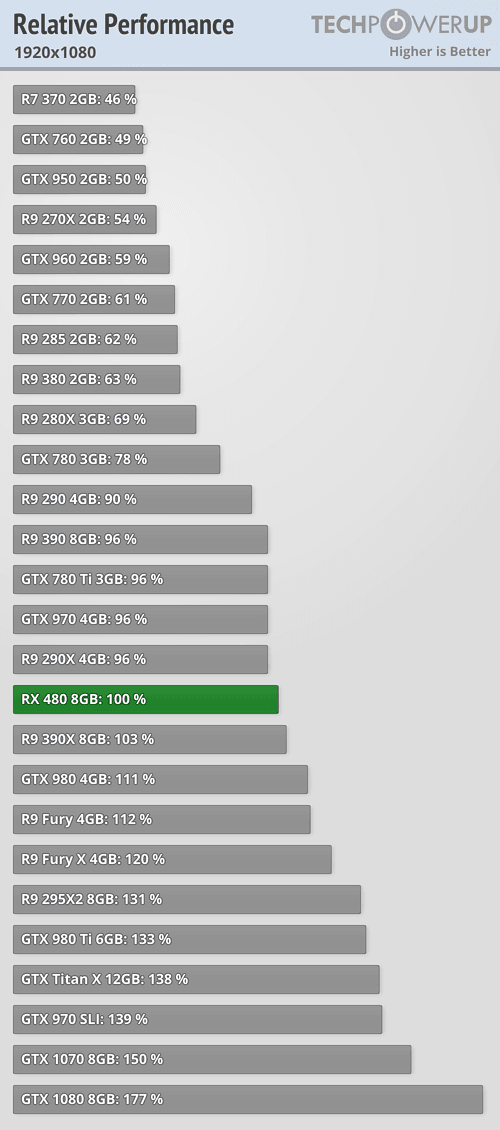
View attachment 7064
35% better perf/watt for the RX 480.
https://www.techpowerup.com/reviews/AMD/RX_480/25.html
I remember that time - I got a GTX 260 216, it was really cheap, it worked great and it drove my 120hz monitor at 120hz (something the AMD cards didn't do at the time). I do admit I did occasionally take off my tinfoil hat...When ATI was smashing Nvidia at every metric when HD 5xxx just came around and Nvidia was still on GTX/S 2XX, the marketshare at most stayed 50-50. THAT is the effect of mindshare working at it's fullest.
I remember that time - I got a GTX 260 216, it was really cheap, it worked great and it drove my 120hz monitor at 120hz (something the AMD cards didn't do at the time). I do admit I did occasionally take off my tinfoil hat...

It didn't replace the 290X (against which its perf/watt advantage is 64%), though. AMD itself compared it to the 270X (or at the very least they compared Polaris 10 to it), and the die sizes are the same (232 and 212 mm^2 respectively). It didn't replace the 280X either. It was always at that "mainstream" ~$200 price point that Pitcairn chips filled. It's the correct comparison.He's not even comparing it to a 290x, that's a 270x of all things.

View attachment 7064
35% better perf/watt for the RX 480.
https://www.techpowerup.com/reviews/AMD/RX_480/25.html
There were plenty of complaints from AMD users of 5800's at the time. In those days it was 3D vision, an Nvidia technology, that ushered in those 120hz displays (they were all 3D vision compatible). AMD simply didn't design that range of cards with 120hz in mind so it took them a while to sort it out. Anyway my original point being that it wasn't quite as simple as people only going Nvidia because they didn't know better.Back then it required a dual link DVI cable. Which only certain cards for both makers could do. It was typically the upper end cards from each. The HD 5800 series could do it for instance.

Perf/watt should always be measured at iso performance or iso watt. This is why we compare RX480 perf/watt to R9 290X, they both have the same perf.
https://www.techpowerup.com/reviews/AMD/RX_480/

it makes no sense only if you make any assumptions about GPUs performance, based on performance/watt ratios.This is an illogical way to measure a card's improvement in perf/w in so many ways.
1. New halo cards from Nvidia have no equal in performance, and therefore based on your logical have an infinite improvement in performance per watt.
2. The GTX 750 TI matched the GTX 480 in performance, but in no way was replacement to that card to anyone with a half brain.
Similar die sizes or same family hierarchy is the most logical way to measure perf/w improvements. The RX480 slotted the exact same way the 270x was with relation to price, die size, and performance amongst the rest of it's stack so therefore that is the most natural and logical comparison.
This is an illogical way to measure a card's improvement in perf/w in so many ways.
1. New halo cards from Nvidia have no equal in performance, and therefore based on your logical have an infinite improvement in performance per watt.
2. The GTX 750 TI matched the GTX 480 in performance, but in no way was replacement to that card to anyone with a half brain.
Similar die sizes or same family hierarchy is the most logical way to measure perf/w improvements. The RX480 slotted the exact same way the 270x was with relation to price, die size, and performance amongst the rest of it's stack so therefore that is the most natural and logical comparison.
AMD itself compared Polaris 10 to 270X, from which they came up with their claimed 2.8x performance/watt increase, it has the same die size, it fills the same market segment, targets similar power consumption; it's the right comparison. The only problem with AMD's comparison is that they used TDP; they didn't actually measure the power consumption of the card under load. It's hard to excuse that when review outlets are able to do it. Of course, this works out in their favor because 270X had a 180W TDP, though the card itself it only consumes 110W at full load. They said the RX 470 had a 110W TDP (later changed to 120W) and consumes 120W. There's a whole lot wrong with this - the 270X consumes 10W less than 470, not 70W more, and once again, AMD is the one who made this comparison. I linked the relevant slide in my post above.You note similar die sizes, thing is, the 270X and the RX 480 do not have the same transistor counts at all as they are on different nodes. The RX 480 has double the transistors of the 270X and is much closer to Hawaii. Which makes sense as they have near the same performance, and Hawaii production ended because the RX 480 took its place. You mention they cannot be compared because of pricing. But pricing changes, and to this day, there has never been a replacement for Hawaii. We had Polaris, which matched its performance. And then a year later we had Vega, but its pricing was way above what the 390 was priced at.
Not even sure why this has to be argued. When AMD stated twice the Perf:Watt, they specifically mentioned the 390. As they had the same performance envelope, but Polaris used almost half the power.
1. We are talking improvements of performance for a given amount of power usage. The card would be measured based on wattage. So it would be compared to a previous gen card that used the same amount of power, and then show the difference in performance. If it uses more power and has more performance, the calculation is not so simple. But by no means would it be considered infinitely better.
2. This doesn't make much sense in this conversation. Who here said we should compare cards that are 3 generations apart?
You note similar die sizes, thing is, the 270X and the RX 480 do not have the same transistor counts at all as they are on different nodes. The RX 480 has double the transistors of the 270X and is much closer to Hawaii. Which makes sense as they have near the same performance, and Hawaii production ended because the RX 480 took its place. You mention they cannot be compared because of pricing. But pricing changes, and to this day, there has never been a replacement for Hawaii. We had Polaris, which matched its performance. And then a year later we had Vega, but its pricing was way above what the 390 was priced at.
Not even sure why this has to be argued. When AMD stated twice the Perf:Watt, they specifically mentioned the 390. As they had the same performance envelope, but Polaris used almost half the power.


You know TPU performance summary includes ancient games and stupid games nobody sane would test GPUs on, like Civ VI, or nobody would ever buy like DragonQuest? Laughable comparison. Use something with some credibility.Vega 64 isnt faster than 1080 in almost all the games, it isnt even faster on average.
https://www.techpowerup.com/gpu-specs/radeon-rx-vega-64.c2871
Thats why its below 1080 in this graph, and it was even worse at launch.
BUT , its certainly faster in most newer games, thats why you may get this.
AND moreover custom aib vega 64`s in newer games pretty much trade punches with vanilla 2070.But custom ones have better cooling so they dont throttle as much.You can still see a result where v64 gets lower fps than 1070Ti.
They tested 20 games for the Vega 64 review; one of them was Civ 6, none of them were Dragon Quest. Incidentally, TPU tests Strange Brigade these days as well.You know TPU performance summary includes ancient games and stupid games nobody sane would test GPUs on, like Civ VI, or nobody would ever buy like DragonQuest? Laughable comparison. Use something with some credibility.
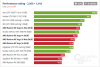

You know TPU performance summary includes ancient games and stupid games nobody sane would test GPUs on, like Civ VI, or nobody would ever buy like DragonQuest? Laughable comparison. Use something with some credibility.

Easiest way right now is to use price brackets. If 399/499 prices are real, then NAVI is VEGA replacement.Figuring out which card replaced which card was so much easier when they had consistent naming. The HD 6750 replaced the HD 5750. Simple. Then they started giving weird names and made it much more difficult.
I'm expecting Navi 10 to be the Vega replacement, Navi 14 to be the Polaris replacement, and Navi 20 (in 2020) to be the Radeon VII replacement. How it actually works out, we'll see...Easiest way right now is to use price brackets. If 399/499 prices are real, then NAVI is VEGA replacement.
Based on your price measurement (which I agree with), the predecessors for RX 480 were:Easiest way right now is to use price brackets. If 399/499 prices are real, then NAVI is VEGA replacement.
Comparing the 1050ti sales to RX 570 is kinda useless. Until recently the MSRP was irrelevant as the prices were sky high due to mining and it was hard to even find an RX 570 (I know because I looked). The 1050ti was expensive but at least it was available. When I went to Japan I looked in a few electronics stores there. All the stores had a few 1050ti’s on the shelf but the spot where the 570 went was empty.I think a lot of you are ignoring that in a lot of countries 1050ti was actually a lot cheaper than RX 570. We are talking about as much as $50-70 difference. This was the main reason for 1050ti being so popular because it was cheaper and small and required no additional power. Only in the last few months has 570 reduced the price gap although now the competition is with the 1650 and guess what the 1650 is also about $30 cheaper.
In majority of countries like US, Canada, Australia, Japan, China, whole EU, etc RX 570 was for months cheaper than GTX 1050 Ti. At least, for last 8 months. And for last 8 months GTX 1050 Ti still outsold RX 570.I think a lot of you are ignoring that in a lot of countries 1050ti was actually a lot cheaper than RX 570. We are talking about as much as $50-70 difference. This was the main reason for 1050ti being so popular because it was cheaper and small and required no additional power. Only in the last few months has 570 reduced the price gap although now the competition is with the 1650 and guess what the 1650 is also about $30 cheaper.

You know TPU performance summary includes ancient games and stupid games nobody sane would test GPUs on, like Civ VI, or nobody would ever buy like DragonQuest? Laughable comparison. Use something with some credibility.
Boo, I bought DQ XI for full price and got well over a hundred hours out of it. Someday I might go back and play it again on my Radeon VII. Great game for anyone who is a DQ fan.


