
-
We’re currently investigating an issue related to the forum theme and styling that is impacting page layout and visual formatting. The problem has been identified, and we are actively working on a resolution. There is no impact to user data or functionality, this is strictly a front-end display issue. We’ll post an update once the fix has been deployed. Thanks for your patience while we get this sorted.
You are using an out of date browser. It may not display this or other websites correctly.
You should upgrade or use an alternative browser.
You should upgrade or use an alternative browser.
Discussion Qualcomm Snapdragon Thread
Page 153 - Seeking answers? Join the AnandTech community: where nearly half-a-million members share solutions and discuss the latest tech.


Meteor Late
Senior member
To be more efficient, E cores are workhorse of Soc in mobile, P cores are just for burst perfomance, 6 E cores would definetely help reducing power usage compare to 4 E cores.
More efficient only when all cores are being used, though, and that's his point here, that almost nothing in the real world is going to leverage all these cores in mobile.

FlameTail
Diamond Member
Android apps are well optimised to scale upto 8 cores.More efficient only when all cores are being used, though, and that's his point here, that almost nothing in the real world is going to leverage all these cores in mobile.
FlameTail
Diamond Member
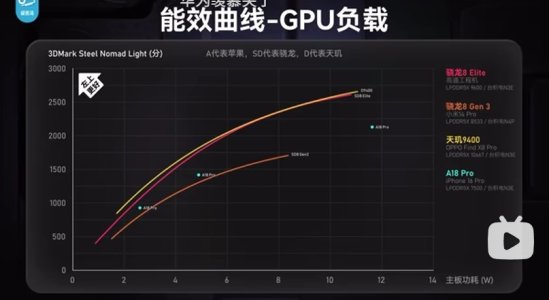
| SoC | FP32 ALUs | Clock Speed | 3DMark Steel Nomad Light |
| 8 Elite | 1536 | 1.15 GHz | 2600 points |
| D9400 | 1536 | 1.6 GHz | 2600 points |
| A18 Pro | 768 | 1.5 GHz | 2100 points |
This means the Adreno 830 has better "performance-per-clock" than the Immortalis G925 MP12 in the Dimensity 9400, which means the architecture is better. But the "performance-per-ALU" is still not as good as A18 Pro, which has half the ALU count.
Last edited:
Meteor Late
Senior member
Main thing I want to see is single core efficiency, as multi core efficiency is going to be better by simply having more cores and reducing frequency to raise efficiency.
Your table states that 8 Elite PPC is 2600/1.6 while G925 is 2600/1.15. That would suggest PPC of G925 is better. Unless you have a mistake in your table.This means the Adreno 830 has better "performance-per-clock" than the Immortalis G925 MP12 in the Dimensity 9400, which means the architecture is better. But the it's still not as good as A18 Pro, which has half the ALU count.
FlameTail
Diamond Member
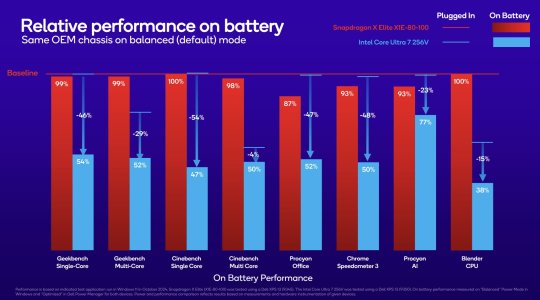
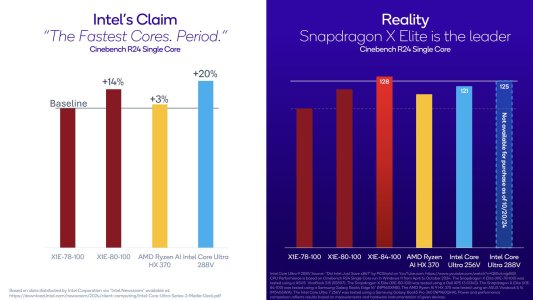
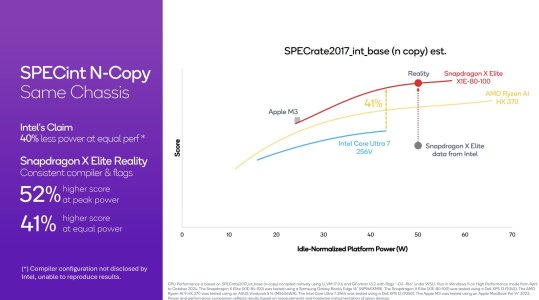
Going by Qualcomm's own slides, it's very good. <10W power for GB6 ST.Main thing I want to see is single core efficiency, as multi core efficiency is going to be better by simply having more cores and reducing frequency to raise efficiency.
FlameTail
Diamond Member
I mixed up the clocks for the two GPUs. Fixed.Your table states that 8 Elite PPC is 2600/1.6 while G925 is 2600/1.15. That would suggest PPC of G925 is better. Unless you have a mistake in your table.
Meteor Late
Senior member
Qualcomm was probably using Geekbench 6.2 because in 6.3 Apple gets higher scores due to the use of SME in that version.
FlameTail
Diamond Member
FlameTail
Diamond Member
Snapdragon 8 Elite product brief;
 www.qualcomm.com
Snapdragon 8 Elite Mobile Platform
The Snapdragon 8 Elite Mobile Platform is performance transformed.

John Bruno
Junior Member
The unrelenting march of Oryon CPU generational advancement has only just begun. Gen 1 set the bar in PC. Gen 2; advance the bar in peak performance, halve the power, introduce a new tier of performance core and maintain industry leading prime core area efficiency.
Gen 2 sets the foundation of the next generation of Oryon. Gen 3...er, you'll have to wait and see. 😉
Below are two salient slides from the keynote:
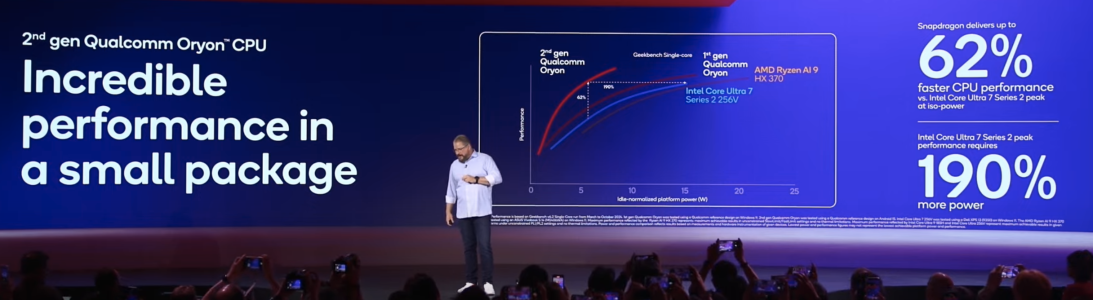
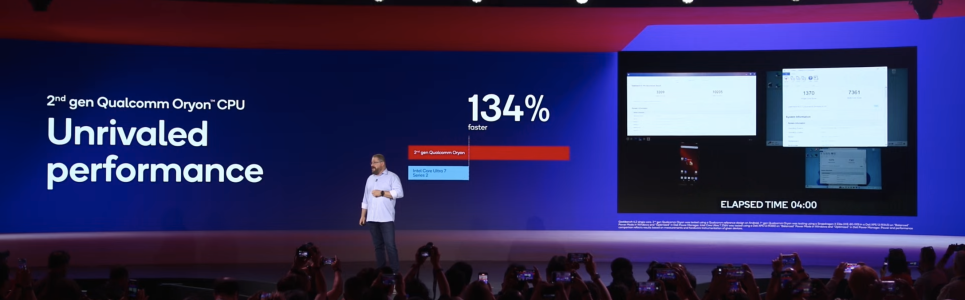
Gen 2 sets the foundation of the next generation of Oryon. Gen 3...er, you'll have to wait and see. 😉
Below are two salient slides from the keynote:
It was very funny to see Qualcomm using Antutu scores in comparisons with the A18 Pro.Qualcomm was probably using Geekbench 6.2 because in 6.3 Apple gets higher scores due to the use of SME in that version.
A little humiliating comparing a phone SoC's benchmarks to a laptop's... so I guess we'll be seeing this in laptops then? 🙂The unrelenting march of Oryon CPU generational advancement has only just begun. Gen 1 set the bar in PC. Gen 2; advance the bar in peak performance, halve the power, introduce a new tier of performance core and maintain industry leading prime core area efficiency.
Gen 2 sets the foundation of the next generation of Oryon. Gen 3...er, you'll have to wait and see. 😉
Below are two salient slides from the keynote:
View attachment 109923
View attachment 109929
The release of the M4 has already proved that Apple will not give up. In an interview with Geekerwan, Johny Srouji said that their goal is the best ST performance in the industry. But in any case, competition is good.GB6 ST
A18 Pro = 3500
A19 Pro = 4000 (speculation)
I think there is a high possibility that 8 Elite Gen 2 will exceed the ST performance of A19 Pro.
The Hardcard
Senior member
Not impossible, but Qualcomm is already using frequency headroom that Apple is still expanding into. Snapdragon remains behind despite having much faster, higher bandwidth memory and higher clocks.GB6 ST
A18 Pro = 3500
A19 Pro = 4000 (speculation)
I think there is a high possibility that 8 Elite Gen 2 will exceed the ST performance of A19 Pro.
I think the clocks will be higher on future nodes in addition to whatever architecture tweaks may come. And Apple now has more room to turn that frequency knob than Qualcomm.
The Hardcard
Senior member
Qualcomm faces a serious uphill battle in laptops. They can claim single thread and battery leadership, but it is all by not much. Any AI leadership will also be by not much.A little humiliating comparing a phone SoC's benchmarks to a laptop's... so I guess we'll be seeing this in laptops then? 🙂
The gaps the M1 held was often jaw dropping. Oryon is impressive, but is no head turning feature. Both Strix Point and Lunar Lake are very snappy with long battery life. They both have better GPUs and Strix is the multithreaded leader.
If you see someone excited about a Strix laptop, what can you say to redirect them to Qualcomm? Barely perceptible extra snappyness? 15 hours of battery life instead of 12 1/2 hours? The ability to generate an article summary in 8.2 seconds instead of 8.8 seconds?
What would compel a Snapdragon purchase?
John Bruno
Junior Member
😉
Agreed and certainly not in performance per clock. There is still quite a gap to narrow.Not impossible, but Qualcomm is already using frequency headroom that Apple is still expanding into. Snapdragon remains behind despite having much faster, higher bandwidth memory and higher clocks.
I think the clocks will be higher on future nodes in addition to whatever architecture tweaks may come. And Apple now has more room to turn that frequency knob than Qualcomm.
My guess the Oryon Gen 3 core will be on ARMv9.2 so maybe that might help claw back some. And they’ll likely focus more on IPC/PPC next time around since they’re already at 4.32GHz in a phone.
Lower SoC manufacture cost and PCB complexity: better screen, build, connectivity iso-cost... Gamers are just 15% of PC users; whomever would have been impressed by Strix Pt. would have been among them and not the market Windows on ARM is initially targetting...Qualcomm faces a serious uphill battle in laptops. They can claim single thread and battery leadership, but it is all by not much. Any AI leadership will also be by not much.
The gaps the M1 held was often jaw dropping. Oryon is impressive, but is no head turning feature. Both Strix Point and Lunar Lake are very snappy with long battery life. They both have better GPUs and Strix is the multithreaded leader.
If you see someone excited about a Strix laptop, what can you say to redirect them to Qualcomm? Barely perceptible extra snappyness? 15 hours of battery life instead of 12 1/2 hours? The ability to generate an article summary in 8.2 seconds instead of 8.8 seconds?
What would compel a Snapdragon purchase?
The genius is that they're MORE efficient at those clocks!! Nothing wrong w/ hitting 5Ghz as long as you're ultimately more efficient...Agreed and certainly not in performance per clock. There is still quite a gap to narrow.
My guess the Oryon Gen 3 core will be on ARMv9.2 so maybe that might help claw back some. And they’ll likely focus more on IPC/PPC next time around since they’re already at 4.32GHz in a phone.
TRENDING THREADS
-
 Discussion Zen 5 Speculation (EPYC Turin and Strix Point/Granite Ridge - Ryzen 9000)
- Started by DisEnchantment
- Replies: 25K
-
Discussion Intel Meteor, Arrow, Lunar & Panther Lakes + WCL Discussion Threads
- Started by Tigerick
- Replies: 24K
-
 Discussion Intel current and future Lakes & Rapids thread
- Started by TheF34RChannel
- Replies: 24K
-

-
