VulgarDisplay
Diamond Member
- Apr 3, 2009
- 6,188
- 2
- 76
I'll take a good blower style cooler over an aftermarket one any day of the week.
I'd take better power circuitry over a good blower style cooler myself...


I'll take a good blower style cooler over an aftermarket one any day of the week.
I'd take better power circuitry over a good blower style cooler myself...
Something wrong with Titan's?
I dunno I took several reference 470s to +60% overclocks on water so I haven't had any reason to concern myself with reference quality or 6+6 not providing enough power.
Titan seems to be a step above typical reference, though I could be wrong, is there any evidence to suggest otherwise?
I'd take better power circuitry over a good blower style cooler myself...
Agreed, my reference 680 can only OC about +90-100 MHz on the core regardless of voltage
I guess not the power circuitry as much as the 265w TDP wall. I'd assume the Lightnings are beefed up in the VRM department and are unlocked.

The Titan is better than any single GPU out there at stock so I wouldn't worry about how far it can o/c. Which happens to look pretty decent btw.
Was just kidding Keys, I'm sure nobody took it seriously.


What's the fun in that though? :biggrin:
Half the allure of a new video card is tinkering with it to see how high she clocks. Besides the gap between Titan and the $400-500 cards isn't that big so overclocking potential is important IMO.
Something wrong with Titan's?
I dunno I took several reference 470s to +60% overclocks on water so I haven't had any reason to concern myself with reference quality or 6+6 not providing enough power.
Titan seems to be a step above typical reference, though I could be wrong, is there any evidence to suggest otherwise?
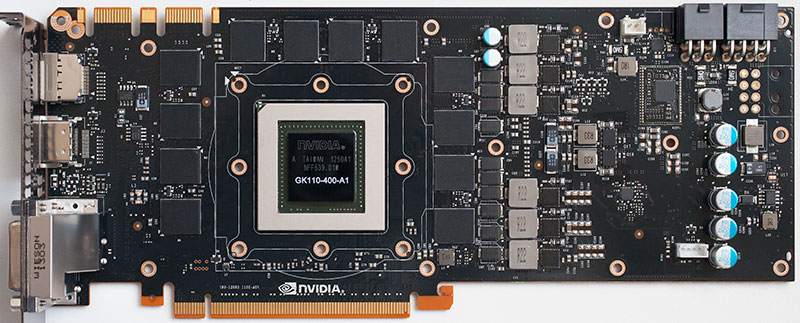

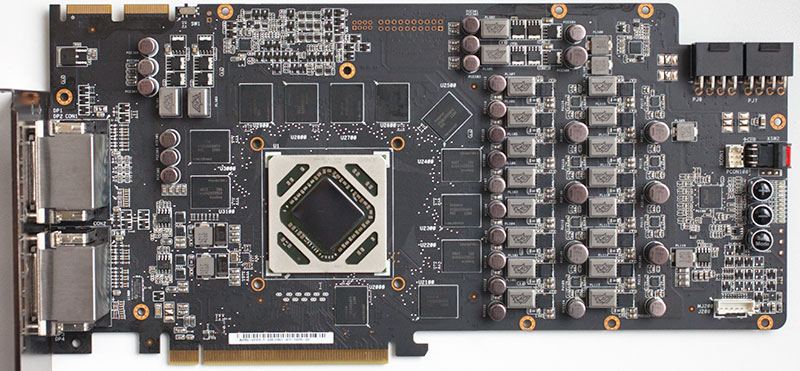
Titan
680 Lightning
7970 Matrix
Nobody said there was anything wrong, but there's definitely room for improvement.
Not necessarily true. as I stated earlier, my particular 680 will not OC past 100 MHz stable even if I up the voltage. Once it gets past around 120% power factor, it just loses its little mind. Beefier delivery is a welcomed addition, even on air. It would also make for an overall cooler running card as you're not running the circuitry at full tilt all the time.
There is a wealth of factors that would affect that long before you could limit it to PCB. Low voltage table, how much voltage did you really add, less than .05v? There are plenty of people using the same PCB with 150% TDP flashed without issue.
Better VRMs would only matter in their own temp, it wouldn't affect gpu temps, and they would not affect overclocking unless reference was unable to provide clean stable power which with the 680 is probably not the case.
I know what temps it would affect, that's why I said specifically said "overall cooler running card" as to not get it confused with GPU temps. I raised the voltage varying levels all the way up to the maximum allowed by MSI Afterburner which I believe is .1v
Raising my voltage actually made it less stable, causing it to lock up sooner than it did when I had it at default. That points directly to the power circuitry as the limiting factor for my particular card.
So you have a dud card, given your card reacts differently than many other reference 680 the last thing I'd sugest with that info is that all reference 680s have PCB limitations.
The first 470 I bought from Newegg locked up within 15 seconds if I added any voltage at all, I returned it and got another one of the same model that would take over 1150mv without issue.
Maybe if you're using LN2, otherwise it's pretty close to pointless. A few more MHz doesn't make either of those cards competitive with Titan.
Maybe so, but with better power delivery, even if I got a dud card I'd be able to OC higher than I am now. Point remains, better power delivery is always welcomed.
Nobody is talking about making those cards competitive with Titan. Where did you pull that from?
Sorry I just don't see how you're drawing the correlation, on air it seems impractical. You're limited quickly by heat and voltage, more heat means more voltage for the same clocks, more power drawn. I've never seen anything that indicates even with water that these "special" boards have anything over reference boards in the last. Where they matter is in extreme overclocks with phase/dry ice/ln2.
The idea that somehow a beefier PCB makes a card faster, it doesn't. It might allow higher overclocks, but that still based on silicon, doesn't matter if you have the best PCB in the world if you have a crap chip it's just going to woof down the power and do almost nothing with it.
Titan is capable of 265w based on Nvidia's limits, most likey guys picking it up will expand that quickly if you're right than we'll see Titans blowing vrms, if you're wrong than we'll see Titan still limited by voltage even with additional TDP headroom. Most likely the board is more than capable of delivering over 300w of power based on the specs of the chips on the board.
"Quality" mosfets and chokes is mostly pure marketing bs.
I'm sorry you've completely ignored everything we've went back and forth about in the last few posts. The correlation is quite clear. You can ignore it, but it will still exist.

Where is your data points that your 'beefier' board components = higher o/c's.I'm sorry you've completely ignored everything we've went back and forth about in the last few posts. The correlation is quite clear. You can ignore it, but it will still exist.





 Facebook
 Twitter