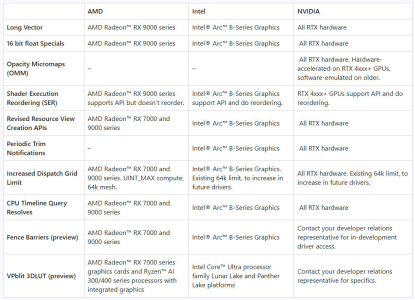
As I see it, denoising is a natural consequence of temporal supersampling. It just gets especially visible with stochastic rendering methods like RT which are inherently noisy (e.g. Monte Carlo sampling).
The better you can track information (pixel or even sub-pixel accuracy), the less noise will be visible in the final image. This can easily be tested by standing still in games vs. moving.
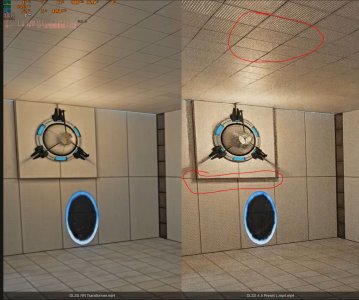
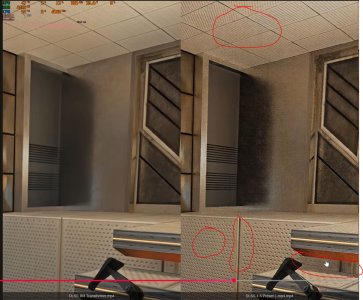
Here is a very neat comparison of DLSS 4.5 versus FSR 3.1. Both with enabled & disabled input denoiser:
FSR 3.1 looks pretty good when standing still, but when moving noise increases because information tracking is not optimal. If you get blurry input instead and therefore also blurry output you do not notice that to that degree.
Now, DLSS 4.5 is much better at information tracking. Therefore, the picture looks better than FSR 3.1 and much better when moving. If the denoiser is enabled, the difference is smaller while moving.
The problem with input denosing is, that denoising at lower rendering resolutions gives the denoiser algorithm a hard time. The results are noise, boiling artifacts and/or blur. You can trade one of those for eachother.
DLSS will have problems to resolve that, because it might interpret it as changing imagery and not noise. Or information might simply not be there anymore (blurred out).
Now the fun part:
DLSS 4.5 might be that good in tracking information, that some denoiser induced artifacts do not get suppressed or blurred anymore. This sounds counter intuitive, I know.
DLSS 4.0 was maybe just blurring that stuff and therefore it was not as noticable as now with DLSS 4.5.
This is just a hypothesis but it somehow would make sense.
Or in other words:
DLSS 4.5 is so good at information tracking, that the input denoiser is not required anymore. This is an exaggerated statement, there are still failing cases. But that seems to be the direction with better DLSS and FSR algorithms in the future.
I could imagine that DLSS 4.5 has a cleanup / lightweight denoise post-pass at full resolution. But this would inevitably add some blur to the image.
Here another cool use case:
Use DLSS preset L as denoiser for Dragons Dogma 2 with pathtracing.
Also DLSS 4 preset K denoises some parts of the picture (e.g. the floor) but fails with more difficult places like areas with only few light.