• We’re currently investigating an issue related to the forum theme and styling that is impacting page layout and visual formatting. The problem has been identified, and we are actively working on a resolution. There is no impact to user data or functionality, this is strictly a front-end display issue. We’ll post an update once the fix has been deployed. Thanks for your patience while we get this sorted.

NON_POLITICAL China Coronavirus THREAD

Page 461 - Seeking answers? Join the AnandTech community: where nearly half-a-million members share solutions and discuss the latest tech.
Pfizer pushes back on vaccine date. I highly doubt that we are going to see a vaccine by the end of October.

Read it again. It's clear that they were defending their original October timeline, denying that they were politically influenced to rush it, and pushing back against Biden's insinuation that an early vaccine couldn't be trusted, especially with that last paragraph...
"Imagine the compounded tragedy if we have a safe and effective vaccine that many people didn't trust. That is a risk none of us should accept."

For CNBC to take that statement and say that it's "because the President keeps tying potential availability of a vaccine to what he calls 'a very special day' - no doubt meaning November 3rd" is an obvious non-sequitur. Are they deluding themselves or lying to us? Either way: they should be ashamed of such a bad take as this.

"I was disappointed that the prevention for a deadly disease was discussed in political terms rather than scientific facts. People, who are understandably confused, don't know whom or what to believe."

In the earlier statement CNBC quoted, Pfizer was specifically calling out exactly this kind of politicization, yet here CNBC goes, hypocritically trying to twist and distort Pfizer's memo for political reasons. Ugh.

Read THROUGH the news, people.

Full memo:
Dear U.S. Colleagues,

Tuesday night I joined the millions of Americans who tuned in to the Presidential debate. Once more, I was disappointed that the prevention for a deadly disease was discussed in political terms rather than scientific facts. People, who are understandably confused, don't know whom or what to believe. Global health has too much at stake, and the public trust and acceptance of a vaccine is so important to me, that I'm writing to explain the principles we are using at Pfizer today.
Remember from the beginning of the year, it was clear that the suffering and destruction from the COVID-19 pandemic would be extreme. In February, cases began spiraling across the globe. Addressing a pandemic requires many simultaneous fronts of attack, but it became obvious that a safe and effective vaccine could be an essential part of the solution. And, it would take a huge effort by a company with scale to achieve that goal. I knew Pfizer had an obligation to step up and lead.

That is why in March, I declared a bold ambition: that Pfizer would create a vaccine, and we would devote any and all resources necessary to be successful. I further announced, after consulting with our scientists, that we could have vaccine data ready to submit to the FDA by end of the third quarter, in October, and hopefully a hundred million doses delivered by the end of the year. I knew our goal was ambitious, but it would also be critical to protect against the second wave of cases that could accompany the return of colder weather in the Fall.

Since then, and every day for the last seven months, we've kept our shoulder to that wheel. Our scientists have leveraged our vaccine research and development expertise, our manufacturing team has innovated to solve production and delivery hurdles, and we've recruited more than 35,000 people in clinical trials in multiple countries. Every ounce of our ability has been spent and nearly $2 billion put at risk.

Now, we are approaching our goal and despite not having any political considerations with our pre-announced date, we find ourselves in the crucible of the U.S. Presidential election. In this hyper-partisan year, there are some who would like us to move more quickly and others who argue for delay. Neither of those options are acceptable to me. Against this backdrop, people need to know three things:

First, we are moving at the speed of science. With a virus this ferocious, time is our enemy. This week, we will hit the grim marker of 1 million deaths globally and the number continues to climb. This danger supersedes any other timing considerations.

Second, we would never succumb to political pressure. The only pressure we feel—and it weighs heavy—are the billions of people, millions of businesses and hundreds of government officials that are depending on us. We've engaged with many elected leaders around the globe through this health crisis, but Pfizer took no investment money from any government. Our independence is a precious asset.

Third, our priority is the development of a safe and effective vaccine to end this pandemic. I have a duty to Pfizer's 171-year history to honor our legacy of discovering and manufacturing high-quality medicines. We will never cut a corner. Pfizer's purpose is simple: "Breakthroughs that Change Patients' Lives." It's our North Star.

Finally, I enjoy a robust policy debate, but I'm not a politician. I'm a scientist, business leader, husband and father, friend and neighbor who cares deeply about the integrity of this potential vaccine. The amplified political rhetoric around vaccine development, timing and political credit is undercutting public confidence. I can't predict exactly when, or even if our vaccine will be approved by the FDA for distribution to the public. But I do know that the world will be safer if we stop talking about the vaccines' delivery in political terms and focus instead on a rigorous independent scientific evaluation and a robust independent approval process.

Let's continue to work together to build trust in the science. That is what we are doing at Pfizer. Imagine the compounded tragedy if we have a safe and effective vaccine that many people didn't trust.
That is a risk none of us should accept.
 
Watching local network news tonight (NBC, SF Bay Area) they interviewed a doctor they have on periodically and asked him about Trump's case. The doctor noted that he's a high risk individual being a male in his middle 70s and overweight. He said the age factor alone made him 90 times more likely to die than a 30 year old male. I did a double take and wondered if he said 9 times and rewound. Captioning showed 90 times and I heard 90 times. Is this feasible? Did the doctor have a brain fart?
 
Watching local network news tonight (NBC, SF Bay Area) they interviewed a doctor they have on periodically and asked him about Trump's case. The doctor noted that he's a high risk individual being a male in his middle 70s and overweight. He said the age factor alone made him 90 times more likely to die than a 30 year old male. I did a double take and wondered if he said 9 times and rewound. Captioning showed 90 times and I heard 90 times. Is this feasible? Did the doctor have a brain fart?
Sounds correct to me.
 
Yeah, relative statistics can sound weird.

A cohort might have a 0.01% mortality rate, meaning 10 deaths per 100,000, and another might have a 0.9% mortality rate, meaning 900 deaths per 100,000, and both of those numbers sound normal but when you say cohort 2 is 90x more likely to die than cohort 1 it sounds weird.
 
Yeah, relative statistics can sound weird.

A cohort might have a 0.01% mortality rate, meaning 10 deaths per 100,000, and another might have a 0.9% mortality rate, meaning 900 deaths per 100,000, and both of those numbers sound normal but when you say cohort 2 is 90x more likely to die than cohort 1 it sounds weird.
Well, it astounded me because early on in the pandemic I was seeing things like, um, 2% (?) CFR for people without risk factors and for people maybe 80 YO, something like 9%. Now the factor there would be 9/2 = 4.5x as likely. So 90% struck we as huh??? Where do they get that? Anyone got any linkage?

I found this:

Declining COVID-19 Case Fatality Rates across all ages: analysis of German data September 9, 2020


They show graphs, don't break it down into numbers, near as I can tell, but 90x wouldn't seem to jibe with the graphs.

And there's this:

 
Last edited:
Well, it astounded me because early on in the pandemic I was seeing things like, um, 2% (?) CFR for people without risk factors and for people maybe 80 YO, something like 9%. Now the factor there would be 9/2 = 4.5x as likely. So 90% struck we as huh??? Where do they get that? Anyone got any linkage?

I found this:

Declining COVID-19 Case Fatality Rates across all ages: analysis of German data September 9, 2020


They show graphs, don't break it down into numbers, near as I can tell, but 90x wouldn't seem to jibe with the graphs.

And there's this:

Yes. Obviously, a higher percentage of the cases were severe cases back when we didn't have the visibility we have now. Even now, the CFR is significantly higher than the actual IFR. The IFR can only be determined down the line with random population antibody testing to estimate actual infection rates.

Though nowhere near as low as the IFR, CFR was driven way down with increased testing/visibility beyond what we would ever see with something like your non-pandemic seasonal flus.
 
Watching local network news tonight (NBC, SF Bay Area) they interviewed a doctor they have on periodically and asked him about Trump's case. The doctor noted that he's a high risk individual being a male in his middle 70s and overweight. He said the age factor alone made him 90 times more likely to die than a 30 year old male. I did a double take and wondered if he said 9 times and rewound. Captioning showed 90 times and I heard 90 times. Is this feasible? Did the doctor have a brain fart?

no, sounds about right. Young adults without health issues are very unlikely to die from Covid-19. I even think his estimate is a bit conservative.
 
no, sounds about right. Young adults without health issues are very unlikely to die from Covid-19. I even think his estimate is a bit conservative.

The talk of death is overrated IMO. His chances of living are much higher than dying, especially when he also has much better healthcare than the average person.

However, even without dying, he might combat the disease for weeks, and after that can still have long term effects and given other reports - it might take him months to recover.
 
The talk of death is overrated IMO. His chances of living are much higher than dying, especially when he also has much better healthcare than the average person.

However, even without dying, he might combat the disease for weeks, and after that can still have long term effects and given other reports - it might take him months to recover.
Well, he is getting experimental therapies. Like Boris Johnson, he will have convalescent plasma available too. His prognosis is EXTREMELY good.
 
I doubt Trump or any major political figure has to worry about death from any kind of medical related issue. I'm sure they have state of the art medical tech that is not available to regular people.
 
About 4 minutes in:
d308c06dc551bf2344960f172b34b089.jpg


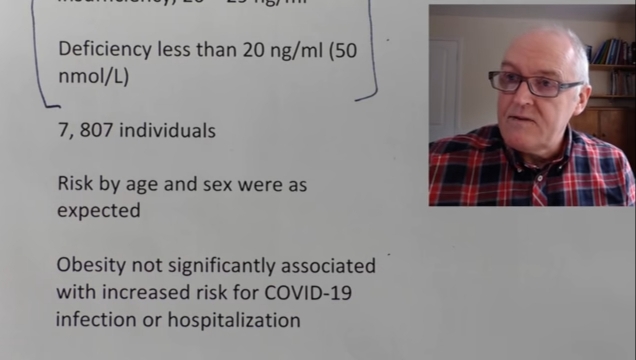
According to new research with a significant sample size, it seems that obesity alone may not be a risk factor after all. Seemingly no increase in mortality or severity. Of course, many other things that correlates with obesity still are risk factors.
 
Last edited:
About 4 minutes in:
d308c06dc551bf2344960f172b34b089.jpg


According to new research with a significant sample size, it seems that obesity alone may not be a risk factor after all. Seemingly no increase in mortality or severity. Of course, many other things that correlates with obesity still are risk factors.
ive been taking 3000 or 4000 a day liquid gel cap vit d3. my body seems to like it.
 
About 4 minutes in:
d308c06dc551bf2344960f172b34b089.jpg


According to new research with a significant sample size, it seems that obesity alone may not be a risk factor after all. Seemingly no increase in mortality or severity. Of course, many other things that correlates with obesity still are risk factors.

In yet, no one ever relays this information to the general public.

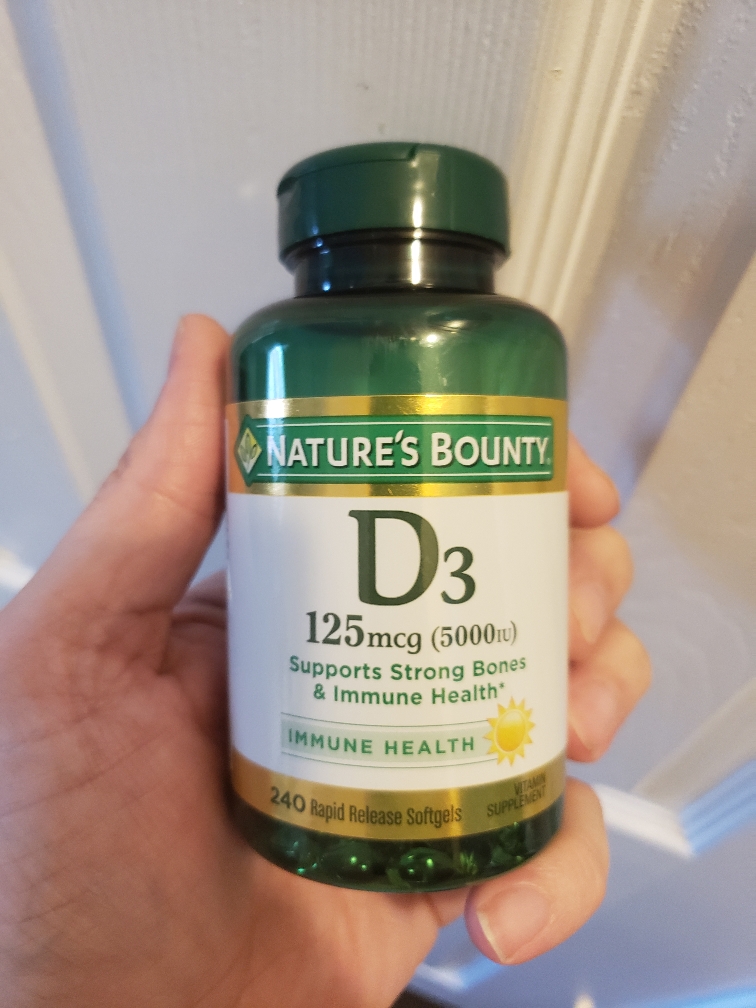
Everyone right now should be on 5000iu/day of Vitamin D supplementation - and perhaps even a zinc one as well. No question.

Instead we keep harping on about masks and not going out - while important - the end result is that we are still getting 10s of thousands of new cases per day.
 
Because so many people are not wearing them.

A mask is not the end-all-be-all of obtaining or not obtaining the virus.

Regardless, we are getting thousands and thousands of cases DAILY. But for some reason we never talk about effectively fighting the virus if obtained.
 
In yet, no one ever relays this information to the general public.

Everyone right now should be on 5000iu/day of Vitamin D supplementation - and perhaps even a zinc one as well. No question.

Instead we keep harping on about masks and not going out - while important - the end result is that we are still getting 10s of thousands of new cases per day.
5,000 IU may be a bit much to take daily unless you are deficient and need to load up quick. Also useful if you are a big dude (big people need more).
 
5,000 IU may be a bit much to take daily unless you are deficient and need to load up quick. Also useful if you are a big dude (big people need more).

Skin color also seems to play a factor where darker skins take in less Vitamin D since their bodies were build for warmer climates with lots of sun exposure.

Where as white boys I guess were built for colder climates where less-sun exposure is common


Regardless, the whole "stay inside all the time and watch TV eating chips and cookies" certainly doesn't help with Vitamin D levels.
 
Gingers like me apparently can produce vitamin D more effectively from the sun. I actually don't take any in summer since I get more than enough through sun. I purposely try to get some sun without sunscreen for short spurts at a time. I don't really have a way of knowing for sure if I actually have enough vitamin D though but I'd be surprised if I'm low. In winter it's another story, like even now I should probably start taking it. The days are shorter and when the sun is out it's coming in at a steeper angle so there is less UVB.
 
5,000 IU may be a bit much to take daily unless you are deficient and need to load up quick. Also useful if you are a big dude (big people need more).

I'm on 10k a day. I started taking 5k in Feb for this then as summer hit I made a point to go out and get some sun, got a pretty nice tan now. But in Aug I had blood tests done that show I am low and they wanted me to double my dose. I really thought between 5k and getting much more sun than I have since I was a kid I would be covered but apparently my half ginger/quarter Mexican genes are not happy with the Texas sun alone.
 
So? We'll be alright. I wish the US government would quit giving loans and money to these loser airlines like American and United and let them suffer and fail if they have to. Supporting these zombie companies helps no one except the terrible management who will continue to pay themselves outsized compensation. Let these loser companies fail and let the bankruptcy courts do their work. Propping up loser airlines and other companies is not the answer.

While I don't disagree on principal about your post, what about mom and pop places such as local small restaurants. I did watch a story on CNA about restaurants in Singapore and other places Asia such as Hong Kong and Philippines and even with the best conditions, the most restaurants would get about 10% of profit with majority of them would make about 5% of profit. Most restaurants would have about 2 months of cash flow..ie..if they don't make money for two months, they are in big trouble financially.

Should we let them die or help them out because current situation is not their fault.
 
Last edited:
While I don't disagree on principal about your post, what about mom and pop places such as local small restaurants. I did watch a story on CNA about restaurants in Singapore and other places Asia such as Hong Kong and Philippines and even with the best conditions, the most restaurants would get about 10% of profit with majority of them would make about 5% of profit. Most restaurants would have about 2 months of cash flow..ie..if they don't make money for two months, they are in big trouble financially.

Should we let them die or help them out because current situation is not their fault.
Let them die.
 
Back
Top