
Heartbreaker
Diamond Member
But again, the Navy, not the Coast Guard.
Actually I checked for previous Marine accidents/disasters.
In the US, it's the Coast Guard jurisdiction, in Canada it's the TSB.
Both are investigating, so this is just normal.

But again, the Navy, not the Coast Guard.


It could just have easily been a case of the wrong material for the job. The whole organization sounds like a nightmare when it came to any sort of safety culture.Just a wild ass guess: Someone in the crew (from the top on down) accidentally damaged the hull and tried to hide that fact, presuming the damage wasn't bad enough that the perp thought he/she could get away with hiding the fact of the matter. If so, that person(s) should be squirming themselve(s) into knots at the moment. I'm wondering if the insurance firm that's covering this multi-million $$$ loss has the best headhunter available working on this tragic...well let's call this an "accident" for now.
The hope is that there is enough debris that'll be collected to precisely determine the cause of the hull implosion.

Just a wild ass guess:

What's with the speculation? Occam's razor says that sub only had a few dozen cycles of life and they found the end of it. it is a piss poor material for that environment.
Everybody else uses titanium or steel, homogeneous materials that won't admit water into their very fabric.

Yes and that guy was the CEO when he approved the design, construction and use.Just a wild ass guess: Someone in the crew (from the top on down) accidentally damaged the hull and tried to hide that fact, presuming the damage wasn't bad enough that the perp thought he/she could get away with hiding the fact of the matter. If so, that person(s) should be squirming themselve(s) into knots at the moment. I'm wondering if the insurance firm that's covering this multi-million $$$ loss has the best headhunter available working on this tragic...well let's call this an "accident" for now.
The hope is that there is enough debris that'll be collected to precisely determine the cause of the hull implosion.
Nope. Submersibles are considered cargo and not subject to the same regulations as ships. It’s why there are industry practices and defined processes for certification (strictly voluntary) which the CEO deliberately chose not to follow.Thanks for the info that I was not aware of. So following along this train of thought, would you happen to know if there was some regulatory agency, say the Coast Guard for example, that was responsible for assuring the safety of that vessel as that agency does with surface craft both personal and commercial?

 jalopnik.com

And I think you should join Harry's Razors club. No, wait, even better, Occam's!I tend to think that it happened because one of the crew members went totally mad and crushed everything inside the tube. Not everyone can withstand being in such a small space for hours and there would be no surprise if someone just lost their shit and ruined the whole thing causing it to implode
Did you forget the /s?I tend to think that it happened because one of the crew members went totally mad and crushed everything inside the tube. Not everyone can withstand being in such a small space for hours and there would be no surprise if someone just lost their shit and ruined the whole thing causing it to implode
From now on, off the wall speculation like this will be accepted and taken as a Geven.Didi you forget the /s?
Because we have become collectively stupid. And the internet gives the dumbest among us a broad platform.Wow first it’s Biden using this story to hide Hunter. Then it’s a crew who damaged the hatch. Now it’s a passenger who went crazy inside. How about it was the owner who created a piss poor product. Why does this story need any conspiracy theories.

Wow first it’s Biden using this story to hide Hunter. Then it’s a crew who damaged the hatch. Now it’s a passenger who went crazy inside. How about it was the owner who created a piss poor product. Why does this story need any conspiracy theories.

There was this lady expert on CNN who said that salt water eventually gets into the layers and guess what? A work function differential is also present due to using dissimilar materials, add salt water and epoxy resins break down. This was a known phenomenon to the community.What's with the speculation? Occam's razor says that sub only had a few dozen cycles of life and they found the end of it. it is a piss poor material for that environment.
Everybody else uses titanium or steel, homogeneous materials that won't admit water into their very fabric.
I am unfamiliar with any mechanism whereby salt water would degrade epoxy resins; theure used in marine environments all the time due to their chemical resistance. Albeit not at 6000 psi to my knowledge so maybe thats its.There was this lady expert on CNN who said that salt water eventually gets into the layers and guess what? A work function differential is also present due to using dissimilar materials, add salt water and epoxy resins break down. This was a known phenomenon to the community.
I am unfamiliar with any mechanism whereby salt water would degrade epoxy resins; theure used in marine environments all the time due to their chemical resistance. Albeit not at 6000 psi to my knowledge so maybe thats its.
 www.geekwire.com
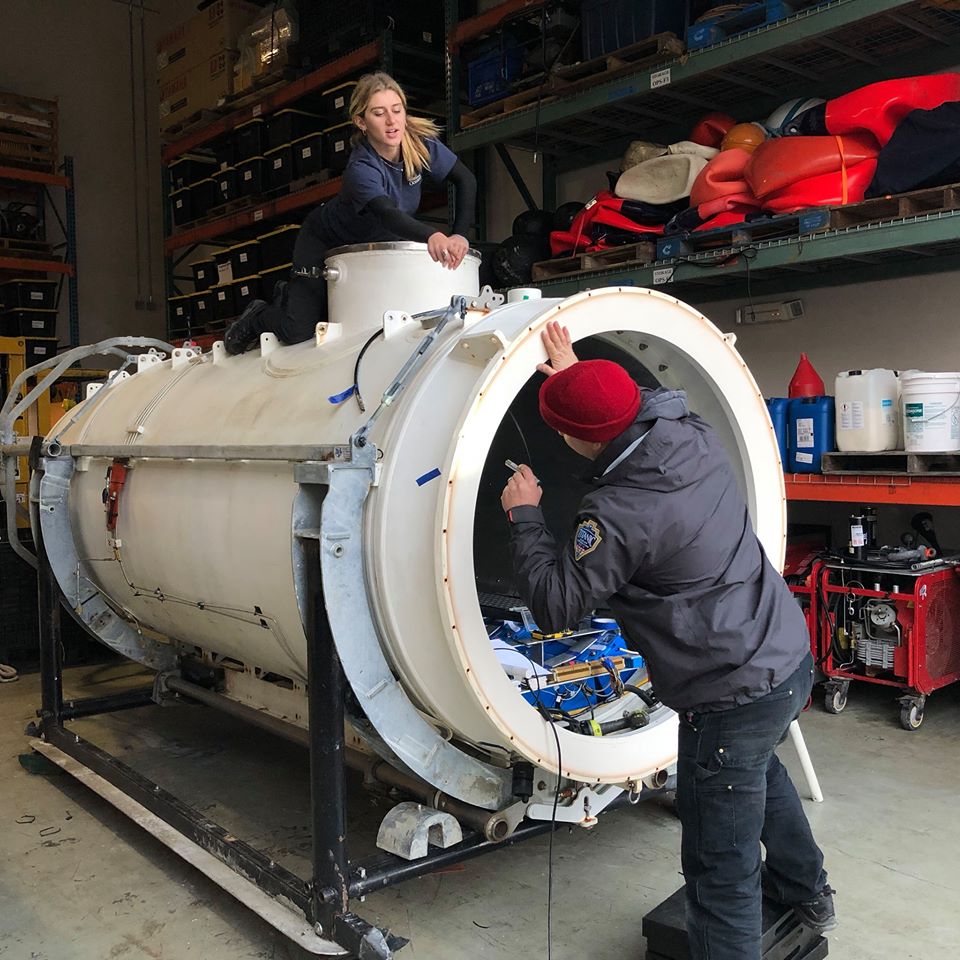
Rush said tests that were conducted at the Deep Ocean Test Facility in Annapolis, Md., revealed that the Titan’s hull “showed signs of cyclic fatigue.” As a result, the hull’s depth rating was reduced to 3,000 meters.
“Not enough to get to the Titanic,” Rush said.
That meant the Titanic trips — which had been planned at first for 2018, then 2019, then 2020 — had to be put off until mid-2021. By that time, Rush expects the new submersibles to be ready to enter service. He said mission specialists who have paid more than $100,000 each to participate in the Titanic expeditions were “generally supportive but disappointed” by the delay.

Yes, but the cyclic fatigue manifests itself differently than it does in simple bending or compression fatigue. The 6000 PSI water can end up between layers as the material breaks down. It's like you glued together a phone book and then worked it until the pages came back apart again.
Then picture of the same phenomena at the interface between the titanium and carbon fiber. It's going to try and peel that epoxy bond apart. It's a damned insidious failure mode.
That's why since the trieste and forward, All the other submersibles have been made out of homogenous materials and it worked.
I did a stint at Hexcel as a manufacturing
inspector.
They had some pretty big autoclaves there 25 ft in diameter and 60 ft long.
I recall they got up to about 350 PSI and a couple hundred degrees temperature. All the while they were applying vacuum to the assemblies to pull out any bubbles.
The goal with composite materials is to have as dry an assembly as possible with as little resin.
So now you stuck it together with 350 PSI plus the vacuum plus the heat, and now mother nature's trying to pry it back apart with 6,000 psi.
I'm no expert in materials but you can see why people were concerned.


