Discussion Intel Meteor, Arrow, Lunar & Panther Lakes + WCL Discussion Threads

Page 896 - Seeking answers? Join the AnandTech community: where nearly half-a-million members share solutions and discuss the latest tech.

Tigerick

Senior member
Apr 1, 2022
942
857
106
Wildcat Lake (WCL) Specs

Intel Wildcat Lake (WCL) is upcoming mobile SoC replacing Raptor Lake-U. WCL consists of 2 tiles: compute tile and PCD tile. It is true single die consists of CPU, GPU and NPU that is fabbed by 18-A process. Last time I checked, PCD tile is fabbed by TSMC N6 process. They are connected through UCIe, not D2D; a first from Intel. Expecting launching in Q1 2026.
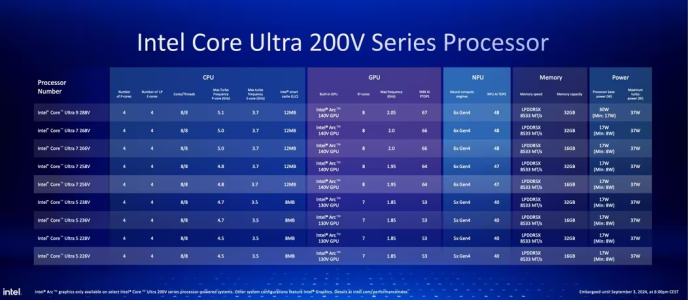
Intel Raptor Lake UIntel Wildcat Lake 15W?Intel Lunar LakeIntel Panther Lake 4+0+4
Launch DateQ1-2024Q2-2026Q3-2024Q1-2026
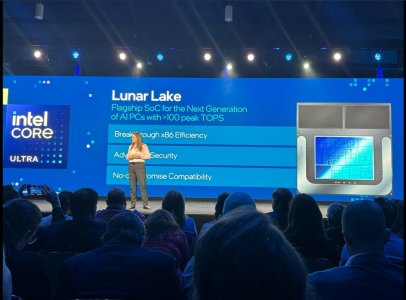
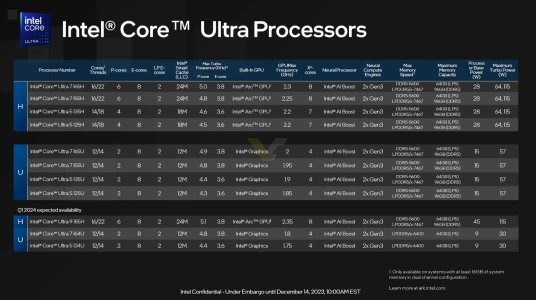
ModelIntel 150UIntel Core 7Core Ultra 7 268VCore Ultra 7 365
Dies2223
NodeIntel 7 + ?Intel 18-A + TSMC N6TSMC N3B + N6Intel 18-A + Intel 3 + TSMC N6
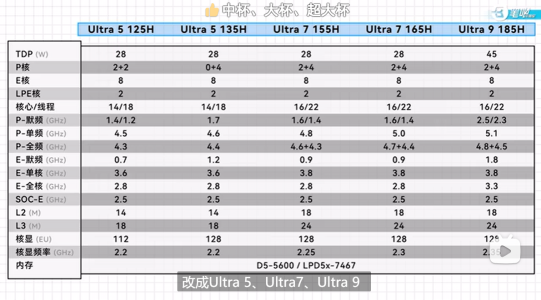
CPU2 P-core + 8 E-cores2 P-core + 4 LP E-cores4 P-core + 4 LP E-cores4 P-core + 4 LP E-cores
Threads12688
Max Clock5.4 GHz?5 GHz4.8 GHz
L3 Cache12 MB12 MB12 MB
TDP15 - 55 W15 W ?17 - 37 W25 - 55 W
Memory128-bit LPDDR5-520064-bit LPDDR5128-bit LPDDR5x-8533128-bit LPDDR5x-7467
Size96 GB32 GB128 GB
Bandwidth136 GB/s
GPUIntel GraphicsIntel GraphicsArc 140VIntel Graphics
RTNoNoYESYES
EU / Xe96 EU2 Xe8 Xe4 Xe
Max Clock1.3 GHz?2 GHz2.5 GHz
NPUGNA 3.018 TOPS48 TOPS49 TOPS


PPT1.jpg
PPT2.jpg
PPT3.jpg


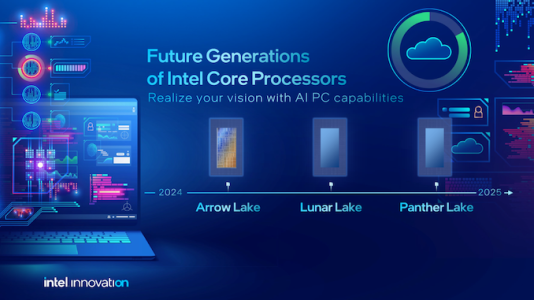
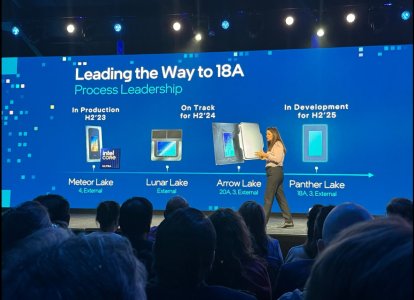
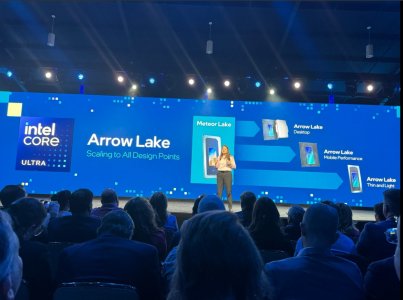
As Hot Chips 34 starting this week, Intel will unveil technical information of upcoming Meteor Lake (MTL) and Arrow Lake (ARL), new generation platform after Raptor Lake. Both MTL and ARL represent new direction which Intel will move to multiple chiplets and combine as one SoC platform.

MTL also represents new compute tile that based on Intel 4 process which is based on EUV lithography, a first from Intel. Intel expects to ship MTL mobile SoC in 2023.

ARL will come after MTL so Intel should be shipping it in 2024, that is what Intel roadmap is telling us. ARL compute tile will be manufactured by Intel 20A process, a first from Intel to use GAA transistors called RibbonFET.


LNL-MX.png
 

Attachments

  • PantherLake.png
    PantherLake.png
    283.5 KB · Views: 24,044
  • LNL.png
    LNL.png
    881.8 KB · Views: 25,531
  • INTEL-CORE-100-ULTRA-METEOR-LAKE-OFFCIAL-SLIDE-2.jpg
    INTEL-CORE-100-ULTRA-METEOR-LAKE-OFFCIAL-SLIDE-2.jpg
    181.4 KB · Views: 72,439
  • Clockspeed.png
    Clockspeed.png
    611.8 KB · Views: 72,326
Last edited:

Meteor Late

Senior member
Dec 15, 2023
347
382
106
Intel knows 18A is no bueno, that's why Nova Lake is on N2P for the higher parts, would clock like garbage otherwise.
 

511

Diamond Member
Jul 12, 2024
5,441
4,867
106
Which is why PTL is behind schedule and 300MHz down on fmax?
You know as well as I do that ARL and LNC are different Physical design for the same core and PTL is also different Phys Design than these two as for behind schedule they cancelled EEP hence no early launch they will ship to OEM on time.
Datacenter used to ramp much faster than client. In the past, 70%+ of sales would move to new generation in a year. That changed.
Ramping is money the faster you want to ramp the more you need and Intel doesn't have lots of it lying around.
 
  • Like
Reactions: Tlh97 and DKR

DrMrLordX

Lifer
Apr 27, 2000
23,217
13,300
136
If true, then it is likely due to hot spots in BSPDN on 18A ..... so yea, yields at higher clocks.
Where are people getting this idea? Have we seen any samples of Panther Lake (ES/QS) in the wild overheating or something? Because the rumour mill repeatedly indicated parametric yield problems.
 
  • Like
Reactions: DKR

dullard

Elite Member
May 21, 2001
26,195
4,864
126
Because the rumour mill repeatedly indicated parametric yield problems.
Keep in mind that those rumors were all before fab 52 was even fully operational. Any 18A chip (and therefore any rumor based on actual chips) before July 2025 was made in an incomplete fab.
 
Last edited:

dullard

Elite Member
May 21, 2001
26,195
4,864
126
Ramping is money the faster you want to ramp the more you need and Intel doesn't have lots of it lying around.
Intel has made many sizable mistakes over the last couple of decades. But to me, by far, the biggest mistake was authorizing over $150 billion in stock buybacks. Note: not all of that was spent (a quick search shows $108 billion to $128 billion was spent). But that is money that has vanished for Intel with nothing to show for it. Think of where they would be if they invested even 1/3rd of that into their fabs instead (or like Apple saved it for rainy days--like now).
 

MoistOintment

Member
Jul 31, 2024
155
248
76
Intel has made many sizable mistakes over the last couple of decades. But to me, by far, the biggest mistake was authorizing over $150 billion in stock buybacks. Note: not all of that was spent. But that is money that has vanished for Intel with nothing to show for it. Think of where they would be if they invested even 1/3rd of that into their fabs instead.
If you, as a company, effectively reach borderline monopoly status and have no real growth opportunities left, like Intel did ~15 years ago, then why would someone invest in your stock if there's no possibility of growth? Why even hold that stock?

Companies in that position have to

1) issue dividends
2) stock buybacks
3) All of the above.

If you have no growth opportunities then you need other methods to keep stock afloat.

The problem is that if you have excess profit, you gotta spend it or let it get taxed to hell. Intel's failures in 10nm, etc. were not the result of a lack of funding. Intel, still, spends massive amounts of money on R&D. The issues were structural, strategic, and cultural.
 

dullard

Elite Member
May 21, 2001
26,195
4,864
126
If you, as a company, effectively reach borderline monopoly status and have no real growth opportunities left, like Intel did ~15 years ago, then why would someone invest in your stock if there's no possibility of growth? Why even hold that stock?

Companies in that position have to

1) issue dividends
2) stock buybacks
3) All of the above.

If you have no growth opportunities then you need other methods to keep stock afloat.

The problem is that if you have excess profit, you gotta spend it or let it get taxed to hell. Intel's failures in 10nm, etc. were not the result of a lack of funding. Intel, still, spends massive amounts of money on R&D. The issues were structural, strategic, and cultural.
1) Stock buybacks do not reduce taxable income. Your basis of your post is fundamentally incorrect.

2) Dividends at least provide direct cash to investors. With the stock buybacks investors had shares about at about $20 and for decades they are about $20 (excluding the recent jump in the last month after the government stepped in). Meaning for most of that time the net gain to investors was nothing.

3) Apple has essentially a monopoly on many segments of the market. But they sit on $55 billion in cash and $66 billion in other investments.

4) Even with a monopoly there can be plenty of growth. When haven't electronics grew, other than a few bubbles here and there bursting? Right now there is an almost unlimited demand for good fab space.

5) The entire point of value stocks is steady income. No growth needed. Why hold that stock? Consistent flows of cash into your pocket. Not that tech companies should be thought of as value stocks. But, I just wanted to counter your first paragraph.

6) Heck, they were illegal until 1982 for these very reasons.

Stock buybacks are a fundamental mistake, an admission of defeat. That goes for any company. GE, Boeing, Bed Bath and Beyond--they all bought stocks back until they were nearly bankrupt and valueless.
 
Last edited:

oak8292

Senior member
Sep 14, 2016
210
225
116
1) Stock buybacks do not reduce taxable income. Your basis of your post is fundamentally incorrect.
Must be a man that gambles versus invests.

2) Dividends at least provide direct cash to investors. With the stock buybacks investors had shares about at about $20 and for decades they are about $20 (excluding the recent jump in the last month after the government stepped in). Meaning for most of that time the net gain to investors was nothing.
Dividends are taxable every year. Intel’s stock was at $65. Revenue was still increasing when they were doing buybacks.

3) Apple has essentially a monopoly on many segments of the market. But they sit on $55 billion in cash and $66 billion in other investments.
Apple routinely buys back shares. They have returned 100s of billions in buy backs. They sat on cash for a while but they have been buying shares for years. I don’t pay taxes on that improved in return per share.

4) Even with a monopoly there can be plenty of growth. When haven't electronics grew, other than a few bubbles here and there bursting? Right now there is an almost unlimited demand for good fab space.

Stock buybacks are a fundamental mistake, an admission of defeat.
Stock buybacks decrease the desire of management to expand into businesses they have no business trying to manage. Look at oil and gas companies or GE to see businesses that used free cash flow to get out of their lane. Even Intel buying McAfee or Windriver?


Here is a list of all the companies that Intel bought.
 

Joe NYC

Diamond Member
Jun 26, 2021
4,215
5,817
136
Intel has made many sizable mistakes over the last couple of decades. But to me, by far, the biggest mistake was authorizing over $150 billion in stock buybacks. Note: not all of that was spent (a quick search shows $108 billion to $128 billion was spent). But that is money that has vanished for Intel with nothing to show for it. Think of where they would be if they invested even 1/3rd of that into their fabs instead (or like Apple saved it for rainy days--like now).

The company has nothing to show for it, but the management does, in stock-based compensation they received.
 

Josh128

Golden Member
Oct 14, 2022
1,536
2,290
106
1) Stock buybacks do not reduce taxable income. Your basis of your post is fundamentally incorrect.

2) Dividends at least provide direct cash to investors. With the stock buybacks investors had shares about at about $20 and for decades they are about $20 (excluding the recent jump in the last month after the government stepped in). Meaning for most of that time the net gain to investors was nothing.

3) Apple has essentially a monopoly on many segments of the market. But they sit on $55 billion in cash and $66 billion in other investments.

4) Even with a monopoly there can be plenty of growth. When haven't electronics grew, other than a few bubbles here and there bursting? Right now there is an almost unlimited demand for good fab space.

5) The entire point of value stocks is steady income. No growth needed. Why hold that stock? Consistent flows of cash into your pocket. Not that tech companies should be thought of as value stocks. But, I just wanted to counter your first paragraph.

6) Heck, they were illegal until 1982 for these very reasons.

Stock buybacks are a fundamental mistake, an admission of defeat. That goes for any company. GE, Boeing, Bed Bath and Beyond--they all bought stocks back until they were nearly bankrupt and valueless.
You missed a huge plus for stock buybacks, probably the biggest reason companies do it-- Reduce hundreds of millions or even billions of dividend payouts to investors per year. Thats a pretty big reason to do it.
 
Last edited:

desrever

Senior member
Nov 6, 2021
340
832
136
Buy backs is just the reverse of issuing more shares. Problem would still exist if they just paid special dividend instead if they had to. Companies choose to do buy backs due to tax reasons but they can still do dividend if they were banned from doing buy backs. They'd just get slightly less money back.

Apple hold cash cause they hold the money in other countries which would get taxed if they tried to bring it back into the US. The last time they got a special tax deduction, they brought the money back and did a buy back.

The problem is companies are terrible at managing their own cash and if they can't figure out how to invest in the business, they want to pay it out to the investors. But because the cyclical nature of the markets and the economy, they only have cash when the times are good so they tend to buy back or issue more dividend during those time. During good times, stock prices are high and you get less bang for your buck for buy backs (this logic also apply to dividend but isn't as straight forward). But when times are tough and they already used their cash, they can't easily get it back because issuing more shares won't get them much now cause the stock price is low now.

Only reason why people keep complaining about buy backs is the nature of capitalism has changed and companies have even less incentives to hold cash now. CEOs and other execs are now more than ever only looking at the short term stock price and their jobs are more and more just becoming a public promoter of the company. If they didn't do those things, they'd personally make less money. If buy backs are banned tomorrow, it wouldn't change anything.
 

Doug S

Diamond Member
Feb 8, 2020
3,829
6,766
136
3) Apple has essentially a monopoly on many segments of the market. But they sit on $55 billion in cash and $66 billion in other investments.

Apple has spent over ONE TRILLION DOLLARS in stock buybacks in the past couple decades, and is buying back shares at a rate of ~ $100 billion a year these days.

That cash you reference is just "working capital" for a company the size of Apple, considering it may at any time choose to write 10 digit checks to TSMC, DRAM/NAND suppliers, display suppliers, etc. and I suppose to be ready in case they decided to ever make a "large" acquisition. Their largest ever was $3 billion for Beats over a decade ago, far smaller than the acquisitions others in the trillion dollar cap club have made, but even if they are loathe to make large buyouts they may want to "keep their powder dry" as Buffett says.
 

Doug S

Diamond Member
Feb 8, 2020
3,829
6,766
136
Apple hold cash cause they hold the money in other countries which would get taxed if they tried to bring it back into the US. The last time they got a special tax deduction, they brought the money back and did a buy back.

That tax dodge is no longer available as of the 2017 tax bill, there is no longer any difference US tax bill wise to leaving money in Ireland or whatever versus bringing it back to the US. You can leave it there if you want, but you're still taxed on it the same as if you brought it home.
 

511

Diamond Member
Jul 12, 2024
5,441
4,867
106
If you, as a company, effectively reach borderline monopoly status and have no real growth opportunities left, like Intel did ~15 years ago, then why would someone invest in your stock if there's no possibility of growth? Why even hold that stock?

Companies in that position have to

1) issue dividends
2) stock buybacks
3) All of the above.

If you have no growth opportunities then you need other methods to keep stock afloat.

The problem is that if you have excess profit, you gotta spend it or let it get taxed to hell. Intel's failures in 10nm, etc. were not the result of a lack of funding. Intel, still, spends massive amounts of money on R&D. The issues were structural, strategic, and cultural.
It was a cultural issue TSMC/Nvidia are a monopoly you don't see them stagnating
 

desrever

Senior member
Nov 6, 2021
340
832
136
It was a cultural issue TSMC/Nvidia are a monopoly you don't see them stagnating
They are still in the early stages of monopoly where they are building their lead but aren't far enough ahead to stand still. If they maintain them and the competitors go bankrupt, then they can stagnate.
 

DrMrLordX

Lifer
Apr 27, 2000
23,217
13,300
136
Keep in mind that those rumors were all before fab 52 was even fully operational. Any 18A chip (and therefore any rumor based on actual chips) before July 2025 was made in an incomplete fab.

We now know that Panther Lake's top bin is 5.1 GHz which is about 300 MHz (or more) short of where it "should be". The only thing we don't know is what availability will be like on that top SKU, versus the i7s using the same core counts with lower max clocks. The question is "why", and given the rumours that were circulating, the logical conclusion is that Intel never truly overcame those parametric yield problems with 18a (instead we'll have to wait for 18ap for that). There has been no indicator that backside power delivery had anything to do with Panther Lake's clockspeed deficit.