
-
We’re currently investigating an issue related to the forum theme and styling that is impacting page layout and visual formatting. The problem has been identified, and we are actively working on a resolution. There is no impact to user data or functionality, this is strictly a front-end display issue. We’ll post an update once the fix has been deployed. Thanks for your patience while we get this sorted.
You are using an out of date browser. It may not display this or other websites correctly.
You should upgrade or use an alternative browser.
You should upgrade or use an alternative browser.
Discussion Intel current and future Lakes & Rapids thread
Page 911 - Seeking answers? Join the AnandTech community: where nearly half-a-million members share solutions and discuss the latest tech.

coercitiv
Diamond Member
Turns out Sapphire Rapids was cheating a bit for a while, luckily Emerald Rapids is a fair player:

 www.tomshardware.com
Industry group invalidates 2,600 official Intel CPU benchmarks — SPEC says the company's compiler used unfair optimizations to boost performance
It mostly affects Sapphire Rapids benchmarks.
SPEC says it will no longer be publishing SPEC CPU 2017 results for Intel CPUs running a specific version of the Intel compiler, citing displeasure over an apparent targeted optimization for a specific workload (via ServeTheHome and Phoronix) that essentially amounts to cheating. A note has been added to the more than 2,600 benchmark results published with the offending compiler, effectively invalidating those results, mostly from machines running 4th Gen Xeon Sapphire Rapids CPUs.
According to Phoronix, the optimization could boost performance in SPECint by 9% overall. The publication also notes that versions 2022.0 to 2023.0 of the Intel oneAPI Compiler are impacted, meaning most of the now-invalidated results were run in 2022, largely on Sapphire Rapids CPUs.
Results for fifth-gen Xeon Emerald Rapids CPUs are very unlikely to have been running a version of the compiler with the banned optimization since Emerald Rapids came out after the good versions of the compiler were available.

Intel pulling the old "if you ain't cheating you ain't trying." 👎

Dayman1225
Golden Member
Intel Clearwater Forrest (successor to Sierra Forest) is rumoured to use 3D stacking and hybrid bonding aka Foveros Direct
Last edited:

tamz_msc
Diamond Member
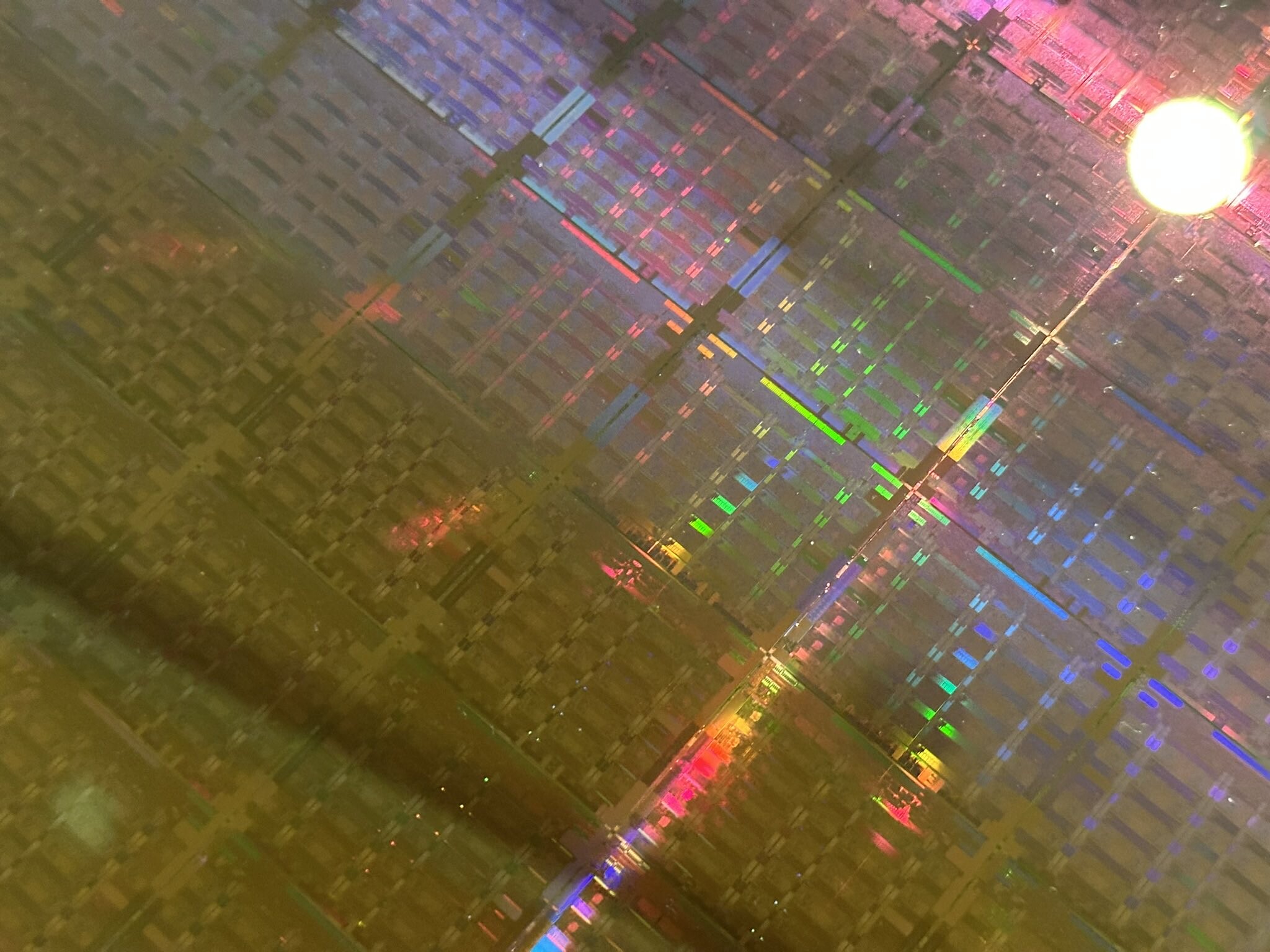
Intel Xeon "Granite Rapids" Wafer Pictured—First Silicon Built on Intel 3
Feast your eyes on the first pictures of an Intel "Granite Rapids" Xeon processor wafer, courtesy of Andreas Schilling with HardwareLuxx.de. This is Intel's first commercial silicon built on the new Intel 3 foundry node, which is expected to be the company's final silicon fabrication node to...
The first clearer photos of the wafer with GraniteRapids chips on Intel 3.
You can see 33 cores (RedwoodCove) per chip.
4 rows of 7 cores and 1 row of 5 cores.
Last edited:

Philste
Senior member
It's Emerald Rapids, as many pointed out below his Tweet. He corrected it now.The first clearer photos of the wafer with GraniteRapids chips on Intel 3.
You can see 33 cores (RedwoodCove) per chip.
Thanks! Now I checked and remembered what the EmeraldRapids tile looks like and it is actually not GraniteRapids. Unfortunately, the news on Techpowerup still says it is GraniteRapids.It's Emerald Rapids, as many pointed out below his Tweet. He corrected it now.
Dayman1225
Golden Member
CWF is 12 compute tiles, 3 base tiles and 2 I/O tiles. 17 in total. I/O tile reused from Granite RapidsIntel Clearwater Forrest (successor to Sierra Forest) is rumoured to use 3D stacking and hybrid bonding aka Foveros Direct
32 cores per compute tile for a total of 384 with only 288 active.CWF is 12 compute tiles, 3 base tiles and 2 I/O tiles. 17 in total. I/O tile reused from Granite Rapids

ashFTW
Senior member
Link?32 cores per compute tile for a total of 384 with only 288 active.

Markfw
Moderator Emeritus, Elite Member
Those are E-cores, correct (essentially) If so, it does not stand a chance against Bergamo, let alone the Zen5 equivalent.32 cores per compute tile for a total of 384 with only 288 active.

adroc_thurston
Diamond Member
Oh CWF kills it cleanly.it does not stand a chance against Bergamo
That's a real tough fight.let alone the Zen5 equivalent.
itsmydamnation
Diamond Member
i know intel thread but......Oh CWF kills it cleanly.
That's a real tough fight.
take zen2 from x/y/z console process port , apply "Dense optimisation"
????????
profit ?
no that i expect AMD to do that.
funny in 2024 we are talking about flock of chickens like is a57 allover again.
adroc_thurston
Diamond Member
No, CSP wants around 256 vCPU per socket so spam is bad.take zen2 from x/y/z console process port , apply "Dense optimisation"
????????
profit ?
No we're like sub 300 vCPU per P or therein.funny in 2024 we are talking about flock of chickens like is a57 allover again.
192-256.
controlflow
Member
You realize those aren't Gracemont E cores and it is on 18A?Those are E-cores, correct (essentially) If so, it does not stand a chance against Bergamo, let alone the Zen5 equivalent.
adroc_thurston
Diamond Member
And this is Zen5c on N3e.You realize those aren't Gracemont E cores and it is on 18A?
Now what?
controlflow
Member
No.And this is Zen5c on N3e.
Now what?
Bergamo is Zen 4c.
adroc_thurston
Diamond Member
CWF isn't competing with Bergamo.No.
Bergamo is Zen 4c.
It's a far more expensive part positioned against Turin-Dense.
controlflow
Member
I didn't say it was. He was saying CWF doesn't stand a chance against Bergamo.CWF isn't competing with Bergamo.
It's a far more expensive part positioned against Turin-Dense.
That is very unlikely to be the case.
Never talked about competition, but apparently you are threatened by any mention of a "superior" Intel part like it's your own child's business.Those are E-cores, correct (essentially) If so, it does not stand a chance against Bergamo, let alone the Zen5 equivalent.
igor_kavinski
Lifer
Doesn't support AVX-512 and will be more expensive. AMD's competitive part will still sell out."superior"
Markfw
Moderator Emeritus, Elite Member
I am just sick of people defending E-cores against AMD C cores, there is a big difference. So, we will just see when they are available what the competition is and which is superior.Never talked about competition, but apparently you are threatened by any mention of a "superior" Intel part like it's your own child's business.

dullard
Elite Member
I am sorry that you are sick of it and yet I still will comment. But, I think there is a fundamental point that keeps getting missed. Intel E-cores (when compared to Intel P-cores) perform their best in low power per core situations. The E-cores perform terribly in higher power per core situations. What power level will each core in Clearwater Forest have? Roughly 1 W to 2 W each (give or take depending on model)? Now look at E-core vs P-core performance near that 1 W to 2 W power per core:I am just sick of people defending E-cores
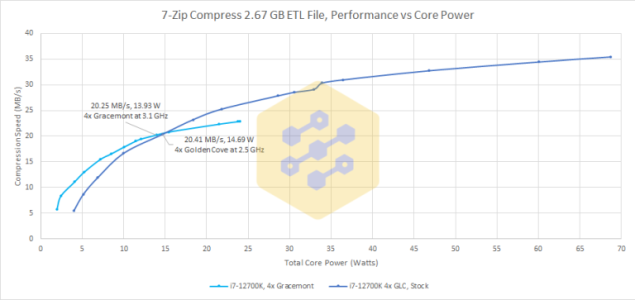
Yes, you are correct that E-cores have been over-defended and often over-hyped. But large core count situations is where E-cores really can shine. If AVX-512 is needed, the E-cores are the wrong way to go. But, otherwise I don't think you can compare what you think of high power per E-core performance to what will happen at low power per E-core. In other words, forget whatever you think you know about E-cores until these chips come out.
32 cores per compute tile for a total of 384 with only 288 active.
Physically only has 288 cores
TRENDING THREADS
-
 Discussion Zen 5 Speculation (EPYC Turin and Strix Point/Granite Ridge - Ryzen 9000)
- Started by DisEnchantment
- Replies: 25K
-
Discussion Intel Meteor, Arrow, Lunar & Panther Lakes + WCL Discussion Threads
- Started by Tigerick
- Replies: 25K
-
 Discussion Intel current and future Lakes & Rapids thread
- Started by TheF34RChannel
- Replies: 24K
-

-
