
Patranus
Diamond Member
Imagine that! An old document like that that doesn't mention health care. Well there you have it then, case closed.
Well if that is the case you need a constitutional amendment, you know, like what they did with alcohol.

Imagine that! An old document like that that doesn't mention health care. Well there you have it then, case closed.

In other words, you will continue to ignore what I actually said because, you know, reading is hard. Instead, you attack a straw man drawn from your preconceived ASSumption of what your mental caricature of me would say. And naturally you can't ever provide specific objections, so you just fling a couple of vague generalizations and prance away as if you mattered. You fail ... again.Oh, I understand that but I also know Bowfinger's history and selectiveness. It's also a tactic used by many on the left to deflect away from the issue of "should" because they know it's outside the scope of the Feds based on the Constitution. Just sayin'...

Ahh I see, thanks for the explanation, would it be better if it was a tax and you guys had national health care like us? I agree that forcing citizens to pay for private health insurance is insane, it's definitely not the way to do things, but would a welfare state like the UK not be a good idea?
I think I agree with "the left" in your examples, the insurance based system you guys have now seems horrible and needs reform, maybe to a government based health care system,
senseamp said:Do you then also believe that Republican proposal to allow individuals to buy health insurance across state lines even if their state laws forbid it is unconstitutional too?

That's the million dollar question right there. Some people believe that single payor will allow the government to leverage it's financial might into driving down costs, prevent situations where a specific provider doesn't accept your coverage, etc. Other people believe that most government-run programs are models of inefficiency and putting it in charge of health care will lead to increased cost, delays in care, etc.
That's two interesting stand points I'd agree with the first and to sat to the second: can it really be more ineffecient than the current stystem?

Very well said. I'd also point out that our federal government, unlike most state governments, has labor costs that are far above private for-profit and not-for-profit insurance corporations, paying arguably higher salaries and unarguably higher benefits than do comparable private businesses. The more we move to our federal government, the less efficient we become. (The flip side for progressives is that liberalism implemented at the state level tends to run off the non-government highest income bracket, whereas federal liberalism cannot be escaped without leaving the whole country - or by lobbying D.C. for special treatment.)From an academic standpoint, yes it could be much more inefficient.
Most of the health insurers in the US are for-profit corporations, either publicly traded or closely held. They have enormous incentive for efficiency, profit. If they can increase efficiency by 5% they're looking at potentially hundreds of millions or billions of dollars in extra profit. Any and all efficiency measures should be undertaken.
On the flip side, the government should have no profit motivation. A case could be made that government profiting off it's citizenry is immoral. So what keeps the government efficient? What is the driving force? Pressure from voters? We've seen innumerable times where elected officials are completely disconnected from their constituents. Actually, there's disincentive for the government to be efficient; the more inefficient they are they more powerful they become as their share of jobs increases and the populace becomes more dependent upon their services.
Now the biggest problem is that free-market efficiency can be (and very often is) counter to the interests of the citizens. Insurance companies earning record profits is, to a certain degree, an indicator of great efficiency, yet those profits are earned at the expense of the citizens.
So, really, I think you have a party with great interest in efficiency (insurers) but whose efficiency is almost counter-productive and a party with practically no interest in efficiency (government) but whose efficiency, once realized, it to the benefit of the citizens. It' kinda a catch-22.

Very well said. I'd also point out that our federal government, unlike most state governments, has labor costs that are far above private for-profit and not-for-profit insurance corporations, paying arguably higher salaries and unarguably higher benefits than do comparable private businesses. The more we move to our federal government, the less efficient we become. (The flip side for progressives is that liberalism implemented at the state level tends to run off the non-government highest income bracket, whereas federal liberalism cannot be escaped without leaving the whole country - or by lobbying D.C. for special treatment.)
There's a reason that Obamacare creates so many new agencies, committees, etc. and gives so many new and often undefined powers to bureaucracy. It's because the main thrust of Obamacare is not to make health care more affordable or health insurance more widely available; the main thrust is to gradually make private health insurance unfeasible and thus usher in single payer government health care.
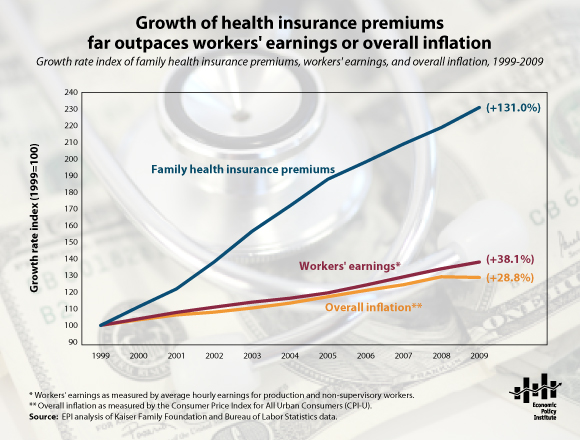
The whole point of individual mandate is so that health care isn't free, but people bear their own health burdens. Pre-Obamacare, people could go to ER's, get care, file for bankruptcy and get the care for free without ever paying a penny into the system, and saddle everyone else with the bill.After that, Democrats will claim at every election that Republicans will take away your "free" health care, just as they now do fro Social Security.
Socialist democracies in Western Europe have single payer. Individual mandate is generally practiced in more market oriented democracies such as Switzerland, Singapore, and Israel. So go ahead and kill the individual mandate, if you really want to. But make sure it's nice and dead. If all Obamacare does is get a Conservative court to rule out any private sector universal coverage solutions, it would have done its job.After that, America will rapidly become just a larger and less efficient Western European socialist democracy. Everyone knows this. /flying pig
Edit: Two things on buying health insurance across state lines. First, with Obamacare the Democrats have moved authority for health insurance regulation from the state level to the federal level, so state insurance authorities are obsolete and should be phased out (assuming Obamacare passes SCOTUS, which I think it will.) Second, if something is purchased across state lines it meets the original definition of the commerce clause, interstate commerce.
new law. everybody must buy a gun or get fined or sent to jail.

That's the million dollar question right there. Some people believe that single payor will allow the government to leverage it's financial might into driving down costs, prevent situations where a specific provider doesn't accept your coverage, etc. Other people believe that most government-run programs are models of inefficiency and putting it in charge of health care will lead to increased cost, delays in care, etc.
new law. everybody must buy a gun or get fined or sent to jail.
I. Be it enacted by the Senate and House of Representatives of the United States of America, in Congress assembled, That each and every free able-bodied white male citizen of the respective States, resident therein, who is or shall be of age of eighteen years, and under the age of forty-five years (except as is herein after excepted) shall severally and respectively be enrolled in the militia, by the Captain or Commanding Officer of the company, within whose bounds such citizen shall reside, and that within twelve months after the passing of this Act. And it shall at all time hereafter be the duty of every such Captain or Commanding Officer of a company, to enroll every such citizen as aforesaid, and also those who shall, from time to time, arrive at the age of 18 years, or being at the age of 18 years, and under the age of 45 years (except as before excepted) shall come to reside within his bounds; and shall without delay notify such citizen of the said enrollment, by the proper non-commissioned Officer of the company, by whom such notice may be proved. That every citizen, so enrolled and notified, shall, within six months thereafter, provide himself with a good musket or firelock, a sufficient bayonet and belt, two spare flints, and a knapsack, a pouch, with a box therein, to contain not less than twenty four cartridges, suited to the bore of his musket or firelock, each cartridge to contain a proper quantity of powder and ball; or with a good rifle, knapsack, shot-pouch, and powder-horn, twenty balls suited to the bore of his rifle, and a quarter of a pound of powder; and shall appear so armed, accoutred and provided, when called out to exercise or into service, except, that when called out on company days to exercise only, he may appear without a knapsack. That the commissioned Officers shall severally be armed with a sword or hanger, and espontoon; and that from and after five years from the passing of this Act, all muskets from arming the militia as is herein required, shall be of bores sufficient for balls of the eighteenth part of a pound; and every citizen so enrolled, and providing himself with the arms, ammunition and accoutrements, required as aforesaid, shall hold the same exempted from all suits, distresses, executions or sales, for debt or for the payment of taxes.
i'd believe that if they'd have accomplished that with the 55% of US medical consumption the .gov already controls.

i'd believe that if they'd have accomplished that with the 55% of US medical consumption the .gov already controls.
Republicans explicitly forbade Medicare from using its purchase power for negotiating lower drug prices in their Medicare expansion under Bush.

Republicans explicitly forbade Medicare from using its purchase power for negotiating lower drug prices in their Medicare expansion under Bush.
But Bush... again.
The Dems have been in charge - what did they do?
This is true. Of course there is no real Medicaid reform by any party, which is a huge budget buster, but hey they'll get it down next time, right?
:awe:

Typical Republican MO:
1. Get elected by bashing the government screw ups.
2. Once elected, screw up governing.
3. Wash, rinse, repeat.
Typical Republican MO:
1. Get elected by bashing the government screw ups.
2. Once elected, screw up governing.
3. Wash, rinse, repeat.
A state has the ability to regulate anything sold within its borders to the exact extent that it does not interfere with or contradict federal control of interstate commerce. Thus California or other progressive fail-in-motion may ban Happy Meal toys - but it may not levy a tax on Happy Meal toys. Presumably California is free to do the same with health insurance. However - health insurance is clearly one of the Democrat Party's preferred paths to eternal electoral dominance, which suggests that the federal government will take over more and more of its regulation and administration. And thus, states' health insurance regulatory authorities will become progressively (pun intended) obsolete.Private health insurance market was doing that long before Obamacare.
The whole point of individual mandate is so that health care isn't free, but people bear their own health burdens. Pre-Obamacare, people could go to ER's, get care, file for bankruptcy and get the care for free without ever paying a penny into the system, and saddle everyone else with the bill.
Socialist democracies in Western Europe have single payer. Individual mandate is generally practiced in more market oriented democracies such as Switzerland, Singapore, and Israel. So go ahead and kill the individual mandate, if you really want to. But make sure it's nice and dead. If all Obamacare does is get a Conservative court to rule out any private sector universal coverage solutions, it would have done its job.
By your logic, a state has no power to regulate any products that are sold there, as long as the point of origin for those products is in another state. Want to sell tainted milk in California, no problem, just bring it in from Nevada.

I'm inclined to agree with this decision aside from one nagging issue. All citizens will at some point participate or utilize the healthcare system. Every single one of us has been to the doctor and probably the ER for some thing or another over the course of our lives. That's where the "inactivity" deal doesn't really fly with me. It may not be regular participation but everyone is a consumer of healthcare services.
The slippery slope argument for me is stronger in this case however - so it's a good decision. The SC will decide, hopefully soon so that the potential for wasting money one way or the other isn't disgustingly high.
Single payer is still the best solution in my opinion and we'll get there eventually when things reach critical mass.
The uninsured can only be said to have a substantial effect on interstate commerce in the manner as described by the defendants: (i) if they get sick or injured; (ii) if they are still uninsured at that specific point in time; (iii) if they seek medical care for that sickness or injury; (iv) if they are unable to pay for the medical care received; and (v) if they are unable or unwilling to make payment arrangements directly with the health care provider, or with assistance of family, friends, and charitable groups, and the costs are thereafter shifted to others. In my view, this is the sort of piling inference upon inference rejected in Lopez, supra, 514 U.S. at 567, and subsequently described in Morrison as unworkable if we are to maintain the Constitutions enumeration of powers. Supra, 529 U.S. at 615.21.
I do not mean to suggest that these inferences are illogical or unreasonable to draw. As did the majority in Lopez and Morrison, I do not dispute or question their underlying existence. Indeed, while $43 billion in uncompensated care from 2008 was only 2% of national health care expenditures for that year, it is clearly a large amount of money; and it demonstrates that a number of the uninsured are taking the five sequential steps. And when they do, Congress plainly has the power to regulate them at that time (or even at the time that they initially seek medical care), a fact with which the plaintiffs agree. But, to cast the net wide enough to reach everyone in the present, with the expectation that they will (or could) take those steps in the future, goes beyond the existing outer limits of the Commerce Clause and would, I believe, require inferential leaps of the sort rejected in Lopez.
That's the million dollar question right there. Some people believe that single payor will allow the government to leverage it's financial might into driving down costs, prevent situations where a specific provider doesn't accept your coverage, etc. Other people believe that most government-run programs are models of inefficiency and putting it in charge of health care will lead to increased cost, delays in care, etc.
new law. everybody must buy a gun or get fined or sent to jail.
The government has no financial might to drive down costs. The government is running over a $1,000,000,000,000 deficit at the moment. However, what they do have, is the bureaucratic might (and failing that, military/police might) to force people to consume less health care service (i.e. rationing & "death panels").
A state has the ability to regulate anything sold within its borders to the exact extent that it does not interfere with or contradict federal control of interstate commerce. Thus California or other progressive fail-in-motion may ban Happy Meal toys - but it may not levy a tax on Happy Meal toys. Presumably California is free to do the same with health insurance. However - health insurance is clearly one of the Democrat Party's preferred paths to eternal electoral dominance, which suggests that the federal government will take over more and more of its regulation and administration. And thus, states' health insurance regulatory authorities will become progressively (pun intended) obsolete.


