Computex.It's MLID and if you ask me Zen 7 is EOY 2028 at best
Likely

-
We’re currently investigating an issue related to the forum theme and styling that is impacting page layout and visual formatting. The problem has been identified, and we are actively working on a resolution. There is no impact to user data or functionality, this is strictly a front-end display issue. We’ll post an update once the fix has been deployed. Thanks for your patience while we get this sorted.
You are using an out of date browser. It may not display this or other websites correctly.
You should upgrade or use an alternative browser.
You should upgrade or use an alternative browser.
Discussion Zen 7 speculation thread
Page 2 - Seeking answers? Join the AnandTech community: where nearly half-a-million members share solutions and discuss the latest tech.
- Status
- Not open for further replies.

Hulk
Diamond Member
MLID is pure entertainment. Nothing wrong it it or him, I like his presentation actually, but you have to understand it is pure "computer fiction." As far as his predictions, well, even a blind squirrel finds nut now and then and a broken clock is right twice day and so on.
If you want speculation with some logic, deduction, and analysis, just scroll through the threads around here. Not as entertaining of course but far more informative and (generally) logically supported.
If you want speculation with some logic, deduction, and analysis, just scroll through the threads around here. Not as entertaining of course but far more informative and (generally) logically supported.
LightningZ71
Platinum Member
While it's possible that you could break up a CPU core between layers, there's a bit of latency that makes that problematic with our current methods. I could see in maybe half a decade where they would identify the worst hot spots on the core and arrange it so that they could be on an upper layer, with the less thermally dense areas on a lower layer, then the L2 layer below that, then all of that on an L3 layer. There's the potential that the various layers of the core can be on completely different lithography generations.
Far more likely, though, is the next step being Core components stacked on L2, stacked on L3, stacked on I/O. The L3 layer can be designed around high energy efficiency and density, the L2 area can be designed around moderate density and efficiency but very high performance, and the core die can be balanced as needed. Different layers could be swapped around for different applications, like a core die that's planned for maximum density and efficiency for mobile use, and another planned for maximum performance for desktop use.
Far more likely, though, is the next step being Core components stacked on L2, stacked on L3, stacked on I/O. The L3 layer can be designed around high energy efficiency and density, the L2 area can be designed around moderate density and efficiency but very high performance, and the core die can be balanced as needed. Different layers could be swapped around for different applications, like a core die that's planned for maximum density and efficiency for mobile use, and another planned for maximum performance for desktop use.
How do you know he hasn't?I am personally waiting for the day MLID joins AT Forum 🙂
I would know the first person to say arc is cancelled will be the prime suspect for MLID 🙂.How do you know he hasn't?
never said it does lol but the question was how would you identify MLID 🙂Saying "arc is cancelled" on the AT forum doesn't make you any money.

fastandfurious6
Banned
If you want speculation with some logic, deduction, and analysis, just scroll through the threads around here. Not as entertaining of course but far more informative and (generally) logically supported.
yes.... this is exactly why forums with knowledgable members are the best
and exactly why forums like this are going extinct or private...... everything getting commodified and monetized..... forums provide so much free value, capitalism can't have forums, only fast paced Reddit with opaque shoddy moderators and youtube videos with ads, sponsors and often devoid of meaning....
will AT forums be around when zen 7 releases?
he likely post first post in this topic 😎How do you know he hasn't?
Yea, given Zen 6 is H2 2026 with the rest dripping through 2027, Zen 7-based products are most likely gonna be relevant in 2029.It's MLID and if you ask me Zen 7 is EOY 2028 at best
fastandfurious6
Banned
Influencer-types don't really engage with forums unless it's for PR purposes, everything else is a liability.....
Communication is money for them
Communication is money for them

Seems overkill unless Zen7 removes SMT16 core CCD for consumer desktops — MLID

adroc_thurston
Diamond Member
SMT is forever.Seems overkill unless Zen7 removes SMT

Darkmont
Member
Always keep in mind this is the guy who pinned Raptor Lake Refresh’s slightly lower power draw in cinebench MT on DLVR despite the actual patent showing it offered no benefits at high current draw (something like 70 amps) and has been shown repeatedly on Arrow Lake to create waste power in high load scenarios. Not to mention motherboards would’ve needed a new VR to implement it and DLVR was never mentioned as enabled in the 13/14th gen documentation…
It is entirely possible. Intel tested a version of Pentium 4 with it. It resulted in:While it's possible that you could break up a CPU core between layers, there's a bit of latency that makes that problematic with our current methods.
-Peak temp reduction of nearly 25C at same overall Temp
-30% power reduction
-8% faster, and 15% faster per clock(at 13C higher temps but still lower power)
-Reduction of a quarter of pipeline stages, which will be largely responsible for increased per/clk.
The problem is, while it might work for lower power designs, it'll be a thermal density problem for highest end parts. It is not practical without experimental methods such as micro fluidic channels.
Here's my analysis of the patent: https://forums.anandtech.com/thread...ure-lakes-rapids-thread.2509080/post-40772218lower power draw in cinebench MT on DLVR despite the actual patent showing it offered no benefits at high current draw
Knowing what "DLVR" stands for and spending 30-60mins reading the patent, even skimming it will tell you the reality. Also basic electronics.
DLVR stands for "Digital Linear Voltage Regulator". Key word: Linear. Linear is essentially a fancy resistor, meaning unlike a switched mode one, it reduces voltage by using power, resulting in heat dissipated.
The patent tells you the power saving is ONLY for bursty workloads. Before you had one regulator, and the CPU predicts what the next voltage required is. By having two regulators, you increase the current capacity and thus reduce the voltage because voltages are based on worst case scenarios(so the CPU doesn't crash). It only kicks in at high power though according to the patent, since having it activated all the time will result in worse efficiency, nevermind better.
Last edited:
I guess it’s time again to remind everyone that MLID is not a trustworthy source.
 forums.anandtech.com
Discussion - Should MLID be considered a legitimate source
To keep this topic from polluting other threads, I've created its own. @dullard Here is your list that you wanted to discuss: Nov 2020 June 2021 June 2022 Nov 2022 Dec 2022 May 2023 June 2023 I listed this as wrong because MTL not being Ocean Cove was known well before this...
forums.anandtech.com
In terms of when they want to announce it likely, in terms of when it will be design ready for release will likely be a different date.It's MLID and if you ask me Zen 7 is EOY 2028 at best
Announcement dates will probably depend on how much the current US trade wackawacka continues and how much that directly affects AMD's bottom line.

DisEnchantment
Golden Member
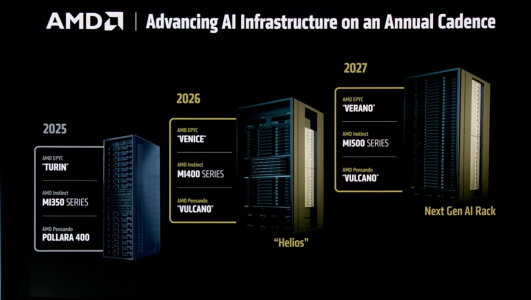
"Next Generation CPU" Verano in 2027 according to Lisa
Verano = Zen 7?
adroc_thurston
Diamond Member
Yes bosmang
Provided they give ample enough warning, if an announcement of forum closure is made, I will roll out a replacement for everyone to go to. I have a domain reserved for it and some other hardware related stuff, I just have to set things up. I'm a busy guy so it is low on my priority list since no announcement has been made.yes.... this is exactly why forums with knowledgable members are the best
and exactly why forums like this are going extinct or private...... everything getting commodified and monetized..... forums provide so much free value, capitalism can't have forums, only fast paced Reddit with opaque shoddy moderators and youtube videos with ads, sponsors and often devoid of meaning....
will AT forums be around when zen 7 releases?
I know there are other forums out there, but I feel this one hits has the most interesting conversations, so I'd like to help that continue to live on.
- Status
- Not open for further replies.
TRENDING THREADS
-
 Discussion Zen 5 Speculation (EPYC Turin and Strix Point/Granite Ridge - Ryzen 9000)
- Started by DisEnchantment
- Replies: 25K
-
Discussion Intel Meteor, Arrow, Lunar & Panther Lakes + WCL Discussion Threads
- Started by Tigerick
- Replies: 24K
-
 Discussion Intel current and future Lakes & Rapids thread
- Started by TheF34RChannel
- Replies: 24K
-

-
