
adroc_thurston
Diamond Member
you can't get 'close' when you can't clock.Everything else I think might be close.

you can't get 'close' when you can't clock.Everything else I think might be close.

I'm sure they will both have clock domains.you can't get 'close' when you can't clock.
A hypothetical 6.5GHz vs 6GHz fmax is an 8% difference, even assuming linear scaling of performance with frequency I would say 8% is close enough.you can't get 'close' when you can't clock.
NVL-S is 5.7G.A hypothetical 6.5GHz vs 6GHz fmax is an 8% difference, even assuming linear scaling of performance with frequency I would say 8% is close enough.
So you'd expect a >10% fmax difference, while having similar PPC? That would indeed be bad for IntelNVL-S is 5.7G.
similar or higher yeah.So you'd expect a >10% fmax difference, while having similar PPC?
This is *already* a problem for Intel; they're on N3 with worse v/f than AMD on N4p.That would indeed be bad for Intel
Is N3B expected to clock higher at the limit than N4P though? Not sure if has anyone gotten high clocks out of N3B.similar or higher yeah.
This is *already* a problem for Intel; they're on N3 with worse v/f than AMD on N4p.
yeaCan amd clock tho??
Apple gained 17% fmax there so yeah.Is N3B expected to clock higher at the limit than N4P though?
It's a much much faster node than anything N5/N4.Not sure if has anyone gotten high clocks out of N3B.
N3p is maybe 5% (optimistically) faster than N3b.N3P is a different story ofc.
most insane statement maybe everST "turbo" clocks aren't important
What.ST "turbo" clocks aren't important. It's MT clocks that win the day.
I think you meant N3E not N3BN3p is maybe 5% (optimistically) faster than N3b.
rare usage compared to ST For client ST matters the most if MT was superior we would be getting 48C Skymont not 8+16 ARLST "turbo" clocks aren't important. It's MT clocks that win the day.
nope.I think you meant N3E not N3B
I meant aren't important for the comparison of top parts, they are important for performance of course. I was referring to the comparison of parts that was carrying through the last few posts. For most top end parts today they will boost for a couple of cores within a few hundred MHz of one another. When it comes to frequency I'm more concerned with how high they clock when all of those cores are loaded.rare usage compared to ST For client ST matters the most if MT was superior we would be getting 48C Skymont not 8+16 ARL
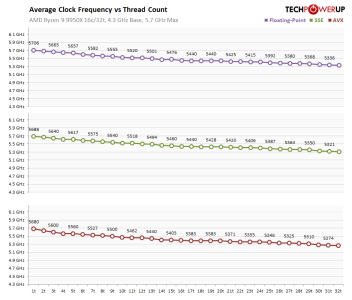
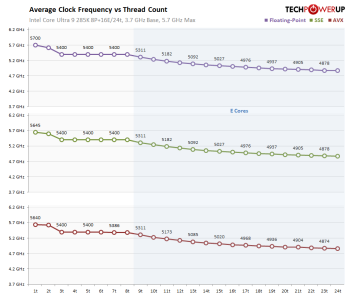
ah yes Intel is paying all this money for N2 just to get the same frequency as N3B lmao. sure thing buddy.NVL-S is 5.7G.
Yeah?ah yes Intel is paying all this money for N2 just to get the same frequency as N3B lmao
Skill issue.sure thing buddy.
Well, it’s a new core and design compared to ARL. There’s no reason that it can’t clock the same (or even lower) on a better node. Presumably, the implication is that Intel messed up the physical design or what have you. No idea whether the 5.7GHz figure is accurate or not, to be clear.ah yes Intel is paying all this money for N2 just to get the same frequency as N3B lmao. sure thing buddy.
Zen6 and Zen6 3D probably ought to be benchmarked with 4800/5200/5600/6000 in addition to the new default/sweet spot considering the kind of memory market prospective buyers will have to deal with.Caching might drive performance with RAM at the ridiculous prices. Of course every reviewer has buttloads of RAM rather than accurate reflections of Joe Consumer.

When's the last time a new intel core lost 10%+ frequency iso-node?Well, it’s a new core and design compared to ARL. There’s no reason that it can’t clock the same (or even lower) on a better node. Presumably, the implication is that Intel messed up the physical design or what have you. No idea whether the 5.7GHz figure is accurate or not, to be clear.
When's the last time a new intel core lost 10%+ frequency iso-node?
NVL-S is 5.7G.
Obviously, but claiming that Nova Lake gets zero clockspeed increase when it's moving from N3B to N2 is tantamount to saying that Coyote Cove clocks 10% worse than Lion Cove, iso-node. It's possible, but it would be a historically bad.It's not going to be iso-node obviously.
you can't get 'close' when you can't clock.
ST "turbo" clocks aren't important. It's MT clocks that win the day.


