
DisEnchantment
Golden Member
Speculate at will
Last edited:


The former figure was given by a random internet poster. Oh boy...

The 16% from AMD is the geomean of different benchmarks, some are higher, some lower.So i'm still very much confused about the discrepancy between the 32% specint 2017 and the 16% figure directly from amd. Weird.

He can read the AMD slides, no problem.The 16% from AMD is the geomean of different benchmarks, some are higher, some lower.
I wish Intel would've shrunk Raptor Lake Refresh to 20A instead of pushing it wayyyy beyond its limits.
With the release of MSI's CAMM2 mobo, I'm not sure anymore that Zen 6 will be released on AM5. Maybe on AM5+ CAMM2 mobo.
The 32% figure just doesn't appear out of thin air, and that's the issue.He can read the AMD slides, no problem.
He is just wondering how comes it is not 32% as advertised by the leakerz. It is simple, he got bamboozled..

There still is merely the old rumor of a 16 core complex, no public info from AMD.I was assuming that it is still 2 CCX per die like it is in zen4c. Do you have something indicating that they changed that?
AMD subsequently gave minor clarifications to the press. Renderings from AMD:I also haven't really seen any indicating that it actually has more than 12 infinity fabric links on the IO die.
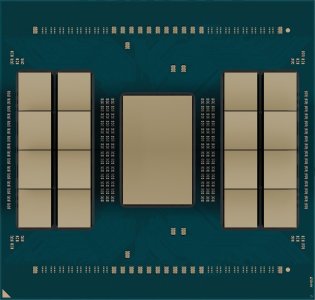 | 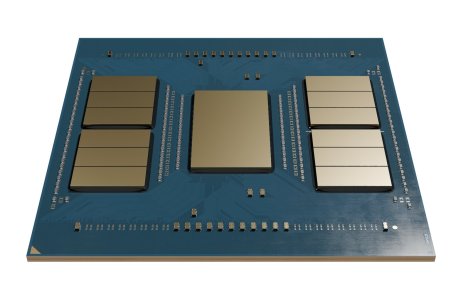 |
| Turin classic, up to 128 cores | Turin dense, up to 192 cores |
Have I missed it? Have specint scores been posted?So i'm still very much confused about the discrepancy between the 32% specint 2017 and the 16% figure directly from amd. Weird.

Nope, nothing was posted except the poor breakdown of IPC on Computex.Have I missed it? Have specint scores been posted?
I hadn't seen any yet.
Not that I am expecting something amazing but....
Nothing has changed of what we know about MLID's quality of sources, background checking, interpretations, and outright inventions.Now that Mlid credibility has been improved,
An essential ingredient for hype trains.outright inventions.
32% figure was about a 1T test (not usually power or thermally limited) and it was a single data point anyway.The 32% figure just doesn't appear out of thin air, and that's the issue.
Now that Mlid credibility has been improved, I'm inclined to believe the new core was plagued with bugs as mentioned recently.
This slide showed iso-clock tests.¹16% Geomean as AMD gave us was determined on all nT tests (which are power/thermally limited)
The chipset is actually unchanged, so the differences will come down to board quality and BIOS improvements. Zen 4 already supports DDR5-8000, but you have to drop to 1:2 mode, which causes quite a hit.Is there any indication it supports higher speed DDR5 than previous versions?
I'm not too optimistic on that.
I made the mistake of going 7950X (non-3D) last time. I'm waiting for the 3D part this time around.For the 1 CCD parts, I think its pretty obvious that the X3D parts are tempting. But with the 2 CCD parts, I'm definitely gonna go with the one that does not rely on a flimsy thread prioritization routine, and is available earlier, the 9950X. I of course can't claim to know if the majority of potential buyers think like me though.
Desktop is likely to move to LPDDR before we see non LPCAMM adoption. I will be shocked if we continue to have a split since combining the tech means lower costs and higher margins.You can do AM5 + CAMM, compatible with AM5 + DIMM at the socket. If you just intend to support DDR5 CAMM, not LPDDR5X + CAMM, there is no reason to make the socket incompatible.
(edit: ) Actually, let's make that a prediction. I predict that sometime between now and 2027, AMD/partners will release a new motherboard platform that differs from AM5 in that it supports CAMM, and this will be the best platform to run Zen6 on. But, those same CPUs still work just fine, just with reduced memory clock, on AM5 boards.
Yeah, it seems I missed that part but in any case the setup is very strange because they should also say a CCD was disabled on the 9950X to get those data, and there are other information missing as well . Also it would have been quite easy for AMD to move that average on an higher number, by including more games (Far Cry 6 seems to be one of the lowest gains looking at the comparison with the 14900K) or FP-intensive apps. It's strange because basically Zen5 seems stronger in the comparison against the 14900K than in the one against the Zen4. True that the former has no AVX512, but in some cases (gaming) has no effect or in others (CB24 supports AVX512 but AFAIK it has very small effect).This slide showed iso-clock tests.¹
________
¹) Presumably, I should add. (The slide deck is, as has been pointed out by others, not free from mistakes.)
My guess is, it was supposed to be a comparison between server Z4 Z5 CPUs. This somehow got translated to desktop IPC by few people.So i'm still very much confused about the discrepancy between the 32% specint 2017 and the 16% figure directly from amd. Weird.
If you really want to know about SPECint and IPC, you should check my post here two months ago. I may not technical competent, but I spent time trying to calculate the figures and present in the table format to understand the difference between performance numbers and IPC. I don't have much free time, maybe you should study the table and do the technical analysis which clearly the forum members lacking...So i'm still very much confused about the discrepancy between the 32% specint 2017 and the 16% figure directly from amd. Weird.
That's a smart attempt to gain marketshare especially in light of Intel's shader compilation crashes.basically Zen5 seems stronger in the comparison against the 14900K than in the one against the Zen4.
Desktop is likely to move to LPDDR before we see non LPCAMM adoption. I will be shocked if we continue to have a split since combining the tech means lower costs and higher margins.

Wasn't the whole issue that the 32% value was presented as a 1T datapoint, but (correct me if I am wrong in this understanding) the original source actually gave it as MT (across all threads) gain for the Epyc 9005 classic SKU?32% figure was about a 1T test (not usually power or thermally limited) and it was a single data point anyway.
.
You're objectively wrong. His info about zen 5 has not been discredited, yet.Nothing has changed of what we know about MLID's quality of sources, background checking, interpretations, and outright inventions.
As we can see, if you focus on only a single benchmark then it could be 35% increase in IPC, so maybe somewhere an "up to 35%" transformed to 35% increase.He can read the AMD slides, no problem.
He is just wondering how comes it is not 32% as advertised by the leakerz. It is simple, he got bamboozled..
It's just specINT is THE benchmark. Nothing burger if it's cinebench otherwise.As we can see, if you focus on only a single benchmark then it could be 35% increase in IPC, so maybe somewhere an "up to 35%" transformed to 35% increase.
It's strange because basically Zen5 seems stronger in the comparison against the 14900K than in the one against the Zen4. True that the former has no AVX512, but in some cases (gaming) has no effect or in others (CB24 supports AVX512 but AFAIK it has very small effect).
IIRC it was normalized for the core number so no, but I can be wrong.Wasn't the whole issue that the 32% value was presented as a 1T datapoint, but (correct me if I am wrong in this understanding) the original source actually gave it as MT (across all threads) gain for the Epyc 9005 classic SKU?
I assumed what happened was that the leakers thought that Epyc 9005 classic had to have 96 cores like Genoa, so the +32/ MT specint result means it has to soemhow get +32% performance per core. However, Epyc 9005 Classic apparently goes up to 128 cores, so part of that +32 % are the extra cores, and it was a mistake to interpret it as ST gain. So wasn't that what happened? Would make a lot of sense.


