


- Nov 1, 2001
- 61,504
- 12
- 56
So, how long before the first Moon Colonies or Moonolonies sprout up?
http://www.nytimes.com/2009/11/14/science/14moon.html?hpWater Found on Moon, Scientists Say
Published: November 13, 2009
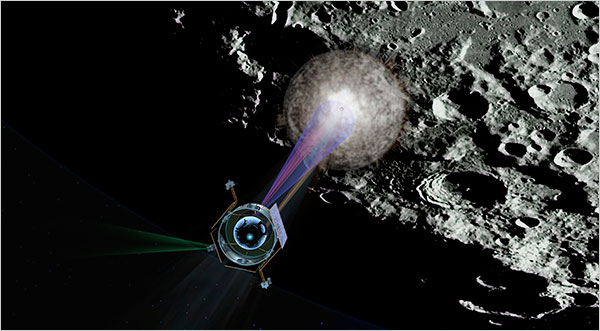
This artist's rendering released by NASA shows the Lunar Crater Observation and Sensing Satellite as it crashed into the moon to test for the presence of water last month.
There is water on the Moon, scientists stated unequivocally on Friday, and considerable amounts of it.
Indeed yes, we found water, Anthony Colaprete, the principal investigator for NASAs Lunar Crater Observation and Sensing Satellite, said in a news conference.
The confirmation of scientists suspicions is welcome news both to future explorers who might set up home on the lunar surface and to scientists who hope that the water, in the form of ice accumulated over billions of years, could hold a record of the solar systems history.
The satellite, known as Lcross (pronounced L-cross), slammed into a crater near the Moons south pole a month ago. The impact carved out a hole 60- to 100-feet wide and kicked up at least 24 gallons of water.
We got more than just whiff, said Peter H. Schultz, a professor of geological sciences at Brown University and a co-investigator of the mission. We practically tasted it with the impact.
For more than a decade, planetary scientists have seen tantalizing hints of water ice at the bottom of these cold craters where the sun never shines. The Lcross mission consisted of two pieces an empty rocket stage to carve into the lunar surface and a small spacecraft to measure what was kicked up, but it too slammed into the surface.
For space enthusiasts who stayed up, or woke up early, to watch the impact on Oct. 9, the event was anticlimactic, even disappointing, as they failed to see the anticipated debris plume. But NASA later said that a plume was indeed photographed; the live video stream was not properly attuned to pick out the details.
The water findings come from analysis of the slight shifts in color after the impact, showing telltale signs of water.



 Facebook
 Twitter