
-
We’re currently investigating an issue related to the forum theme and styling that is impacting page layout and visual formatting. The problem has been identified, and we are actively working on a resolution. There is no impact to user data or functionality, this is strictly a front-end display issue. We’ll post an update once the fix has been deployed. Thanks for your patience while we get this sorted.
You are using an out of date browser. It may not display this or other websites correctly.
You should upgrade or use an alternative browser.
You should upgrade or use an alternative browser.
Worst CPUs ever, now with poll!
Page 14 - Seeking answers? Join the AnandTech community: where nearly half-a-million members share solutions and discuss the latest tech.

ctk1981
Golden Member
c3-s was not so bad. however, c7 was much better.
It would depend largely on which c3 (samuel/sam2/ezra/Nehemiah) we're talking about, but in general none of them would compete with intel or amd offerings at the same clock. They were cheap to make and ran cool but were complete dogs in performance. Nehemiah cores addressed some problems....but when your based off an aging socket 370, single data rate 133mhz FSB and have a 64KB L2 cache you're not looking at a screamer by any means.

Matt1970
Lifer
I mean, you have to understand that in 1999 the top speed was around 233mhz, In 2005 you could get dual cores with a top speed around 2ghz. In roughly 10 years we easily had a 10x the performance increase.
The PII 233 was out in 1997 and by 1998 we had the 333
The real problem came with the next version, the 6x86MX/M-II, which used all sorts of weird, non-standard voltages and bus speeds, which sent system stability down the toilet. And when AMD came out with the hugely successful K6-2 and Intel created the much more competent second Celeron revision, it was game over.
The MII did have a much higher death rate but any of the 75MHz including the 6x86 pr-200 were susceptible.

Gerilgfx
Banned
It would depend largely on which c3 (samuel/sam2/ezra/Nehemiah) we're talking about, but in general none of them would compete with intel or amd offerings at the same clock.
when we comparing the performance per mhz rate, that was bad, okay, but that does not means anything. the power consumption, the performance, and the price is the deciding factors.
600 mhz via c3 dissipated typical 7w under load, with 13w maximum peak, and 1w in idle.
600 mhz amd k7 continously 50w (they decrased it a bit in the second version, however, to some 40w, no power throttling)
600 mhz intel pentium 3 - 42w (later models decrased the power consumption seriously, however, still no power throttling for idle)
Via C3 offered the same performance/watt rate with the earlyer amd and intel competition (+/-5%) - while under typical tasks, it had 10x-20x smaller power demand, offering superior solution for notebooks, laptops, or even some desktop computers, where power demand and/or silent/fanless operation was needed. with c3, via owned these market segments, amd and intel was unable to competite with via in these segments, this resulted a slow market share incrase for via, and also, under the same watt rate, it performed the same maximum performance.
via c3 was an awesome solution in every mentionable ways, and it was much cheaper than the competitors later-released low-power k7 and p3 chips. i didnt seen anybody to complain about them until yet. of course, competitors also had the newer low-power chips on the market when the c3 is released, but a 20w p3 was like... 600-1000 usd without even power throttling...
so in short, while c3 ate few watts, it was cheap, and was relatively fast for its power consumption. (the situation can be compared to the intel atom chips of the 2010's)
(however C7 was a more brutal successor, sometimes reaching pentium4 on the same clock, while eating 5x-50x few watts, catalizing the market share of via)
Last edited:

jji7skyline
Member
Why is the IBM PowerPC 970 on this list?

III-V
Senior member
Terrible memory latency?Why is the IBM PowerPC 970 on this list?

RadiclDreamer
Diamond Member
The old celerons with no L1 cache http://www.anandtech.com/show/237/7
And the intel Prescott (PresHOT) line
And the intel Prescott (PresHOT) line
RadiclDreamer
Diamond Member
Via C3 processors.
OMG YES! Those things were such crap, and had some roots with the Cyrix line if I recall correctly, which were also soooo bad.
*edit, looked it up and the C in C3 stood for cyrix
Last edited:
Yes, this was something else, what a piece of sh.t😱 all the company offices had this energy wasting CPU.Pentium 4 Prescott...
Last edited:

ShintaiDK
Lifer
Yes, this was something else, what a piece of sh.t😱 all the company offices had this energy wasting CPU.
Its nothing compared to the FX line tho. I never thought Intel would get rid of their Prescott nightmare, until AMD released Bulldozer that is.
GuinnessGuy
Member
The Bulldozer's were pretty bad. Prescott's will be forever BURNED into my memory though...

NTMBK
Lifer
Intel owes its success to key people who were involved in managing its business - Gordon Moore, Robert Noyce, Andy Grove.
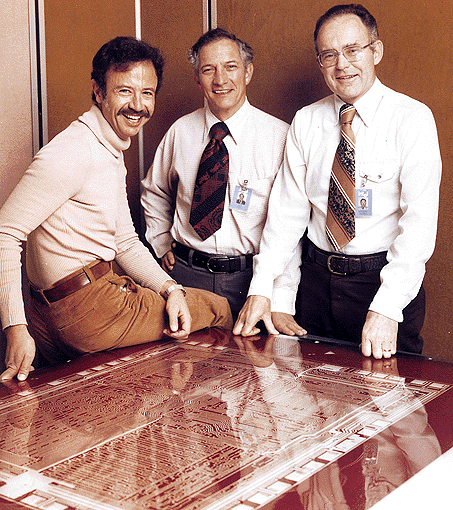
Wow, Moore's Law has brought us a long way, those chips used to be enormous 😵

PingSpike
Lifer
It would depend largely on which c3 (samuel/sam2/ezra/Nehemiah) we're talking about, but in general none of them would compete with intel or amd offerings at the same clock. They were cheap to make and ran cool but were complete dogs in performance. Nehemiah cores addressed some problems....but when your based off an aging socket 370, single data rate 133mhz FSB and have a 64KB L2 cache you're not looking at a screamer by any means.
I bought one of those chips. It filled a niche for me. I built a low power torrent box using a motherboard and RAM I had lying around already and would have otherwise done nothing with. It was slow though, no doubt about it. I think it was a 1ghz but most benchmarks had it trading blows with a PII-400 or something like that.
Wow, Moore's Law has brought us a long way, those chips used to be enormous 😵
True, but with the downside that nowadays our desktops no longer pull double-duty as desk tops 😉
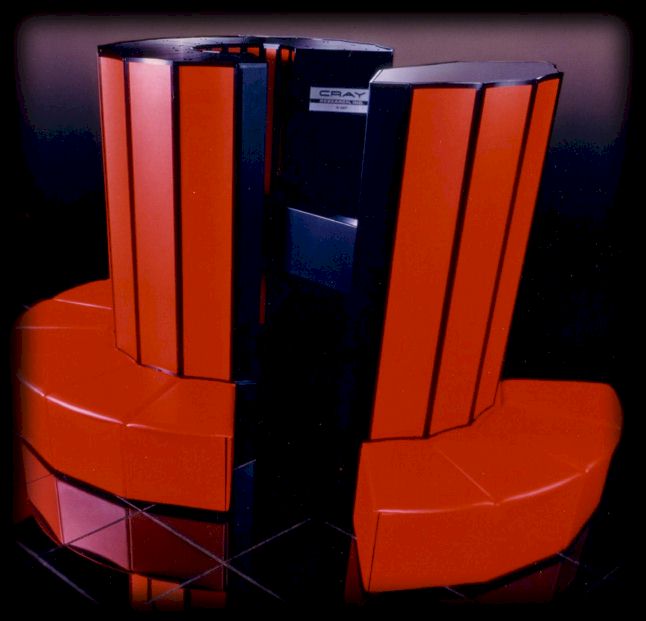
I heard these things doubled as secret make out spots at night.
Explains the incorporation of comfy seating around the perimeter. Helps set the mood 😀

Lorne
Senior member
For the price, the K5 and 6x86 were okay. The one I hated was the 486SLC chips. Slightly better than a 386SX that wanted to pretend it was a 486 SX but wasn't a true 32-bit processor.
That was only during the transition time, Later there was 386 with full 32bit and PCI, There was also some 486 that had 32bit IS but only 16bit registry.
Also both suffering at times with off board FPU.

SOFTengCOMPelec
Platinum Member
Explains the incorporation of comfy seating around the perimeter. Helps set the mood 😀
You're right, just the right warm temp too. It was an Effective Cuddle Lounge, or E.C.L. (ECL) for short.
The computer probably heard funny sounds, and thought the human Emitter Couple Logic(ally) together, or emitter coupled logic, ECL for short.
VERY NSFW pics here
Yowzers! thanks for the warning 😀You're right, just the right warm temp too. It was an Effective Cuddle Lounge, or E.C.L. (ECL) for short.
The computer probably heard funny sounds, and thought the human Emitter Couple Logic(ally) together, or emitter coupled logic, ECL for short.
VERY NSFW pics here


OBLAMA2009
Diamond Member
man, recent dogs would be anything labeled "atom", as well as bay trail celerons and pentiums.
Last edited:
TRENDING THREADS
-
 Discussion Zen 5 Speculation (EPYC Turin and Strix Point/Granite Ridge - Ryzen 9000)
- Started by DisEnchantment
- Replies: 25K
-
Discussion Intel Meteor, Arrow, Lunar & Panther Lakes + WCL Discussion Threads
- Started by Tigerick
- Replies: 25K
-

-

-
