Why are desktop CPUs so slow at improving?

Page 6 - Seeking answers? Join the AnandTech community: where nearly half-a-million members share solutions and discuss the latest tech.

goldstone77

Senior member
Dec 12, 2017
217
93
61
It's also possible that Intel isn't increasing performance and reducing price because they don't want to create a monopoly so they are just staying ahead of AMD as much as legally makes sense. That's surely only a small part of the (possible) reasons though.

If this was the case they would have continued to develop technology(R&D) and trickled it out, and not suffering from 10nm development issues while Samsung has adopted EUV before any other foundry, and has an aggressive process roadmap of 4nm by 2020. They report that they can see a clear path to 1nm!
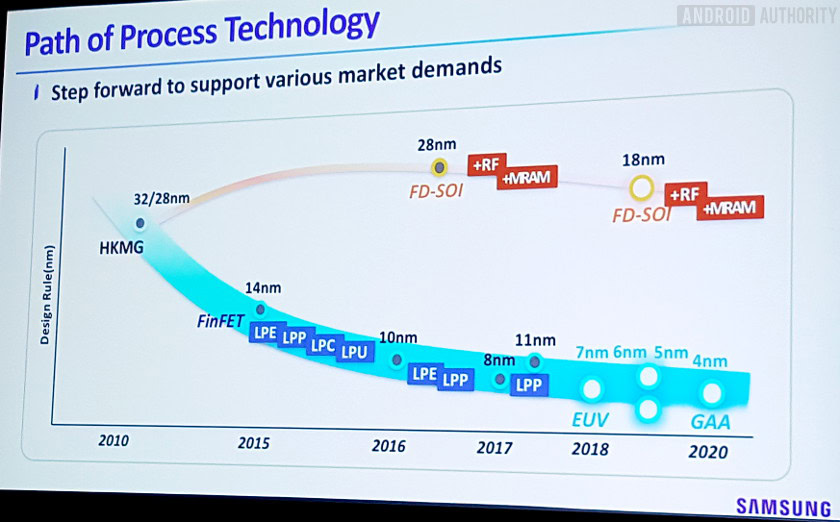
Samsung-4nm-RoadMap.jpg

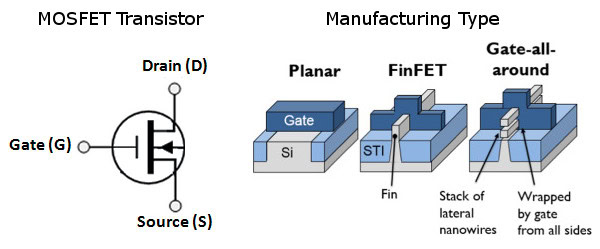
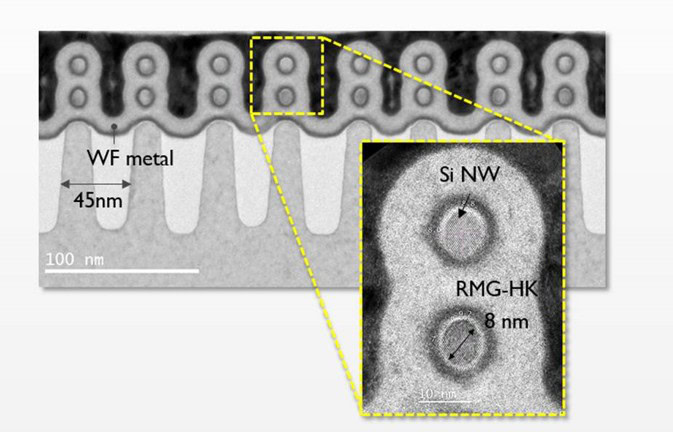
Fin-vs-GAA-FET.jpg
GAA-MOSFET.jpg


https://www.androidauthority.com/4nm-processing-node-812959/

Edit: Just note the cell phone industry is highly competitive with multiple manufactures. How long I wonder before the processing power in these devices rivals todays desktops in certain application performance? Before long we will be wearing AR/VR glasses instead of having cell phones. AR/VR is moving into the industrial sector over the next 5 years the demand is expected to grow by 5 times what it is today. That technology will certainly bleed over into consumer electronics! Say good bye to desktops and monitors. You can create as many virtual ones as you want.
 
Last edited:
  • Like
Reactions: Ken g6
Aug 11, 2008
10,451
642
126
Okay, let's break it down by defining the variables in simplest terms. What is a monopoly? Why is it good to have competition? What happens when there is a drastic reduction in material cost in a field driven by a monopoly?
1. As the sole providers of a product or service, monopolies have no competition and no price restrictions. ... If left unmonitored and unregulated, monopolies can adversely affect businesses, consumers and even the economy.
2. Competition exists in every field, and, believe it or not, can actually be good for your venture. Competition leads to innovation. ... Competition shakes off complacency. If your company is consistently trying to innovate and better itself, your employees will be encouraged to push themselves.
3. 10 years of quad cores, 4 years of rebranded cpus, and cooperation making more than 50% in gross profits!
And to reinforce that: generic drug makers conspired so that only one company would make each of the formerly patnented drugs. Prices have gone up drastically on those.
I am not saying competition is not a good thing, obviously. However, there is only so much that can be done, based on the laws of physics as well as economics. As far a cpus go, in the early/mid 90s, a single core 200 to 500 *mhz* was probably 400.00 (just a rough guess). Now for the same price we can get 10x the clockspeed, 6 or 8 x the cores, and much better ipc. Seems like a damn good improvement to me. But now we have reached the plateau where each improvement is increasingly difficult and expensive. No amount of competition now or in the past is going to change or would have changed the fact that turning that "handful of sand" into a 14nm cpu with billions of transistors and the research, design, validation, logic, circuitry, and programming to match is an extremely difficult and expensive process. The actual price of the raw materials is a tiny portion of the overall cost of a cpu.
 
  • Like
Reactions: PeterScott

goldstone77

Senior member
Dec 12, 2017
217
93
61
I am not saying competition is not a good thing, obviously. However, there is only so much that can be done, based on the laws of physics as well as economics. As far a cpus go, in the early/mid 90s, a single core 200 to 500 *mhz* was probably 400.00 (just a rough guess). Now for the same price we can get 10x the clockspeed, 6 or 8 x the cores, and much better ipc. Seems like a damn good improvement to me. But now we have reached the plateau where each improvement is increasingly difficult and expensive. No amount of competition now or in the past is going to change or would have changed the fact that turning that "handful of sand" into a 14nm cpu with billions of transistors and the research, design, validation, logic, circuitry, and programming to match is an extremely difficult and expensive process. The actual price of the raw materials is a tiny portion of the overall cost of a cpu.

Lots of people have a hard time with change, the idea of it, or that it's impossible. Until it is. People are telling you that things are getting harder, or impossible! People have been saying things along these lines since the dawn of time! What is intelligence without creativity to drive it? Useless. Science is constantly evolving like our understanding of physics. Don't create barriers where none exist. What you are looking at is a timeline showing the relatively recent lack of innovation mainly, because of the lack of competition! Other foundries are pushing ahead full steam ahead, but Intel's foundry is floundering and they tell you that they can't do it doesn't mean everyone else won't! Competition is the cellphone market are pushing foundries to push smaller, and reaching nodes previously thought impossible. Even in 2017 almost 2018 there are still people that believe anything isn't possible. Imagine that. Don't worry the times, they are a changin!
 

TheELF

Diamond Member
Dec 22, 2012
4,029
753
126
Lots of people have a hard time with change, the idea of it, or that it's impossible. Until it is. People are telling you that things are getting harder, or impossible! People have been saying things along these lines since the dawn of time! What is intelligence without creativity to drive it? Useless. Science is constantly evolving like our understanding of physics. Don't create barriers where none exist. What you are looking at is a timeline showing the relatively recent lack of innovation mainly, because of the lack of competition! Other foundries are pushing ahead full steam ahead, but Intel's foundry is floundering and they tell you that they can't do it doesn't mean everyone else won't! Competition is the cellphone market are pushing foundries to push smaller, and reaching nodes previously thought impossible. Even in 2017 almost 2018 there are still people that believe anything isn't possible. Imagine that. Don't worry the times, they are a changin!
walter-bishop-s-most.jpg


No trolling allowed. Image only posts are not allowed either.
Both of you stop it.


esquared
Anandtech Forum Director
 
Last edited by a moderator:

PeterScott

Platinum Member
Jul 7, 2017
2,605
1,540
136
Lots of people have a hard time with change, the idea of it, or that it's impossible. Until it is. People are telling you that things are getting harder, or impossible! People have been saying things along these lines since the dawn of time! What is intelligence without creativity to drive it? Useless. Science is constantly evolving like our understanding of physics. Don't create barriers where none exist. What you are looking at is a timeline showing the relatively recent lack of innovation mainly, because of the lack of competition! Other foundries are pushing ahead full steam ahead, but Intel's foundry is floundering and they tell you that they can't do it doesn't mean everyone else won't! Competition is the cellphone market are pushing foundries to push smaller, and reaching nodes previously thought impossible. Even in 2017 almost 2018 there are still people that believe anything isn't possible. Imagine that. Don't worry the times, they are a changin!

Sure. Time Travel and faster than than light travel are possible. It's just dummies that have a hard time with change holding us back. :rolleyes:

Foundries really haven't been an issue for a while. There have been several process shrinks with negligible effect on Desktop CPUs. Because more transistors don't automatically give better performance on CPUs.

Desktop CPUs have stagnated because they low hanging fruit has been plucked, and we are in an age of incremental improvement on both IPC and clockspeed.

Mobile CPUs can improve because they still have desktop features to implement. Essentially they are just following the already broken trail of the Desktop CPUs as process improvements yield one of the main benefits these days: Power reductions, that enables more complex destkop features in mobile.
 
Last edited:
  • Like
Reactions: CatMerc

goldstone77

Senior member
Dec 12, 2017
217
93
61
Sure. Time Travel and faster than than light travel are possible. It's just dummies that have a hard time with change holding us back. :rolleyes:

Foundries really haven't been an issue for a while. There have been several process shrinks with negligible effect on Desktop CPUs. Because more transistors don't automatically give better performance on CPUs.

Desktop CPUs have stagnated because they low hanging fruit has been plucked, and we are in an age of incremental improvement on both IPC and clockspeed.

Mobile CPUs can improve because they still have desktop features to implement. Essentially they are just following the already broken trail of the Desktop CPUs as process improvements yield one of the main benefits these days: Power reductions, that enables more complex destkop features in mobile.

You are just distracting from the point I was making about advancements of foundries other than Intel advancing smaller nodes, and more aggressive node road maps. It doesn't matter if they are manufacturing cell phones or 4nm AMD CPU's in 2020. The process is portable. You try to apologize for a monopoly market without competition suffering from a lack of innovation. As if the laws of economics do not exist.
 

Excessi0n

Member
Jul 25, 2014
140
36
101
Add 8 more aggressive competitive CPU manufactures 10 years ago, and CPU's today would be exponentially more powerful, and cost a nickel(slight exaggeration how much does sand cost?).

Sand might be cheap, but the tools to turn that sand into a CPU can cost upwards of a hundred million dollars.

Each.

Add in the man-millenia of research and development...
 

goldstone77

Senior member
Dec 12, 2017
217
93
61
Sand might be cheap, but the tools to turn that sand into a CPU can cost upwards of a hundred million dollars.

Each.

Add in the man-millenia of research and development...

EUV tool costs hit $120 million
Mark LaPedus

11/19/2010 11:55 PM EST

I'm not debating the cost of anything. If you read my previous comments you would see that Intel is grossing over 50% profit. I'm debating "Why are desktop CPUs so slow at improving?" My argument is a monopoly market grown stagnant from lack of innovation caused by lack of aggressive competitive competition.
 

PeterScott

Platinum Member
Jul 7, 2017
2,605
1,540
136
You are just distracting from the point I was making about advancements of foundries other than Intel advancing smaller nodes, and more aggressive node road maps. It doesn't matter if they are manufacturing cell phones or 4nm AMD CPU's in 2020. The process is portable. You try to apologize for a monopoly market without competition suffering from a lack of innovation. As if the laws of economics do not exist.

Nope.

Smaller Process Node doesn't make desktop CPUs faster.

You are barking up the wrong tree.
 

goldstone77

Senior member
Dec 12, 2017
217
93
61
Nope.

Smaller Process Node doesn't make desktop CPUs faster.

You are barking up the wrong tree.

Faster is a relative term! 4 cores or 6? Smaller node reduces the material cost of creating cpu's. 10 cores to 20 cores for the same amount of sand! How about parallel processing? If we had more competitions we probably wouldn't be having this conversation.
 

Torn Mind

Lifer
Nov 25, 2012
12,086
2,774
136
VIA chips are the third option if one must have an x86 chip, but no one buys them because...they're behind in terms of performance and performance per dollar, being expensive yet slower. .

CPUs are a market that lends itself to price fixing. The top-of-the-line will always cost a fortune-- on the demand side, the logic would be similar to buying Snap-on, aka time is money and saving time to do work means more money in your pocket and one the supply side, such golden chips are more rare) and whoever is the market leader gets to set the price, provided that they can supply enough chips.

The market is also affected by the race to the next process, and those who stumble usually then find times of struggle and a weakened position. Such stumbles can bring a company down.
 

Thunder 57

Diamond Member
Aug 19, 2007
4,244
7,039
136
Faster is a relative term! 4 cores or 6? Smaller node reduces the material cost of creating cpu's. 10 cores to 20 cores for the same amount of sand! How about parallel processing? If we had more competitions we probably wouldn't be having this conversation.

You are really starting to sound annoying. It's almost like "Merrr, too much profit is evil, monopolies bad!". So Intel had a distinct advantage for the past many years. AMD innovated and returned true competition. You keep saying how it's just a bit of sand, those buttheads are ripping you off. Well, what about diamonds? Just carbon, after all. Things are worth what people will pay for them.
 
  • Like
Reactions: tential

goldstone77

Senior member
Dec 12, 2017
217
93
61
Anti-Competitive practices can eliminate the competition, and create a stagnant uninspiring market with over inflated prices! It's to the point that everyone watches for scraps from the dinner table, and is in awe of last nights leftovers, because of the lack of competition we don't know any different. We have grown complacent, because of we have been hand fed for so long that accept it as the status quo. Competition quickly changes the tempo! You have to be able to look at other markets to see economics in action. We suffer from a monopoly market with desktop CPUs.
 

goldstone77

Senior member
Dec 12, 2017
217
93
61
You are really starting to sound annoying. It's almost like "Merrr, too much profit is evil, monopolies bad!". So Intel had a distinct advantage for the past many years. AMD innovated and returned true competition. You keep saying how it's just a bit of sand, those buttheads are ripping you off. Well, what about diamonds? Just carbon, after all. Things are worth what people will pay for them.
I'm staying true to the topic: Why are desktop CPUs so slow at improving? I've discussed this previously. Corporations are not inherently evil, they are inherently profit driven(with no morality clause), and Intel has a history of Anti-competitive practices, which amounted to a slap on the wrist. 1/4 of the profit for 1 quarter for nearly wiping out the competition. I'm just pressing my point that the lack of the competition in a monopoly run markets have slowed the improvement of CPUs.
 

jpiniero

Lifer
Oct 1, 2010
17,102
7,488
136
If it wasn't for the sudden revival of PC gaming Intel likely would have killed off the desktop entirely. With or without AMD. Core has pretty much run it's course but Intel is focusing their efforts of Sapphire Rapids now which for sure is 100% server focused so it's questionable at this point on it's viability as a desktop processor.
 
Last edited:

VirtualLarry

No Lifer
Aug 25, 2001
56,587
10,225
126
but Intel is focusing their efforts of Sapphire Rapids now which for sure is 100% server focused so it's questionable at this point on it's viability as a desktop processor.
Makes you wonder how long Intel is going to release "mainstream" desktop CPUs altogether. Although, Coffee Lake is a good sign, that they are paying attention to that market. I'm wondering if Intel is confused as to whether they should "push" their HEDT platform, for "Gamers and Enthusiasts", or continue to advance their "mainstream" platform.
 

whm1974

Diamond Member
Jul 24, 2016
9,436
1,571
126
Makes you wonder how long Intel is going to release "mainstream" desktop CPUs altogether. Although, Coffee Lake is a good sign, that they are paying attention to that market. I'm wondering if Intel is confused as to whether they should "push" their HEDT platform, for "Gamers and Enthusiasts", or continue to advance their "mainstream" platform.
Most likely Intel will continue to release "mainstream" desktop CPUs as long as people are buying them. And speaking of the HEDT platform, most Gamers and Enthusiasts either can't afford the HEDT CPUs and motherboards or not willing to shell out that kind of money.
 

TheELF

Diamond Member
Dec 22, 2012
4,029
753
126
My argument is a monopoly market grown stagnant from lack of innovation caused by lack of aggressive competitive competition.
We had aggressive (competitive) competition back in the nineties...sure it caused a lot of advancement in IPC and clockspeeds but it also caused every other CPU company except for intel and AMD to close down and or/be bought up...
Sure we could have this again today ,intel could have made a competitive move in releasing the 6c/12t CPU a week before amd started the pre-orders for ryzen,come on even you have to admit that they had that sku ready to go ever since amd first announced ryzen,but that would not cause any race toward innovation this would just have killed off amd right away.
 

Ventanni

Golden Member
Jul 25, 2011
1,432
142
106
There is a lot more than raw performance standing in the way of an Apple takeover. This may have been said already. If it has, I do apologize:

X86 CPUs are built for a vastly larger and more open ecosystem than Apple's ARM architectures are. Apple CPUs are no doubt impressive, but they only have to design them for their own stuff, which is really mobile phones and tablets only. This is compared to X86 being designed for desktop, laptop, server, tablet, and console environments. Additionally, as many companies are starting to find out, Apple is not a great company to partner with, and would need to undergo a major culture change if they are to begin dominating the rest of the market. They will continue to be immensely profitable, but they shoot themselves in the foot from being a complete monopoly by their domineering and exclusive practices. Microsoft, on the other hand, is a much easier and inclusive company to partner and do business with, and will generally consider the well-being of its partners (within reason).

Honestly, until Apple opens up and becomes a more inclusive company, I doubt Apple CPUs will have much if any effect on the rest of the market aside from dominating the cell phone and tablet space.
 

goldstone77

Senior member
Dec 12, 2017
217
93
61
We had aggressive (competitive) competition back in the nineties...sure it caused a lot of advancement in IPC and clockspeeds but it also caused every other CPU company except for intel and AMD to close down and or/be bought up...
Sure we could have this again today ,intel could have made a competitive move in releasing the 6c/12t CPU a week before amd started the pre-orders for ryzen,come on even you have to admit that they had that sku ready to go ever since amd first announced ryzen,but that would not cause any race toward innovation this would just have killed off amd right away.

Everything to date except for i9's were products on "leaked" roadmaps. All of those product releases were planned, but the launch dates were moved up as fast as they could as a response to Ryzen. Everyone know Skylake-X was a rushed disaster, motherboard VRM overheating(de8auer), and popular YouTubers like Linus made videos about the rushed launch. If you look back how, and see that Intel has hamstrung AMD from the very beginning. AdoredTV makes a good timeline video "Intel - Anti-Competitive, Anti-Consumer, Anti-Technology."pointing out Intel's anti-competitive practices. AMD despite having the best performing CPU couldn't give away 1 million for free to Dell, because of Intel's influence. The internal memo's from top level executes were released, and it was a bit mess. They starved AMD out. AMD was Intel's biggest rival(and a competitor made by Intel), so how could we expect anyone else to even have a chance? My whole point is we would be living in a different world right now if we had a free and fair desktop CPU market with another 8 manufactures bringing aggressive competitive competition. Economics applies here regardless of the preconceived notions "it's too hard to do" opinions.
 

ehume

Golden Member
Nov 6, 2009
1,511
73
91
Even in other markets, as technology leveled off, cost to build became important and competitors fell away. Look at the car market of 1950. By 1980 we were down to 3 US manufacturers. Airliners: by 2000 we were down to 1 US manufacturer, and only one other global manufacturer for 120+ passengers. What has changed in car, airliner, screen and lighting is the advent of new competitors. Sometimes (as in screen and lighting) it was based on new technology. Sometimes (as in airliners and cars) it was in response to a dearth of competitors. Perhaps ARM will take over. Perhaps NVIDIA will. Or the foundries. For sure the competive landscape will change.
 

scannall

Golden Member
Jan 1, 2012
1,960
1,678
136
Even in other markets, as technology leveled off, cost to build became important and competitors fell away. Look at the car market of 1950. By 1980 we were down to 3 US manufacturers. Airliners: by 2000 we were down to 1 US manufacturer, and only one other global manufacturer for 120+ passengers. What has changed in car, airliner, screen and lighting is the advent of new competitors. Sometimes (as in screen and lighting) it was based on new technology. Sometimes (as in airliners and cars) it was in response to a dearth of competitors. Perhaps ARM will take over. Perhaps NVIDIA will. Or the foundries. For sure the competive landscape will change.
Just a small correction. Russian also builds passenger airliners. And decent ones at that.
 

epsilon84

Golden Member
Aug 29, 2010
1,142
927
136
Progress naturally slows once a technology matures. How many car manufacturers are there? Is a 2017 car a lot more advanced than a 2007 car? Apart from a slight increase in horsepower, lower emissions and some fancier electronics, the car of today isn't that different from one 10 years ago.

Using your example of TVs, around 10 years ago I bought a 42" 1080P TV for about $1500. Nowadays for $1500 I can buy 60" or bigger 4K TVs. That's roughly a 2x increase in screen area and a 4x increase in pixel density. Colours and contrast are better too, but is it orders of magnitudes better? Of course not.

In 2007 we were rocking Core 2 Quads under 3GHz, with no SMT and IPC levels about 50% lower than today.

In terms of improvements, comparing a Q6600 to 8700K we are looking at a 3x improvement in terms of ST, and about a 5 - 6x improvement in terms of MT. That's strictly gains from IPC, clockspeeds and core/thread counts, and not including AVX workloads that can show even bigger increases.

I'd say that's not bad improvement for a supposed monopoly (duopoly is more accurate, hello AMD).

Would we have even better CPUs today with more competition? Possibly. Would it be significantly better than what is currently available? Probably not. As others have pointed out, the easy improvements aka 'low hanging fruit' has been picked clean long ago. We are well into the age of incremental improvements now. Maybe when we finally stop using 'sand' ;) to make CPUs we may yet again see a revolutionary leap in performance.
 
  • Like
Reactions: whm1974