The cost of homeless people.

Page 2 - Seeking answers? Join the AnandTech community: where nearly half-a-million members share solutions and discuss the latest tech.

K1052

Elite Member
Aug 21, 2003
53,396
47,816
136
The big problem in SF is that they are not building up like most other large US cities. SF has a horrible habit of trying to "preserve" the city, so they pass zoning laws to limit density and growth. Demand grows because the bay is where the jobs are, but they wont let housing be built. So, everyone has to live in the valley and drive into the bay every day.

Yes. Locals try to preserve the city in amber and this is the result. If they wanted that then the city shouldn't have approved any more office space instead of adding millions of square feet of it.
 

realibrad

Lifer
Oct 18, 2013
12,337
898
126
This is how a lot of homelessness is created/made worse? The poor can no longer afford housing because prices are sky rocketing so they end up on the street. It seems like a valid discussion/fight to be having.

Personally I feel like both sides go a bit too far to the extreme. Economic development is important and helps a city thrive but low cost housing is also important. I don't know how SF does it but I know other cities that have quotes when approving building projects that certain percentages of residencies need to be low cost.

Building low cost housing when demand is high guts the middle. NY has this same problem. If you mandate low cost housing, then the housing that you build must be high end. What you have to do is accept that in places with high demand that its going to have very few places for the poor.
 

Jaskalas

Lifer
Jun 23, 2004
36,150
10,449
136
It got me to thinking about how I would handle the problem given that kind of budget, and made me realize that even with that kind of cash, I don't know how I'd go about it. Obviously throwing buckets of money at the problem isn't working, so what's next?

First you need Basic Income. So there is an inherent amount of liquidity for each person. Always. You follow that up with a housing program that takes people in for a portion of their Basic Income. Say, one third of it. Maybe a quarter for couples.

Then the question becomes, how many units are available and at what cost to the government? The cost would ultimately be in the form of a loan. The properties will always have the value of the income they generate, but it won't immediately cover the expense of owning it. The return on investment wouldn't be for many years, multiple decades even. However... given that the government can soak the cost of the loan and has no need for profits, that small monthly payment can go quite far over the span of a 30 year "loan".

*edit - The first draft of this had incorrect figures.

Anyways, I think the question becomes, how long can each unit stand before they have to be rebuilt or replaced? I imagine it's more than 30 years so we're not limited to that time frame, but rather how long a property is safe to live in? For that duration it would generate revenue. That will add up. How much would it cost to build housing, per unit?

I think we might have to be careful about costs, but it should certainly be possible to house people for far less than $85,000 per person per year. That figure is just absurd.
 
Last edited:

Chromagnus

Senior member
Feb 28, 2017
255
111
86
Building low cost housing when demand is high guts the middle. NY has this same problem. If you mandate low cost housing, then the housing that you build must be high end. What you have to do is accept that in places with high demand that its going to have very few places for the poor.

So it is alright to gut the poor but not gut the middle (or high)? Like I said it's all about balance and I'm not in policy or development so I'm not sure how to strike the correct balance but if you don't accommodate low income housing then you have more homelessness and the people in the city still have to pay for that, as we are seeing in SF.
 

K1052

Elite Member
Aug 21, 2003
53,396
47,816
136
Supply restriction is the primary culprit of decreased affordability. If cities want to guarantee that adequate amounts of mid and low income housing are built at the same time as market rate simply require it but offer meaningful FAR bumps that incentivize developers.
 
Last edited:

Atreus21

Lifer
Aug 21, 2007
12,001
571
126
Given that I was homeless for a few months I'm heavily biased toward social programs that will actually prevent people from ending up being homeless and help those who do off the street. I consider the saying that homeless people choose to be homeless to be a bunch of nonsense.

It's not without basis. There are people who get picked up on the street after passing out, brought to the hospital, detoxed, set up with medicaid, given free prescription meds, and set up with social workers and work placement, only to leave the hospital before they are formally discharged to get back to their old life.

My wife, who worked in a trauma unit, saw that many times. Makes healthcare workers very jaded. Some people won't take a way out even when it's offered. They want what they know.
 
  • Like
Reactions: Thunder 57

DrunkenSano

Diamond Member
Aug 8, 2008
3,892
490
126
Why not transport the homeless to other places in the country where housing is much cheaper and labor is needed? Keeping them in high cost areas is just setting people up to fail. It's much, much harder to buy a house or rent in New Jersey, NYC, or California. Move them to places with much lower housing cost and set up labor programs, put them to work and help them get back on their feet.
 

Atreus21

Lifer
Aug 21, 2007
12,001
571
126
Why not transport the homeless to other places in the country where housing is much cheaper and labor is needed? Keeping them in high cost areas is just setting people up to fail. It's much, much harder to buy a house or rent in New Jersey, NYC, or California. Move them to places with much lower housing cost and set up labor programs, put them to work and help them get back on their feet.

I suppose that's one way to keep rich cities more sightly.
 

K1052

Elite Member
Aug 21, 2003
53,396
47,816
136
Why not transport the homeless to other places in the country where housing is much cheaper and labor is needed? Keeping them in high cost areas is just setting people up to fail. It's much, much harder to buy a house or rent in New Jersey, NYC, or California. Move them to places with much lower housing cost and set up labor programs, put them to work and help them get back on their feet.

Why not? Probably the law.
 
  • Like
Reactions: Paladin3

DrunkenSano

Diamond Member
Aug 8, 2008
3,892
490
126
I suppose that's one way to keep rich cities more sightly.

Has nothing to do with keeping rich cities more sightly, it's about the cost and getting them out of their homeless situation. How is someone who is without a home and job supposed to climb the insurmountable mountain that even most people with jobs can't climb? You can't regulate housing prices, so they are set up to fail.
 
  • Like
Reactions: whm1974

realibrad

Lifer
Oct 18, 2013
12,337
898
126
So it is alright to gut the poor but not gut the middle (or high)? Like I said it's all about balance and I'm not in policy or development so I'm not sure how to strike the correct balance but if you don't accommodate low income housing then you have more homelessness and the people in the city still have to pay for that, as we are seeing in SF.

You cant gut the high end.

Demand is not going to change. So, you can try to cap what is built for the high and unlimited for mid and low, but, that wont work. Thats because people will compete over what is already there. People will money will pay more for the mid range, people in the mid will pay for the low range, and the poor still cant get housing.

You can try and cap it, but, nobody will want to build low housing and cap them so nothing gets built.

This is why every economist says rent control is bad and hurts the poor. People with money will pay more and people without money cannot.
 

Chromagnus

Senior member
Feb 28, 2017
255
111
86
You cant gut the high end.

Demand is not going to change. So, you can try to cap what is built for the high and unlimited for mid and low, but, that wont work. Thats because people will compete over what is already there. People will money will pay more for the mid range, people in the mid will pay for the low range, and the poor still cant get housing.

You can try and cap it, but, nobody will want to build low housing and cap them so nothing gets built.

This is why every economist says rent control is bad and hurts the poor. People with money will pay more and people without money cannot.

Rent control doesn't seem like the answer and you can't change demand but you can change supply (if you want to). Supply not keeping up with demand is what leads to these massive spikes in housing costs. If cities would allow for more development it wouldn't be as big of a problem. With that development you can mandate that a certain percentage needs to be for lower income. Yes that leads to more high income housing to offset the cost but if there is a demand for that then there isn't a problem.

If you can't change demand the only action is to change supply. The problem comes into play when cities don't want to build up supply and thus you get problems like homelessness. There are people that don't like development and want their city to stay the same. That doesn't stop the wealthy from coming in, they will just buy at a higher price, it hurts the poor who can no longer afford to live there since prices have shot up because demand house outpaced supply.

The answer to me seems to be build up supply. It sucks that it needs to come at the expense of the historic nature of a city but when the cost of not doing it is human suffering, it seems like a pretty easy choice to me. The population of the world is always increasing and more and more people are moving to the cities from the countrysides. The only way to deal with that is to build upward.
 

Ventanni

Golden Member
Jul 25, 2011
1,432
142
106
Why not transport the homeless to other places in the country where housing is much cheaper and labor is needed? Keeping them in high cost areas is just setting people up to fail. It's much, much harder to buy a house or rent in New Jersey, NYC, or California. Move them to places with much lower housing cost and set up labor programs, put them to work and help them get back on their feet.

Because San Francisco cannot legally do that. And besides, play it out in your head for a sec. If a city was transporting its homeless to the city you live in, how do you think you would react? That would be a huge political mess, because no one wants another person's problems. The solution to homelessness is to deal with the problem where its at, not hide it or remove it. Yes, there are homeless who will stay homeless. But, there are also homeless people who do legitimately need help getting back on their feet, such as:
  • Former convicts who have done their time and want to work, but can't because no one will hire them.
  • Reformed drug addicts who just need help getting back on their feet.
  • People who experience traumatic health issues, accidents, or injuries and lose everything in the process.
  • War veterans who need the continued help of social work programs.
  • Etc etc
Well run homeless programs do a great job of reintegrating former productive people back into society.
 

whm1974

Diamond Member
Jul 24, 2016
9,436
1,571
126
Why not transport the homeless to other places in the country where housing is much cheaper and labor is needed? Keeping them in high cost areas is just setting people up to fail. It's much, much harder to buy a house or rent in New Jersey, NYC, or California. Move them to places with much lower housing cost and set up labor programs, put them to work and help them get back on their feet.
This probably would work for those who are willing to use these programs to help them improve their lives as long as the program are set up properly.
 

realibrad

Lifer
Oct 18, 2013
12,337
898
126
Rent control doesn't seem like the answer and you can't change demand but you can change supply (if you want to). Supply not keeping up with demand is what leads to these massive spikes in housing costs. If cities would allow for more development it wouldn't be as big of a problem. With that development you can mandate that a certain percentage needs to be for lower income. Yes that leads to more high income housing to offset the cost but if there is a demand for that then there isn't a problem.

If you can't change demand the only action is to change supply. The problem comes into play when cities don't want to build up supply and thus you get problems like homelessness. There are people that don't like development and want their city to stay the same. That doesn't stop the wealthy from coming in, they will just buy at a higher price, it hurts the poor who can no longer afford to live there since prices have shot up because demand house outpaced supply.

The answer to me seems to be build up supply. It sucks that it needs to come at the expense of the historic nature of a city but when the cost of not doing it is human suffering, it seems like a pretty easy choice to me. The population of the world is always increasing and more and more people are moving to the cities from the countrysides. The only way to deal with that is to build upward.

You cant have unlimited development as it would clog the city. So, you have to pick and choose what you allow to be built. If you force low end housing, you have go give up something else. Even if you allowed more supply, you still have to have a tradeoff. But, you are missing the main economic point.

High demand for housing means people wanting to move in will compete with how much they are willing to pay as its the only way to compete. Poor people simply cannot compete. So, if you put in poor housing and dont regulate it, non-poor people will move in. If you do regulate it, you have the problem that you decided not to build middle income housing.

You cant build everything to meet demand as resources are limited. This is the foundation of markets.
 

realibrad

Lifer
Oct 18, 2013
12,337
898
126
Because San Francisco cannot legally do that. And besides, play it out in your head for a sec. If a city was transporting its homeless to the city you live in, how do you think you would react? That would be a huge political mess, because no one wants another person's problems. The solution to homelessness is to deal with the problem where its at, not hide it or remove it. Yes, there are homeless who will stay homeless. But, there are also homeless people who do legitimately need help getting back on their feet, such as:
  • Former convicts who have done their time and want to work, but can't because no one will hire them.
  • Reformed drug addicts who just need help getting back on their feet.
  • People who experience traumatic health issues, accidents, or injuries and lose everything in the process.
  • War veterans who need the continued help of social work programs.
  • Etc etc
Well run homeless programs do a great job of reintegrating former productive people back into society.

You are wrong, that is exactly what some cities are doing.

http://www.sfexaminer.com/sf-expanding-program-bused-10k-homeless-residents-town-past-decade/

That’s the title Bilal Ali, a homeless man living at a city shelter, gave to San Francisco’s decade-old program providing free one-way Greyhound bus tickets for the homeless to leave town.

Since February 2005, The City has provided nearly 10,000 homeless residents Greyhound bus tickets — also a $10 per travel day allowance for food — to cities across the United States under Homeward Bound, the bus ticket home program, according to data compiled by the San Francisco Examiner through the Freedom of Information Act.
 

[DHT]Osiris

Lifer
Dec 15, 2015
17,477
16,810
146
You cant gut the high end.

Demand is not going to change. So, you can try to cap what is built for the high and unlimited for mid and low, but, that wont work. Thats because people will compete over what is already there. People will money will pay more for the mid range, people in the mid will pay for the low range, and the poor still cant get housing.

You can try and cap it, but, nobody will want to build low housing and cap them so nothing gets built.

This is why every economist says rent control is bad and hurts the poor. People with money will pay more and people without money cannot.
What if we did inverse rent control, mandate that you're not permitted to spend less than, say, 1/4th your gross income on housing. Govt overreach, but it'd prevent the ballers from hoovering up all the low income housing.

I guess if you're doing that, you can also stipulate you aren't permitted to spend more than 1/3rd your gross, to prevent people from getting underwater.
 

Ventanni

Golden Member
Jul 25, 2011
1,432
142
106
Build up is also generally more expensive than building out. Building up requires a very clear and concise effort and planning path, and it's usually still expensive. Seattle is doing this now, and it ain't cheap.
 

Ventanni

Golden Member
Jul 25, 2011
1,432
142
106
  • Like
Reactions: Paladin3

realibrad

Lifer
Oct 18, 2013
12,337
898
126
What if we did inverse rent control, mandate that you're not permitted to spend less than, say, 1/4th your gross income on housing. Govt overreach, but it'd prevent the ballers from hoovering up all the low income housing.

I guess if you're doing that, you can also stipulate you aren't permitted to spend more than 1/3rd your gross, to prevent people from getting underwater.

So nobody is allowed to buy investment properties? That seems like a bad idea.

The point is, when you try and shape supply you mess with the market. If people want to live there, they are willing to compete. So, supply will always be limited.

The people with money will be willing to spend the money to live there. People will then try and build housing for those people. The poor simply cannot compete and often people try to make ways for them to and it makes things worse. Not everyone should be able to live wherever they want. Sometimes you have to live within your means.
 

realibrad

Lifer
Oct 18, 2013
12,337
898
126
Build up is also generally more expensive than building out. Building up requires a very clear and concise effort and planning path, and it's usually still expensive. Seattle is doing this now, and it ain't cheap.

To a point. SF has already built out and can only build up, but they wont allow it.

So what do you do when you can only build up and down?
 
  • Like
Reactions: Ventanni

realibrad

Lifer
Oct 18, 2013
12,337
898
126
And... are they actually helping people get back on their feet? I want to see fruit in what these cities are doing. Transporting your homeless to another city where they will continue to be homeless doesn't sound like a solid solution to me.

Thats not the point of my post. You said they cant bus people out of the city, and they absolutely can.
 

woolfe9998

Lifer
Apr 8, 2013
16,242
14,244
136
The big problem in SF is that they are not building up like most other large US cities. SF has a horrible habit of trying to "preserve" the city, so they pass zoning laws to limit density and growth. Demand grows because the bay is where the jobs are, but they wont let housing be built. So, everyone has to live in the valley and drive into the bay every day.

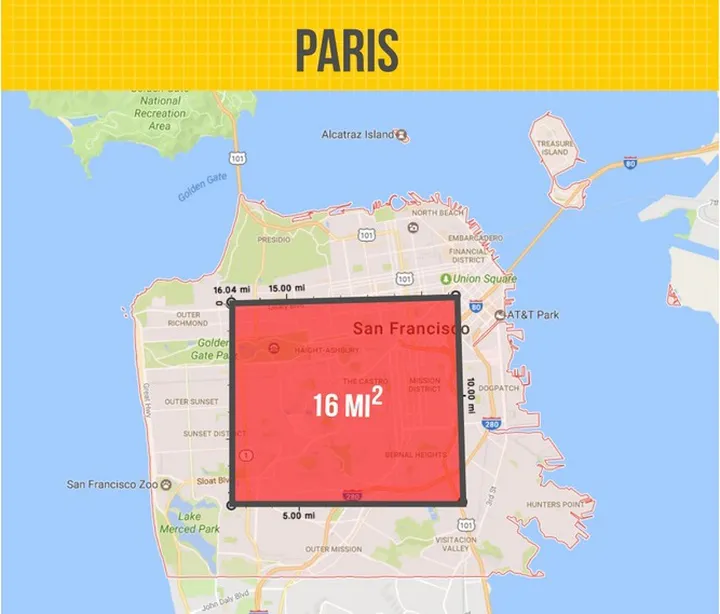
Its not that demand is the only thing driving prices, its the limiting of supply.

Interesting link here.

https://sf.curbed.com/2017/3/8/14856316/san-francisco-density-map
paris.jpg

I'm not on board with the anti-growth policies in the greater bay area, where I happen to live. In the suburbs around here, there is plenty of room for growth. In SF, however, I agree with it. SF doesn't need more population density. It would make it a worse place to live, visit and work. The fact that population density isn't as high as many of the most dense cities in the world is in fact part of its appeal.

What needs to happen is that the suburban counties, particularly San Mateo and Santa Clara, ease up on their growth restrictions to lower housing prices. People can live in the burbs and work and/or visit SF. But let's not make SF into Manila or Mumbai.


