• We’re currently investigating an issue related to the forum theme and styling that is impacting page layout and visual formatting. The problem has been identified, and we are actively working on a resolution. There is no impact to user data or functionality, this is strictly a front-end display issue. We’ll post an update once the fix has been deployed. Thanks for your patience while we get this sorted.

Discussion Speculation: Zen 4 (EPYC 4 "Genoa", Ryzen 7000, etc.)

Page 383 - Seeking answers? Join the AnandTech community: where nearly half-a-million members share solutions and discuss the latest tech.

Vattila

Senior member
Except for the details about the improvements in the microarchitecture, we now know pretty well what to expect with Zen 3.

The leaked presentation by AMD Senior Manager Martin Hilgeman shows that EPYC 3 "Milan" will, as promised and expected, reuse the current platform (SP3), and the system architecture and packaging looks to be the same, with the same 9-die chiplet design and the same maximum core and thread-count (no SMT-4, contrary to rumour). The biggest change revealed so far is the enlargement of the compute complex from 4 cores to 8 cores, all sharing a larger L3 cache ("32+ MB", likely to double to 64 MB, I think).

Hilgeman's slides did also show that EPYC 4 "Genoa" is in the definition phase (or was at the time of the presentation in September, at least), and will come with a new platform (SP5), with new memory support (likely DDR5).

Untitled2.png


What else do you think we will see with Zen 4? PCI-Express 5 support? Increased core-count? 4-way SMT? New packaging (interposer, 2.5D, 3D)? Integrated memory on package (HBM)?

Vote in the poll and share your thoughts! 🙂
 
Last edited:
This CPU runs way different than previous generations, with the way it boosts, it's power targets and how it handles cooling. So with high end cooling and those high power limits, stock it's going to pull a ton of power.

I am wondering if worse cooling will have better efficiency stock as it won't take as much power to hit that 95c.
 
Computerbase measure power on the 230V main as well, and the 12900K/KS both drain more power, they are a more serious site than Gamernexus with way better methodology.

As for temp It s up to the manufactuerer to decide what is a safe temp, 7950X limit was fixed at 95°C or so, on the other hand ADL is allowed to reach 102°C as displayed by Computerbase, so what is the fuss all about..?.


:laughing::laughing::laughing:

So basically it is boiling down to throwing dirt at publications that do not align with your own views.
 
For those thinking about the processor's life - guess what? Staying at 95°C fixed is way better than throttling continuously between that temperature and a lower limit.
It might very well behave that way with standard cooling that most people will use. Remember most of the AIOs used in testing were using 100% fan speed. That is simply not desirable in real life.
 
It might very well behave that way with standard cooling that most people will use. Remember most of the AIOs used in testing were using 100% fan speed. That is simply not desirable in real life.

If that is true, that is a problem that should be corrected with firmware updates or with a better cooler.
 
Crazy good AVX512 performance in Linux (with more room for compiler improvements): https://www.phoronix.com/review/amd-zen4-avx512/6

Almost no difference in clock speeds or power draw, while performance jump is significant. Kudos to AMD's engineers!
Yeah, the AVX-512 implementation looks really solid. Unfortunate (for the adoption of it) how Intel abandoned it in laptops and desktops right before AMD finally implemented it.
 
It might very well behave that way with standard cooling that most people will use. Remember most of the AIOs used in testing were using 100% fan speed. That is simply not desirable in real life.

That doesn't sound like how it boosts, rather it is designed to hit 95c no matter what cooler you have if it can still draw more power. So instead with more standard cooling it would pull less power and run slightly slower.
 
I’m disappointed AMD went the Intel route and increased TDP to chase that last 5 - 10% of performance but they either must have felt like they had to to keep pace with Intel and their continuously growing power consumption, or they did market tests and found that their target desktop market didn't care and so why not grab that last little bit to get as high on the charts as possible? Either way, disappointing to me, but also not a big deal since AMD makes it so easy to set the power consumption to more reasonable limits while maintaining excellent performance.


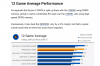
Look at this gaming beast 7600X..

View attachment 68129

They also showed that if you use DDR5-6400, you would get ~5% boost on top of what is shown in 2/3 games they tested for memory scaling (and a slight bump for the 3rd). A 7950x with DDR5-6400 (maybe faster?) memory should be the clear gaming leader in their test suite.

Edit: Either way, outside of specific games you might be interested where 1 performs better than the other, there really won't be a difference in gaming between the high end parts from AMD or Intel (including RPL). Maybe next gen GPUs will change this though.
 
Last edited:
I’m disappointed AMD went the Intel route and increased TDP to chase that last 5 - 10% of performance but they either must have felt like they had to to keep pace with Intel and their continuously growing power consumption, or they did market tests and found that their target desktop market didn't care and so why not grab that last little bit to get as high on the charts as possible? Either way, disappointing to me, but also not a big deal since AMD makes it so easy to set the power consumption to more reasonable limits while maintaining excellent performance.

I think they knew intel will go all out with high power SKUs (unlimited mode on 13900K will go to ~350W, talk about insane levels of power draw for "stock" chip). So in summary, people who want the absolute best performance don't care (that much) about the power draw. Good thing for AMD is that they will most likely have decent perf./watt (and pure performance) advantage versus the 13th gen, at least with 7900X and 7950X.
 
Yeah looks like those stock power consumption numbers are just way out there, and looks like we are getting very little out of it.

I do like the new boost behavior, just seems that the stock power limit is higher than it should be.
 
I’m disappointed AMD went the Intel route and increased TDP to chase that last 5 - 10% of performance but they either must have felt like they had to to keep pace with Intel and their continuously growing power consumption, or they did market tests and found that their target desktop market didn't care and so why not grab that last little bit to get as high on the charts as possible? Either way, disappointing to me, but also not a big deal since AMD makes it so easy to set the power consumption to more reasonable limits while maintaining excellent performance.

Pure perf is way more marketable than perf/watt, and worse, the general public think that the best performer is forcibly the most efficient...

For the rest the sweet spot is at 65W and 88W eventually for whom want absolutely to beat the previous gen.
 
Back
Top