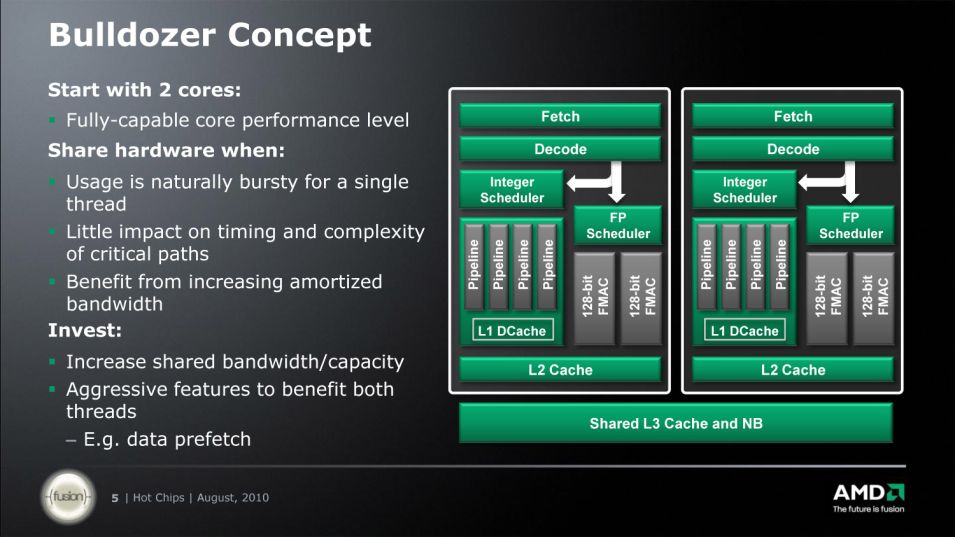
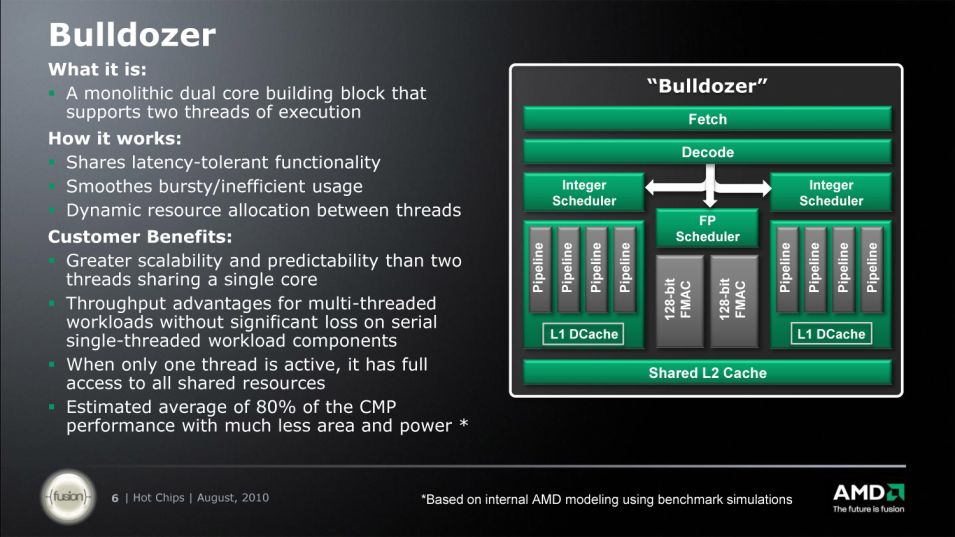
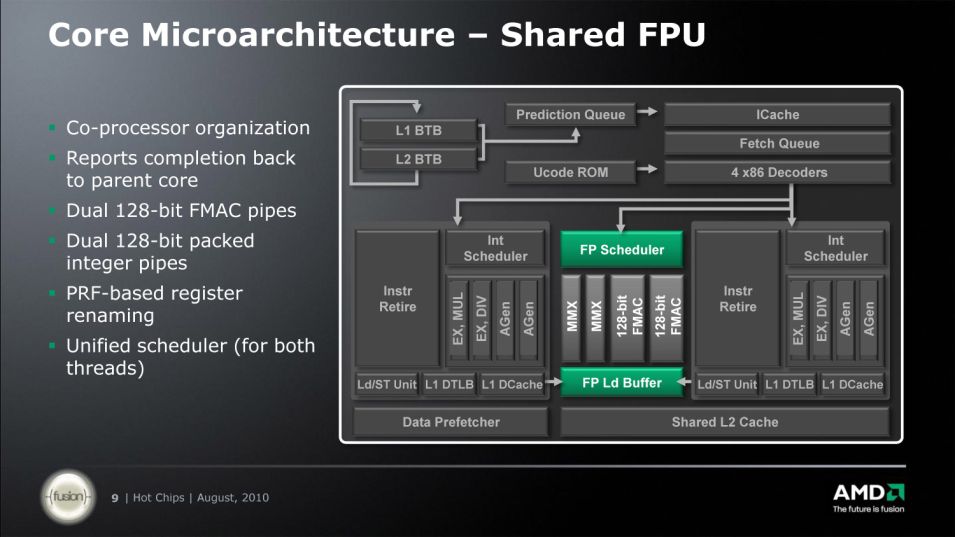
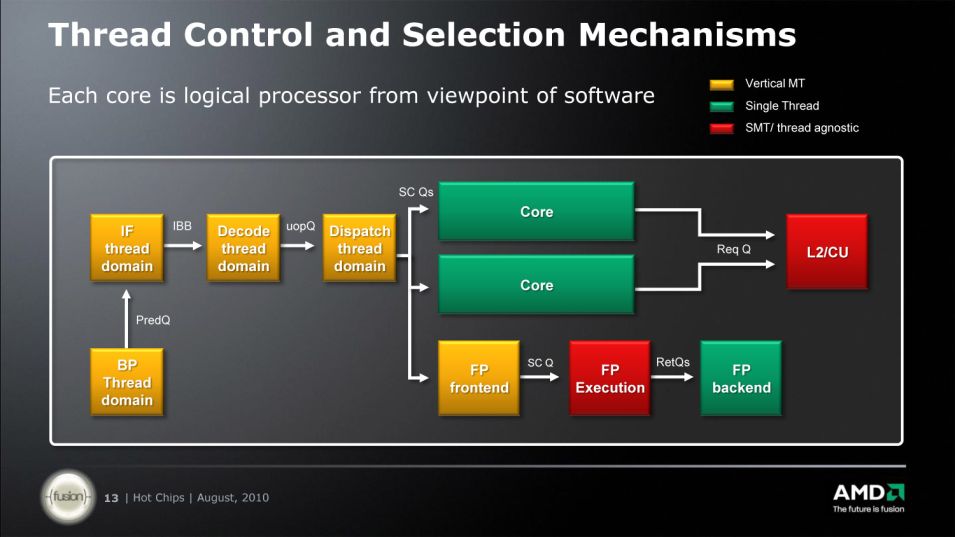
Fusion... that's the only big reason why AMD acquired ATI. As you can see, it's definitely paying off now, even if it's five years later. AMD has sold around 12 million APUs in less than a year.
Ok, but why buy ATI at the peak for $5.4B?? I believe that was > 20% price premium. Good management would have assessed what was more important in the short term. They were well aware of how uncompetitive Phenom I was going to be before they released it. So they knew they'd lose market share in the next 2-3 years in all 3 key markets, making the ATI acquisition extremely costly from a cash flow perspective. It would have been better to invest more into a new CPU architecture, make more cash flow from it, and buy ATI much later. AMD really wasn't in a position to afford ATI buyout easily at the time, but that's exactly what they decided to do.....esp. in a market with relatively high borrowing interest rates at the time.
There was no rush to buy ATI at the time (more point on this below). It took
5 years of technological innovation since 2006 (and by that I mean manufacturing node to fall to 32nm) and ATI's own architectural changes in Cypress/Barts, etc. to maximize performance/watt before Fusion could be possible. In other words, AMD could have delayed the purchase of ATI into late 2007/2008 and still got Fusion out the door in 2011, while making $$ from their 20-25% server market share at the time (had Phenom I/II were more successful if they invested more $ rather than rolling over A64 tech).
Excerpt:
http://gear.ign.com/articles/720/720756p1.html
Key points:
1) Extremely poor timing of buyout on the part of AMD
IF they actually did a lot of planning and due diligence prior to buyout considering the stock was trading <$13 just 1 year before buyout:
"ATI stock jumped significantly in early trading based upon the news. The company's stock, which went as low as $12.40 per share in the last year, is now trading at $22.37, up nearly 20% on the day."
2) No one wanted to buy ATI (and esp. not for $5.4-5.8B), so why the rush and the huge 24% price premium?
"AMD investors worry that the ATI deal may have cost the company too dearly. No other companies bid on ATI".
3) Unreasonable multiple for buyout on a going-concern basis:
"ATI's worth as a company on the stock exchange is equivalent to 28 times its projected earnings next year, while AMD's ratio is only 15 times. Companies in the Standard & Poor's 500 trade at 14 times--a benchmark for more conservative investors. As such, ATI is considered a risky investment for AMD."
4) Despite point #4 with 28x PE ratio, Intel immediately reduced ATI's revenue after buyout announcement. This means the buyout price was already inflated after that:
"Intel responded to the news today by terminating ATI's (now essentially AMD's) license to produce chipsets for Intel CPUs."
5) Buyout occurred during a volatile/risky time for AMD's CPU business as they were only trying to transition to a far inferior Phenom I/II (and AMD's management for sure knew Phenom I was going to flop since Core 2 Duo were available and it was really easy to gauge that a C2Q would mop a Phenom I since C2D crushed X2 processors.....so they knew!):
"Investors are also worrying about the ongoing battle between AMD and Intel in general CPU sales. Both companies are producing more chips than are currently in demand and are locked in a struggle to continuously outdo the other in chip cost and performance. Both companies are racing to release the next generation of quad-core CPUs and are relying heavily upon strong sales in the fourth-quarter to make up for a slow summer."
If you look at AMD stock now as a whole it's worth 4.51B in market cap, or less than what AMD paid for ATI just 5 years ago.
😱