Theyve done quite fine without it thus far, I'd say.
AMD has 1, that is one in English, uno in Spanish, design win for Strix Halo.

Theyve done quite fine without it thus far, I'd say.
Of those 3, Intel has said it's a poor market fit for their customers (remember, you're the customer's customer). Apple is their own customer. And Qualcomm isn't all-in on it.
And? What does that have to do with it? Intel sayethLast time I checked, there were 47 unique Lunar Lake models on the market vs. 1 Strix Halo model.
Intel stressed that Lunar Lake's MoP package-level memory design is a "one-off" solution. In the future Panther Lake, Nova Lake and its successors products, Intel will return to the traditional package.
That's DDR5 5600, not LPDDR5.While @adroc_thurston mentioned that 8533 memory speed laptops are coming, including for Kraken, on the same day, I encountered a Kraken laptop with (garbage) 5600 LPDDR5 memory speed.
That's DDR5 5600, not LPDDR5.
It's actually faster in CPU workloads.
And? What does that have to do with it? Intel sayeth
They're not doing it again. Well, maybe in 2029. AMD and Intel are in the same boat here. They don't want inventory management and their customers do not want memory configuration tied to the SKU. Qualcomm is trying but they have only 1 (memory) configuration to avoid some of these problems.
Consider it.Intel management is very scared of low margins
Consider it.
How would Strix Halo be any more attractive if AMD went the middle road like Qualcomm? There would be one single 64GB MoP STH SKU. A SKU even more irrelevant for gamers because it's more memory than they need and more irrelevant for MLturds because it's less than they want.
Nope. No one at all wants to pay for that 300mm² RDNA3½ die. It isn't because of a memory configuration. MoP in no way saves turdsI bet there would be more than 1 Strix Halo design on the market with the "middle of the road" solution.

They're doing the right thing. They always do the right thing.only AMD stubbornly shooting itself in the foot by refusing to adopt it.
You do understand that bidding for Xbox includes Actual Real graphics players (you know, NV/AMD).They really should try to win the XBox contract to get more dev. feedback / support for their GPU drivers though...
how the hell are you comparing completely different market segments.Last time I checked, there were 47 unique Lunar Lake models on the market vs. 1 Strix Halo model.
What would you rather take:
- 1 design win and OEM claiming to be happy
- 47 design wins and OEM claiming to be unhappy
I think it all BS, with OEMs raping customers on RAM and including garbage RAM on AMD laptops.
please stop doing this dementia it's bad for you.Suppose AMD can offer Strix Halo in FP10 socket with 2 of the 4 memory channels internal, other 2 external.
It would offer (even more than) full Strix Halo bandwidth and performance, and it would not require any extra work on part of OEMs than they do for any Strix Point or Kraken laptop.
The 2 internal channels can run at full speed of LPDDR5 that's on the market, and could be 32 and 64 GB memory sizes.
are you still upset over stxH ASPs?Consider it.
How would Strix Halo be any more attractive if AMD went the middle road like Qualcomm? There would be one single 64GB MoP STH SKU. A SKU even more irrelevant for gamers because it's more memory than they need and more irrelevant for MLturds because it's less than they want. With the on board approach, at least they can disappoint all three markets (gamers, imaginary, and ML) equally.
Nope. No one at all wants to pay for that 300mm² RDNA3½ die. It isn't because of a memory configuration. MoP in no way saves turds
Qualcomm being one as the biggest mobile GPU vendors whose custom GPUs are actually being sought after and used for playing mobile games as well as the dominant choice in VR.You do understand that bidding for Xbox includes Actual Real graphics players (you know, NV/AMD).
that's the problem.Qualcomm being one as the biggest mobile GPU vendors
When in comparison to the powerhouses of PowerVR and Mali, even Radeon has god-tier drivers.Qualcomm being one as the biggest mobile GPU vendors whose custom GPUs are actually being sought after and used for playing mobile games as well as the dominant choice in VR.
Yeah it is, their caches alone are a joke.Horse power isn't an issue
they tried.I would think the next logical step would be to try to convince Valve to make some flavor of an ARM Steam Deck.
If you mean the pre 8xx series, yes. For low bandwidth phone dram, tiling and gmem are well suited for UIs with high overdraw. They lightly modified and shoehorned a mobile-first architecture onto a laptop PC for the first gen. X and it shows.Yeah it is, their caches alone are a joke.
It will never ever run any AAA title properly until they build an actual real microarch for it all.
stretching the definition of "fully capable" here.fully capable of running AAA titles in its phone incarnation even and with emulation.
They really should try to win the XBox contract to get more dev. feedback / support for their GPU drivers though...
Yeah AMD already won it.Are you sure there will be a next Xbox to win a contract for?
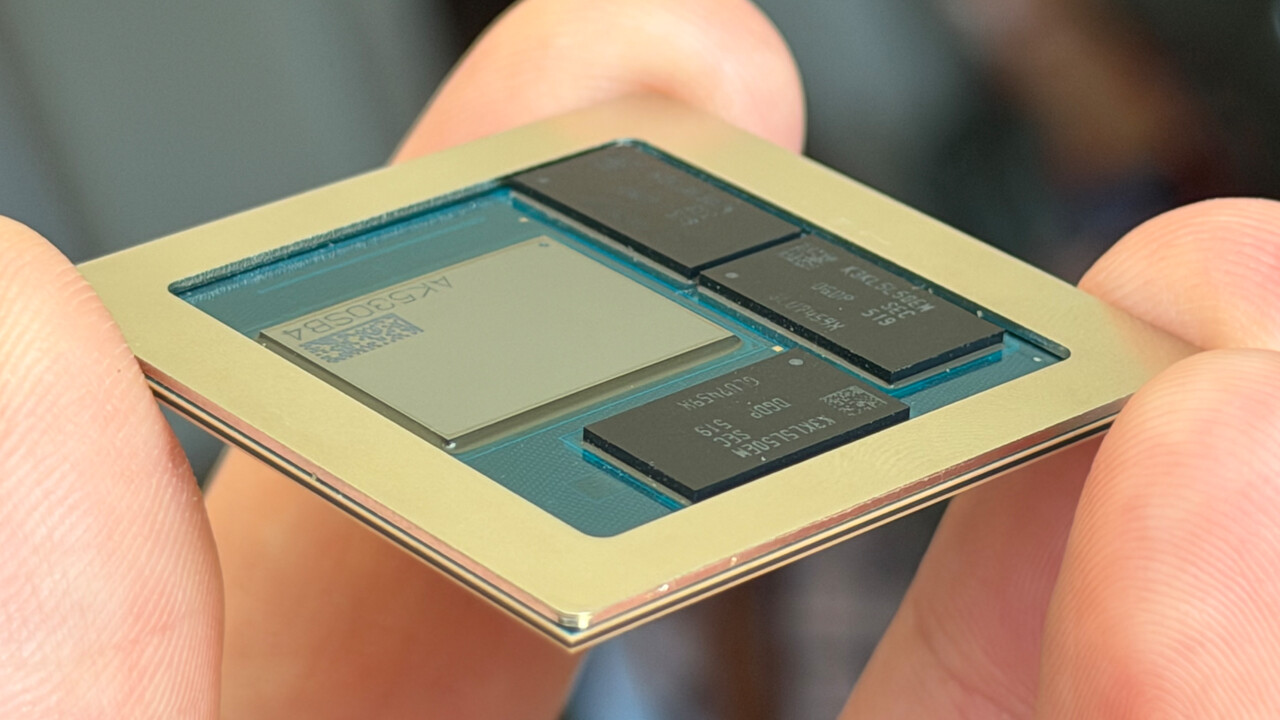
Hey, overdrive fins.Snapdragon X2 Elite Extreme: Qualcomm mischt TSMC N3X und N3P für High-End-Chip
Qualcomm hat gegenüber ComputerBase bestätigt, beim Snapdragon X2 Elite Extreme die Nodes TSMC N3X und N3P innerhalb des Dies zu mischen.www.computerbase.de
Elite Extreme is a mix of N3P and N3X
The 192b memory bus for the top SKU looks interesting. Good to see the continued march towards faster memory with both wider buses and high MT.


