• We’re currently investigating an issue related to the forum theme and styling that is impacting page layout and visual formatting. The problem has been identified, and we are actively working on a resolution. There is no impact to user data or functionality, this is strictly a front-end display issue. We’ll post an update once the fix has been deployed. Thanks for your patience while we get this sorted.

Discussion Qualcomm Snapdragon Thread

Page 189 - Seeking answers? Join the AnandTech community: where nearly half-a-million members share solutions and discuss the latest tech.
Gotcha. I should point out. He probably will give a max frequency version.
See this is where it gets harder since everyone and their mom cranked up 1t power this gen (to varying degrees).
I'm not even sure the 4.74 sd8e g5 SKU for SGS26 will be able to sustain rated clock for longer than a few seconds.
 
Wrong, it's basically a halo SKU, with MoP (and thus full memory width) and a different package.

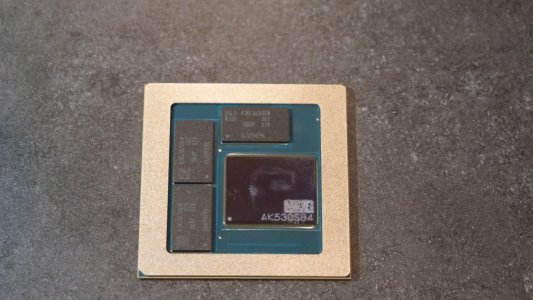
Do we have die photos showing they are separate dies? Given Qualcomm's meager PC sales, it doesn't make sense to make a separate die for an "Extreme" SKU that is gonna sell in the hundreds of thousands at best.

Even Apple de-risked that at first with their Pro/Max "chop".
 
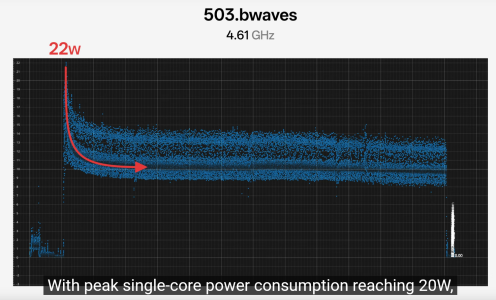
He used liquid nitrogen to lower the temperature to -80 C that still wasn't enough to get stable clocks in something like 503.bwaves. So much for the dig at Mediatek for their meme 4000 .gb6 measurements at subambient.
Ngl I did cruise through it. But, I think I caught him saying that because Geekbench has quick subtests, this allowed for the peak performance to be measured. Liquid nitrogen not needed.
But for SPEC, yeah. Quite a nuance there.
 
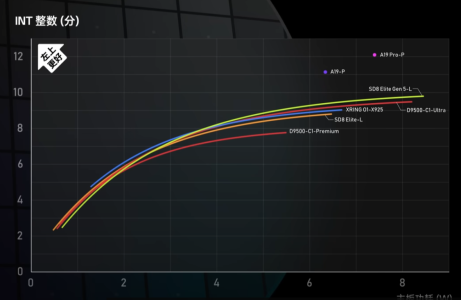
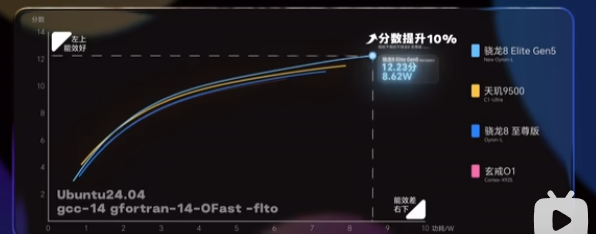
Some inconsistent SPEC17 scores out there:


1758809374645.png


1758809022956.png


1758809058651.png
 
Last edited:
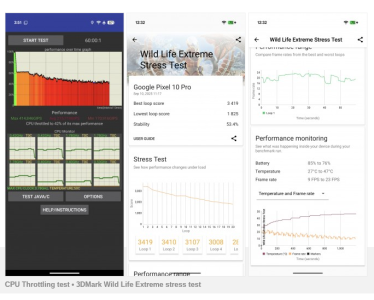
Has this been posted yet? Gen 5 throttles pretty hard and the Tensor is not throttling at all which is just odd also.

zntltgioq8rf1.jpeg
 
Some inconsistent SPEC17 scores out there:


View attachment 130978


View attachment 130975


View attachment 130976

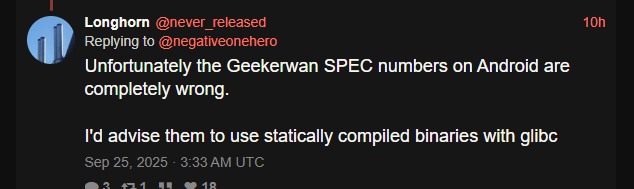
Andrei has also said the same on Reddit:
"Geekerwan is using some older LLVM11 (iirc) NDK native app for SPEC with classic Flang for Fortran (much slower than Gfortran). S.White is using GCC with static glibc binaries. The GCC part is actually the less impactful difference, but them being glibc instead of having the Android Scudo handicap has a quite larger difference in the scores.

S.White's Android SoC numbers are more comparable to Geekerwan's iOS numbers than Geekerwan's own Android numbers in terms of the way the binaries behave, that's why the iPhones still appear so far away, but actually really aren't."

Also:
"It's not that it's wrong, it's just different. It's only an issue when comparing the Android scores to the iPhone scores. If you just compare the Android numbers to each other, relatively speaking there's no issue."
 
If I checked it right, A19 Pro using S.White review gets 11.99 score, while using 8 Elite Gen 5 it gets 12.23 points. This is Spec2017 int scores.
 
It did not run full modern Windows, netbooks used castrated Windows SKUs. And sometimes, Linux.
Which castrated Windows was that? Windows Netbook Edition? I have a $136 HP education netbook that wasn't able to complete a Windows Update in over 20 hours. I shut it down and never booted it up again. Yes, it had an HDD.
 
So even if Linux supports takes 2 years, this Pegasus core will still be on par with what Intel will ship in 2 years?


That’s fine, I don’t need to update my laptop anytime soon.
 
Qualcomm practically doubled their CPU performance in the last 3 years with only one major node shrink.
All it took was a 1.4 billion dollar acquisition of Nuvia, doubling power consumption and a lawsuit with ARM.

I'm impressed, personally.
 
So now we have:
- Apple
- Intel
- Qualcomm

All using MoP, only AMD stubbornly shooting itself in the foot by refusing to adopt it.
Of those 3, Intel has said it's a poor market fit for their customers (remember, you're the customer's customer). Apple is their own customer. And Qualcomm isn't all-in on it.
 
Qualcomm practically doubled their CPU performance in the last 3 years with only one major node shrink.
All it took was a 1.4 billion dollar acquisition of Nuvia, doubling power consumption and a lawsuit with ARM.

I'm impressed, personally.
1758837000319.png

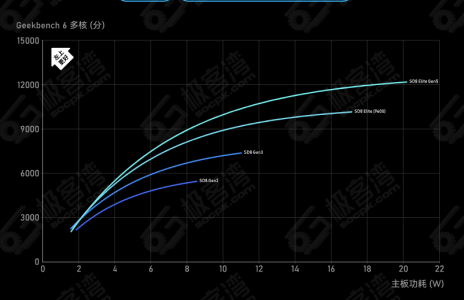
Agree that 20W is laptop territory, but it'd be 2x as fast even if they didn't double power --at iso-power it's still around ~2x performance from 8g2.

As for laptops, some gripe about the Windows on ARM platform being being the worst of both worlds when it comes to compromises in software compatibility and hardware performance / efficiency (vs. x86 machines and the Mac consumer electronics experience), but I happen to think that with this gen's SD X2 and the continuing maturity of Win11's software compatibility, it solidly hits the best of both worlds.

The main gripe against WARM laptops continues to be gaming and incompatible kernel level drivers, but that will be chiseled away over time especially now that the WARM toolchain is more mature. ARM's lawsuit delayed the first SD X, but they now seem to be on a similar cadence for cores and GPU on phone and laptop SoCs at least, so going forward they won't be stuck with the inferior performance and the chore of a developing GPU drivers for lagging architectures. With the new Adreno supporting DX12.2 and moving to a more gaming friendly IMR rendering pipeline, it should end up a solid choice for light gaming --one doesn't buy a machine in the form factors they're targeting expecting much more than that. They really should try to win the XBox contract to get more dev. feedback / support for their GPU drivers though...
 
Last edited:
Back
Top