• We’re currently investigating an issue related to the forum theme and styling that is impacting page layout and visual formatting. The problem has been identified, and we are actively working on a resolution. There is no impact to user data or functionality, this is strictly a front-end display issue. We’ll post an update once the fix has been deployed. Thanks for your patience while we get this sorted.

Discussion Qualcomm Snapdragon Thread

Page 164 - Seeking answers? Join the AnandTech community: where nearly half-a-million members share solutions and discuss the latest tech.
I’d be curious to the performance of the 8 Elite if it were scaled up to the M4 size.
By adding more cores you mean?

Because you can't just 'scale up' the size of an individual core. That would require designing a new core microarchitecture.
 
Android Authority then reached out to Realme, and a company representative said that Qualcomm didn't notify them about the name change before GT 7 Pro's box was designed. The representative adds that the confirmation about the Snapdragon 8 Elite naming was only confirmed "several days before the Snapdragon Summit."
Marketing departments are so fickle!
 
By adding more cores you mean?

Because you can't just 'scale up' the size of an individual core. That would require designing a new core microarchitecture.

In this context yea, scaling up by adding more resources.

Edit: did Amon actually say they have the most area efficient core? Can’t find that.
 
Last edited:
A Conversation with Qualcomm CEO at the Snapdragon Summit 2025


Timestamp 5:40
You gotta book your tickets for the Snapdragon Summit next year, because 3rd generation Oryon is going to be awesome.
- Cristiano Amon, CEO of Qualcomm.
 
Last edited:
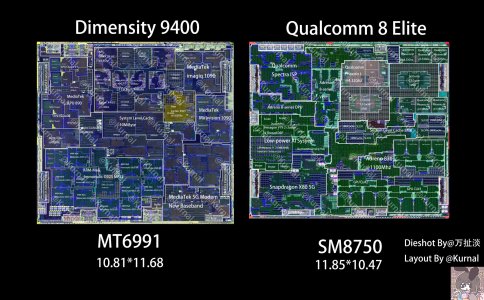
Kurnal has published his labelled dieshot of the X Elite!

With almost all major subsystems labelled.


Geekerwan has finally published their Review/Analysis of X Elite...on Bilibili.


Waiting for it to be uploaded on YouTube with English subtitles....
 
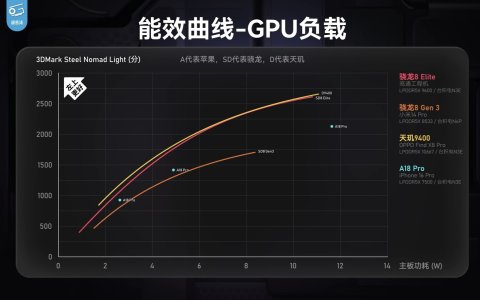
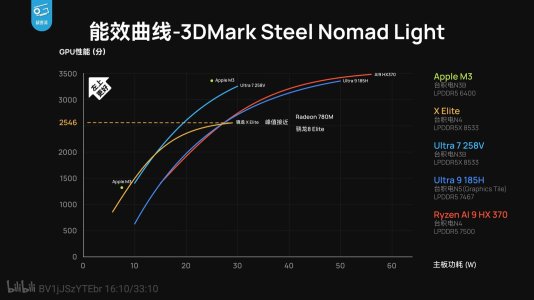
Comparison of X Elite and 8 Elite GPUs (benchmark numbers from Geekerwan);
X Elite
8 Elite
Adreno 741​
Adreno 830​
1.5 GHz​
1.1 GHz​
1536 FP32 ALUs​
1536 FP32 ALUs​
6 CU​
12 CU
3 slices​
3 MB GMEM​
12 MB GMEM​
1 MB L2​
128 bit
LPDDR5X-8448
135 GB/s​
64 bit
LPDDR5X-10667
85 GB/s​
6 MB SLC​
8 MB SLC​
2550 points @ 29W
Steel Nomad Light​
2600 points @ 11W
Steel Nomad Light​
26 mm² N4P​
22 mm² N3E​

• 8 Elite can match the performance of X Elite at roughly 1/3 the power in Steel Nomad Light.

• 8 Elite scores higher than X Elite in this benchmark while running at a lower clock speed (1.5 vs 1.1 GHz), which shows the improvement of Adreno 8 sliced architecture.

455578eje.jpg
GbaP4QcawAAlqOm.jpeg
 
Last edited:
Big news for ARM PCs:

AVX, AVX2, BMI, FMA and F16C emulation is coming to Windows-on-ARM


It was added to Rosetta 2 earlier this year, guess Microsoft wanted to keep up! Not sure it really matters except for software that doesn't have an SSE codepath.
 
It was added to Rosetta 2 earlier this year, guess Microsoft wanted to keep up! Not sure it really matters except for software that doesn't have an SSE codepath.
SSE is slower than AVX. Also not all apps have an SSE codepath (they have AVX/AVX2).

Right now, those apps don't work on WoA, which is a big problem.

Prism gaining the ability to emulate these extensions is great.
 
Geekerwan has finally published their Review/Analysis of X Elite...on Bilibili.


Waiting for it to be uploaded on YouTube with English subtitles....
It's been several days since, and it looks like it won't be uploaded to Youtube.

If there is anyone here who has Bilibili, can you post the important screenshots? (Unregistered users can only view the video at a max of 360p).
 
SSE is slower than AVX. Also not all apps have an SSE codepath (they have AVX/AVX2).

Right now, those apps don't work on WoA, which is a big problem.

Prism gaining the ability to emulate these extensions is great.

SSE being slower on x86 is irrelevant, since everything is translated to and executed with NEON's 128 bit registers. If you're emulating AVX which has 256 bit wide registers the translator has to break it up to fit the 128 bit registers any ARM systems able to run Windows currently have.

Games that require AVX/AVX2 makes sense as a reason to include that in the emulator. Well for Microsoft's emulator at least. Not sure if that was the reason Rosetta 2 had AVX/AVX2 added.
 
Back
Top