Full stop. You're missing the point.
ROCm = open source
CUDA = closed source
That is the primary differentiator. AMD would be pleased as punch if people made actual contributions to ROCm, but that's not really the point. Other hardware vendors are free to comply with ROCm fully if they so choose, versus CUDA where only nVidia hardware is supported natively. Not that, you know, anyone else has chosen to support ROCm that I know of.
OpenCL (also ope n source), for all its warts, is (mostly) supported by AMD; Intel; and NV hardware.
If that's what you think then I don't think you understand what open source truly entails ...
Open source is more than just about hosting code in public. Have you ever considered that open source has interesting endpoints other than just for archiving purposes ? On some open source projects, their main goal is releasing their code for the purpose that
others will use it in their own projects which is why permissive licenses like MIT licenses is ideal in this circumstance. For other open source projects, their goals could involve
attracting contributors so less permissive like GPL licenses are more popular in these cases. In both cases, ROCm meets neither criteria since it only works on AMD hardware so others can't really use most of the codebase in their own projects and AMD isn't interested in community contributions either ...
Just because ROCm meets the definition of what it means to be an open source project by letter does not mean it has the spirit of an open source project which is being useful to other projects or getting maintainers on boards. There's literally nothing impressive about ROCm compared to any of the other run of the mill open source project many of which are already dead or rendered useless. The only thing ROCm has going for it compared to other open source projects is that it's being maintained by AMD but that's not a recipe for long-term success when we consider the fact that AMD has a tendency to abandon GPU compute stacks ...
OpenCL has two parts. The standard which could be argued to be open and then we have driver implementations many of which are closed source. ROCm is ironically the polar opposite since it's a closed standard dictated purely by AMD with an open source implementation so it doesn't really change anything with respect to CUDA ...
Meanwhile, AMD's dGPU products are positioned better against NV's than they have been in years. Remember Vega? You don't want them to go back to that do you?
The Evergreen architecture and earlier GCN iterations were truly greatness at the time. Vega and RDNA or even RDNA2 shows that AMD are just a shadow of their past graphics division. Instead of ever one upping Nvidia like they did in the past, all AMD ever does now is follow them so they don't have a "GPU guru culture" anymore ...
Completely false. CDNA and RDNA2 are working quite nicely. CCIX is bringing AMD a step closer to the Fusion they had envisioned years ago. Yknow, before they had even produced Llano.
Fusion was a dead end since the HSA Foundation fell apart. AMD already had concept working but they had to massively readapt it to run on discrete CPUs and GPUs to make it more successful ...
Really? REALLY???
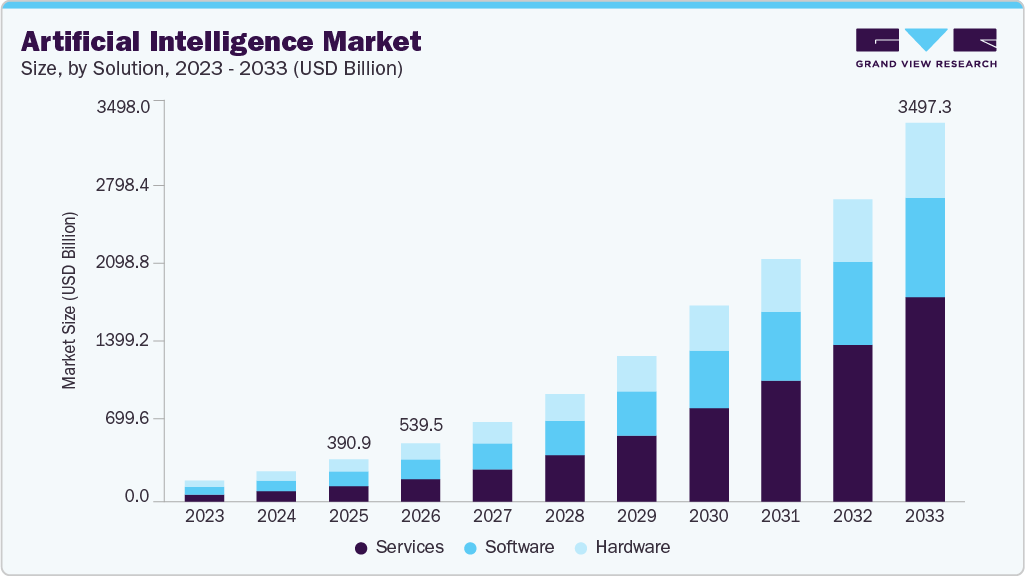
Artificial intelligence market size was valued at $390.91 billion in 2025, is projected to reach $3,497.26 billion by 2033, at a CAGR of 30.6% from 2026 to 2033

www.grandviewresearch.com
Yes, really and Intel makes almost just as much money in a quarter as Nvidia does in it's entire year when we compare their data center sales. Most supercomputers also don't deal with trite like GPUs so the market for GPU compute is far smaller than you imagine it is ...
Doesn't matter, since that isn't NV's priority. Point being:
AVX-512 isn't a significant threat to GPGPU-based anything (FP64, 16-bit ML, 8-bit ML)
AVX-512 isn't a significant threat to ARM vendors that do choose to support SVE/SVE2, such as Fujitsu
NV has a master plan of offering you a complete platform to host their expensive-and-oh-so-wonderful compute cards which is where they make all their money currently. They'll sell you the entire hardware AND software stack, top to bottom. Their compute cards are the stars of the show.
"AVX-512 isn't a significant threat to GPGPU-based anything (FP64, 16-bit ML, 8-bit ML)"
The same could be said for the other way around ...
"AVX-512 isn't a significant threat to ARM vendors that do choose to support SVE/SVE2, such as Fujitsu"
AVX-512 will be standardized before we even see a SVE2 implementation. If there's no hardware, programmers won't deal with a hypothetical programming model ...
Is Nvidia's master plan is to offer a GPU computing platform ? Been there, done that before! If they want to keep pushing out mediocre CPUs, they'll never be able to properly compete in the upcoming trend of heterogeneous compute ...



 www.anandtech.com






 Facebook
 Twitter