
• We’re currently investigating an issue related to the forum theme and styling that is impacting page layout and visual formatting. The problem has been identified, and we are actively working on a resolution. There is no impact to user data or functionality, this is strictly a front-end display issue. We’ll post an update once the fix has been deployed. Thanks for your patience while we get this sorted.

Article NVIDIA allegedly cancels GeForce RTX 3080 20GB and RTX 3070 16GB

Page 2 - Seeking answers? Join the AnandTech community: where nearly half-a-million members share solutions and discuss the latest tech.

traderjay

Senior member
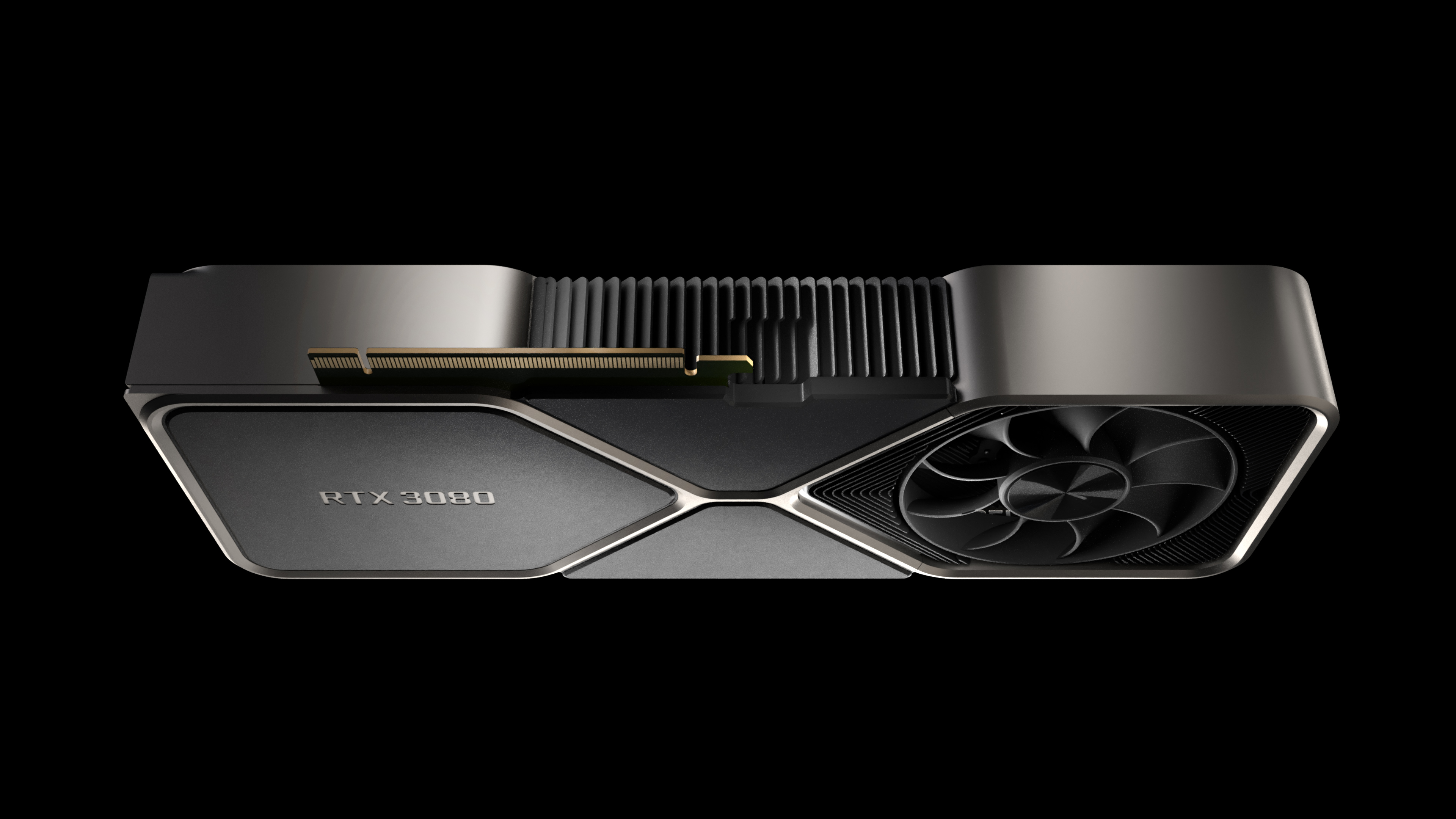
I guess if this is true, the current stock situation is going to be more acute. I wonder if nvidia somehow figured out that big navi is going to be a flop?
 
One of two things.

1: There are no 2GB GDDR6x RAM chips. So they would have to do the double sided board like the do with the 3090. This means higher productions costs, and it means using TWENTY RAM modules. So the card would probably end up be $200 more, which make make it cost prohibitive.

2: 2GB chips were supposed to be come available, but haven't.
Actually there is a much more likely 3rd option:
3) Nvidia was holding the extra memory SKUs in the bag as the answer to AMD's cards, but AMD looks like they completed surpassed Nvidia's expectations for AMD's card performance, and a bump in memory on Nvidia's cards won't be the performance answer that Nvidia originally thought it would be to take away AMD's launch thunder.
 
I'm still holding out to see if there is any other response from Nvidia once the independent reviews of the new AMD cards come out. I'm kind of stuck with a Gsync only monitor right now. Not like I can easily buy a card right now anyway.

But if convincing enough, I may be interested in an all amd build and just keeping the monitor. But this is very unlikely depending on what shows up.
 
You're not going to see anything much better than the 3080. We already know the upper bound for that die is 3090 performance and the scaling isn't great. Unless there's some amazing process improvements or some tweak that a new spin can use to get better clock speeds the frequencies are lot going to change much either. There may be some 2 GB GDDR6X modules by the time the card comes out, but if not the memory limit is 12 GB or it uses the same approach as the 3090 and probably becomes similarly expensive.

Unless they make a new die, then the 3080 seems like it will be it for now. It's probably at least six months before NVidia will be able to have a good answer that doesn't ultimately have the same potential drawbacks as the 3080 or is able to remove them without imposing a lot of extra cost.
 
You're not going to see anything much better than the 3080. We already know the upper bound for that die is 3090 performance and the scaling isn't great. Unless there's some amazing process improvements or some tweak that a new spin can use to get better clock speeds the frequencies are lot going to change much either. There may be some 2 GB GDDR6X modules by the time the card comes out, but if not the memory limit is 12 GB or it uses the same approach as the 3090 and probably becomes similarly expensive.

Unless they make a new die, then the 3080 seems like it will be it for now. It's probably at least six months before NVidia will be able to have a good answer that doesn't ultimately have the same potential drawbacks as the 3080 or is able to remove them without imposing a lot of extra cost.

Big Navi is approximately the same transistors as GA102. It will be interesting to see Big Navi's die size when that (finally) comes out. Comparing TSMC 7nm to Samsung 8nm will give us a good idea as to transistor density. Also, given that GA100 is on TSMC, I think Nvidia could probably (relatively) easily port GA102, 104, etc. to TSMC if the gains in efficiency is there.

But yeah, unless Ampere can be majorly re-tweaked like Fermi or ported to TSMC 7nm, there isn't much they can do at this point as they're already tapping out the silicon for maximum performance.
 
You're not going to see anything much better than the 3080. We already know the upper bound for that die is 3090 performance and the scaling isn't great. Unless there's some amazing process improvements or some tweak that a new spin can use to get better clock speeds the frequencies are lot going to change much either. There may be some 2 GB GDDR6X modules by the time the card comes out, but if not the memory limit is 12 GB or it uses the same approach as the 3090 and probably becomes similarly expensive.

Unless they make a new die, then the 3080 seems like it will be it for now. It's probably at least six months before NVidia will be able to have a good answer that doesn't ultimately have the same potential drawbacks as the 3080 or is able to remove them without imposing a lot of extra cost.
Worth to wait until after the holiday to see what happens with the stock anyway. Depending on what and which parts I can get to upgrade my current rig, waiting 6 months might be realistic in the current scenario.
 
You're not going to see anything much better than the 3080. We already know the upper bound for that die is 3090 performance and the scaling isn't great. Unless there's some amazing process improvements or some tweak that a new spin can use to get better clock speeds the frequencies are lot going to change much either. There may be some 2 GB GDDR6X modules by the time the card comes out, but if not the memory limit is 12 GB or it uses the same approach as the 3090 and probably becomes similarly expensive.

Unless they make a new die, then the 3080 seems like it will be it for now. It's probably at least six months before NVidia will be able to have a good answer that doesn't ultimately have the same potential drawbacks as the 3080 or is able to remove them without imposing a lot of extra cost.
I wouldn't say 3090 is the limit of the die. I don't know if I have seen any articles that mapped back to the physical silicon exactly how many SMs, ROPs, RT Cores exist in the hardware with some disabled to have better yields. I suspect that fully enabled, there are 96 SMs and RT Cores (not the 82 enabled) and that there are also 128 ROPs (not just the 112 enabled, so 16x8 instead of 16x7 that we see in the 3090 or 16x6 in the 3080).

That said, it won't be much of an improvement on the current manufacturing node. I suspect that Nvidia has prototypes of the chip under TSMC's 7nm process, given the fact that they use TSMC for their A100 server GPU line. I suspect Nvidia at least tested using TSMC and decided against it for other reasons such as existing capacity of the lines given TSMC's other customers.
 
Big Navi is approximately the same transistors as GA102. It will be interesting to see Big Navi's die size when that (finally) comes out. Comparing TSMC 7nm to Samsung 8nm will give us a good idea as to transistor density. Also, given that GA100 is on TSMC, I think Nvidia could probably (relatively) easily port GA102, 104, etc. to TSMC if the gains in efficiency is there.

But yeah, unless Ampere can be majorly re-tweaked like Fermi or ported to TSMC 7nm, there isn't much they can do at this point as they're already tapping out the silicon for maximum performance.

-Infinity Cache throws a big wrench in all that. GA100 is super dense thanks to it's low clock speeds and buttloads of cache. N21 is likely fairly dense thanks to it's 128mb of L3 Cache. GA 102 is the least dense of all thanks to having to hit higher clocks than GA100 with less cache than N21.

Process likely has a huge impact on yields, but is likely fairly similar in density.
 
Back
Top