
traderjay
Senior member
- Sep 24, 2015
- 221
- 167
- 116
I assume "higher system reboots" is a euphemism for "crashes a lot".
This needs to win the PR spin of the year. Random data center reboot is AKA = nuclear reactor randomly going out of control.


I assume "higher system reboots" is a euphemism for "crashes a lot".
https://www.computerbase.de/2018-01/meltdown-spectre-amd-intel-benchmarks/
Looks like Microsoft wasn't kidding about making sure Windows 7 users really took it in the pants on this one. Kind of bizarre that gaming takes such a hit.
https://www.computerbase.de/2018-01/meltdown-spectre-amd-intel-benchmarks/
Looks like Microsoft wasn't kidding about making sure Windows 7 users really took it in the pants on this one. Kind of bizarre that gaming takes such a hit.
https://www.computerbase.de/2018-01/meltdown-spectre-amd-intel-benchmarks/
Looks like Microsoft wasn't kidding about making sure Windows 7 users really took it in the pants on this one. Kind of bizarre that gaming takes such a hit.

tl; dr: Since the beginning of 2018, the CPU vulnerabilities Meltdown and Specter are on everyone's lips. And almost as hotly discussed are the expected performance losses through the use of the required patches. ComputerBase can confirm in the test that old Intel CPUs are more affected.

I show the worst gaming performance impact on windows 7. They only had a windows update patch to compare on Ryzen, and there were no changes in performance. What we need to look for is the microcode bios updates from manufacturers for AMD processors to get a fuller picture of the impact.Conclusion
Even the Windows update against Meltdown costs on Intel CPUs performance. While Windows 10 has little impact on the tested applications or on the average FPS of the games - neither on a Kaby Lake nor on a Sandy Bridge CPU. But considering the fram times of the games (-4%) and the SSD performance with random accesses with small files (-6%) on Kaby Lake, things look quite different. And Sandy Bridge strikes it even harder: five percent loses the system in games in Windows 10, eleven in Windows 7.
The previously available only on the system with Core i7-7700K microcode update doubled there the performance losses again. This corresponds in the end approximately in a downgrade to the previous CPU generation. The Specter countermeasures Kaby Lake also severely hit the SSD throughput: The performance of random access drops by up to 40 percent. This is the current major concerns of database providers and users justified.
The extent to which Sandy Bridge will be affected by Specter countermeasures in applications and games is currently speculation - it may seem questionable whether there will be any updates. At any rate, the Core i5-2500K already loses more power than the Core i7-7700K with the combination of Windows Update and microcode update.
Only a matter of time is the availability of microcode updates for AMD Ryzen, because those days were made available to the motherboard manufacturers. Currently, it can be stated: Without meltdown vulnerability, power losses from the inactive meltdown patch are also eliminated. However, the editors will keep an eye on what Specter protection will look like.
This also applies to many other aspects: Three CPU architectures with a graphics card in seven benchmarks on two operating systems are far from covering the whole field of the potential impact of serious security vulnerabilities and their correction. Covering everything is impossible. Hints and suggestions are still welcome in the comments.


Well, hold on to your panties, the fun has just begun!
Intel says patches can cause reboot problems in old chips

Since the meltdown is not a problem for Ryzen/TR and Spectre is such a low chance of problems, I am ignoring all updates on those for now.I still haven't seen any available UEFI updates for my X370 Taichi intended to address Spectre. Any Ryzen owners out there got microcode updates available for their boards?
As far as disabling updates for Win7 goes, that may not be a good option. You're one malicious script away from becoming a part of somebody's botnet.

Disable the Windows Update service from services.msc?Guys how do I avoid getting "patched"?
Since the meltdown is not a problem for Ryzen/TR and Spectre is such a low chance of problems, I am ignoring all updates on those for now.


Over at r/Intel somebody has posted that the Aida64 GPGPU benchmark shows a big hit for the GPU tests post-Windows update, BIOS and NVIDIA driver fix. It would be interesting to see if other people report the same.
Here is mine before and after
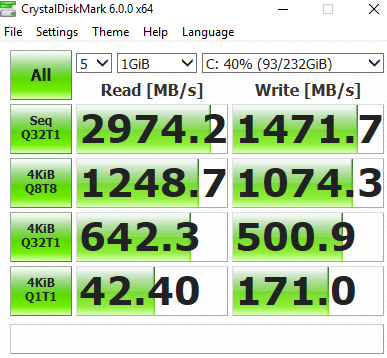
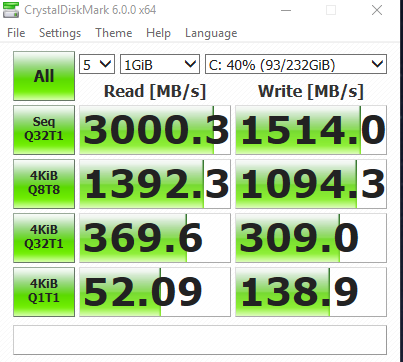
Awesome.
Digital Foundry already confirmed an example of a worst-case scenario for gaming, approx 9% in Witcher 3. Computerbase.de showed a loss of 8% in 99th percentile frame rates. Measurable performance loss - whether it's perceptible or not is a different matter.I made some benchmarks on my rig (i7-8700k stock, asrock taichi, 3600MHz ddr4, sams. 960pro, 1080), without any patches and with Win+BIOS. Fallout4+RoTR - no change in fps (+- 1%), the only big hit is on syntetic SSD benchmarks caused solely by BIOS patch. Intel benchmarks "responsivenes" confirms thats the only measurable hit. Zero practical effect for desktop.

Regarding that Computerbase.de review, the reason why the Star Wars BF2 benchmarks are so bad under Windows 7 is because the game's renderer uses DX11.1 (has some nice CPU optimizations over the base DX11), which is only available on Windows 8/8.5 and 10. I just remembered that!
If you remove Star Wars BF2 out of the equation, the results aren't nearly as terrible for Windows 7. Still, it's become more and more untenable to justify staying on Windows 7 due to the performance and security of the platform, even without these mitigations.
Digital Foundry already confirmed an example of a worst-case scenario for gaming, approx 9% in Witcher 3. Computerbase.de showed a loss of 8% in 99th percentile frame rates. Measurable performance loss - whether it's perceptible or not is a different matter.





 Facebook
 Twitter