
Paratus
Lifer
Definitely would have been a complication to get a shuttle and the required support equipment out there although I’m not too familiar with SLC-6.Probably for the best they never tried to launch it from Slick Six.

Definitely would have been a complication to get a shuttle and the required support equipment out there although I’m not too familiar with SLC-6.Probably for the best they never tried to launch it from Slick Six.

Definitely would have been a complication to get a shuttle and the required support equipment out there although I’m not too familiar with SLC-6.
A long list of construction issues and operational safety concerns when they were getting it ready for the Shuttle. Also possibly cursed at the time by a local Native American tribe because it was partially built on a sacred site...which considering its launch history for a good while seems not impossible.


The DC-X was in development but it fell over after landing ONCE, and they cancelled the project. Guess why, because something else was sucking up all of NASA's budget.

A long list of construction issues and operational safety concerns when they were getting it ready for the Shuttle. Also possibly cursed at the time by a local Native American tribe because it was partially built on a sacred site...which considering its launch history for a good while seems not impossible.

Yea, the microprocessor was just starting to become an option, an culture was still stuck of custom design by defense contractors.Well to be fair, the public really wanted to go back to space and trying to include full propulsive landing for boosters would have almost meant starting over with a whole new vehicle. You're probably pushing it back to late 80s at least at that point.
And I always thought the on-the-fly calculations required just weren't possible with the computing power available at the time, but I guess that wasn't the major issue.
And ironically if they had gone the SpaceX route they could have had a high flight cadence and a large cross range capability because it's a giant stainless steel bus that costs pennies compared to launching an airplane into space. Even before reusability enters the equation.The USAF was trying to use the shuttle for heavy lift DOD payloads and the shuttle was supposed to be reusable enough to have a quick turn around before launching again.
One design requirement for the shuttle was a US Air Force requirement to have a cross range capability to take off from Vandenberg, deploy a USAF satellite in a polar orbit, and then land an orbit later.
Since the Earth is rotating at about 1000 mph at the equator that means for the Shuttle to land near Vandenberg it needed enough glide capability to cover the 1000+ miles the Earth had rotated in the single orbit it was up there.
That meant it needed large wings which required a more complicated thermal protections system and more surface area susceptible to foam shedding off the external tank.
The Shuttle never used this capability as it was never able to meet the launch cadence they wanted. After Challenger the Airforce eventually moved back to using expendable launchers for all payloads.
The push for high flight cadence and large cross range capability led directly to design and programmatic decisions that led to Challenger and Columbia.


So essentially conflicting design requirements and expecting too much out of a single platform?The USAF was trying to use the shuttle for heavy lift DOD payloads and the shuttle was supposed to be reusable enough to have a quick turn around before launching again.
One design requirement for the shuttle was a US Air Force requirement to have a cross range capability to take off from Vandenberg, deploy a USAF satellite in a polar orbit, and then land an orbit later.
Since the Earth is rotating at about 1000 mph at the equator that means for the Shuttle to land near Vandenberg it needed enough glide capability to cover the 1000+ miles the Earth had rotated in the single orbit it was up there.
That meant it needed large wings which required a more complicated thermal protections system and more surface area susceptible to foam shedding off the external tank.
The Shuttle never used this capability as it was never able to meet the launch cadence they wanted. After Challenger the Airforce eventually moved back to using expendable launchers for all payloads.
The push for high flight cadence and large cross range capability led directly to design and programmatic decisions that led to Challenger and Columbia.

So essentially conflicting design requirements and expecting too much out of a single platform?
F-35 says hi
I wonder if/when we will ever learn our lesson
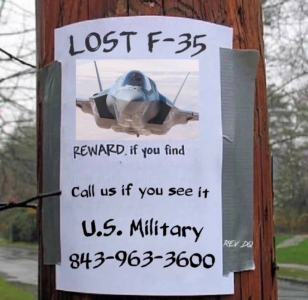
Or even an A-10.Every once in awhile, F16 happens.
That and ignoring the proven predictive nature of the system they designed to monitor the hull for filament breakage by sound from those same tests.There's a new documentary on netflix or maybe you can find it elsewhere called:
Titan: The OceanGate Submersible Disaster
45 mins in.. Rush tests a miniature model of the submersible (25% to scale) and guess what happens.. it pops at the exact same pressure the real thing did.
Like holy fucking shit dude.. did you ignore your own pressure tests??
That and ignoring the proven predictive nature of the system they designed to monitor the hull for filament breakage by sound from those same tests.
Ironic that he DID go but not without murdering some other people with him.Rush said to the accoustic monitoring engineer.. if you're not going to okay the sub ready for diving.. one of us needs to go and it won't be me.
Ironic that he DID go but not without murdering some other people with him.

I know. I meant getting fired from life 🙂I think he meant in terms of leaving the company/ getting fired.
Somebody should sue him.
Serving the papers might be a problem though.


