Is soldering copper pipe difficult?

Page 4 - Seeking answers? Join the AnandTech community: where nearly half-a-million members share solutions and discuss the latest tech.

Red Squirrel

No Lifer
May 24, 2003
70,899
13,919
126
www.anyf.ca
Normally I like to do as much as I can in one go as the pipe is too hot to handle after, but for that it might be too heavy and slip off, so what you could do is make the whole 3 valve assembly separately, make sure it will align with the pipes, then to solder it on use something to hold it in place. If the pipes are tight enough you may be able to put a block of wood behind it just to wedge it so it does not slip out, then solder the two pipes, and done. The wood may burn a bit from being in contact with the pipes while soldering but it's not going to actually catch on fire. Another option is you could use pipe clamps and tapcon it into the concrete and leave it that way after.
 

iGas

Diamond Member
Feb 7, 2009
6,240
1
0
It doesn't matter where you start first. Just hook it all up and squeeze the tees gently (with a pair of pliers) to ovalized the fittings (turn the copper tubing till it tight in the fittings) so that it doesn't fall off when solder. Heat up the top risers above the tees so that it expand and hold the tees in place, then heat the fitting to solder.

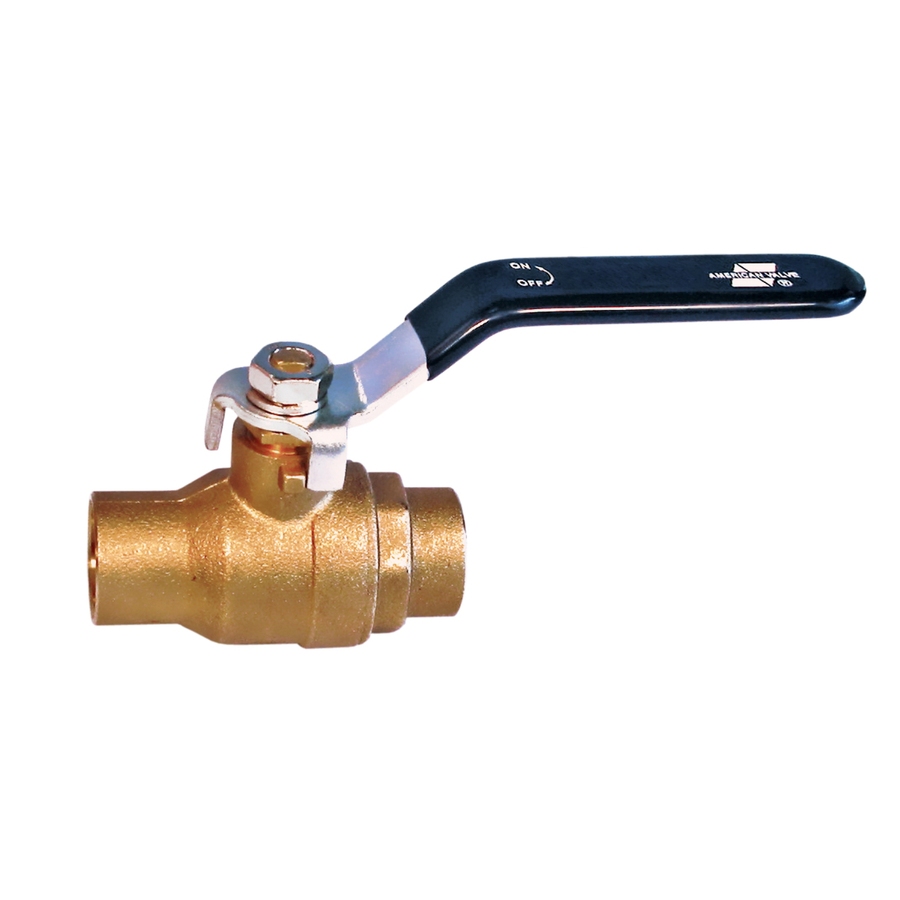
IMHO, it would be easier/cheaper to solder a brass slip ball valve instead of a threaded ball valve because there will be more room to fit the copper nipples, and it save you two 3/4" NPT male x copper sweat coupling/adapters. The only reason that you may want to use threaded ball valves is because you afraid that you may over heat the ball valve and burn the seats.
 
Last edited:

iGas

Diamond Member
Feb 7, 2009
6,240
1
0
Heating the end of the fittings or at the center are all personal preference.

Heating at the center of the fitting may over heat and burn the fitting, making it black and may burn the flux making it difficult to solder. Smaller tubing and fitting require little heat to solder, hence you can just heat the end of the fitting till it is hot enough to solder then move the flame toward the inner of the fitting just the edge of the flame is on the fitting end, and gently feed the solder at the end of the fitting toward the center.

Large fittings and tubing require better technique that you must first heat the end of the fitting then work toward the center while keeping the end hot so that the solder travel toward the center, and you must work all around the fitting with the flame in circular motion, similar technique to brazing and welding.

But, for fittings that are 1 1/4" in diameter and smaller, you simply just heat up the fitting and solder with out the need for advance technique of large fitting soldering. However, you must move the flame around to keep the entire fitting heated to encourage capillary action (over heat will burn the flux that stops the capillary flow).

611918069180.jpg

Slip valves have no threads

Brass%20Ball%20Valves%20%28Sweat,%20Threaded%29.jpg

Threaded ball valve.

Use pliers to squeeze fittings so that you can built the assembly all in one go and have it all attached in place as a single unit for soldering.
 
Last edited:

Red Squirrel

No Lifer
May 24, 2003
70,899
13,919
126
www.anyf.ca
Yeah definitely go with the 1st one, non threaded. I find it's easier. With threaded if you don't put enough teflon, or too much or don't put it tight enough etc it will leak then you end up having to redo the whole thing as you can't twist it once it's soldered on the other end.


NPT = National Pipe Thread, which is the thread used in that 2nd fitting. Not to be mistaken for a garden hose thread, which is different. I just recently learned most of this stuff myself, so someone correct me if wrong. :p
 

iGas

Diamond Member
Feb 7, 2009
6,240
1
0
Wow, thanks for the thorough explanation! I need to find a male threaded ball valve so I can just use one of those flexy metal mesh tubes with two female (the softeners bypass is male threaded) threaded ends.

Can you just straight up solder the threaded ball valve (or is one side not threaded?) onto a piece of pipe? It would be really nifty if there was such thing as a copper T with a threaded end, then I could just screw the ball valve on. :p

Wow...more questions. Feel completely free to not answer if you dont want to. But know that your help is invaluable for my noobness. :)
There are brass threaded tee with male x female NPT threads, or threaded x slip, but they usually are special order, and are expensive that generally are use for oil/gas application.
 

iGas

Diamond Member
Feb 7, 2009
6,240
1
0
Yeah definitely go with the 1st one, non threaded. I find it's easier. With threaded if you don't put enough teflon, or too much or don't put it tight enough etc it will leak then you end up having to redo the whole thing as you can't twist it once it's soldered on the other end.


NPT = National Pipe Thread, which is the thread used in that 2nd fitting. Not to be mistaken for a garden hose thread, which is different. I just recently learned most of this stuff myself, so someone correct me if wrong. :p
http://www.onestopfire.com/threads.htm
 

iGas

Diamond Member
Feb 7, 2009
6,240
1
0
You can get threaded valves and get fittings to fit it it you need the thread end for hooking up to things. Or, get valves with slip ends and sweat a threaded fitting into it.

IMHO, you are making it out to be tougher than it really is.
 

Tommy2000GT

Golden Member
Jun 19, 2000
1,832
3
81
I recently soldered copper pipe for my first time, what I did is I bought some fittings and pipe to practice on first, and an attachment to put a hose. I hooked it up to the sink and applied pressure to make sure nothing leaked. It's actually easier to do than it looks.

Basically what you want to get is this:

- flux
- wire brush for the size of pipe you'll be working on - this brush fits snugly inside the pipe fittings and you just twist it around to sand it
- sand paper for the pipe itself (sand on the outside)
- propane torch
- solder
- flint and steel (hand held thingy that makes sparks, to start the torch)
- safety glasses
- gloves are ideal, you WILL get burned pretty badly if you touch the pipe. Did it by error without thinking I went to move the piece I was working on... took like 2 weeks to heal.

Basically sand the outside of the end of a pipe, sand the inside of the fitting, apply flux on both, fit them all the way. I like to give a little twist to spread the flux more evenly.

Then heat the fitting itself, and the pipe a bit, and keep trying to apply solder until it melts on contact, then try to get it all around, but it should wick around on it's own.

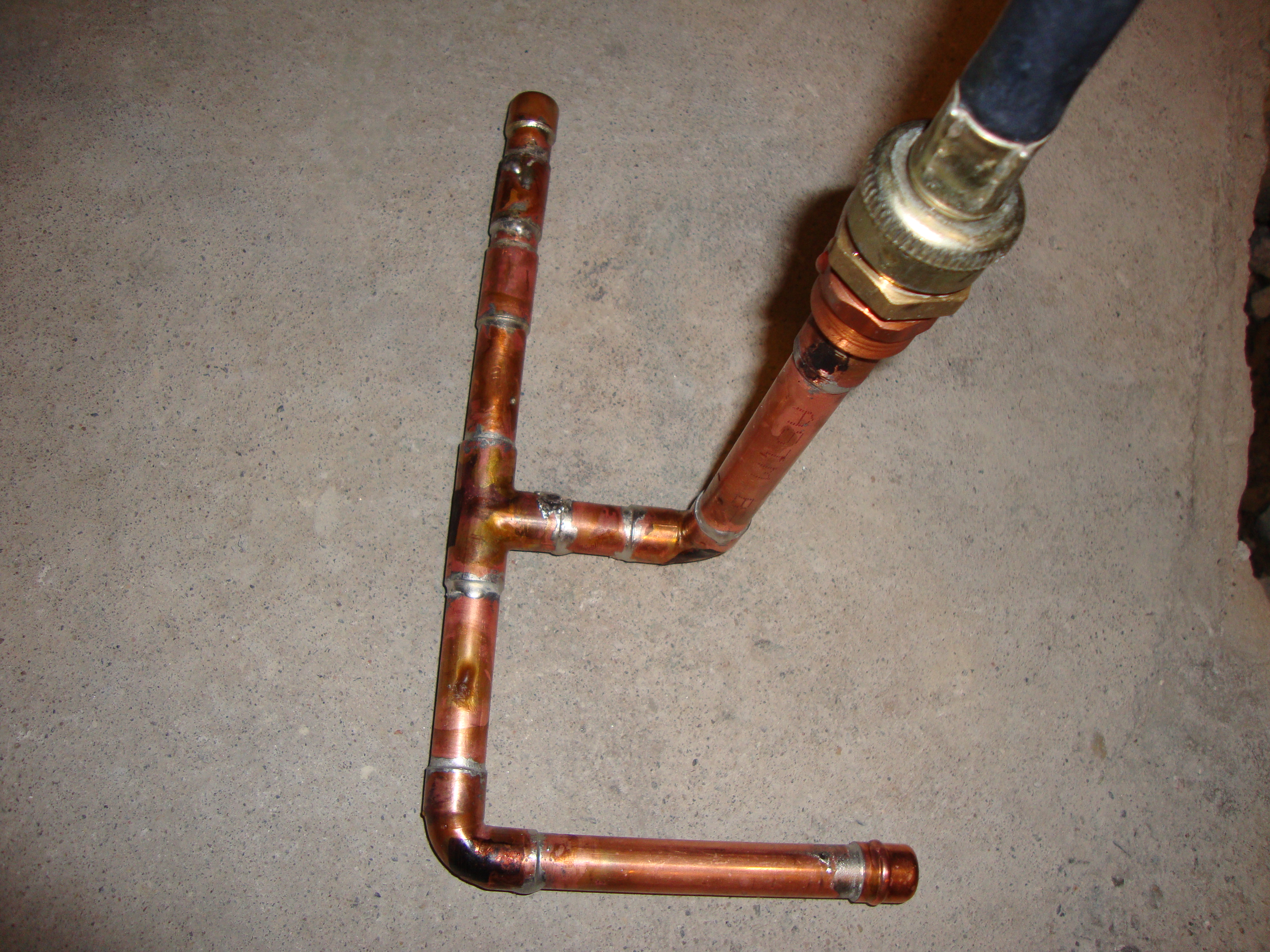
This was my first practice project, no leaks!


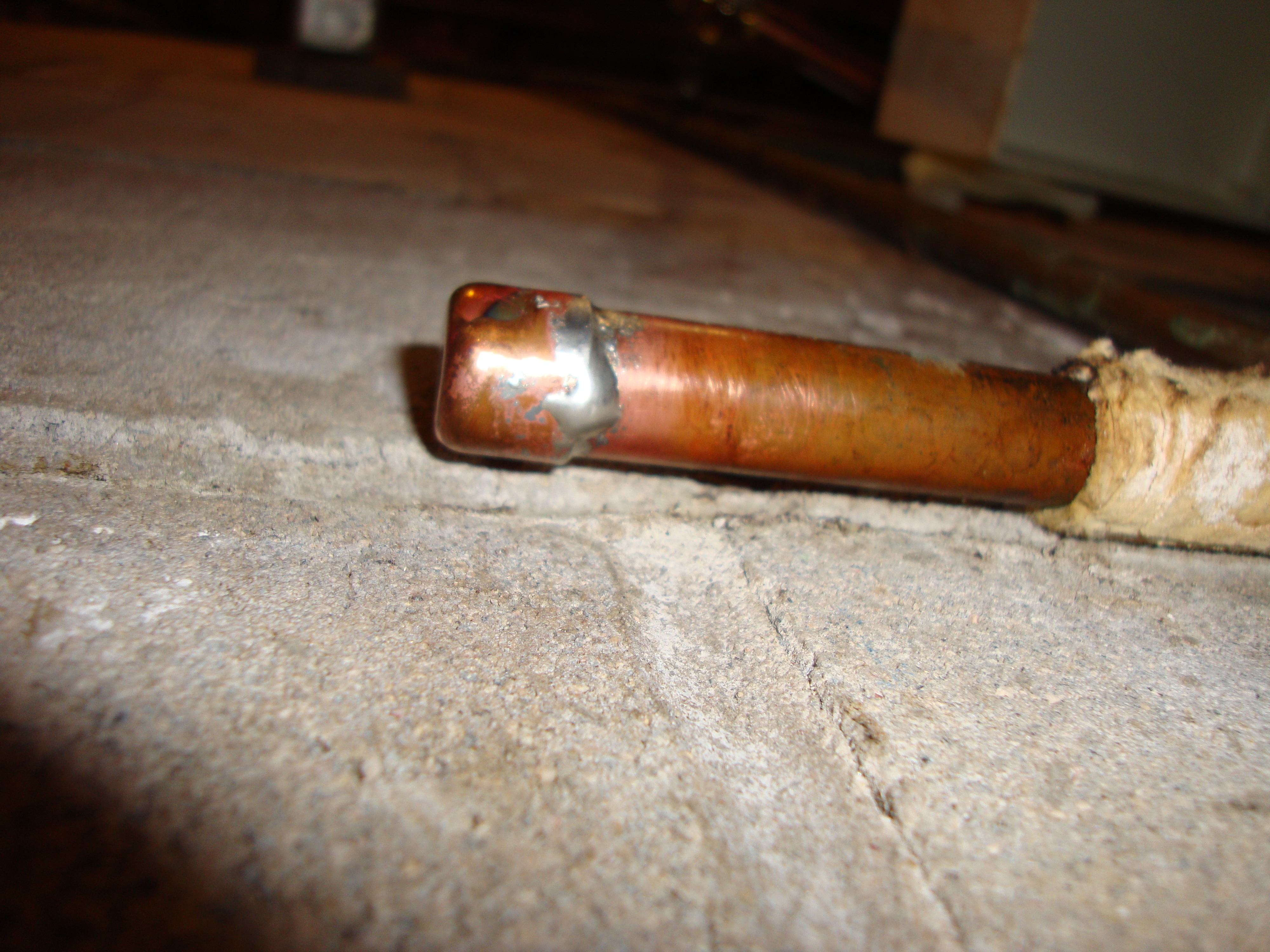
First real project (just adding a cap)


And another recent project:


Adding humidifier drain (used to use a bucket before)


Oh and for the ball valve, if it's one where one end is twist and the other end is solder, do the solder part first then twist after. I'm not a huge fan of those I rather just solder on both ends. Leave the valve open while soldering as to not melt it internally. Let it cool before you do the other side, or see if you can do it right away without applying too much more heat. Most valves will have instructions. Some may require you to take it apart.

The trick with anything that has to be twisted is if it does not work the first time you sometimes have to cut the pipe upstream so you can twist it more and redo it.


I think I should do something like that to practice. It looks like a good idea.
 

Red Squirrel

No Lifer
May 24, 2003
70,899
13,919
126
www.anyf.ca
Question: is it important that I use full port ball valves instead of regular ball valves?

Yes, go for the big ones, I never figured there was a difference, but if you look inside the smaller ones have more flow restriction. Won't make a HUGE difference due to the nature of a high pressure system, but it will still have some impact, and given it's your main line going through there you definitely don't want to restrict it.
 

Howard

Lifer
Oct 14, 1999
47,982
11
81
Question: is it important that I use full port ball valves instead of regular ball valves?
If the cost difference is insignificant, go with the full-port. If the difference is significant, then you need to calculate your flows vs pressure drop. Would be a nice exercise for you.
 

wirednuts

Diamond Member
Jan 26, 2007
7,121
4
0
I would always go full port if its part of the regular water system. if its for a washer or something, who cares but otherwise there is no good reason to create a pressure drop. the cost can be twice as much, but youre talking $15 instead of $7...
 

wirednuts

Diamond Member
Jan 26, 2007
7,121
4
0
Yes, go for the big ones, I never figured there was a difference, but if you look inside the smaller ones have more flow restriction. Won't make a HUGE difference due to the nature of a high pressure system, but it will still have some impact, and given it's your main line going through there you definitely don't want to restrict it.

if the pressure drop doesn't bother you, the noise might. full flow valves are quiet. restricted ones make a lot of whishing noise anytime someone is using water.