Arachnotronic
Lifer

Tahoe, what RAM kit are you using?

The 8-pin connector(s) are only one minor part of the discussion, the more relevant issue is how many pins on the socket provide power, and whether it's feasible to share their maximum current carrying capacity with two more cores without creating other problems.

Tahoe, what RAM kit are you using?

I don't disagree, but clearly the scenarios you mention don't have anything to do with complying with specs. Pushing a hexacore to the limit on air with the current socket's power delivery arrangement might just be a sketchy proposition. Most of us just don't know.You're right, but this ignores the fact that running Skylake/Kaby Lake at >5.0 GHz can easily push power consumption to >50% of stock consumption without issues with the socket delivering power. High-end motherboards can push Skylake/Kaby Lake to >7.0 GHz, which - without factoring in voltage increases - represents at least a 66% increase in power consumption.
Given that high end "overclocking" motherboards use the same LGA 1151 socket and that socket is capable of running at >7.0 GHz, we can deduce that the socket is fully capable of delivering sufficient power.
I don't disagree, but clearly the scenarios you mention don't have anything to do with complying with specs. Pushing a hexacore to the limit on air with the current socket's power delivery arrangement might just be a sketchy proposition. Most of us just don't know.
I don't disagree, but clearly the scenarios you mention don't have anything to do with complying with specs. Pushing a hexacore to the limit on air with the current socket's power delivery arrangement might just be a sketchy proposition. Most of us just don't know.
I've been trying to give Intel the benefit of the doubt, but it sounds like you think "1151v2" is most likely a money grab.I wouldn't worry about the socket, but I would be worried about some of the cheaper Z170 boards not having robust enough power delivery systems.
I've been trying to give Intel the benefit of the doubt, but it sounds like you think "1151v2" is most likely a money grab.
Not a money grab for Intel (PCH revenue from enthusiast desktop is really peanuts & losing out on CPU sales because people don't want to buy new mobos or being pissed off to say "I'm going Ryzen because AMD supports its sockets" could be a net loss for Intel), but a kiss blown to the motherboard makers, probably to help make up for the fact that they have to do a whole new round of boards for a pulled-in Coffee Lake to deal with Ryzen.
I still feel like they changed enough that it's more than just more power.
If anything the mobo makers are the big losers since they will have loads of soon to be unsellable Z270 boards.

Not upset at all. Just pointing out the ridiculous claim you made with zero facts to back it up. But seeing how you are the only person on these forums who is never wrong, who am I to argue.
I will make sure to check Intel's HEDT sales after the 8700K gets released. I should see a 90% drop in sales after that according to you.
They are very close.Weird, wonder why the single thread is slower than the 7700K.


240mm AIO.
I am not even close to getting these numbers. What is your Cinebench score?
As in, you're much lower or much higher?
I still feel like they changed enough that it's more than just more power.
If anything the mobo makers are the big losers since they will have loads of soon to be unsellable Z270 boards.
Z390 is a new PCH, with some features like native USB 3.1 and some integrated connectivity stuff manufactured in 14nm rather than 22nm, so should be slightly more efficient, too.
But, it's really not a big deal.
I don't think so, there is plenty of evidence of CFL working in Z270 boards.
iKBLULTGT2R = "Intel(R) UHD Graphics 620"
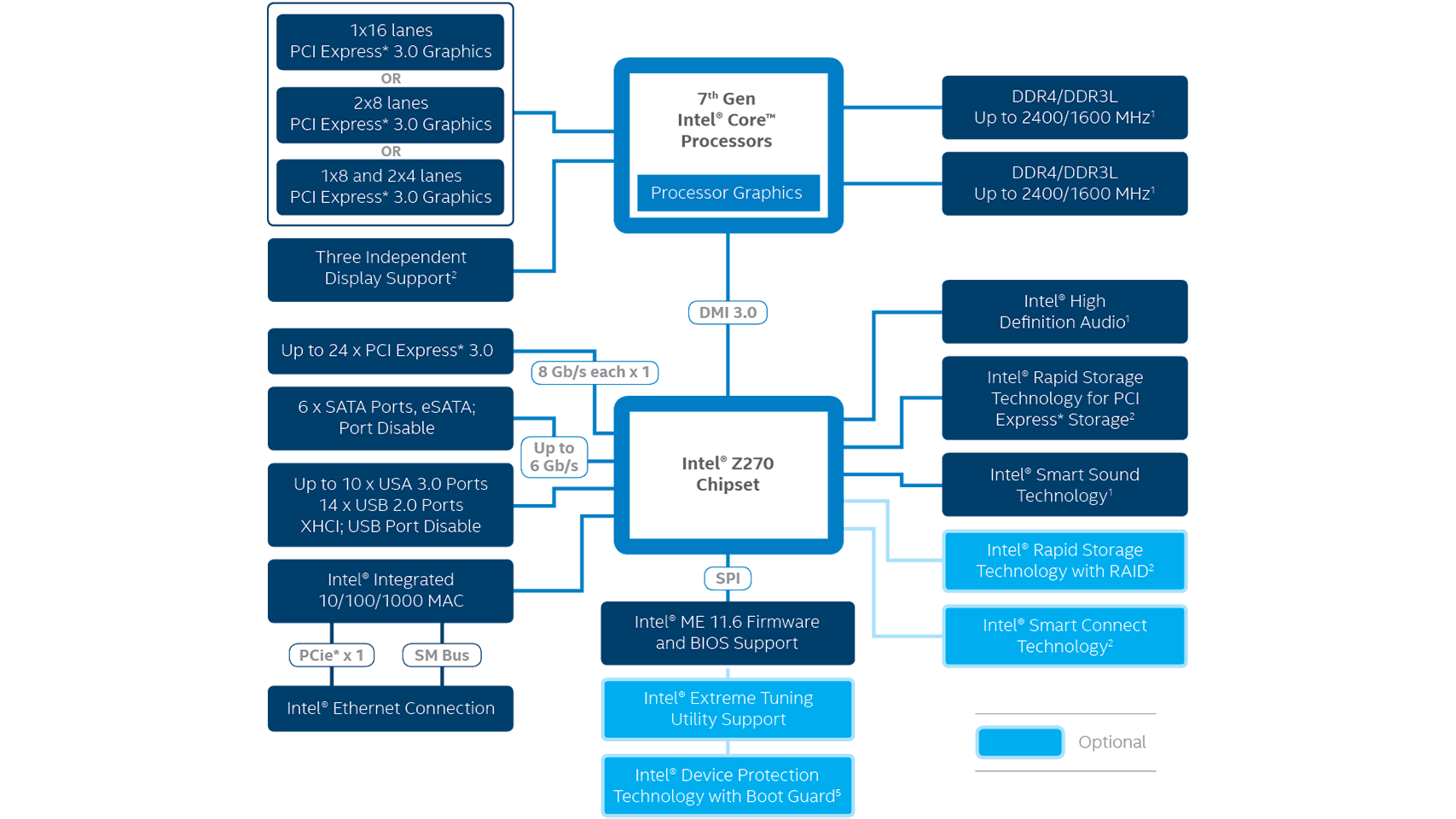
The 8700k combined with the Z370 has 24 lanes right? (just like z270 and 7700K pci lane talk is where i get confused) I have 1 graphics card, 2 nvme ssds, and 1 sata ssd. The nvme drives should run at full speed right?
I don't know enough about this subject. I suppose a fast chipset-CPU connection is important when loading applications and data from storage into RAM. In what other situations it plays a major role?No. IIRC, It's the same as Kaby - 16 lanes on the processor and 24 on the chipset. But to go from the chipset to the processor is only x4.