• We’re currently investigating an issue related to the forum theme and styling that is impacting page layout and visual formatting. The problem has been identified, and we are actively working on a resolution. There is no impact to user data or functionality, this is strictly a front-end display issue. We’ll post an update once the fix has been deployed. Thanks for your patience while we get this sorted.

Intel Skylake / Kaby Lake

Page 619 - Seeking answers? Join the AnandTech community: where nearly half-a-million members share solutions and discuss the latest tech.
Funny how "sample of 1" warnings are no longer instantly triggered when dealing with good news. Let's hope the HCC silicon does indeed contain sugar, spice and everything nice!
Haha, true, but the opposite would have triggered a similar reaction from you know who. All the same, given all the dire warnings about how much of a low clocker this particular chip is going to be and we get this?
 
I'm still wondering how the mobo VRMs are going to deal with an 18c CPU @ 1.12v or whatever. That's gonna be a huge current draw given how badly early x299 boards handled even the 10c parts. Unless there's another run of boards with better VRMs/better VRM cooling to go with the 12-18c parts.
 
I'm still wondering how the mobo VRMs are going to deal with an 18c CPU @ 1.12v or whatever. That's gonna be a huge current draw given how badly early x299 boards handled even the 10c parts. Unless there's another run of boards with better VRMs/better VRM cooling to go with the 12-18c parts.
Perhaps the VRM problem is overstated?
 
Maybe. We'll just have to see how the chips perform in the hands of regular users once they get them. Careful choosing your boards, lads! Don't burn em out.
 
Perhaps the VRM problem is overstated?

No, the VRM problem is real. It's not the quality of the VRMs, though -- the X299 boards do have excellent VRMs, generally speaking. The problem is that the motherboard makers are trying to cool the VRMs with really bad coolers that sacrificed cooling performance for "bling."

It's unfortunate, but I have seen evidence of VRM throttling at very high clock speeds running Prime95 small FFT (basically I get "phantom throttling" -- clock speed looks normal, but perf and power consumption go way down).

The only boards suitable for overclocking I would say are the Rampage VI Apex, and the Gigabyte AORUS Gaming 7 and Gaming 9 as all three of these boards have good VRM cooling (Apex is best, AORUS boards second).
 
How do we know this, though?

E4UUhRP.png


If we buy an 8700K, for example. How do we know it's 14nm++?
Is there any way to know other than Intel telling us?

Intel has to tell you.
 
Would be interesting to see Cascade Lake performance on 14nm++.

Since X299 chipset motherboards will also support Cascade Lake with UEFI BIOS update, Kaby Lake-X users can have a forward upgrade path to higher core count CPUs.
 
Would be interesting to see Cascade Lake performance on 14nm++.

Since X299 chipset motherboards will also support Cascade Lake with UEFI BIOS update, Kaby Lake-X users can have a forward upgrade path to higher core count CPUs.

Cascade Lake should be a pretty awesome family. 14nm++ should be epic.
 
No, the VRM problem is real. It's not the quality of the VRMs, though -- the X299 boards do have excellent VRMs, generally speaking. The problem is that the motherboard makers are trying to cool the VRMs with really bad coolers that sacrificed cooling performance for "bling."

It's unfortunate, but I have seen evidence of VRM throttling at very high clock speeds running Prime95 small FFT (basically I get "phantom throttling" -- clock speed looks normal, but perf and power consumption go way down).

The only boards suitable for overclocking I would say are the Rampage VI Apex, and the Gigabyte AORUS Gaming 7 and Gaming 9 as all three of these boards have good VRM cooling (Apex is best, AORUS boards second).

When you have to say the issues concern running Prime95 at very high clockspeed (i read that as high overclocks 4,6GHz+), then TBF they are somewhat overstated.

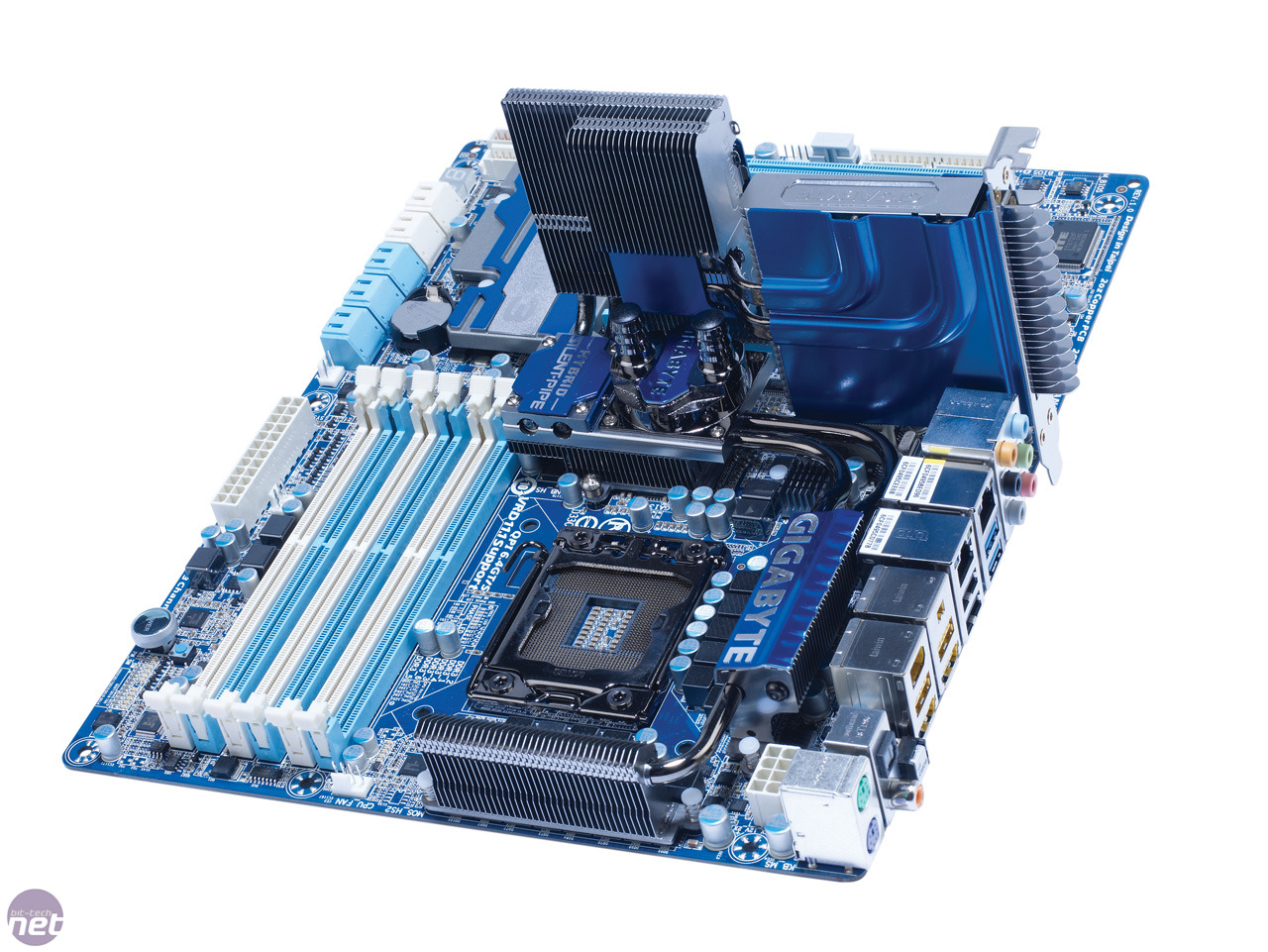
However i agree about the insufficiency of VRM cooling, i used to have Gigabyte X58A UD7:
gigabyteud7a.jpg


and thats how the VRM cooling should look like 🙂 Still dont understand why exactly are newer mobos in this regard worse than the old ones, did the people at Asus etc..., the ones who had knowledge that those fins on heatsinks are there to increase transfer of heat away to air, retire or something, and current generation of designers were not told that?

 
When you have to say the issues concern running Prime95 at very high clockspeed (i read that as high overclocks 4,6GHz+), then TBF they are somewhat overstated.

However i agree about the insufficiency of VRM cooling, i used to have Gigabyte X58A UD7:
gigabyteud7a.jpg


and thats how the VRM cooling should look like 🙂 Still dont understand why exactly are newer mobos in this regard worse than the old ones, did the people at Asus etc..., the ones who had knowledge that those fins on heatsinks are there to increase transfer of heat away to air, retire or something, and current generation of designers were not told that?

'Gaming' motherboards must look cool. Chalk up a win for the marketing department over engineering. AMD set a 180W TDP limit from the get go and scared the marketing folks enough that they left it to their engineering teams.
 
When you have to say the issues concern running Prime95 at very high clockspeed (i read that as high overclocks 4,6GHz+), then TBF they are somewhat overstated.

However i agree about the insufficiency of VRM cooling, i used to have Gigabyte X58A UD7:
gigabyteud7a.jpg


and thats how the VRM cooling should look like 🙂 Still dont understand why exactly are newer mobos in this regard worse than the old ones, did the people at Asus etc..., the ones who had knowledge that those fins on heatsinks are there to increase transfer of heat away to air, retire or something, and current generation of designers were not told that?
Everybody accepts it as is. It really isn't some arcane knowledge as I'm sure you know. Basic thermal flows.
 
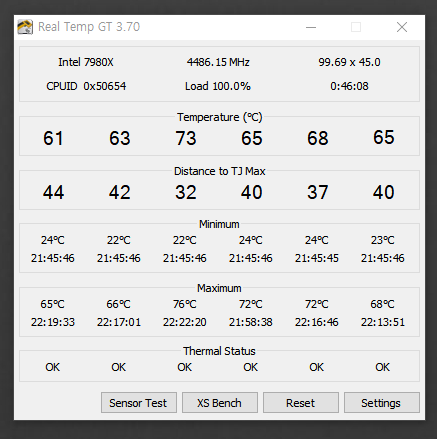
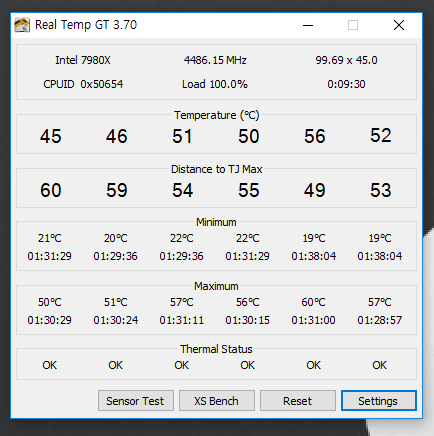
I think it's funny they're using RealTemp GT 3.70. Released January of 2012. Isn't there anything modern they could have used?
 
I think it's funny they're using RealTemp GT 3.70. Released January of 2012. Isn't there anything modern they could have used?
There are some more detailed screenshots in the link....but yeah. Kinda odd.

Are you still not planning on getting one?
 
Back
Top