
-
We’re currently investigating an issue related to the forum theme and styling that is impacting page layout and visual formatting. The problem has been identified, and we are actively working on a resolution. There is no impact to user data or functionality, this is strictly a front-end display issue. We’ll post an update once the fix has been deployed. Thanks for your patience while we get this sorted.
You are using an out of date browser. It may not display this or other websites correctly.
You should upgrade or use an alternative browser.
You should upgrade or use an alternative browser.
News Intel GPUs - we've given up on B770, where's Celestial already
Page 203 - Seeking answers? Join the AnandTech community: where nearly half-a-million members share solutions and discuss the latest tech.

Agreed. It's yet another layer of complexity involved though. On top of needing DXVK. And if trying to rehab in old PC, getting rebar working. You can't ask that of shoppers when the other vendors simply work without all the hassles.EAC is the biggest PITA.
Pirated Version are fine compared to EAC any day to the the thing EAC is i hate it
Still the fault of the vendors IMO. Most of the code across main boards is relatively common. There are differences at the microcode level, but the lions share is the same. If they went open source the community could even keep it updated.It can be a PITA to get working depending on the vendor and system in question. Oz did it with a lenovo and it got rather involved. Video is time stamped -
It has to be easy, and it has to work for casuals. ARC has never been that. It's the closest it's ever been, but there are still games that are a hot mess using one. Some... I have no hope they will ever fix. Others you have to have the pirated version of the game due EAC. And of course, you have to use DXVK sometimes. All too much to ask when AMD and Nvidia have superior OOB experiences.
I am not disagreeing that Intel should not have relied on rebar being enabled, but the board
makers need to do a better job.
Most of us would rather have a boring text based UI that is the same across systems, longer update support, and higher quality board/software releases rather than flashy new whiz bang UI with AI and fancy feature XYZ that isn’t actually exclusive even though a company markets it that way.
Just my opinion, of course. Give me 5 years of updates rather than junk. If you can’t, make it so others can.
If I had the capital, I’d put some of these guys out of business.
Still the fault of the vendors IMO. Most of the code across main boards is relatively common. There are differences at the microcode level, but the lions share is the same. If they went open source the community could even keep it updated.
I am not disagreeing that Intel should not have relied on rebar being enabled, but the board
makers need to do a better job.
Most of us would rather have a boring text based UI that is the same across systems, longer update support, and higher quality board/software releases rather than flashy new whiz bang UI with AI and fancy feature XYZ that isn’t actually exclusive even though a company markets it that way.
Just my opinion, of course. Give me 5 years of updates rather than junk. If you can’t, make it so others can.
If I had the capital, I’d put some of these guys out of business.
I think expecting board makers to go back and add support for features long after the board is EOL is not realistic.
Agreed. Intel changes desktop sockets more than a hobo changes underwear. Why would boardmakers care about supporting them for more than a hot second?I think expecting board makers to go back and add support for features long after the board is EOL is not realistic.
This one hurts. Listing the A750 next to 2 ancient video cards for stalker 2 -

Lack of OEM support does not change the reality for Intel: rebar requirement handicapped their GPUs when it came to value/budget shoppers.
It is up to INTEL to make sure it doesn't need Rebar. Neither of the competitors need one.It isn’t Intel’s fault OEMs don’t support the products they release. MOST UEFI systems support rebar. See this if your doesn’t: https://github.com/xCuri0/ReBarUEFI
EDIT: Not PCIE version dependent either. Supported on Sandy Bridge, so your old 2500k-2600k can use it.
Up until Windows XP I had to deal with Windows crashing every day. That's how I have the knowledge I do now. XP made it lot better and 7 practically eliminated it. Most people don't want to go through that. I don't either. There's a reason Smartphones gained massive marketshare. And the same reason why computers during those days were barely used. It was difficult to use.
Totally agree. Win95 was terrible. I literally had to reinstall the os everyday, because of registry errors. Then again I was always playing around with it, installing random apps and stuff. But that's what tinkerers do, right? Like checking everything in the CP and seeing what everything and anything does. Tweaking, modding, overclocking, etc...It is up to INTEL to make sure it doesn't need Rebar. Neither of the competitors need one.
Up until Windows XP I had to deal with Windows crashing every day. That's how I have the knowledge I do now. XP made it lot better and 7 practically eliminated it. Most people don't want to go through that. I don't either. There's a reason Smartphones gained massive marketshare. And the same reason why computers during those days were barely used. It was difficult to use.
I'm just in the process of installing Win98SE on a Lenovo system with a K8S-LA motherboard, and it's been quite the journey. Crashes haven't been bad, but drivers are a significant challenge. Stupid thing is just a couple years too new, but it has an AGP slot so I'll be able to get a 9700 in there.

QueBert
Lifer
Totally agree. Win95 was terrible. I literally had to reinstall the os everyday, because of registry errors. Then again I was always playing around with it, installing random apps and stuff. But that's what tinkerers do, right? Like checking everything in the CP and seeing what everything and anything does. Tweaking, modding, overclocking, etc...
LOL, I had my Windows 95 product key memorized, that shit was like 20 random characters. I remember many BSOD's from my Voodoo 3 card that resulted in me having to completely reinstall Windows. If you weren't a tinkerer and didn't have patients Windows wasn't for you. And then Windows 98 came, and it was like 40% better, so I'd only have to reinstall every month instead of every 2 weeks. Back then plug n play was rightfully referred to as plug n pray.
I still remember the video of Bill Gates giving a live demo of how USB PNP works on Windows 95. Only to have the computer BSOD 1 second after he plugged the scanner in lol. And somehow Win 95 still ended up being the death of OS/2, which doesn't say much about OS/2 really.
igor_kavinski
Lifer
The only Win9x that was unstable for me was WinMe.Totally agree. Win95 was terrible.
What the heck do these billionaires do with their money? They should make backward compatible drivers for current hardware so we can reduce the OS overhead and enjoy maximum speed gaming! 😛
igor_kavinski
Lifer
OS/2 died because of IBM. You know, the actual INVENTOR of the x86 PC. If those idiots couldn't hold onto the hardware, what chance did they have with software? 😀which doesn't say much about OS/2 really.
igor_kavinski
Lifer
Screw you for reminding me of that pain in the rear admiral! 😀AGP slot
Remember the AGP card incompatibility issue due to different voltages???
Man, I would've torn down the entire building where those geniuses came up with that bit of historical magic! 😡
igor_kavinski
Lifer
Raja Koduri himself is an inexcusable blunder of a human 😀It's an inexcusable blunder.
Gotta be the luckiest guy alive. Responsible for spearheading lukewarm commercially failed GPU efforts at the only two companies of the x86 duopoly and he still has a job!
Tinkering is fine, but if you cater your GPU to that, you will guaranteed fail, because the competing ones don't need you doing it.Totally agree. Win95 was terrible. I literally had to reinstall the os everyday, because of registry errors. Then again I was always playing around with it, installing random apps and stuff. But that's what tinkerers do, right?
Tinkering for the sake of tinkering is a small amount even among enthusiasts. And mostly it's done to make it better than it already is.
Intel needs to make Battlemage and future generations work out of box.
JustViewing
Senior member
While it is true, I had to repair/reinstall win95 twice a month or so. I guess it was mainly due to hard disk issues. Lost sectors..Registry errors etc. But the real benefit was, I learned a lot about windows and its inner workings because of this. Also it turned me into some sort on-call helper for others 🙂 .Totally agree. Win95 was terrible. I literally had to reinstall the os everyday, because of registry errors. Then again I was always playing around with it, installing random apps and stuff. But that's what tinkerers do, right? Like checking everything in the CP and seeing what everything and anything does. Tweaking, modding, overclocking, etc...
Last edited:
50% higher IPC on Xe2 compared to Xe1 LPG in this new THG test.
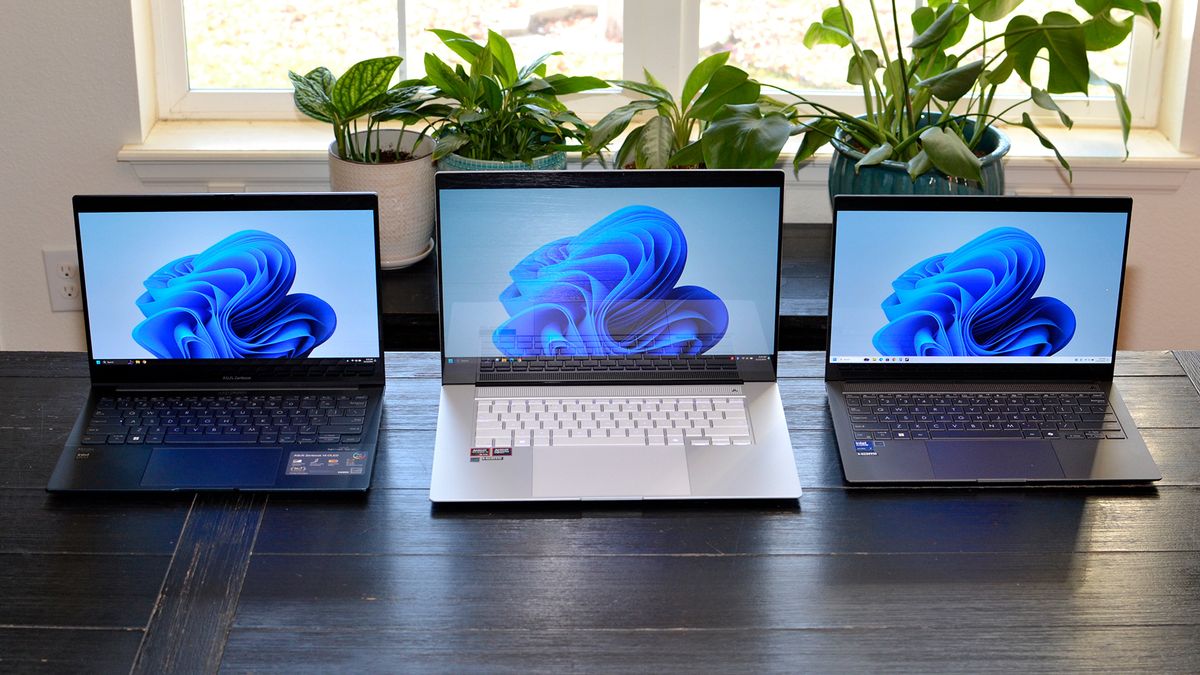
 www.tomshardware.com
Lunar Lake has 14% more bandwidth than MTL. BMG dGPU should have a new IMC anways, the one from Alchemist wasn't great.
We crunched the numbers, and we end up with Lunar Lake offering 10.33 FPS/TFLOPS across our test suite, Strix Point gives 9.05 FPS/TFLOPS, and Meteor Lake only offers 6.90 FPS/TFLOPS. That means, for our independent testing, Intel delivered exactly 50 percent higher performance per teraflops compared to its prior generation GPU.
Intel takes down AMD in our integrated graphics battle royale — still nowhere near dedicated GPU levels, but uses much less power
Intel, perhaps for the first time ever, can legitimately claim to have the fastest Windows iGPU.
Lunar Lake has 14% more bandwidth than MTL. BMG dGPU should have a new IMC anways, the one from Alchemist wasn't great.
LightningZ71
Platinum Member
Lunar Lake also has an SLC to help with memory bandwidth. It's a lot more than 14% effective...
You are also seeing AMD shoot themselves in their own foot with Strix Point for replacing their MALL cache with an almost completely useless NPU. 16-32MB of MALL cache, or even just 16MB of Infinity Cache dedicated to the iGPU (the same amount that the 6400/6500 dGPUs had) would have made a world of difference...
You are also seeing AMD shoot themselves in their own foot with Strix Point for replacing their MALL cache with an almost completely useless NPU. 16-32MB of MALL cache, or even just 16MB of Infinity Cache dedicated to the iGPU (the same amount that the 6400/6500 dGPUs had) would have made a world of difference...
with an almost completely useless NPU.
AI AI AI tho
Lunar Lake also has an SLC to help with memory bandwidth. It's a lot more than 14% effective...
You are also seeing AMD shoot themselves in their own foot with Strix Point for replacing their MALL cache with an almost completely useless NPU. 16-32MB of MALL cache, or even just 16MB of Infinity Cache dedicated to the iGPU (the same amount that the 6400/6500 dGPUs had) would have made a world of difference...
According to Intel SLC is not for the iGPU, it won't help.
LightningZ71
Platinum Member
Even if it isn't DIRECTLY for the GPU, it indirectly benefits it by relieving contention on the IMC for access to the DRAM by answering a portion of the calls from the CPU cores and DMA peripheral IO controllers.
Even if it isn't DIRECTLY for the GPU, it indirectly benefits it by relieving contention on the IMC for access to the DRAM by answering a portion of the calls from the CPU cores and DMA peripheral IO controllers.
How much does it help?
LightningZ71
Platinum Member
That's asking for a static answer to what is a dynamic problem. It depends on the CPU and peripheral I/O memory access load. It's certainly non-zero, but definitely highly variable. I don't have any kind of specific answer for you.
That's asking for a static answer to what is a dynamic problem. It depends on the CPU and peripheral I/O memory access load. It's certainly non-zero, but definitely highly variable. I don't have any kind of specific answer for you.
In a gaming workload I mean. How does it even help? SLC looks quite slow.
LightningZ71
Platinum Member
It still increases EFFECTIVE bandwidth by caching at least some RAM requests by the cores. The less memory access contention, the better.
TRENDING THREADS
-
 Discussion Zen 5 Speculation (EPYC Turin and Strix Point/Granite Ridge - Ryzen 9000)
- Started by DisEnchantment
- Replies: 25K
-
Discussion Intel Meteor, Arrow, Lunar & Panther Lakes + WCL Discussion Threads
- Started by Tigerick
- Replies: 25K
-

-

-
