
Makaveli
Diamond Member
Never seen GPUs use DDR5.
ADL integrated graphics is probably the first GPU to ever use DDR5.
I think he was referring to GDDR5 which you are correct is not DDR5.
Last edited:

Never seen GPUs use DDR5.
ADL integrated graphics is probably the first GPU to ever use DDR5.

 www.forbes.com
| Cinebench 20 | Theoretical | ||||||
| Single Thread | Single Core | Single Core | |||||
| Score | Score | Score | |||||
| Core | Cinebench 20 ST | At MT speed | MT Score | At MT speed | SMT Increase | MT Speed | at 5GHz |
| Golden Cove | 817 | 771 | 11600 | 918 | 19.1% | 5000 | 918 |
| Rocket Lake | 649 | 612 | 5963 | 745 | 21.7% | 5000 | 745 |
| Gracemont | - | - | - | 532 | N/A | 3700 | 718 |
| Skylake | 532 | 492 | 6355 | 636 | 29.2% | 4900 | 648 |
| Haswell | 361 | - | 1769 | 442 | 22.5% | 3900 | 567 |
| IPC Calcs | based on | single | core | score | during | MT | bench |
| Golden Cove over Cypress | 23.2% | ||||||
| Cypress Cove over Skylake | 14.9% | ||||||
| Gracemont over Skylake | 10.8% | ||||||
| Cypress Cove over Gracemont | 3.7% | ||||||
| Golden Cove over Skylake | 41.6% | ||||||
| Golden Cove over Haswell | 62.0% | ||||||
| Skylake over Haswell | 14.4% |
11900 in ST has 5.3GHz and the same clock speed reaches 12900 so if both systems reached 5.3GHz then GoldenCove has IPC higher by 26% in CB 20.
on the other hand, 20-25% higher IPCs are nothing extraordinary considering the fact that Golden can decode 6 x86 instructions versus 4 in CypressCove. Additionally, two new, more extensive FADD units.

Definitely. The architecture is wider which also increases the potential for SMT.
As a sidenote: This is why I wonder why Apple did not apply SMT to the M1.
That is indeed very probable. I also suspect that the answer can be found in this document. Sadly I only progressed until page 50 by now.If you can get enough throughput in relation to the core's execution resources without it, then it's no benefit. Looking at the perf/clock Apple are able to achieve, I'd say that's probably the case.
Definitely. The architecture is wider which also increases the potential for SMT.
As a sidenote: This is why I wonder why Apple did not apply SMT to the M1.
Definitely. The architecture is wider which also increases the potential for SMT.
As a sidenote: This is why I wonder why Apple did not apply SMT to the M1.
The "lack of knowledge" was a reason I omitted. Those people over there at Apple know about CPU design - and in a big way.While I doubt Apple will pursue SMT, just because the M1 doesn't have it enabled doesn't necessarily mean it isn't in there. That's not easy to get right given all the security issues that have been found with it over the past few years, so even if they wanted to do it they might need an iteration or two before they would announce/enable it.
AVX512 is minor or non-existent in Cinebench.
You're right. CB R23 no longer supports AVX512 and GoldenCove also shows 26% better IPC.

Granted that there s no AVX512 but for sure something was done in CB R23 in respect of CB R20.
R23 came shortly after R20 while using the same scene, usually there is several years between each revision, R 11.5 was in 2008, R15 in 2013 and R20 in 2017.
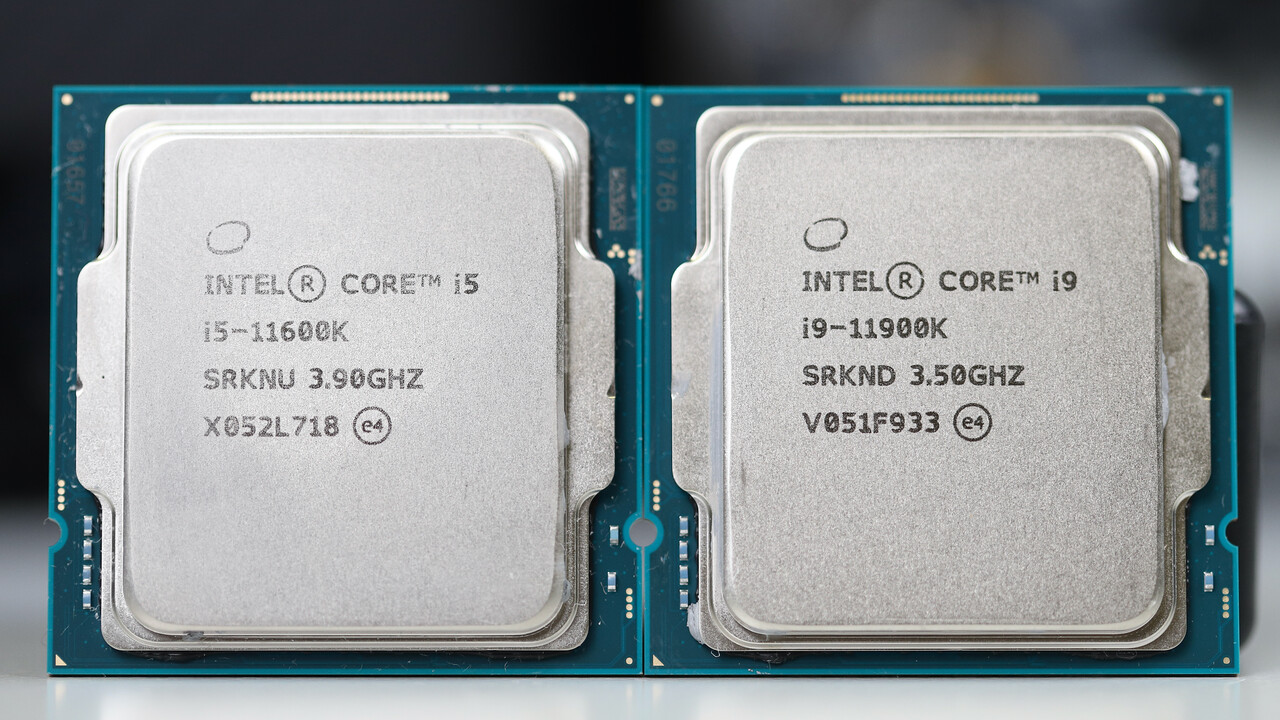
You can compare the single scores of R20 and R23 here :
Intel Core i9-11900K & i5-11600K „Rocket Lake-S“ im Test: Benchmarks in Anwendungen
Core i9-11900K und i5-11600K im Test: Benchmarks in Anwendungen / Multi-Core-Szenarien / Single-Core-Szenarienwww.computerbase.de
Seems that R20 wasnt "optimised" enough for Intel s taste, hence a "revison" that came at speedlight..


Quit posting 10 year old videos to back up your conspiracy theories. I got more recent videos of AMD partnering with Maxon to deliver better performance to their customers. Care to see them?Today Intel claims that Cinebench is useless, or it is not useful real world bench.
If we now, that Cinebench dont care about system memory performanse+dont care about big L3 Cache.Hm, what has changed from R20 to R23.
Pricing....
View attachment 50954
Kinda high, but you gotta price it against the competition. When AMD brought down an HEDT chip into the desktop space and priced it for $800 some here thought it was the coolest thing. Now Intel, by virtue of matching it is charging same. It's a race to $1,000 from here on out, though, to be fair the 5950x already exceeded that sometime in the near past.

Pricing....
(snip)
It's a race to $1,000 from here on out, though, to be fair the 5950x already exceeded that sometime in the near past.

Today Intel claims that Cinebench is useless, or it is not useful real world bench.
F5, F5, F5.Newegg marketplace!!! Comparing retail vs scalper is taxing to the argument.


