DaaQ
Platinum Member
That is clearly a 2wd RWD model, not a 4x4 or 2011-2019 model with FWD for 2wd.
Don't be so obtuse.

That is clearly a 2wd RWD model, not a 4x4 or 2011-2019 model with FWD for 2wd.

That is clearly a 2wd RWD model, not a 4x4 or 2011-2019 model with FWD for 2wd.
Don't be so obtuse.

You dumb ass, of course a front wheel hub is going to have a spindle on it, there is CLEARLY no CV axle behind it. I know more about Explorers than you can youtube in the rest of your life, which from what I've read won't be too long. Since your all retired and all.
PM me if you have any questions.
Unsubscribing because PC is being a subjective tool.
Then took it over to the mechanic but apparently my car had an aftermarket wheel hub so I had to buy that replacement instead of a $15 stud.
$600 down the drain.. OUCH!
You do you bud. The OP solved his problem and it appears he did NOT spend 600 dollars.
Our last Costco tire rotation was a shit show. Tech rounded off the lug nut and just left it in the passenger seat for my wife to find (Yes they sent the car with a missing nut). Fortunately I was still close by and swung by the Toyota dealer and picked up a replacement which Costco installed.You should consider buying your tires at Costco, Discount Tires or getting your oil changed at a car dealership that includes tire rotation. It would save you a lot of potential trouble.

I think the OP may be taking appointments from tire changes.Our last Costco tire rotation was a shit show. Tech rounded off the lug nut and just left it in the passenger seat for my wife to find (Yes they sent the car with a missing nut). Fortunately I was still close by and swung by the Toyota dealer and picked up a replacement which Costco installed.

Anyone else feeling frisky after reading that? Just me?what a lubricant will do is lower the friction of the bolt, increasing the amount of bolt tension at a given applied torque.
The general equation is T=k*P*d where T is torque, k is the nut factor (essentially a friction factor), P is the bolt load, and d is the nominal bolt diameter.
so if you have a critical joint where you have designed for a specific friction and preload in mind, and then someone uses a lube with a very low friction coefficient (nut factor) while keeping the installation torque the same, you could easily increase your bolt load by 50-100%%, putting you well into the yield or even fracture range of the bolt when you think you're normally nowhere close.
it depends on the joint and how it's designed.

I just snapped a stud for the first time a few months ago. When they start to give up the ghost, they will just stretch and you never hit the torque value. So my perfectly fine torque wrench never clicked on that stud either, but did on the other 19 and on the replacement stud. (I pay attention to feel also, it never got to the right torque by feel either, way light).I've very, very rarely checked the torque when putting tires on in 20+ years and I've never managed to snap a stud (or had a wheel come off). Wonder if the aftermarket part was part of the problem (or if the lug nut was already adequately torqued before you put the torque wrench on).
Putting any lube on a bolt will increase it's clamping force/bolt stretch for the same amount of torque. Bolt specs will list a dry and wet torque, where the wet torque is a fair amount lower.There's quite the debate on that. Some claims it will cause torque values to read lower than they are, causing stretching, or breaking of the stud.
I do use a dab of grease. Doesn't really matter when the tire place uses an impact wrench and torques it to 150lbs!
Had to take one of my wife's wheels off (brake shield rusting off) about a month after she had new tires installed. Had to use a 4 foot pipe on the breaker bar to break a couple of the studs free. They are only supposed to be 76 ft. lbs. on a Camry.
The simple solution is to add a little heat with a propane torch. It doesn't take much to loosen a bolt that is stuck/seized in place. That is also a plumbing technique as well. A second or two of the flame is all it takes. Nobody uses torque wrenches for lug nuts over 75-80lbs. Using 1/2" impact rated 6 point deep sockets will make it very difficult to round off a lug nut.Putting any lube on a bolt will increase it's clamping force/bolt stretch for the same amount of torque. Bolt specs will list a dry and wet torque, where the wet torque is a fair amount lower.
I don't think you can say nobody. I do and the tire shop I used also puts a torque wrench on every lug nut. I sure as hell don't beat the hell out of them with an impact wrench then call it good.The simple solution is to add a little heat with a propane torch. It doesn't take much to loosen a bolt that is stuck/seized in place. That is also a plumbing technique as well. A second or two of the flame is all it takes. Nobody uses torque wrenches for lug nuts over 75-80lbs. Using 1/2" impact rated 6 point deep sockets will make it very difficult to round off a lug nut.
Can we agree that a person can have at it with a tire iron without the feat of snapping a lug or needing a torque wrench?I don't think you can say nobody. I do and the tire shop I used also puts a torque wrench on every lug nut. I sure as hell don't beat the hell out of them with an impact wrench then call it good.
In general that's probably fine, but I'd personally worry that I'd either under torque or go way over. A lot of people would be challenged to push down with 90 pounds on a one foot tire iron, so they'll step on it and go way over. But this is what I did before I had a torque wrench, now that I have one it's easier to just use it.Can we agree that a person can have at it with a tire iron without the feat of snapping a lug or needing a torque wrench?
Nope I didn't because the first one you posted CLEARLY did not have a cv axle but just a front spindle as pictured above.Just for information: ALL of the videos I linked were FWD Fords, they all had CV Drive Axles.
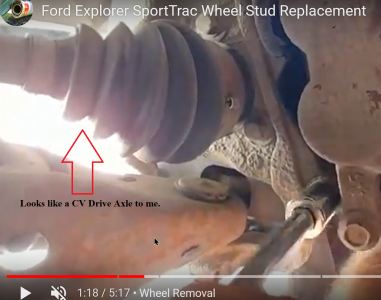
The Sportrac image you have from the video I linked has the CV Drive Axle clearly visible going through the hub with a nut on it. And if you went further into the video you would have seen the CV Axle on the backside of the hub.
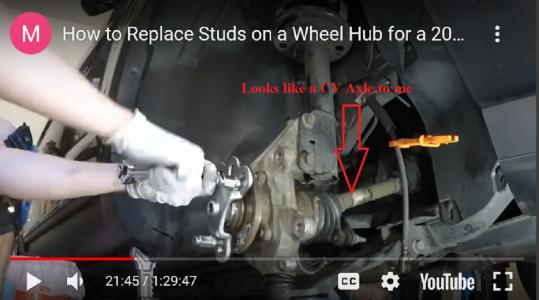
If someone had spent two minutes looking at the videos they would have seen they were all FWD with CV Axles.
@DaaQ clearly did not watch any of the videos. Esp the last one...
I would never allow someone that can't replace a wheel stud and would screw me by replacing the entire hub assembly work on my vehicles.
Love Harbor Freight Tools but their 1/2 inch Pittsburgh Torque Wrench is horrible. Never clicked once after I did a tire rotation myself and I snapped the stud.
Then took it over to the mechanic but apparently my car had an aftermarket wheel hub so I had to buy that replacement instead of a $15 stud.
$600 down the drain.. OUCH!
Any recommendations for a torque wrench that won't cause me a disaster like that next time?
And I'm trying to repair my car more and more myself so if anyone can recommend me good repair channels on Youtube for a Ford Explorer.. I'd be grateful!
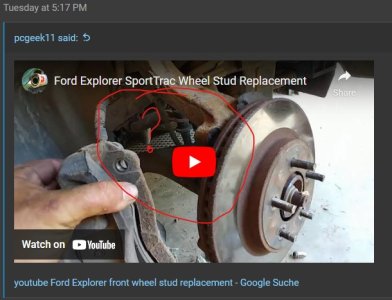
Nope I didn't because the first one you posted CLEARLY did not have a cv axle but just a front spindle as pictured above.
You're too humorous to put on ignore. You can me IDC.
All front tires, if rear wheel drive will STILL have an axle nut for the SPINDLE. I don't give clicks to rando sites especially posted by dishonest argumentative people. Such as yourself.
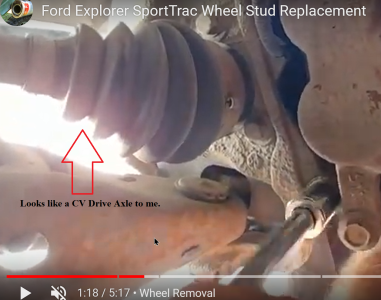
Dude give it up, Sport Tracs came only in RWD or 4x4, even this picture here CLEARLY SHOWS NO CV AXLE SHAFT.I know I said I wasn't posting anymore but you are wrong. The angle you took the screenshot from is covering the axle. Watch a little further when he is unbolting the caliper from the rear. Here let me help with a screen shot from the video I posted. Look that is not a spindle at all, Its a CV Drive Axle.
View attachment 91482
And this little gem you stated:
" All front tires, if rear wheel drive will STILL have an axle nut for the SPINDLE. I don't give clicks to rando sites especially posted by dishonest argumentative people. Such as yourself."
So you won't look at the evidence, but you are going to argue about what is in it. Puzzling...
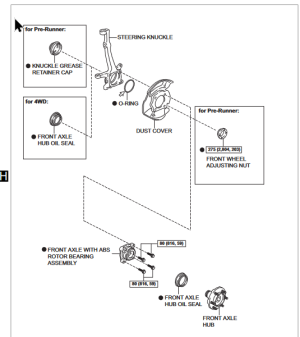
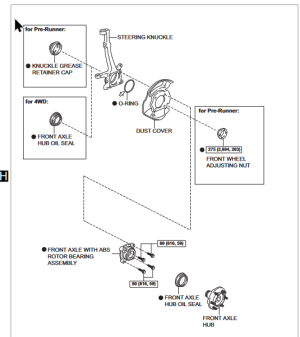
That is also wrong ALL rear wheel drives do not have a spindle nut. My 2012 Toyota Tacoma Prerunner uses a hub without a spindle axle going through it. See below.
View attachment 91483
I know I said I wasn't posting anymore but you are wrong. The angle you took the screenshot from is covering the axle. Watch a little further when he is unbolting the caliper from the rear. Here let me help with a screen shot from the video I posted. Look that is not a spindle at all, Its a CV Drive Axle.
View attachment 91482
And this little gem you stated:
" All front tires, if rear wheel drive will STILL have an axle nut for the SPINDLE. I don't give clicks to rando sites especially posted by dishonest argumentative people. Such as yourself."
So you won't look at the evidence, but you are going to argue about what is in it. Puzzling...
That is also wrong ALL rear wheel drives do not have a spindle nut. My 2012 Toyota Tacoma Prerunner uses a hub without a spindle axle going through it. See below.
View attachment 91483
Dude give it up, Sport Tracs came only in RWD or 4x4, even this picture here CLEARLY SHOWS NO CV AXLE SHAFT.
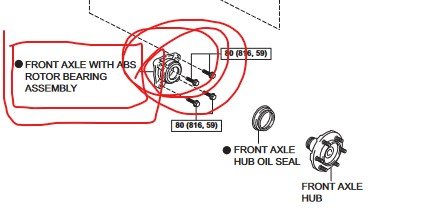
Back to original argument about the HUB ASSEMBLY which you called me out on.
View attachment 91485
NO CV AXLE JUST A SPINDLE. ARE WE CLEAR YET? You are all over the map, the models model years platforms, who knows probably even brands. I even was going to try and click TWO of your videos which turned out to be screen shots so WTF with that? Huh? Just drop it. OP messaged me I gave MY OPINION, followed by a reputable youtube site, and also offered a REPUTABLE FORUM for his vehicle. So get off my back. before I infract myself for pure enjoyment.