
-
We’re currently investigating an issue related to the forum theme and styling that is impacting page layout and visual formatting. The problem has been identified, and we are actively working on a resolution. There is no impact to user data or functionality, this is strictly a front-end display issue. We’ll post an update once the fix has been deployed. Thanks for your patience while we get this sorted.
You are using an out of date browser. It may not display this or other websites correctly.
You should upgrade or use an alternative browser.
You should upgrade or use an alternative browser.
How did you learn multiplication?
- Thread starter mikegg
- Start date
schmuckley
Platinum Member
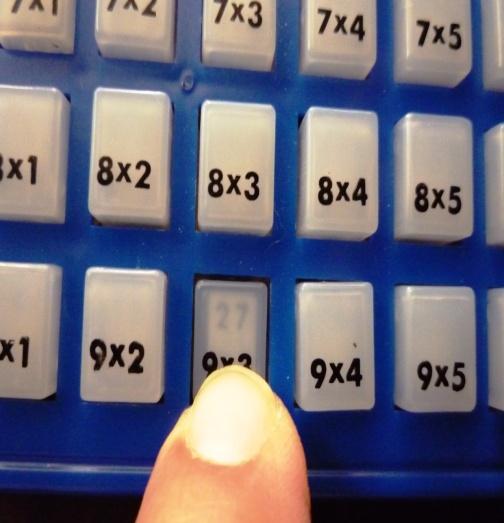
Flash cards
or a chart.
both=32
or a chart.
both=32



PlanetJosh
Golden Member
A teacher taught me to put the bigger number on top and smaller one below. So it was a vertical format like this without the "0"s
008
x04
------
32
But she's dead now I think because I'm an old guy and she looked kinda old as I remember so she's gotta be dead by now.
008
x04
------
32
But she's dead now I think because I'm an old guy and she looked kinda old as I remember so she's gotta be dead by now.

Aikouka
Lifer
Eh, I'll admit that I sometimes forget a random product of two numbers. In that case, I normally just do x * (y-1) + x to get it. It seems more complex, but if for some reason, I forget something like 6x9 = 54, I can just do 5x9 = 45 + 9 = 54.
Anyway, we did multiplication tables to learn them. As I've eluded above, I tend to use shortcuts a lot of the time to try and figure things out.
Anyway, we did multiplication tables to learn them. As I've eluded above, I tend to use shortcuts a lot of the time to try and figure things out.

Printer Bandit
Lifer
i can't multiply (2) 2-digit numbers in my head
for example, 18x16. No clue.
for example, 18x16. No clue.

AyashiKaibutsu
Diamond Member
I cheated on my tests until I had them down without cheating.

Carson Dyle
Diamond Member
Did you memorize the bigger number multiplying the smaller number or just the smaller number multiplying the bigger number?
Example:
Did you memorize 8 x 4? Or did you only memorize 4 x 8?
Both. Wrote memorization and endless writing of multiplication tables with a #2 pencil on yellow lined paper. From 2x1 through 9x9. Never did 11, 12 or higher in school, but they were easily learned later.
My Mom was my third grade math teacher. 🙂
schmuckley
Platinum Member
180 + 108=288i can't multiply (2) 2-digit numbers in my head
for example, 18x16. No clue.
AyashiKaibutsu
Diamond Member
i can't multiply (2) 2-digit numbers in my head
for example, 18x16. No clue.
I would do 16x20 - 32 personally.

Slacker
Diamond Member
Whatever way you can visualise it worksI would do 16x20 - 32 personally.
We started with the example of 18*16
20*14
10*10+8*10+6*10
In different situations I will stack the blocks the way it is most logical, it also makes a difference to me if I am doing other things with the numbers after I have the sum.
AyashiKaibutsu
Diamond Member
Whatever way you can visualise it works
We started with the example of 18*16
20*14
10*10+8*10+6*10
In different situations I will stack the blocks the way it is most logical, it also makes a difference to me if I am doing other things with the numbers after I have the sum.
Yea, that's just the way I always found it easy. Round one number to something easy then minus/add what I did to the original.

disappoint
Lifer
Aikouka
Lifer
i can't multiply (2) 2-digit numbers in my head
for example, 18x16. No clue.
Keep in mind what I talked about above about making things simpler. This is how I look at it: 18 is close to 20, 20 is easy to work with. 20 * 16 = (2 * 10) * 16 or, if we use the commutative property (I think that's the right one), we can do 2 * 16 * 10 = 32 * 10 = 320. So, to change our product to what we really want, just subtract 2 * 16 (32) and get 288.
Although, the thing is... I think everyone has a method that is simpler to them. You may like the whole round up and subtract, or you might prefer breaking it down like schmuckley did.
Last edited:


Printer Bandit
Lifer
College. 😉
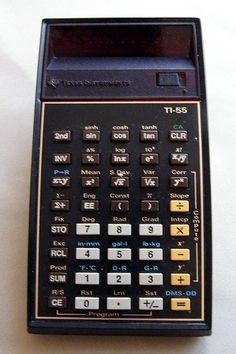
unfortunately, this was 6th grade and up for me.

Rakehellion
Lifer
Did you memorize the bigger number multiplying the smaller number or just the smaller number multiplying the bigger number?
Example:
Did you memorize 8 x 4? Or did you only memorize 4 x 8?
For x * 4, I do x * 2 * 2. (Double the number twice.)
For x * 8, I do x * 10 - x * 2.
I probably have similar shortcuts for other numbers but I never really think about it.
Memorization flash cards 1's through 10's. Obviously 4x8 was memorized about the same time as 8x4 because going through the cards, they reinforced each other. When I was in second grade I had the toughest time with 9's until my dad taught me that 9's are easy to check, at least up until 10s. The solution digits add to 9 and the largest order of magnitude digit is one less than the number multiplied by 9. (E.g. 9*2 = 18; to check if that is correct, 1+8=9 and 2-1=1, thus 18 is a solution in the 9's table and because 18 begins with the digit 1, it is the correct choice from the table. Alternatively, if you didn't know what to guess out of nervousness when given for example, 9*7, you would do 7-1=6, then 9-6=3, the the answer must be 63.) After that point, they were all memorized. Being able to have some logical understanding of the 9's helped bolster memorization of the 9's by way of the combination of blind memorization and practice of basic two-step mental arithmetic. Beyond 10's were done by hand and then memorized through overuse up through 15's.
Last edited:

Red Squirrel
No Lifer
I've never been good with memorization of anything to do with numbers nor very good at math. So I always have to break it down and calculate. Though some I do actually know off hand. 8's for example I know just from working with computers. So for 8 * 4 I know that 8*2 is 16 and know that 16*2 is 32 so I figure it out that way. Basically progresses as 2 4 8 16 32 64 128 256 512 1024 2048... I just know that. Basically in my head I think of it like ram. 😛
For something like 9 * 9 I'll have to break it down more, so like 9*2=18, 18 + 9 = 27, then just add that up 3 times, 27+27 = 54, then add 27 again = 81.
I usually have to write that down since I also suck at doing math in my head. Math was just never my strong subject.
But now they have this whole new way of doing math they call common core that is even more complicated, so glad I'm done school. 😛 I think that's just in the states though.
For something like 9 * 9 I'll have to break it down more, so like 9*2=18, 18 + 9 = 27, then just add that up 3 times, 27+27 = 54, then add 27 again = 81.
I usually have to write that down since I also suck at doing math in my head. Math was just never my strong subject.
But now they have this whole new way of doing math they call common core that is even more complicated, so glad I'm done school. 😛 I think that's just in the states though.

Thebobo
Lifer
i can't multiply (2) 2-digit numbers in my head
for example, 18x16. No clue.
10s were easy so I would do....
10 x 16 = 160
8 x 10 = 80
8 x 6 = 48
288

Multiplication tables. 1-12 across the top and and the left side, then we had to fill in all the squares. It was like a math crossword puzzle. Good times.
KT
KT

MidasKnight
Diamond Member
The yellow Pee Chee All Season Portfolio :


Last edited:
TRENDING THREADS
-
 Discussion Zen 5 Speculation (EPYC Turin and Strix Point/Granite Ridge - Ryzen 9000)
- Started by DisEnchantment
- Replies: 25K
-
Discussion Intel Meteor, Arrow, Lunar & Panther Lakes + WCL Discussion Threads
- Started by Tigerick
- Replies: 25K
-
 Discussion Intel current and future Lakes & Rapids thread
- Started by TheF34RChannel
- Replies: 24K
-

-
