• We’re currently investigating an issue related to the forum theme and styling that is impacting page layout and visual formatting. The problem has been identified, and we are actively working on a resolution. There is no impact to user data or functionality, this is strictly a front-end display issue. We’ll post an update once the fix has been deployed. Thanks for your patience while we get this sorted.

Housing prices.

Page 13 - Seeking answers? Join the AnandTech community: where nearly half-a-million members share solutions and discuss the latest tech.
Infill affects traffic, schools, hospitals, shopping, energy requirements, sanitation, and water supply. Those effects are magnified by density.
Developers won't be required to study or mitigate those changes. On a per unit basis the savings isn't much, but when measured against infrastructure improvements in already developed areas it's huge. Moving those costs from the developer to the municipality make infill projects very profitable.
The reason to do infill housing is not primarily for construction cost reasons, it is to allocate housing where it is needed. Of course it's cheaper to build on undeveloped land but the market doesn't want to live in the middle of nowhere, they want to live in developed areas. That's why you can buy a house very cheaply in West Virginia.

This is basic supply and demand and as a conservative you should be glad to see excessive government regulation cut back.
 
What a lot of American cities don't have is the "Missing Middle Housing" which would allow more mixture of residential housing in cities.

Unfortunately we cannot have something like this in the US.

The Best-Designed Town in the Netherlands (and therefore, the world)
And? A lot of US cities have made it illegal to build those for any number of reasons.

Regardless, places like LA, San Diego, and other major cities need more than missing middle. They need mid- and high-rise condos/apartments because the demand is there
 
Infill affects traffic, schools, hospitals, shopping, energy requirements, sanitation, and water supply. Those effects are magnified by density.
Developers won't be required to study or mitigate those changes. On a per unit basis the savings isn't much, but when measured against infrastructure improvements in already developed areas it's huge. Moving those costs from the developer to the municipality make infill projects very profitable.

*jerking off motion*

The government is compensated for that through increased tax revenue. Also urban infill development is, bar none, the most efficient development that exists from a services and energy standpoint.
 
And? A lot of US cities have made it illegal to build those for any number of reasons.

Regardless, places like LA, San Diego, and other major cities need more than missing middle. They need mid- and high-rise condos/apartments because the demand is there

San Diego has high rise condos and apartments. They just cost so much to build because of CA regulations that they get built as luxury high rises.
 
San Diego has high rise condos and apartments. They just cost so much to build because of CA regulations that they get built as luxury high rises.
San Diego has a very small number of high rise apartment buildings, yes, but the vast majority of housing is two stories or less.

The reason new construction is 'luxury' housing is for the same reason that almost all new construction is 'luxury'. One part marketing bullshit and one part that it's the same reason why generally only rich people buy new cars. New housing is nicer than old housing and is therefore more expensive. That's okay though because new housing of any kind reduces housing prices for everyone.
 
San Diego has high rise condos and apartments. They just cost so much to build because of CA regulations that they get built as luxury high rises.
Yes, and they need more of those types of structures.

Also, everything new is largely built and marketed as "luxury". In real estate, "luxury" is a meaningless term. I've seen units from the 80s marketed today as "luxury", and I've seen plenty of normal things marked at "luxury" (eg, AC, in-unit washer/dryer... Things people wouldn't have a second thought about having in their SFH).
 
San Diego has a very small number of high rise apartment buildings, yes, but the vast majority of housing is two stories or less.

The reason new construction is 'luxury' housing is for the same reason that almost all new construction is 'luxury'. One part marketing bullshit and one part that it's the same reason why generally only rich people buy new cars. New housing is nicer than old housing and is therefore more expensive. That's okay though because new housing of any kind reduces housing prices for everyone.
Except it doesn't lower prices for most people in a bunch of markets. That's just nonsense.

Source: been in the industry for over a decade
 
Except it doesn't lower prices for most people in a bunch of markets. That's just nonsense.

Source: been in the industry for over a decade

If that market does not allow sufficient housing to be built to meet demand then sure. We've seen developers swamp the marketplace in lots of places and rents go down. The NYC metro area is not a place that sees anything close to the level of construction required to meet demand.
 
If that market does not allow sufficient housing to be built to meet demand then sure. We've seen developers swamp the marketplace in lots of places and rents go down. The NYC metro area is not a place that sees anything close to the level of construction required to meet demand.
IIRC rents in Austin actually dropped, or at least slowed down dramatically, as a result of housing construction starting to meet demand
 
IIRC rents in Austin actually dropped, or at least slowed down dramatically, as a result of housing construction starting to meet demand
Both Minneapolis and Austin saw real rent decreases because of the expanded supply. And I believe Boise is about to see the same because a bunch of developments are all finishing right around the same time.
 
San Diego has a very small number of high rise apartment buildings, yes, but the vast majority of housing is two stories or less.

The reason new construction is 'luxury' housing is for the same reason that almost all new construction is 'luxury'. One part marketing bullshit and one part that it's the same reason why generally only rich people buy new cars. New housing is nicer than old housing and is therefore more expensive. That's okay though because new housing of any kind reduces housing prices for everyone.

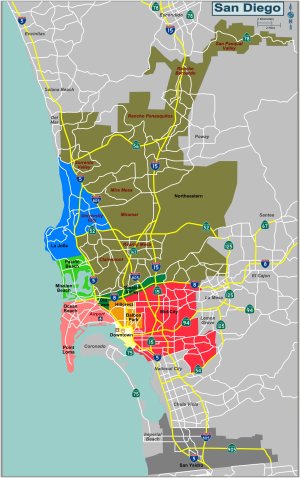
San Diego City is a big place that is fairly spread out. Let Alone San Diego county.

What type of housing density makes sense in Downtown might not make sense in San Pasqual Valley.
The goal in my opinion would be to increase housing density in areas like Clairemont Mid-City etc. with increased Duplexes and Quad Plexes in areas zoned for Single family homes with higher density apartments closer to mass transit hubs.


san-diego-region-map.jpg
 
If that market does not allow sufficient housing to be built to meet demand then sure. We've seen developers swamp the marketplace in lots of places and rents go down. The NYC metro area is not a place that sees anything close to the level of construction required to meet demand.
I love how supply and demand just magically doesn't apply to housing. lol.

As you say, housing construction in NYC is WAY below where it needs to be to mitigate housing prices. A quick google says NYC area approved about 7 units per 1k residents in 2024. Contrast that with like Raleigh that approved 28. NYC doesn't need to just double construction, it needs to like quintuple it.
 
San Diego City is a big place that is fairly spread out. Let Alone San Diego county.

What type of housing density makes sense in Downtown might not make sense in San Pasqual Valley.
The goal in my opinion would be to increase housing density in areas like Clairemont Mid-City etc. with increased Duplexes and Quad Plexes in areas zoned for Single family homes with higher density apartments closer to mass transit hubs.


View attachment 126457
I've lived in San Diego for a total of 11 years, my late wife is from there, and I visit multiple times a year to see her family, my friends, and such. I feel I understand it just fine.

The goal should be to increase housing supply where it is most in demand and the best way to do that is remove regulations that prevent construction and let the market figure it out.
 
If that market does not allow sufficient housing to be built to meet demand then sure. We've seen developers swamp the marketplace in lots of places and rents go down. The NYC metro area is not a place that sees anything close to the level of construction required to meet demand.
It's pretty simple, his point was overly broad and completely wrong. It's a lot more complicated than that statement, and it's just a way to avoid having more complicated discussions about how do we tackle the problem - because this is used to defend all new housing being built now while ignoring completely pricing people out of neighborhoods and cities and simply ignoring any delving into things like affordable housing at the same time. It's a typical argument used by those that could give two shits about affordable housing.
 
I've lived in San Diego for a total of 11 years, my late wife is from there, and I visit multiple times a year to see her family, my friends, and such. I feel I understand it just fine.

The goal should be to increase housing supply where it is most in demand and the best way to do that is remove regulations that prevent construction and let the market figure it out.

I live in San Diego area also. So what?
 
*jerking off motion*

The government is compensated for that through increased tax revenue. Also urban infill development is, bar none, the most efficient development that exists from a services and energy standpoint.
Please keep your autoeroticism to yourself, I'm not interested.

Yes, government does collect taxes on the new units. But the developer is who gets to keep all that up front money. I'm absolutely certain this will spark development across the state. There is serious savings that won't be passed on to the consumer.
I can smell the money from here.
 
Please keep your autoeroticism to yourself, I'm not interested.

Yes, government does collect taxes on the new units. But the developer is who gets to keep all that up front money. I'm absolutely certain this will spark development across the state. There is serious savings that won't be passed on to the consumer.
I can smell the money from here.

If they are building rental housing, which is basically a given with the condo defect law, what up front money are you talking about? They get nothing at all until the units are rented and they certainly are going to have financing to pay back.
 
Please keep your autoeroticism to yourself, I'm not interested.

Yes, government does collect taxes on the new units. But the developer is who gets to keep all that up front money. I'm absolutely certain this will spark development across the state. There is serious savings that won't be passed on to the consumer.
I can smell the money from here.
Oh no people might make money doing things that benefit other people! The horror. Let's instead ensure people only make money by doing things that harm everyone else like God intended.
 
Oh no people might make money doing things that benefit other people! The horror. Let's instead ensure people only make money by doing things that harm everyone else like God intended.
What I think is funny is in any other context conservatives would be like ‘whatever comrade, how can you hate people making money?’ but the one place conservatives come to love central planning and onerous government regulation is housing.

And then of course instead of acknowledging tradeoffs - that banning housing construction makes it more expensive, they just declare supply and demand doesn’t exist. (Or largely does not exist)
 
Back
Top