

Grass-fed "free-range" beef cattle worse for the environment and no healthier?

Page 3 - Seeking answers? Join the AnandTech community: where nearly half-a-million members share solutions and discuss the latest tech.

Modelworks

Lifer
Feb 22, 2007
16,240
7
76
Have any of you seen the videos where they literal have holes in the cows stomachs so that the farmers can reach in and clear out all the corn feed that the animals are unable to digest. Because the cows cannot digest this and have to be constantly "unclogged" , the hole is left open. This open wound requires tons of antibiotics.

Watch food inc and tell me this is a "fad"

I have never seen a farmer do anything like this.
People might be surprised to know though that they do feed them magnets, even the so called free range ones are fed magnets. The reason is that cows will eat anything that is in with the grass , and often that is old nails, bits of metal, and more. Normally this would kill the cow because after digestion it shreds the inside. The magnets are designed to settle in the stomach and stay there and collect the bits of metal preventing it from harming the cow.
http://www.amazon.com/Master-Magneti.../dp/B000UO7FVS
Ceramic cow magnet - 3 1/3in.L x 3/4in. dia. While grazing, cows eat everything including any stray pieces of metal or nails that may be lying in a pasture. When ingested, these bits of metal do not pass through, but can instead puncture the lining of the cow's stomach and cause what is known as hardware disease. Before this happens, a cow magnet is injected into the cow's stomach with a pill gun, and catches all the stray metal the cow eats. The magnet will stay in the stomach for the life of the cow. Cow magnets also have many practical uses such as holding nails or other iron objects in place, or cleaning up nails or staples that have been scattered. This cow magnet consists of five ceramic ring magnets with two washers in between each magnet and solid steel end caps. Dimensions L x W x H (in.): 3 1/3 x 3/4D, Application: Cow magnet, Material: Ceramic, steel
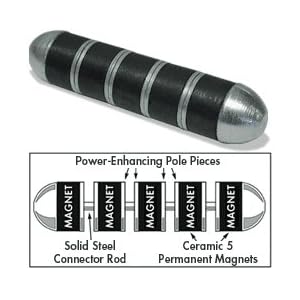


41iGyRTsbvL._SL500_AA300_.jpg
 

trenchfoot

Lifer
Aug 5, 2000
15,982
8,575
136
You mentioned "fresh" vs "older and went through pasture". No mention of grass fed vs not. Not a 1:1 comparison.

aging beef concentrates the beefy flavor. aged beef does taste better.

Sorry for not making my point clear fella's. Two things: I wanted to offer that there was more to what influenced the flavor of beef than what was presently being discussed at the time of posting and that eating grassy-tasting beef backstrap fresh off the pasture is not an enjoyable experience because the meat was not properly aged.

My bad.
 

JellyBaby

Diamond Member
Apr 21, 2000
9,159
1
81
I think it's more a matter of taste. Some people like the taste of leaner cuts, some like the taste of fat. Grass fed beef is definitely a leaner meat. Health-wise, leaner is better; part of America's obesity epidemic is tied to too much intake of the wrong kinds of fat like saturated fats found in beef.
 

IceBergSLiM

Lifer
Jul 11, 2000
29,932
3
81
I have never seen a farmer do anything like this.
People might be surprised to know though that they do feed them magnets, even the so called free range ones are fed magnets. The reason is that cows will eat anything that is in with the grass , and often that is old nails, bits of metal, and more. Normally this would kill the cow because after digestion it shreds the inside. The magnets are designed to settle in the stomach and stay there and collect the bits of metal preventing it from harming the cow.
http://www.amazon.com/Master-Magneti.../dp/B000UO7FVS

Interesting and smart.

I would highly recommend food inc. It will change the way you grocery shop.


41iGyRTsbvL._SL500_AA300_.jpg

Interesting and smart.

I would highly recommend food inc. It will change the way you grocery shop.
 

Capt Caveman

Lifer
Jan 30, 2005
34,543
651
126
I thought marbling and diet was more important than actual fat content. This is why kobe beef is so expensive and jamon iberico de bellota is expensive

Correct. Grass-fed beef has more flavor than corn-fed.

Like Penn & Teller, the majority of John Stossel's points are biased.
 
Last edited:

Modelworks

Lifer
Feb 22, 2007
16,240
7
76
I think it's more a matter of taste. Some people like the taste of leaner cuts, some like the taste of fat. Grass fed beef is definitely a leaner meat. Health-wise, leaner is better; part of America's obesity epidemic is tied to too much intake of the wrong kinds of fat like saturated fats found in beef.


The meat isn't the problem, it is all the stuff they add to it when they cook it. My grandmother lived to be 98 and ate all the things they say you shouldn't. She ate fried fat meat, pork, beef, chicken, brains and scrambled eggs, pig feet, etc. The difference is she rarely ate processed or packaged foods. When shopping she only bought things like flour, sugar, eggs and then prepared everything herself. I never once saw her eat things like frozen dinners or canned soups, etc.
 

JSt0rm

Lifer
Sep 5, 2000
27,399
3,948
126
Correct. Grass-fed beef has more flavor than corn-fed.

Like Penn & Teller, the majority of John Stossel's points are biased.

Well it has more game-y flavor (not so much as venison though) I wouldn't say that the reasons for growing either kind of beef are to help the environment. Beef is horrible for the environment from a energy perspective. Its all about different tastes.
 

Modelworks

Lifer
Feb 22, 2007
16,240
7
76
Interesting and smart.

I would highly recommend food inc. It will change the way you grocery shop.

Won't change anything for me. I have seen cows shot in the head, cut open and slaughtered. Same for hogs and chickens. Also been in processing plants and my dad was a butcher for over 30 years so I know meat pretty well.

I don't think people would enjoy meat much if they visited a processing plant.
 

Kipper

Diamond Member
Feb 18, 2000
7,366
0
0
A "few" things this article from the "authoritative source" doesn't address. In other words, it's rubbish:

1) It has been shown that cows raised on corn vs. grass have higher concentrations of O157:H7 E. coli, which lowers the risk of mass contamination/food borne illness.
2) The entire reason ranchers in CAFOs give their cows corn and soybeans is because these crops are heavily subsidized by the US government, making it comparatively cheap to grasses or allowing cows to graze. It's unclear if the researcher calculated the costs of producing these. Both require large amounts of synthetic fertilizer and pesticide, which is derived from petroleum. There are major costs to agricultural runoff of both nitrogen-rich fertilizer AND pesticides into the water system. Conventional meat does not reflect the true costs of production. There are a ton of what economists would call 'externalities.'
3) Cheap grain means cheap meat, which increases domestic consumption and in turn increases the incentive for meat producers to produce even more meat. In comparison, meat that better reflects the actual cost of production is more likely to stifle demand, leading to both improved health benefits AND environmental impact.
4) The environmental impact of a CAFO vs. grazing grassfed cows is not brought up at all, which I find to be a gaping hole.
5) I'd disagree that there is "no health impact" - grain-fed cows tend to have more marbled flesh and a higher proportion of n-6 fatty acids compared to grass-fed beef, which has a comparatively better fatty acid profile (lower saturated fat, cholesterol, and higher n-3 fatty acid concentrations). If you are eating as much meat and beef as Americans are, a grass-fed choice is likely the better one. Whether it will translate to a major health impact is obviously a matter of debate, but if a consumer makes the decision to choose grass-fed meat they will pay more, and likely consume LESS. A diet that is lower in meat overall is more likely to be healthier than one that is meat-rich.
 

Throckmorton

Lifer
Aug 23, 2007
16,829
3
0
So far no one has brought up the ecology part of the resource use equation.

Whether grazing, growing corn, or something else is the most efficient use of land depends on the local ecology- the climate, soils, etc.

For example, in semi-arid regions growing corn or some other crop isn't practical. It makes the most sense to graze cows on the open range and take advantage of the natural ecology. In the west and the plains, growing cows is basically like growing bison.

You think they feed their goats corn in Afghanistan? No, they're "free range", eating scrub and tin cans, and turning it into meat... on land that can't grow crops.
 
Last edited:
Nov 29, 2006
15,920
4,491
136
I could care less about carbon footprint yada yada. I just dont want the animals treated like a slab of beef (pun intended). I would rather they be allowed to roam the pastures instead of cooped up in a pen in their own shit and cant even move. That is no way to treat an animal even if it is just food.
 

shira

Diamond Member
Jan 12, 2005
9,500
6
81
Agreed. You don't want that cow moving around. Toughens the meat and burns the fat. Fat = flavor. And veal is the ultimate IMHO.

They were put on this earth for us to eat, as such we need to make them as tasty as possible.

Were you put on earth to torture intelligent people, so God made you as impossibly stupid as is consistent with consciousness?
 

Dr. Zaus

Lifer
Oct 16, 2008
11,764
347
126
I don't eat grass feed beef cuz it's healther, I eat it cuz it's delicious.

I'll bet you dinner you couldn't tell between grass vs corn fed prime in a blind test.
I have taken this test; There is a distinct flavor that is somewhere between bison and ground lamb.

If nothing else it seems to be a more humane way to raise an animal ultimately destined for the slaughterhouse. That is really the only benefit I am looking for.
and you should be able to pay extra for it and get it :)

but... why do you care how food feels?

hey eat too much and most of the places here that raise cows have them in corrals that are dirt with little grass.
There's a guy here that keeps 8 cows on a 200 acre hacienda, they keep the grass well cut. I live in a sub-tropical zone and grass grows like a monster.


The greens need to remember that the bovine emissions of methane are a much worse green-house gas than all of those evil carbon molecules released in planting/harvesting corn.
 

JS80

Lifer
Oct 24, 2005
26,271
7
81
I think it's more a matter of taste. Some people like the taste of leaner cuts, some like the taste of fat. Grass fed beef is definitely a leaner meat. Health-wise, leaner is better; part of America's obesity epidemic is tied to too much intake of the wrong kinds of fat like saturated fats found in beef.

Taste is not subjective.
 

shira

Diamond Member
Jan 12, 2005
9,500
6
81
I have taken this test; There is a distinct flavor that is somewhere between bison and ground lamb.

and you should be able to pay extra for it and get it :)

but... why do you care how food feels?

There's a guy here that keeps 8 cows on a 200 acre hacienda, they keep the grass well cut. I live in a sub-tropical zone and grass grows like a monster.


The greens need to remember that the bovine emissions of methane are a much worse green-house gas than all of those evil carbon molecules released in planting/harvesting corn.

The amount of carbon released by grass-fed cows will by definition equal at most the amount of carbon they take in; namely, the carbon in the grass they consume. And the grass grows by capturing carbon from the atmosphere. So the net effect (carbon-captured by grass - carbon released by grass-fed cows) is in theory negative, since the cows' mass contains carbon captured by grass.

The calculation is much more difficult for corn, as carbon is released by the fossil-fuel-burning needed to run the tractors and fertilizer manufacturers and corn-shippers. That part of the equations doesn't exist for grass-fed cows, so I highly doubt that the net effect for corn-fed cattle is as good as for grass-fed cows.
 

JSt0rm

Lifer
Sep 5, 2000
27,399
3,948
126
I'm soooooooooo craving a double big Mac

I suggest using those calories more wisely and grabbing a dry aged rib eye and some oyster mushroom.

Apply kosher salt to both sides of the ribeye

Large pan with 3 tablespoons of butter on low heat. Wait for it to brown and release a nutty smell. Crank the heat for 2 minutes and place the ribeye down in the pan. Do not move the ribeye at this point let it cook for 3 minutes or so and flip it and cook for remainder of time to desired temp.

Pull the ribeye off the and let it REST. Dont cut it.

Take the oyster mushrooms and throw them in the pan. Let them cook until they release their water stirring them slowly. Wait until the water is cooked off and the mushrooms will begin to suck up the butter and fat released from the ribeye. They will get a toasted woody smell and become browned.

Pour oyster mushrooms on the steak and enjoy.
 

Dr. Zaus

Lifer
Oct 16, 2008
11,764
347
126
The amount of carbon released by grass-fed cows will by definition equal at most the amount of carbon they take in; namely, the carbon in the grass they consume. And the grass grows by capturing carbon from the atmosphere. So the net effect (carbon-captured by grass - carbon released by grass-fed cows) is in theory negative, since the cows' mass contains carbon captured by grass.

The calculation is much more difficult for corn, as carbon is released by the fossil-fuel-burning needed to run the tractors and fertilizer manufacturers and corn-shippers. That part of the equations doesn't exist for grass-fed cows, so I highly doubt that the net effect for corn-fed cattle is as good as for grass-fed cows.

My point was that methane is a much worse green-house gas than carbon is and that keeping cows alive longer increases the methane production.

We do care about green house gasses still right? It isn't just mindless hate of plant food, right?
