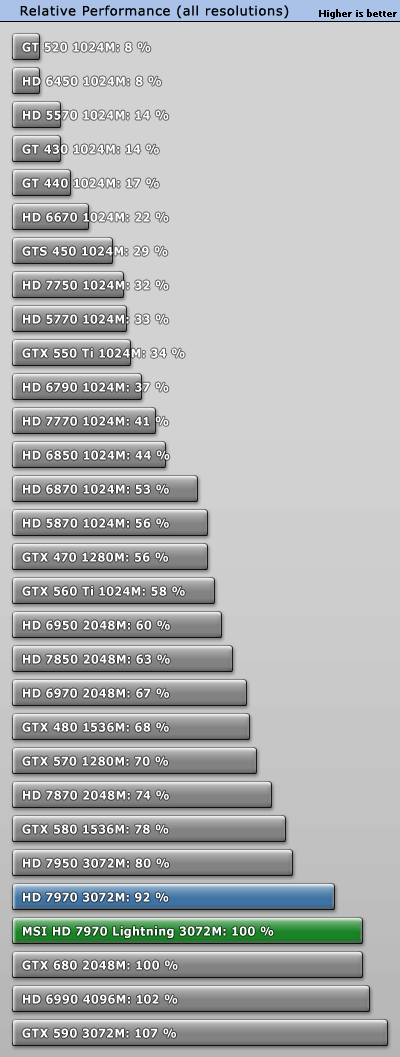
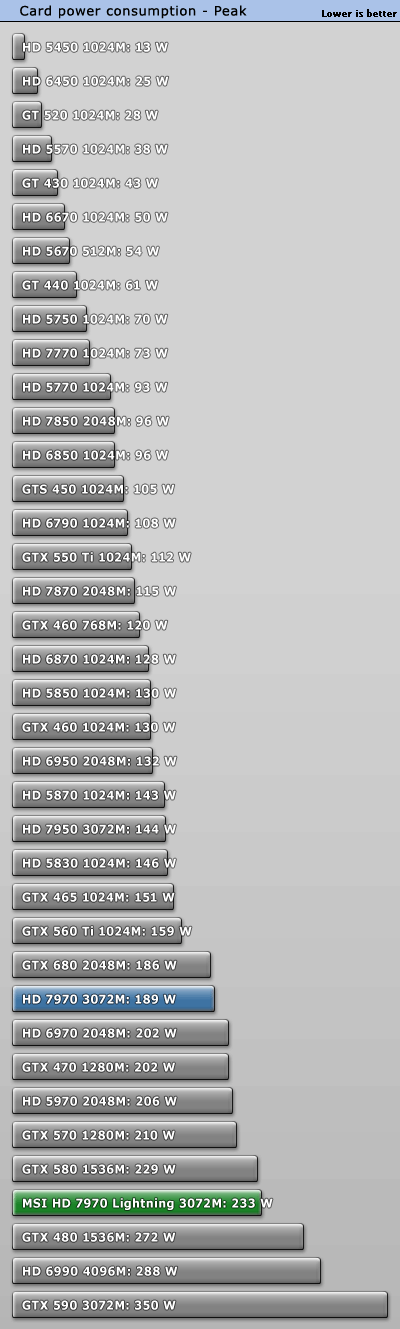
I don't understand why AMD did not clock the hd7970 at 1000-1050mhz to begin with. They should realize that yields were going to improve, and they should have also realized that the miniscule gap between the hd7970 and hd7870 would make it impossible to harvest and sell a third Tahiti-based SKU.
AMD explained why they clocked Tahiti where they did. That's the clock that worked with their engineering samples. Setting clocks isn't just about how fast but also the power requirements. Newer chips are clocking higher with the same voltage.
They don't set clocks like a typical consumer O/C'ing their card. They need to test to certify that the cards will be stable and return an acceptable yield %. They likely could have released at higher clocks, but to do it right they would have had to go through a re-certification process. That takes time and would have delayed the launch.
It's another case of AMD having a nice advantage in one form or another, and completely squandering it. Ever since the hd5870 and hd5850 - which were excellent products AND executed well - to me it seems like they keep tripping over themselves. Releasing hd6800 cards that are slower than hd5800, not reacting to gtx460, cayman offering only a minor performance bump, releasing an underclocked hd7970 flagship card, over-pricing hd7970, taking a month to react to gtx680, even longer to get a proper hd7970 out, and the noise levels for some of their highest end reference cards are abysmal.
1st to market for the entire range with quantities while nVidia has released one card is hardly tripping over themselves.
The 6800 was a restructuring of the lineup. I agree it was a confusing move. But it is what it is. It's not the replacement for the 5800.
The 460 was what, 8 or 9 months late to market? It was almost refresh time for AMD by then. GPU's aren't something you can just pull out of thin air. The 6850 answered the 460 just fine.
Cayman was supposed to be on 32nm. TSMC cancelled it and it forced AMD to neuter the card. It was released with fewer shaders than originally planned. It very likely would have been faster than the 580 if it had the shader count it was intended to (1920sp, or there abouts?).
You don't like the price of the 7900. I don't either. The $550 price made sense with the market at the time.
Taking a month to react to the 680? How about nVidia almost 2mos. after releasing the 680 still can't get any quantities of them into the market.
Even longer to get a proper 7970 out? I assume you mean a higher clocked version. The process has improved and the chips run faster on less voltage. That's TSMC improving their process. AMD has zero control over that. We're still waiting for GK100/110 if you want to talk about something taking too much time.
As far as noise goes, I haven't heard both cards side by side so I can't comment first hand. It's virtually impossible to determine anything from reviews as each reviewer has his/her own way of measuring SPL, and to be honest, every method I've seen is not scientifically verifiable nor well conducted. The
only way to accurately measure the noise from a card would be to isolate it in an anechoic chamber and measure it with calibrated equipment with a standardized procedure that was followed by everyone. How it's done now is a joke.
Nvidia was a half generation late with GF100, but once the gtx460 came out, to me it seems like they have been consistently performing (other than the poor pricing of the gtx550ti): timely fixing GF100 and retaining the single GPU crown, capturing the $200-250 market with the gtx560ti, releasing a plethora of sku's for each Fermi chip they made(which is confusing as hell and negatively looked upon by many, but is good for their bottom dollar), getting their next-gen dual part out before AMD, and now beating AMD at their small die, lower power strategy.
Looks like they are going to be a whole generation late with GF110's replacement. They're getting worse. The only consistency from nVidia is they are consistently late, and by hook or by crook they release the faster product. The GTX 480 was an abortion, neutered, hot, power hungry, late, but it was fast enough to beat the 5870. The 580 was considered timely, but it was in reality a fully functioning GF100 that was a year late. Good thing it was such a powerful design and was still faster than the 6970. Good thing TSMC didn't get 32nm working on time, too.
Capturing the 200-250 market with the 560ti? I'm not sure where you are getting that from. The 560ti and the 6950 competed head to head.
Releasing a plethora of SKU's was good marketing. About the same as AMD's readjustment of their lineup that brought the 6800 to a lower price point than the 5800 before it. The exact strategy you called a fail for AMD is good for nVidia. Sounds a bit bias to me.
While they have released the 690, it is MIA in the market. Again, it's a good marketing move. nVidia is very good at that. Where are the cards though?