• We’re currently investigating an issue related to the forum theme and styling that is impacting page layout and visual formatting. The problem has been identified, and we are actively working on a resolution. There is no impact to user data or functionality, this is strictly a front-end display issue. We’ll post an update once the fix has been deployed. Thanks for your patience while we get this sorted.

Four stroke oil

jmagg

Platinum Member
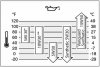
Its time for my first 5 hr oil change in a V Twin Briggs engine. Looking at the recommended viscosities by temperature at Briggs site, it seems at least by this chart, that 10w30 protects better at higher temps than 5w30. I've always assumed that 30 weight is 30 weight regardless of the cold weather side. Am I wrong?
Oil_rec_chart_smaller.jpg
 
I use full synth 5w30. Small engines don't require lots of oil so the cost diff is minimal. Choice of temp and weight depends on your climate.
 
I use full synth 5w30. Small engines don't require lots of oil so the cost diff is minimal. Choice of temp and weight depends on your climate.
I switched out to full synth 5w30 for 2 bucks more, but the question remains.
 
I switched out to full synth 5w30 for 2 bucks more, but the question remains.
30 weight is 30 weight xd but I don't see how 10w30 protects better than 5w30, we are talking small engine here, they tend to be limited to 3600rpm
 
30 weight is 30 weight xd but I don't see how 10w30 protects better than 5w30, we are talking small engine here, they tend to be limited to 3600rpm
Apparently Briggs and Stratton does not agree. The chart comes directly from their site so the recommendations are across the board for single or V Twin engines. The V Twin takes 2 quarts and the single 1.5.
wth
 
Last edited:
The answer is that viscosity is highly complex and can’t actually be boiled down to two numbers. Especially for a non-synthetic, trying to make it behave consistently over a wide temperature range is difficult, so a 5W-30 will be more of a compromise than a 10W-30. The other part of the picture is that the oil will shear down to a lower weight after some probably minimal operating time and the less compromising initially heavier oil may hold a heavier weight for longer. Synthetics with their fancier additives and more complex chemical/petroleum engineering can widen the temperature range over which an oil can behave properly with less compromise, hence the synthetic 5W-30 in the chart matching the high temp performance of the 10 weight. That’s why we have good stuff like actually decent 0W-40 and 10W-60 now as well.
 
30 weight is 30 weight xd but I don't see how 10w30 protects better than 5w30, we are talking small engine here, they tend to be limited to 3600rpm
But they are all air cooled which is tough on oil. Back in '04 when 4 hurricane's rolled through FL those fortunate enough to actually find a genny ran them hard. Problem was few actually bothered to READ the owners manual, it called for an oil change after 40hrs, power was out weeks in any spots and multiple times too. TV did a story showing a small-engine repair shop and the guy had dozens of genny's in the back with ruined motors and NONE were covered under warranty. People heard them run and thought "lawn mower, it'll be fine" except a genny has to run at 3600 RPM constantly and is working much harder than any lawnmower has to.
 
I know the manual for my mower (Briggs & Stratton) calls for conventional oil with a warning that it may consume more oil if you use synthetic. My cars are all synthetic now and I used up the last of my conventional oil, so this year I switched to synthetic. So far I have not seen any increased oil consumption. Considering it holds 4/10ths of a quart, it would have to burn a lot of oil for my to worry about the consumption.
 
But they are all air cooled which is tough on oil. Back in '04 when 4 hurricane's rolled through FL those fortunate enough to actually find a genny ran them hard. Problem was few actually bothered to READ the owners manual, it called for an oil change after 40hrs, power was out weeks in any spots and multiple times too. TV did a story showing a small-engine repair shop and the guy had dozens of genny's in the back with ruined motors and NONE were covered under warranty. People heard them run and thought "lawn mower, it'll be fine" except a genny has to run at 3600 RPM constantly and is working much harder than any lawnmower has to.

Well if you don't follow maintenance instructions, you'll destroy anything.
 
My bad, I shouldn't have assumed mowing. Still, their chart shows their own oil outperforming most of the others, except for very cold weather. For winter duty I would presume a 5W30 synthetic or even 0W30 synthetic would be a no-brainer.
 
Last edited:
Its time for my first 5 hr oil change in a V Twin Briggs engine. Looking at the recommended viscosities by temperature at Briggs site, it seems at least by this chart, that 10w30 protects better at higher temps than 5w30. I've always assumed that 30 weight is 30 weight regardless of the cold weather side. Am I wrong?

Yes, oil uses a base stock that is the first "W" number then polymers are added, which uncoil to improve viscosity when it heats up, but it is not entirely stable at higher temps seen in air cooled engines.

If you use 5W30 dino, once it has some wear it will burn more oil and start to clog the exhaust port and muffler spark screen, but that takes a while, not just a few hundred hours. No real reason to choose 5W30 (even synthetic) anyway if this is a mower engine. Just like the chart shows, 15W50 (or 20W50) synthetic would be the better long term choice, and yet I've ran my B&S V-Twin mower on 30wt for over 20 years with no problems. I've never wanted/needed to mow when the temp is near 100F, even upgraded the headlight on my mower so I can mow when its cooler, from sunset onward at night in summer.
 
Last edited:
The advantages of synthetic oil have become so clear, it's hard for me to understand why anyone who is not an idiot uses dino oil anymore except in worn out junk.
 
But they are all air cooled which is tough on oil. Back in '04 when 4 hurricane's rolled through FL those fortunate enough to actually find a genny ran them hard. Problem was few actually bothered to READ the owners manual, it called for an oil change after 40hrs, power was out weeks in any spots and multiple times too. TV did a story showing a small-engine repair shop and the guy had dozens of genny's in the back with ruined motors and NONE were covered under warranty. People heard them run and thought "lawn mower, it'll be fine" except a genny has to run at 3600 RPM constantly and is working much harder than any lawnmower has to.
I lurked Bobistheoilguy and one member there had real life experience that 15w-50 synth held up better over there. I think he and some other might have been the consumer feedback that got Briggs selling their own 15w-50 because it definitely wasn’t standard advice before.
 
I lurked Bobistheoilguy and one member there had real life experience that 15w-50 synth held up better over there. I think he and some other might have been the consumer feedback that got Briggs selling their own 15w-50 because it definitely wasn’t standard advice before.
In 1999, Briggs recommended 5-30 synth for temps below 40 degrees, and only SAE 30 above 40 degrees.
 
The advantages of synthetic oil have become so clear, it's hard for me to understand why anyone who is not an idiot uses dino oil anymore except in worn out junk.
Common misconception, dino oil got better too but this type of application just isn't one where it makes much difference if you stay within the temp range for the weight grade you choose. Again my B&S V-Twin is over 20 years old, runs well, not worn out junk.

If you don't even believe the engine manufacturer, would you believe an oil analysis lab?

 
Okay, I retract my statement. But it will remain true for me personally, because a lot of my stuff has extended change intervals with low hours/miles. Use whatever you like on your stuff.
 
In 1999, Briggs recommended 5-30 synth for temps below 40 degrees, and only SAE 30 above 40 degrees.
Yea, here in FL and in summer/fall it never drops below 75 at night. Generators in '04 were very hard to find, so much so that many were stolen. They had a Honda 2Kw genny at a divided hwy near me running the traffic light, chained up with the thickest chain I've ever seen, GONE in less than 24 Hr. One thief got a beat up lawnmower and brought it running into a backyard with a new genny running, stole the genny and left the junk lawnmower there so the homeowner would not be alarmed at the engine stopping. Only in FL!.
 
In 1999, Briggs recommended 5-30 synth for temps below 40 degrees, and only SAE 30 above 40 degrees.
My B&S V-Twin is an Intek 19HP, Model 407777. Must've been made around 1998-99. This is the oil specs page in the Op & Maint. Manual for it.

B&S_Oil.png
 
Last edited:
There is no clear winner, only picking the oil that handles your environmental temps and if you pay much more for a temp range you don't need, it was a waste of money.

However, on that chart, 30wt edges out the rest for a typical mowing ambient temp vs cost. Synthetic 5W-30 and 10W-30 will result in more oil burnt, having to top it off and more deposits left behind... which is why when B&S decided to spec their own branded synthetic, they could have picked any grade yet choose 15W-50 instead of 10W-30 or lower.
 
Last edited:
We're gonna nitpick over a few bucks per quart. I don't worry about it. Synthetic is the winner in every metric I've ever seen. I guess if you are careful enough to perfectly match requirements to quality, and you manage your change intervals carefully, cheap dino oil is for you. Have fun with that. I won't ever miss the few bucks, and my engines outlast their intended applications even with extended change intervals. I'm happy, you're happy.
 
Back
Top